When choosing optical frame displays, focus on practical details such as display capacity, fixture size, material quality, lighting, storage space, and how easy it is for customers to try on glasses. For B2B buyers, it is also important to choose a supplier that can provide clear drawings, sample approval, quality inspection, secure packaging, and reliable export delivery.
If you are planning an eyewear store, optical clinic, chain rollout, or shop-in-shop counter, the right display fixtures directly affect how many frames you can present, how comfortably customers compare styles, and how efficiently staff restock inventory. A strong optical display system is not just a shelf; it is a selling structure that connects product visibility, brand image, security, lighting, and daily store operations.
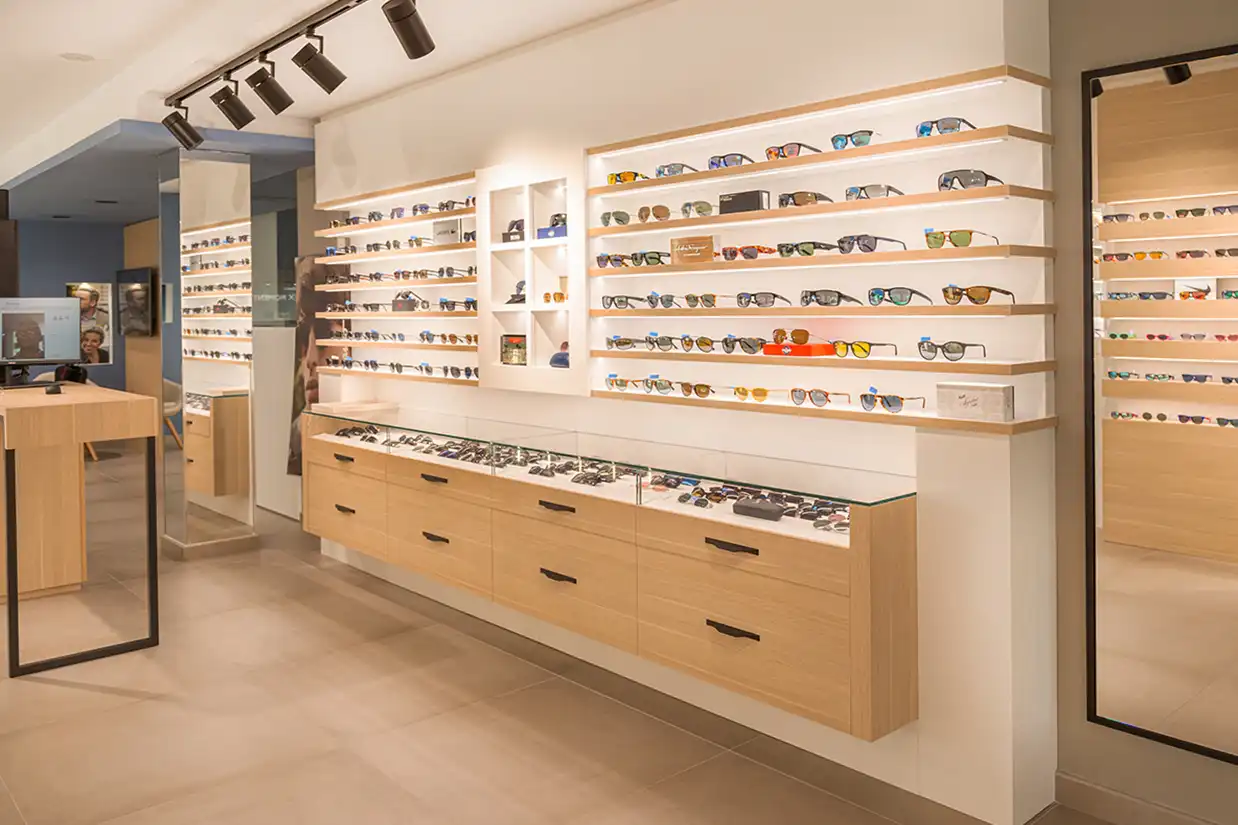
For more store planning ideas, you can review ONI Display’s Optical Store Fixtures solutions and the eyewear display layout guide for small and large eyewear spaces. Whether you are designing a compact optical boutique or a large eyewear store, a well-planned fixture layout can help create a more organized, attractive, and sales-focused retail environment.
What Types of Optical Frame Displays Should Eyewear Stores Consider?
Different optical frame displays solve different retail problems. A wall unit can maximize vertical merchandising, a freestanding display stand can guide traffic, and a lockable glass cabinet can protect premium eyewear. Before choosing a fixture type, buyers should consider the selling zone, customer behavior, frame value, staff workflow, and the visual identity of the optical brand.
In many eyewear stores, the best result comes from combining several fixture types instead of relying on one display format. This allows the store to separate bestsellers, new arrivals, sunglasses, children’s frames, luxury collections, prescription frame categories, and promotional products while keeping the overall layout easy to scan.
Common Optical Frame Display Options
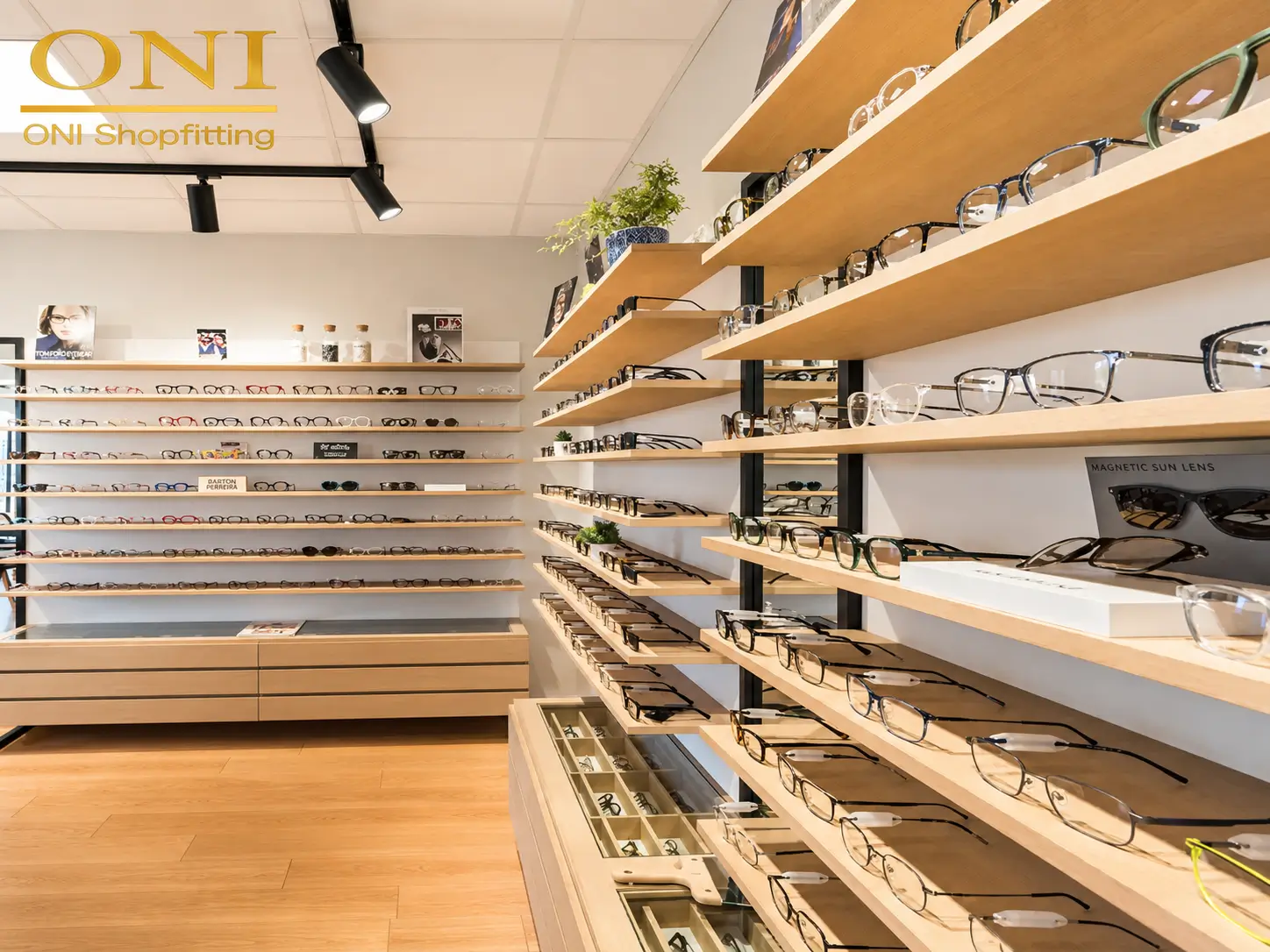
- Wall-mounted displays: Save floor space and create a clean, high-capacity eyewear wall with shelves, rods, mirrors, lighting, or locks.
- Freestanding displays: Ideal for aisles and promotional areas, offering flexible layouts and easy customer access from multiple sides.
- Lockable cabinets: Best for luxury or high-value eyewear, combining secure storage with clear product visibility.
- Countertop displays: Suitable for small collections, accessories, trial frames, and featured products at counters or consultation desks.
- Drawer-integrated displays: Provide convenient storage for extra frames, cases, accessories, and backup inventory.
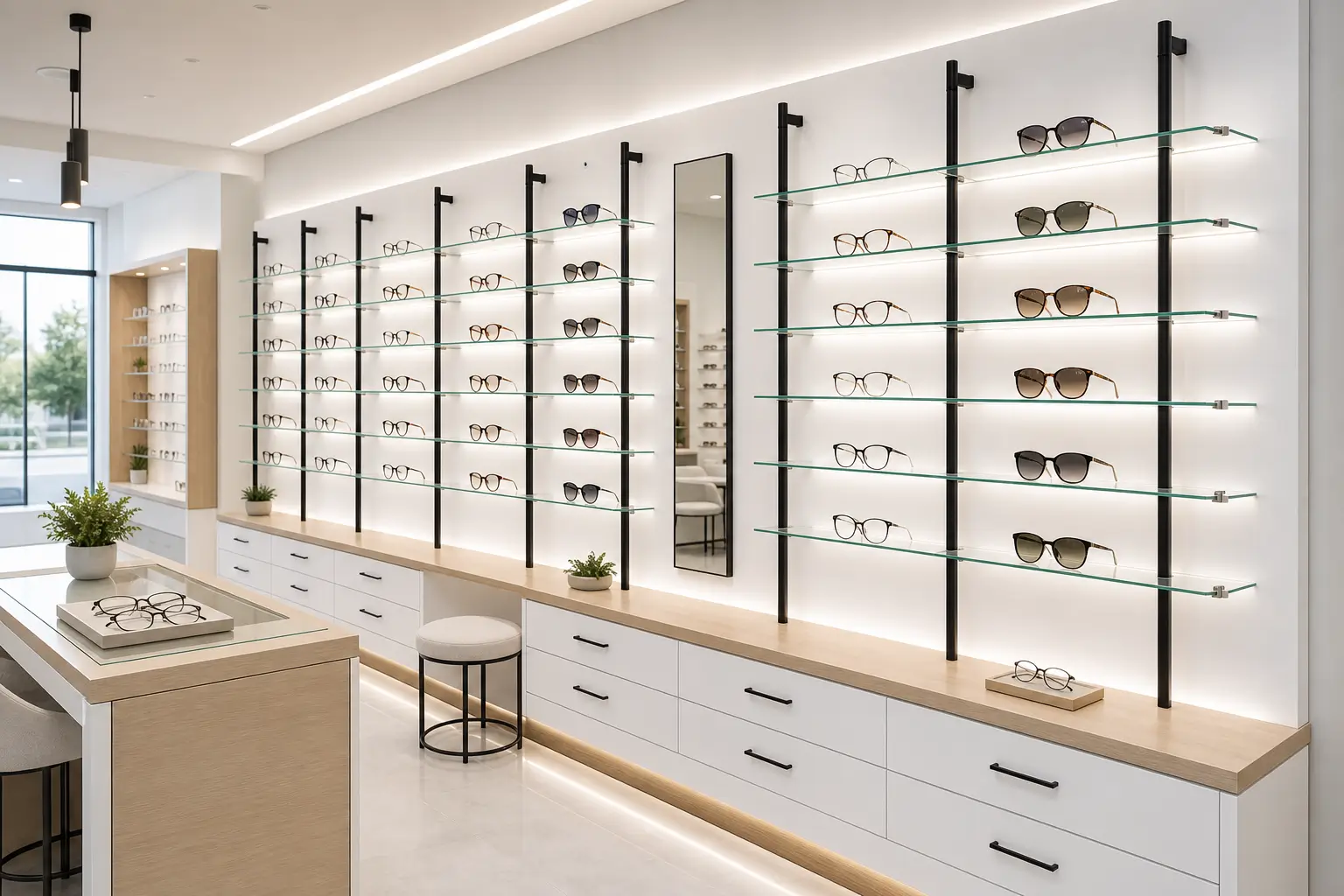
- Illuminated shelves: Use LED lighting to highlight frame designs, colors, materials, and key collections.
- Modular systems: Flexible and scalable for chain stores, franchises, and frequently updated product ranges.
- Mirror & consultation units: Help customers try on and compare frames while improving the in-store consultation experience.
How Many Frames Can an Optical Display Hold?
Frame capacity depends on fixture width, display method, spacing, product value, and how much visual breathing room the store wants. A high-density eyewear wall may hold many frames, but luxury optical stores often reduce capacity to create a calmer, more premium presentation. The right capacity should support both sales volume and brand positioning.
For prescription eyewear, buyers normally calculate capacity by linear display length, number of rods or shelves, and spacing between frames. Sunglasses may need more space because larger lenses and thicker temples can visually crowd the display. Children’s frames, sport eyewear, and accessories may require their own zones to avoid a mixed and confusing product story.
| Display Type | Typical Capacity | Best Application | Buying Note |
|---|---|---|---|
| Wall-mounted frame display | 60-180 frames per bay | Prescription eyewear walls | Confirm rod spacing, shelf depth, and lighting position. |
| Freestanding display stand | 40-120 frames | Mall stores and promotional zones | Check stability, base weight, and customer circulation. |
| Lockable glass cabinet | 20-80 frames | Luxury frames and sunglasses | Use tempered glass, secure locks, and controlled lighting. |
| Countertop display | 6-30 frames | Consultation desks and checkout areas | Keep the footprint compact and easy to clean. |
What Sizes Work Best for Optical Store Fixtures?
Fixture size should match store area, wall height, customer reach, and viewing distance. A tall optical wall can create strong brand impact, but the upper area should not become unusable display space. Frames placed too high are difficult to access, while displays placed too low may reduce perceived value and visibility.
For most eyewear stores, the most valuable selling zone is between comfortable hand reach and eye level. Lower sections can be used for drawers, stock storage, cabinets, or promotional bins, while upper sections can carry signage, illuminated branding, or hero products. This balance improves both merchandising and staff efficiency.
When preparing a store fixture RFQ, you should provide floor plans, ceiling height, wall elevations, expected frame quantity, aisle width, and any existing electrical points. These details help the manufacturer build optical store fixtures that fit the site instead of forcing the retailer to adjust operations around poorly sized furniture.
Which Materials and Finishes Are Best for Optical Frame Displays?
Optical displays often combine metal, MDF, plywood, glass, acrylic, mirror, stainless steel, laminate, lacquer, veneer, and LED components. The best material choice depends on budget, brand positioning, fixture lifespan, and the expected level of daily customer contact. Metal supports durability, glass improves visibility, acrylic keeps lightweight presentation flexible, and wood-based panels create warmer interior expression.
Finish selection is equally important because eyewear fixtures sit close to customers. Fingerprints, scratches, glare, dust, and cleaning frequency can affect the store’s appearance every day. Matte powder coating, HPL laminate, anti-fingerprint metal finishes, tempered glass, and durable lacquer are common choices for modern eyewear displays. If you are comparing material options, the acrylic eyewear display vs metal optical display guide can help clarify where each material performs best.
How Should Lighting Be Designed for Eyewear Displays?
Lighting should make frames easier to compare without creating glare on lenses. Optical displays usually need a combination of ambient store lighting, shelf lighting, vertical lighting, cabinet lighting, and task lighting near consultation areas. The goal is to show frame color, texture, lens tint, and brand details clearly while keeping customers comfortable.
For optical frame displays, warmer neutral lighting can make the retail environment feel more comfortable, while cooler lighting can support a clinical, modern, or technology-led brand image. The final specification should be tested with real frame samples because glossy black acetate, transparent frames, metal frames, and tinted sunglasses react differently under the same lighting.
How Much Storage Should Optical Display Fixtures Include?
Storage is one of the most underestimated parts of optical store fixture planning. Eyewear stores need space for extra frames, frame cases, cleaning cloths, lens samples, tools, packaging, promotional materials, and daily operating supplies. If storage is not integrated into the fixture system, staff often lose time moving between the sales floor and back room.
Drawer bases, lockable cabinets, hidden compartments, and under-counter storage help the store maintain a clean presentation while keeping products close to the selling zone. For high-traffic optical stores, fast restocking can directly affect sales because empty frame positions reduce choice and weaken the visual impact of the eyewear wall.
Good storage design should also support SKU organization. Drawers can be divided by brand, frame model, color, gender, collection, or price level. This makes it easier for staff to locate products during consultations and keeps the sales process smooth when customers want to compare several options.
How Easy Should Frames Be to Access, Try On, and Restock?
Eyewear is a hands-on product, so optical frame displays must support easy access and repeated try-on behavior. Customers need to remove frames smoothly, view themselves in mirrors, compare multiple styles, and return products without damaging the fixture. If the display feels difficult to use, customers may browse less and rely too heavily on staff assistance.
For self-service zones, open shelves, rods, and clear category signs improve browsing freedom. For premium or security-sensitive zones, lockable displays can still feel inviting if lighting, glass clarity, and staff access are well planned. The fixture should protect value without making the product feel unreachable.
Restocking access matters just as much as customer access. Staff should be able to replace frames quickly, clean shelves easily, adjust product groupings, and reach drawers without blocking the aisle. A display that looks good in drawings but slows down store operations will create hidden costs after opening.
What Factory Evidence Should B2B Buyers Check Before Ordering?
Before placing an order, you should check whether the supplier can provide clear drawings, material samples, prototype photos, production records, QC reports, packaging details, and export experience. Optical store fixtures often use different materials and require careful control of visible finishes, so you should look beyond price and pay close attention to the supplier’s actual production and quality control capabilities.
You can ask for shop drawings, sample approval records, welding and assembly photos, lighting tests, finish samples, inspection reports, packaging photos, and loading records. You can also review the supplier’s factory tour to better understand its production capacity. During quality inspection, you should check dimensions, structure, surface finish, hardware, lighting, electrical safety, glass installation, drawers, locks, packaging strength, and final quantities. ONI Display’s Quality Control page gives you a reference for the type of quality control process you should expect from a professional fixture manufacturer.
Summary
A reliable optical frame display system should balance product capacity, fixture size, material durability, lighting comfort, storage efficiency, customer access, customization, and factory evidence. For eyewear stores, the right display does more than hold frames; it shapes how customers browse, compare, try on, and buy optical products.
Frequently Asked Questions
How many frames can an optical wall display hold?
An optical wall display can commonly hold 60-180 frames per bay, depending on the bay width, rod spacing, shelf layout, frame size, and whether the store wants high-density merchandising or a more premium low-density presentation.
What should I include in an optical fixture RFQ?
Your RFQ should include floor plans, elevations, fixture quantities, frame capacity targets, material preferences, finish samples, lighting requirements, storage needs, logo details, destination country, packaging expectations, and the target installation schedule.
How do I evaluate an optical store fixtures manufacturer?
Evaluate the manufacturer by checking design support, shop drawings, material samples, production line capability, QC process, prototype evidence, packaging method, export experience, and whether the factory can support repeat orders for future store rollouts.
Planning a New Optical Retail Store? Talk to Us About Your Complete Shopfitting Project.
ONI Display works with optical retailers, designers, contractors, and shopfitting partners to deliver reliable and customized store fixture solutions. With 25 years of manufacturing experience and a 30,000-square-meter headquarters in Guangzhou, we provide support throughout the entire project, including design and engineering, material and finish selection, prototyping, quality control, packaging, and global delivery. For B2B buyers looking for consistent optical store fixtures, custom eyewear display cabinets, and scalable retail display systems, our complete service helps make the process smoother from RFQ to installation.
📞 WhatsApp / Call: +86 186 2096 3396
📧 Email: sales1@onishopfitting.com
🌐 Website: www.onidisplay.com
📍 Factory Location: Guangzhou, China