


Acrylic offers a clean, modern, and campaign-friendly appearance, while metal provides superior strength and long-term durability. Choosing the wrong material can result in scratches, weak support, higher replacement costs, and poor eyewear presentation that affects customer perception.
Acrylic eyewear displays are best suited for lightweight countertop stands, promotional campaigns, and flexible visual merchandising. Metal optical displays, on the other hand, are ideal for wall systems, high-traffic retail stores, and modular shopfitting projects that require strong load-bearing performance.
For most retailers, a hybrid solution works best, using metal for structural support and acrylic for replaceable display elements. Evaluating performance, cost, maintenance, and store application will help you choose the right display system.
What Is an Acrylic Eyewear Display?
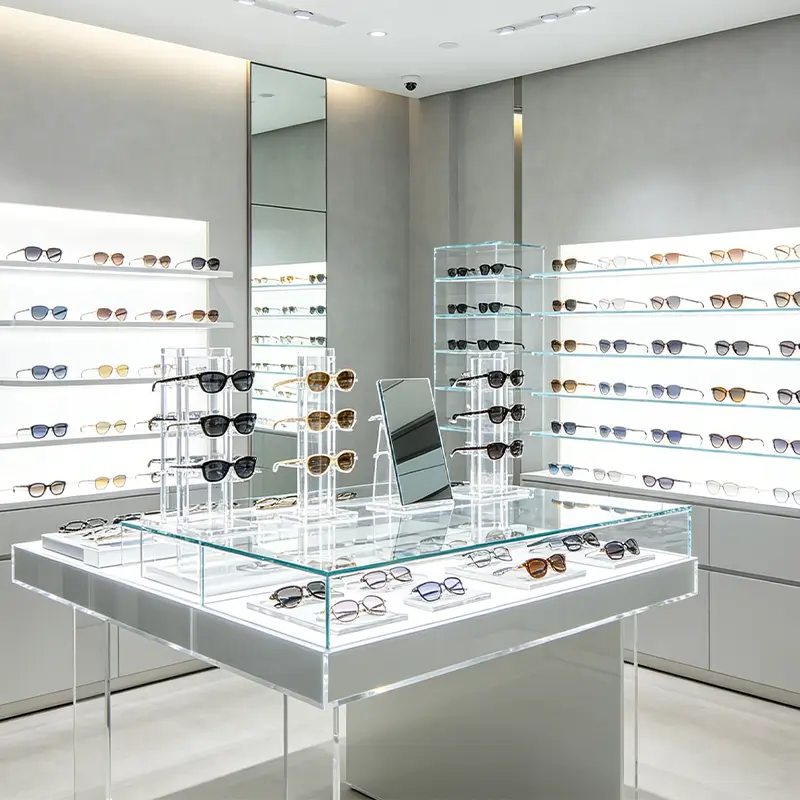
An acrylic eyewear display is a lightweight retail fixture made from clear, colored, frosted, printed, or formed acrylic. It is commonly used in optical stores, sunglasses shops, department store counters, pop-up stores, and promotional display areas.
Acrylic is popular because it keeps the focus on the eyewear. Clear acrylic creates a clean floating visual effect, allowing frames and sunglasses to stand out without heavy fixture distraction. For brands that sell fashion eyewear, designer sunglasses, or seasonal frame collections, this visual lightness can make the product feel more modern and accessible.
Acrylic is often used for:
- Countertop eyewear stands
- Sunglasses display holders
- Promotional campaign props
- Lightweight frame risers
- Logo display blocks
- Seasonal product displays
- Shop-in-shop eyewear counters
- New collection launch displays
For eyewear brands that frequently update campaigns, acrylic is especially useful. It can be laser-cut, polished, printed, bent, and customized into different shapes. ONI Display supports optical retailers with custom optical store fixtures and display systems that can combine acrylic, metal, glass, wood, and LED lighting.
Advantages of Acrylic Eyewear Displays
The biggest advantage of acrylic is flexibility. Retailers can move, replace, and rearrange acrylic displays much more easily than large metal structures. This makes acrylic valuable for stores that update merchandising frequently or run campaign-driven retail programs.
Acrylic eyewear displays are useful when retailers need:
- Fast product display updates
- Lightweight countertop presentation
- Clean and transparent product visibility
- Lower-cost display accessories
- Custom shapes for brand campaigns
- Short-term or seasonal merchandising
- Easy packing and replacement
For example, a sunglasses brand launching a summer collection may use colored acrylic blocks, transparent risers, and printed logo stands to create a bright campaign zone. After the campaign ends, those acrylic components can be replaced without changing the whole store fixture system.
Acrylic also works well for brands that want a modern, minimal, and visually light display style. When combined with LED lighting and clean wall shelving, acrylic can make a small optical area look more spacious and organized.
Limitations of Acrylic Eyewear Displays
Acrylic is attractive, but it is not the strongest material for long-term retail structures. It can scratch more easily than metal, especially in high-contact areas where customers touch products frequently.
Retailers should avoid using acrylic as the main material for:
- Heavy wall-mounted display systems
- Large freestanding optical racks
- High-traffic self-service zones
- Long-term modular store fixtures
- Heavy load-bearing shelves
- Areas requiring strong impact resistance
Acrylic should be cleaned carefully. Rough cloths, strong chemicals, or frequent friction may damage the surface. For premium optical stores, scratched acrylic can quickly reduce the perceived quality of the display.
In most retail projects, acrylic works best as a visual merchandising accessory rather than the main structural framework. Retailers can also review related material choices in ONI Display’s optical store fixtures materials guide.
What Are Metal Optical Displays?
Metal optical displays are eyewear fixtures made from steel, stainless steel, aluminum, or custom metal profiles. They are used for wall display systems, modular shelving, freestanding racks, frame holders, and long-term retail fixture structures.
Metal is commonly selected for:
- Chain optical stores
- High-traffic eyewear shops
- Wall-mounted optical display systems
- Freestanding sunglasses racks
- Modular fixture programs
- Premium metal-frame display designs
- Heavy-duty retail environments
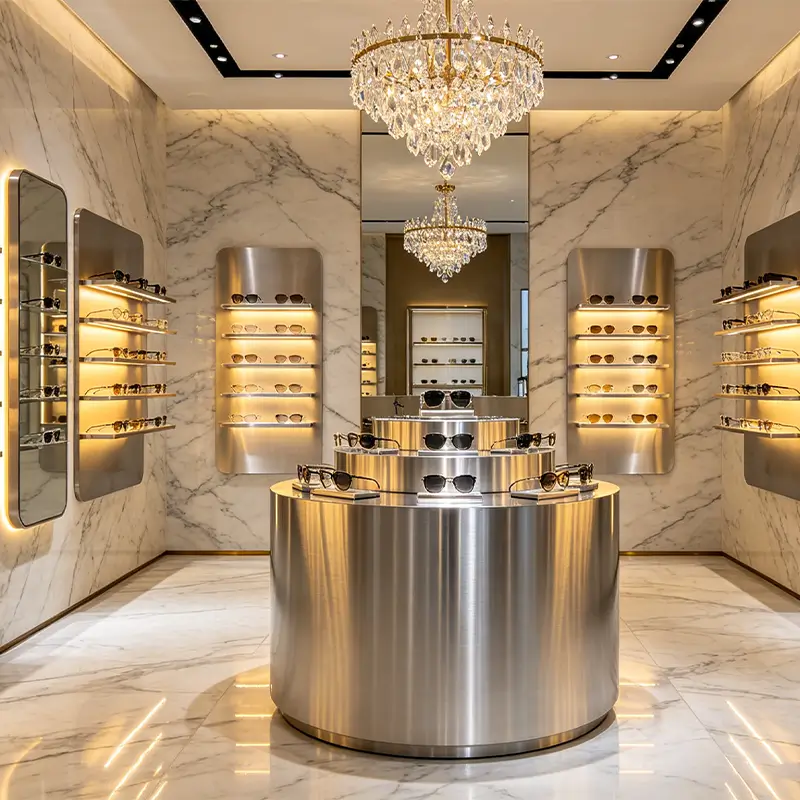
Metal can be powder-coated, brushed, polished, plated, or finished in custom colors. Black metal gives a modern fashion look. Stainless steel feels clean and professional. Champagne, brass, or gold-tone finishes can support luxury eyewear branding.
For inspiration, ONI Display’s industrial metal retail display racks show how metal structures can create durable retail presentation for commercial environments.
Advantages of Metal Optical Displays
Metal is stronger, more stable, and more durable than acrylic. It performs better when the display needs to support many eyewear frames, withstand frequent customer interaction, or remain in use for many years.
Metal optical displays are better for:
- Long-term store fixtures
- Strong load-bearing structures
- Wall-mounted eyewear systems
- Modular retail rollouts
- High-traffic shopping mall stores
- Chain store standardization
- Adjustable shelving and frame holders
- Integrated LED lighting structures
For multi-store optical brands, metal offers a major advantage: consistency. A modular metal display system can be produced repeatedly for different store locations, helping brands maintain the same image across regions.
Metal also provides better support for technical details such as hidden wiring, integrated lighting, adjustable brackets, security features, and reinforced wall connections. These details matter for retailers that need scalable, installation-ready store fixtures.
Limitations of Metal Optical Displays
Metal is durable, but it is not always the most flexible or cost-friendly option. Custom metal displays may require welding, polishing, powder coating, plating, and precise assembly, which can increase production cost.
Retailers should consider:
- Higher initial production cost
- Heavier shipping weight
- More complex installation planning
- Longer production time for custom finishes
- Possible cold or industrial visual feeling
- Need for accurate technical drawings
Metal can also feel too hard if used alone. In many optical stores, metal performs better when combined with wood panels, acrylic holders, glass shelves, mirror details, and warm LED lighting.
For fixture safety, storage, and installation planning, retailers can refer to external resources such as OSHA material handling standards and UL retail fixtures and commercial displays.
Acrylic vs Metal: Detailed Retail Comparison
Acrylic and metal serve different retail purposes. Acrylic is better for visual flexibility, while metal is better for structural reliability.
Choose acrylic when the store needs:
- Lightweight displays
- Promotional flexibility
- Lower-cost accessories
- Transparent product presentation
- Easy replacement
- Seasonal display updates
- Countertop eyewear organization
Choose metal when the store needs:
- Stronger structure
- Longer service life
- Higher load capacity
- Modular display systems
- Premium surface finishes
- High-traffic durability
- Consistent chain-store rollout
From a cost perspective, acrylic may reduce the cost of small display accessories. Metal may cost more at the beginning, but it can provide better long-term value when used for permanent fixtures.
Best Material Choice by Retail Store Type
For a boutique optical store, acrylic creates a clean, minimalist, and elegant presentation that enhances brand image, while metal accents add structural support and a premium finishing touch that elevates perceived value.
For chain optical stores, metal is typically the preferred choice for main wall systems and standardized rollouts due to its durability and consistency. Acrylic works well as a complementary material for interchangeable product holders, signage, and promotional displays that require frequent updates.
For sunglasses stores, acrylic enables vibrant, seasonal campaigns and eye-catching visual merchandising, while metal racks ensure strong support for high-volume product displays. ONI Display also offers custom sunglasses store fixtures, including coordinated display racks, wall cabinets, and full shopfitting solutions tailored to global eyewear brands.
For high-traffic eyewear retailers, metal should be used as the primary structural material to ensure long-term stability and safety. Acrylic is best reserved for low-impact areas where flexibility and visual appeal are more important than strength.
For pop-up eyewear shops, acrylic is often the more practical solution due to its lightweight nature, portability, and ease of installation, making it ideal for temporary retail environments and fast setup scenarios.
Additionally, when planning store layouts, retailers should consider accessibility standards such as the 2010 ADA Standards for Accessible Design to ensure proper aisle spacing, counter height, and smooth customer flow for an inclusive shopping experience.
Summary
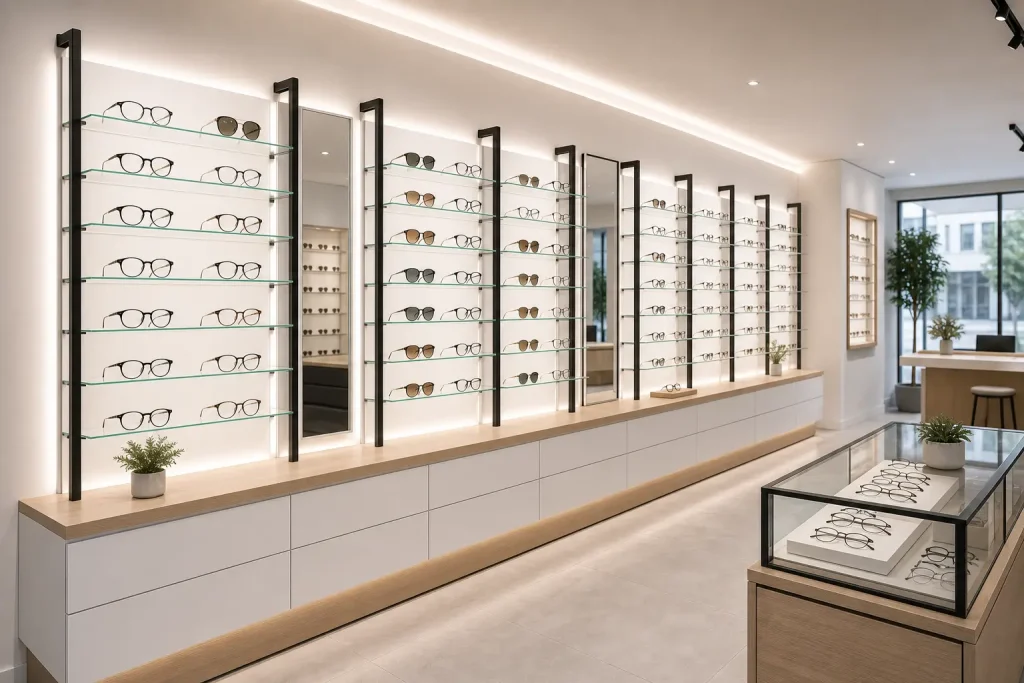
Acrylic brings flexibility to optical retail fixtures, making it ideal for creative displays, seasonal campaigns, and customized branding. Metal, on the other hand, provides greater structural strength, stability, and long-term durability.
For a more complete store solution, ONI Display also designs and manufactures eyewear display cabinets that integrate durable construction with brand-specific presentation. From material selection and color matching to lighting, storage, and logo applications, each cabinet can be customized to support a cohesive optical retail environment while enhancing the overall customer experience.