Optical display cabinets play an important role in optical retail environments by presenting eyeglasses, sunglasses, and optical products in an organized, secure, and visually appealing way. A well-designed display cabinet not only protects valuable products but also enhances brand presentation and improves the customer shopping experience.
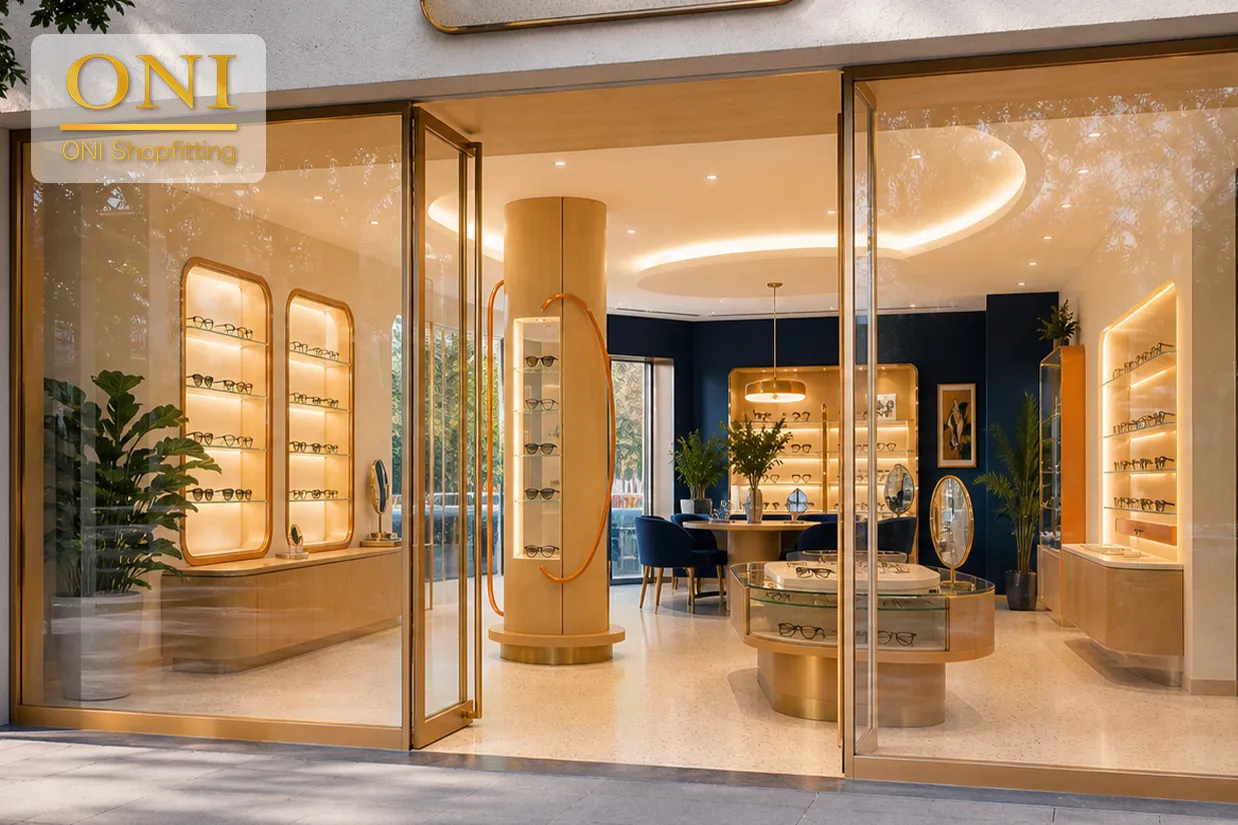
From small optical shops to large retail stores, display solutions can be customized based on store layout, product quantity, merchandising goals, and brand identity. Common options include wall-mounted cabinets, glass showcases, countertop displays, and integrated optical fixture systems with different configurations for product display and storage.
To choose the right optical display cabinet, retailers need to consider key factors such as cabinet size, material selection, lighting design, and storage functionality. Understanding these elements helps create a display solution that balances aesthetics, practicality, and retail performance.
What Are Optical Display Cabinets?
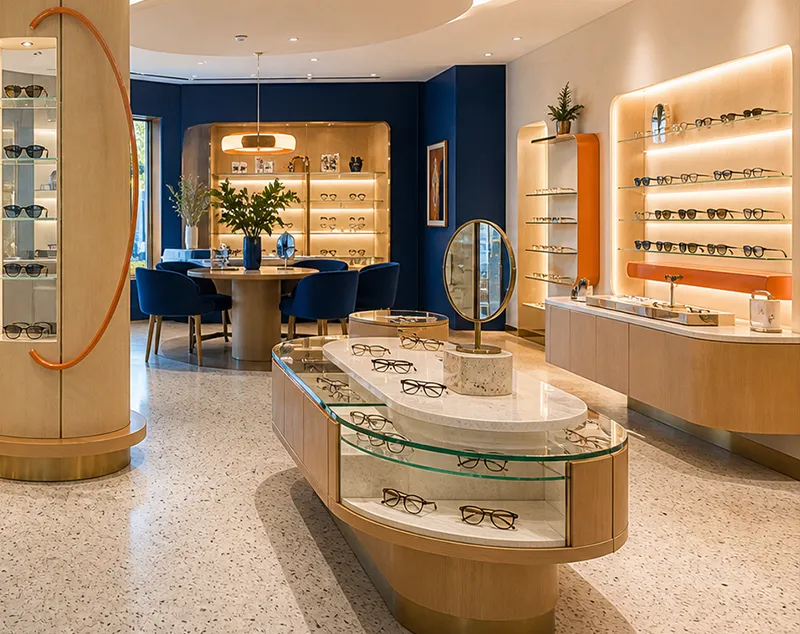
Optical display cabinets are essential fixtures used in eyewear stores to present products in an organized, attractive, and accessible way. Compared with standard retail shelving, optical cabinets are designed specifically for frames, sunglasses, and premium eyewear collections, requiring better visibility, protection, and space utilization.
A well-designed optical display cabinet helps retailers create a professional shopping environment by combining product display, storage management, and brand presentation. These fixtures can include adjustable shelves, LED lighting, glass sections, drawers, and customized branding elements based on different store requirements. ONI Display provides customized optical display cabinets, eyewear shelving systems, glass showcases, display counters, and complete optical store fixture solutions for independent retailers, optical brands, and commercial retail projects.
Optical Display Cabinet Sizes, Materials, Lighting and Storage Options
The size, structure, materials, and internal configuration of an optical display cabinet directly affect product presentation and store efficiency. Retailers usually select display solutions based on available space, product categories, inventory levels, and customer interaction requirements.
| Category | Common Options | Suitable For | Key Considerations |
|---|---|---|---|
| Cabinet Sizes | Wall cabinets: 1200-3000mm width; Counter displays: 600-1500mm width; Full-wall systems: Customized sizes | Optical shops, boutiques, chain stores | Select according to store layout, product quantity, and customer flow |
| Materials | MDF, plywood, wood veneer, metal, tempered glass, acrylic | Modern optical stores and premium eyewear retailers | Balance appearance, durability, maintenance, and budget |
| Lighting Options | LED strips, spotlights, backlighting, illuminated shelves | Luxury eyewear displays and featured collections | Ensure clear product visibility and comfortable viewing |
| Storage Options | Drawers, cabinets, hidden storage, lockable compartments | Stores requiring inventory control and product security | Improve staff efficiency and daily replenishment |
| Display Types | Wall-mounted cabinets, glass showcases, countertop units, island displays | Different retail environments | Match fixture style with store concept and merchandising goals |
Common Optical Display Cabinet Types
Optical stores require different display solutions depending on store size, product range, and customer experience goals. The following are the most common optical display cabinet types used in retail environments.
1. Wall-Mounted Optical Display Cabinets
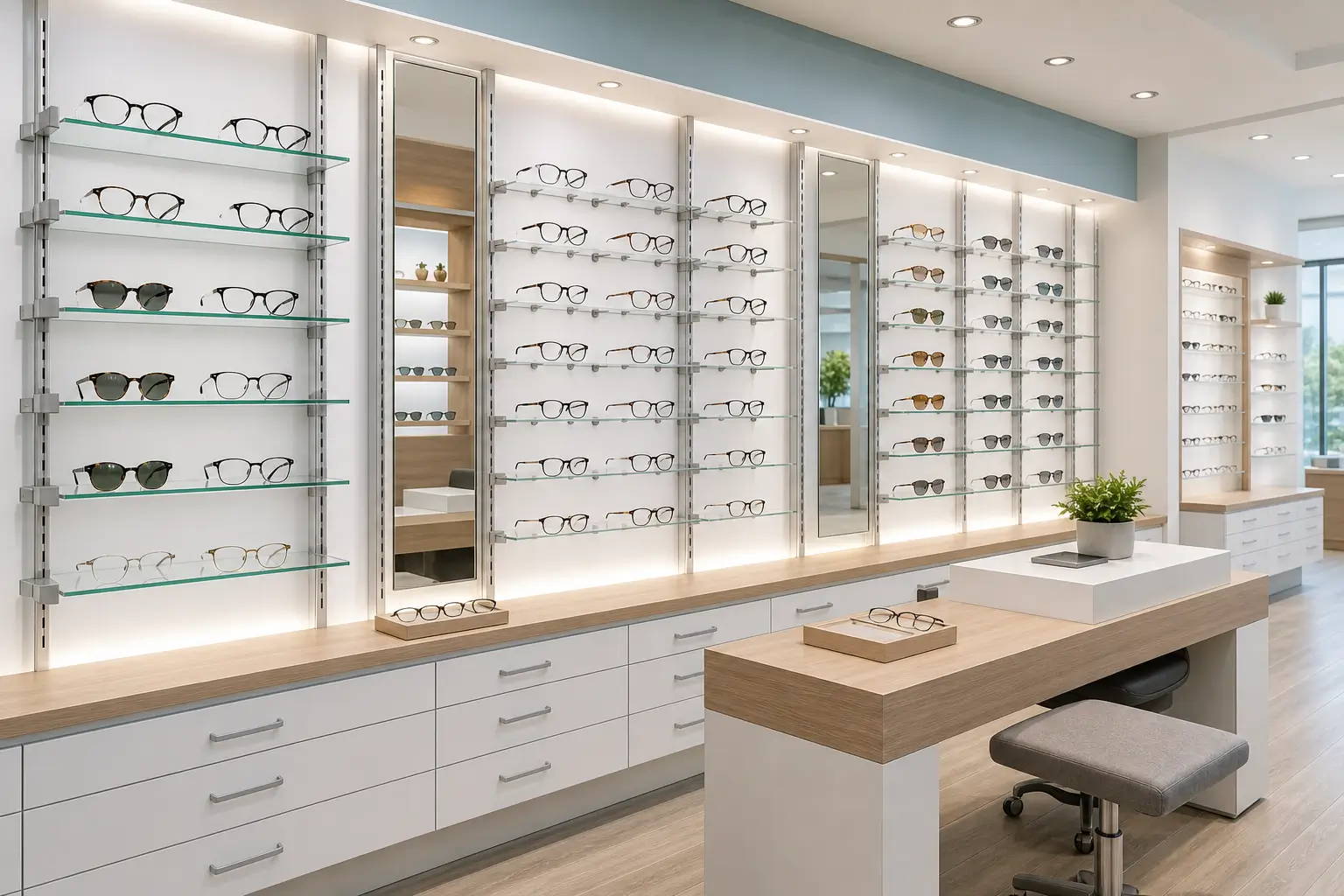
Wall-mounted optical display cabinets are one of the most popular solutions for eyewear stores because they maximize vertical space while keeping products highly visible. They are ideal for stores with limited floor space or large frame collections.
These cabinets can be customized with adjustable shelves, frame holders, LED lighting, branded back panels, and integrated storage sections. By using wall space efficiently, retailers can display more products while maintaining a clean and organized store layout.
2. Glass Optical Display Cabinets
Glass optical display cabinets are commonly used for premium eyewear collections, luxury frames, and high-value products that require additional protection. The transparent structure allows customers to view products clearly while maintaining a professional retail appearance.
Options include full glass showcases, lockable cabinets, glass shelves, and illuminated display sections. These cabinets are often placed near checkout counters or premium product zones to highlight featured collections.
3. Countertop Optical Display Cabinets
Countertop optical display cabinets are compact solutions designed for checkout areas, consultation desks, and promotional zones. They are suitable for showcasing new arrivals, special collections, accessories, and high-margin products.
Because of their smaller footprint, countertop displays work well for independent optical stores, boutiques, and retail spaces where additional product presentation is needed without occupying much floor area.
4. Freestanding Optical Display Cabinets
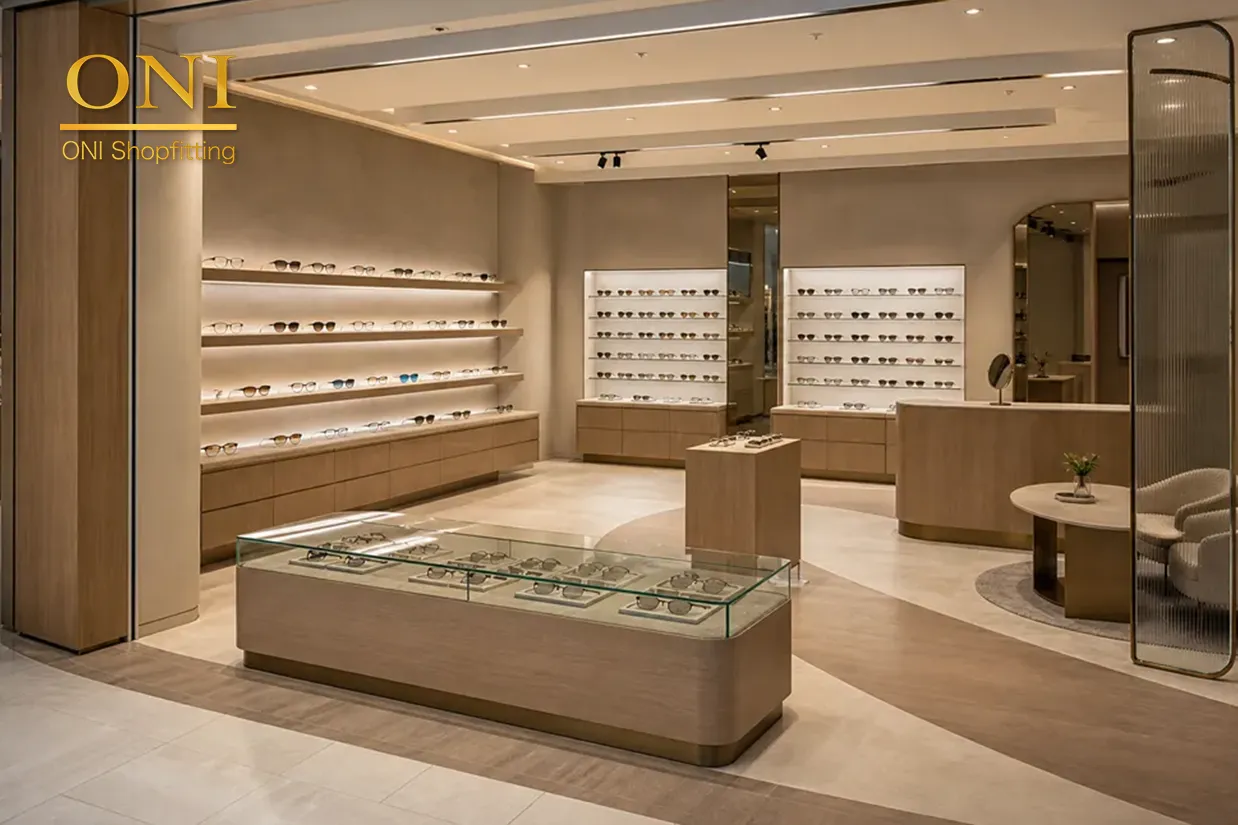
Freestanding optical display cabinets provide flexible merchandising options for larger optical stores and showroom environments. They can be positioned as standalone units, island displays, or part of a complete retail fixture system.
These cabinets allow retailers to create customer pathways, separate product categories, and develop more interactive shopping experiences.
Choosing the Right Materials for Optical Display Cabinets
The material selection of an optical display cabinet affects its appearance, durability, maintenance requirements, and overall store style. Different materials are often combined to achieve the right balance between aesthetics and functionality.
| Material | Features | Advantages | Common Applications |
|---|---|---|---|
| MDF / Plywood | Customizable panels with various finishes | Cost-effective, flexible designs, suitable for branding | Wall cabinets, counters, storage units |
| Wood Veneer | Natural premium appearance | Creates a warm and luxury retail atmosphere | Boutique optical stores, premium displays |
| Metal | Strong structural support and modern appearance | Durable, stable, suitable for modular systems | Frames, shelving structures, commercial fixtures |
| Tempered Glass | Transparent and elegant surface | Improves visibility and protects products | Glass showcases, premium cabinets |
| Acrylic | Lightweight and versatile material | Easy customization, clean appearance | Product holders, risers, accessories displays |
Optical Display Cabinet Lighting Options
Lighting is an important element in optical retail because eyewear products rely heavily on color, shape, material, and design details. Proper lighting helps customers evaluate products more easily while creating a premium shopping atmosphere.
Common lighting solutions include:
- LED Strip Lighting: Installed under shelves or inside cabinets to provide even illumination and improve product visibility.
- Spot Lighting: Used to highlight premium frames, new collections, or featured products.
- Backlighting: Added behind panels or logos to enhance brand presentation and create visual depth.
- Integrated Shelf Lighting: Combines display shelves and lighting systems for a cleaner retail appearance.
A professional lighting design should avoid excessive glare while ensuring that frame colors and details are displayed accurately.
Optical Display Cabinet Storage Options
Modern optical display cabinets are designed to combine product presentation with practical storage functions. Efficient storage helps staff manage inventory while keeping the customer-facing area clean and organized.
Common storage configurations include:
- Lockable Drawers: Protect valuable eyewear and provide secure inventory storage.
- Hidden Storage Compartments: Keep additional stock available without affecting the display appearance.
- Sliding Shelves: Improve accessibility and allow flexible product organization.
- Integrated Cabinets: Combine display areas with back-stock storage for better space utilization.
Custom storage solutions can be developed according to product quantity, staff workflow, and store operation requirements.
How to Choose the Right Optical Display Cabinet?
Selecting the right optical display cabinet requires considering both visual presentation and daily retail operations. Retailers should evaluate the following factors before choosing a fixture solution:
1. Store Size and Layout
Consider available wall length, floor space, customer traffic flow, and consultation areas. Smaller stores often benefit from wall-mounted cabinets, while larger stores can combine multiple display formats.
2. Product Quantity and Categories
Stores with large eyewear collections may need modular systems with adjustable shelves, while boutique stores may focus on premium showcases for selected products.
3. Brand Positioning
Luxury optical brands usually require premium materials, glass displays, and customized lighting, while practical retail stores may prioritize capacity and efficiency.
4. Customer Shopping Experience
Display height, product accessibility, lighting, and product spacing should create a comfortable browsing environment.
5. Future Expansion Needs
Retailers planning multiple locations should consider standardized fixture designs that can be reproduced while maintaining consistent brand identity.
6. Budget and Customization Requirements
Material selection, lighting systems, storage functions, and branding elements should match the project budget and long-term business goals.
In Conclusion
Choosing the right optical display cabinet requires balancing product presentation, store layout, material selection, lighting design, and storage functionality. A well-designed cabinet system not only improves eyewear visibility and customer experience but also helps retailers optimize space and daily operations.
FAQ
1. What size optical display cabinet is suitable for a small eyewear store?
Small optical stores typically use countertop displays or wall-mounted cabinets because they maximize product visibility while saving floor space. Custom dimensions can be adjusted according to available wall length and product quantity.
2. What materials are commonly used for optical display cabinets?
The most common materials include MDF, plywood, wood veneer, metal, tempered glass, and acrylic. The best choice depends on store style, durability requirements, budget, and branding needs.
3. Can optical display cabinets include lighting and storage?
Yes. Custom optical display cabinets can integrate LED lighting, drawers, lockable storage compartments, hidden stock areas, and branded elements to improve both presentation and daily store operations.
Start your optical retail fixture project with ONI Display and transform your store concept into a practical display solution.
 WhatsApp / Call: +86 186 2096 3396
 Email: sales1@onishopfitting.com
 Website: www.onidisplay.com
 Factory Location: Guangzhou, China