



Products inside retail display cabinets often fail to attract attention due to poor internal visibility. When items are not clearly seen, customers ignore them, leading to lost sales. Optimizing cabinet visibility structure solves this problem effectively.
To improve product visibility in retail display cabinets, retailers must optimize sightlines, lighting angles, shelf depth, product spacing, and background contrast. A structured internal design ensures products are visible from multiple angles, reducing visual blockage and increasing customer attention, engagement, and purchase intent. Each of these elements works together to eliminate common visibility barriers.
Let’s explore the Improve product visibility in retail display cabinets.
What Is Product Visibility Inside Retail Display Cabinets?
Product visibility inside retail display cabinets refers to how easily customers can detect, recognize, and mentally process products within a confined glass structure. It goes beyond simple visibility; it involves ensuring products are not just seen but also understood and remembered.
Unlike open shelving, cabinets introduce physical and optical limitations such as reflection, depth compression, and lighting constraints. Effective visibility requires controlling not only what is displayed, but how it is visually processed by the human eye. The goal is to achieve clarity across three levels: noticeability, readability, and memorability.
1. Eye-Level Engineering and Viewing Angle Optimization
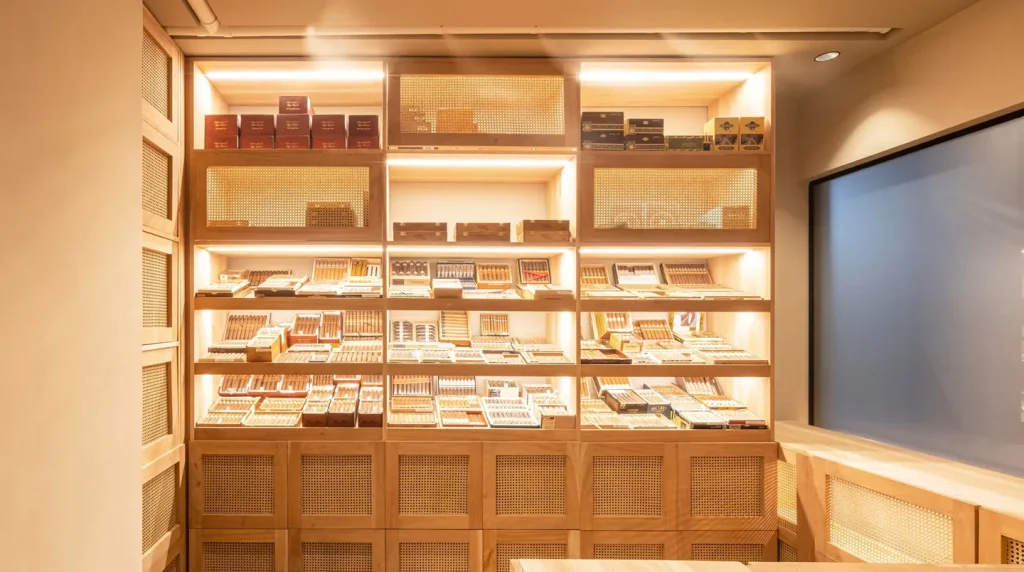
One of the most critical factors in cabinet visibility is eye-level alignment. This is the sweet spot where customer attention naturally concentrates, making it the most valuable real estate in any display cabinet. The optimal viewing height for most retail environments ranges between 1200mm and 1600mm. Products placed outside this range experience significantly lower engagement. Items above this height may be missed during quick scans, while those below require customers to bend down, which many are reluctant to do. Viewing angle also matters. A slight forward tilt or 30-degree presentation angle improves product surface visibility, especially for reflective or detailed items. Straight-on placement works well for branding elements, but angled positioning increases perceptual clarity by reducing glare and highlighting product textures.
2. Shelf Depth and Spatial Layer Control
Poor depth design is one of the main reasons rear products disappear visually. When shelves are too deep or flat, front items block the view of those behind, leaving valuable inventory unseen.
To improve visibility, shelf depth should be controlled so that rear items remain partially visible above front items. A stepped or tiered shelving system allows natural visual layering, creating a clear path for the eye to follow from front to back. Instead of flat alignment, staggered placement ensures uninterrupted sightlines. This prevents visual blocking, where front products completely obscure those behind them.
3. Advanced Internal Lighting Architecture
Lighting inside display cabinets should never rely on a single source. A single light can create harsh shadows, dark zones, or glare, all of which reduce product visibility.
A professional system uses three layers to ensure even, targeted illumination. Top lighting provides general brightness to the entire cabinet. Shelf-integrated LED strips highlight product details and edges. Bottom lighting adds depth by illuminating the lower section of the cabinet.
Beam angles between 15° and 45° should be selected based on product size and reflectivity. Narrow beams create focus for small, detailed items, while wider beams ensure even coverage for larger products. Proper lighting eliminates shadows, prevents dark zones, and ensures every product layer is clearly visible.
4. Controlling Product Density for Visual Clarity
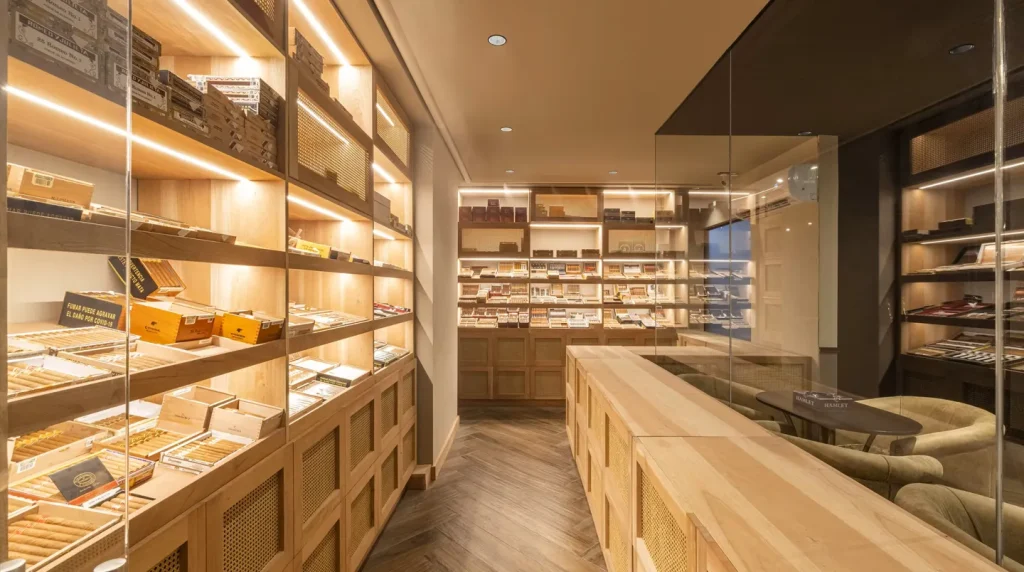
One of the most overlooked principles in retail cabinet design is density control. Overcrowding cabinets with too many products creates visual clutter, overwhelming customers and reducing attention to individual items. The optimal number of products per visual zone is typically 3 to 7 SKUs. Beyond this range, cognitive overload reduces attention efficiency. Customers struggle to focus on any single product, leading to missed sales opportunities.
Designing with “visual breathing space” allows each product to stand independently. This improves recognition speed and increases perceived product value. Giving products room to “breathe” makes them appear more premium and desirable.
5. Background System and Contrast Optimization
The cabinet’s background is a silent but powerful visibility driver. It acts as a canvas, framing products and making them stand out. A poorly chosen background can make even the most eye-catching products blend in.
High contrast between product and background increases recognition speed. Light products stand out better on darker matte surfaces, while darker products require lighter or neutral backgrounds. This contrast helps products “pop” and catch the customer’s eye quickly.
Glossy surfaces may introduce unwanted reflections, while matte finishes reduce distractions and improve focus. Controlled contrast enhances product edges and definition, making it easier for customers to perceive product shapes and details.
6. Glass Reflection and Optical Control
Glass is essential for protection and visibility, but it can also reduce clarity if not engineered correctly. Reflections from ambient light or overhead fixtures can obscure products, making them hard to see. However, low-iron glass can improves transparency by reducing greenish tint distortion. This type of glass provides a clearer view of products, ensuring their true colors and details are visible.
Anti-reflective (AR) coatings significantly reduce glare caused by lighting and ambient reflections. Additionally, lighting angles should be adjusted to avoid direct reflection toward the viewer. Proper optical alignment ensures that customers focus on the product instead of the glass surface.
7. Visual Flow and Attention Direction Design
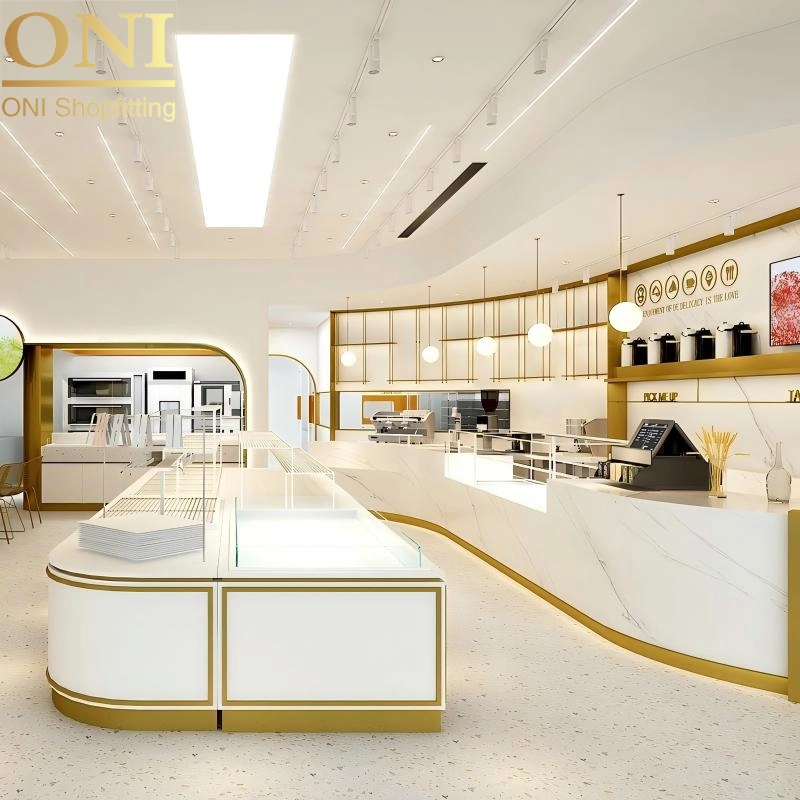
Effective cabinet design guides the customer’s eyes in a controlled sequence. It creates a path for attention, ensuring customers notice key products and engage with the display in a meaningful way.
Common visual flows include left to right scanning, top to bottom hierarchy, and center-out focal expansion. These flows align with natural human viewing habits, making the display intuitive to navigate. By positioning hero products at visual entry points, designers can control where attention begins and how it moves. This creates a structured viewing experience rather than random scanning, increasing the likelihood of customer engagement and purchase.
8. Custom Cabinets to Improve Visibility Performance
Custom display cabinets allow every detail to be precisely engineered for visibility. From optimized shelf spacing and layered structures to integrated lighting and carefully selected materials, each element is tailored to eliminate visual obstacles and ensure products are clearly seen from multiple angles within the cabinet.
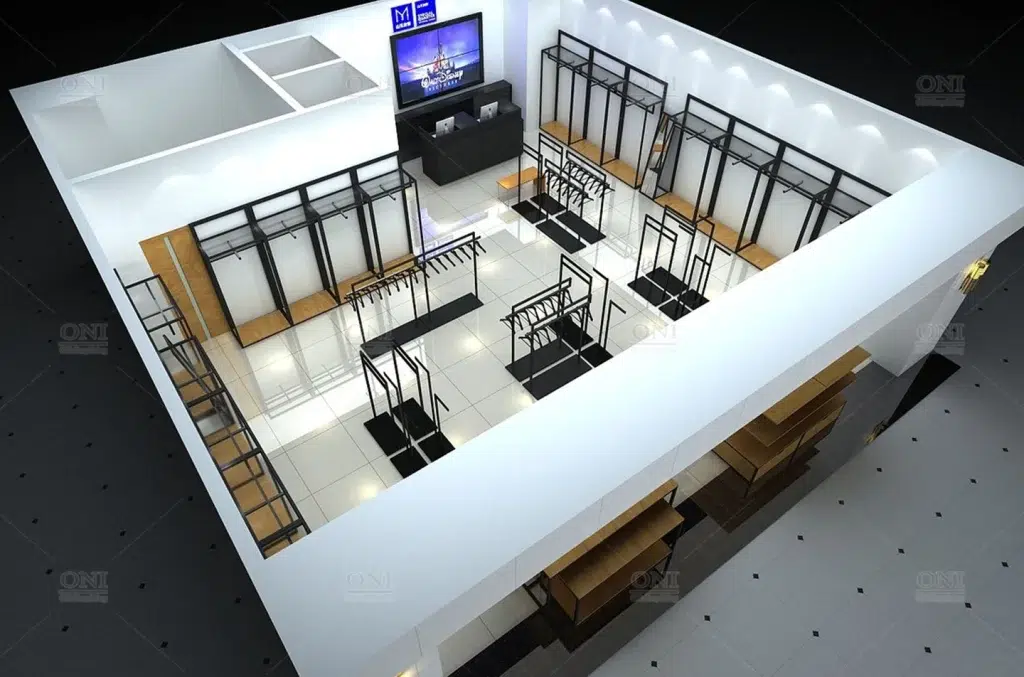
At ONI Display, we further enhance this process through advanced 3D rendering and VR perspective simulations, enabling clients to preview real viewing angles and in-cabinet visibility before production. By combining design, engineering, and immersive visualization, we deliver display solutions that maximize product exposure.
In Conclusion
Improving product visibility in retail display cabinets requires engineering-level control of sightlines, lighting, depth, and product density, ensuring every element works together to eliminate visual barriers and highlight merchandise effectively. A well-structured cabinet transforms each product into a clear focal point, naturally guiding customer attention, enhancing engagement, and ultimately driving sales.
FAQ
This is usually caused by poor depth design or lack of tiered shelving. Rear elevation is required for full visibility. Raising the rear of the shelf or using a tiered system ensures rear products are visible above front items.
👉 Get in touch with us today to start your project.
🌐 Website: www.onidisplay.com | www.onishopfitting.com