A kiosk is a compact retail or service space designed to support product display, sales, and customer interaction in high-traffic commercial locations. Commonly found in shopping malls, airports, supermarkets, department stores, and shopping centers, retail kiosks can combine display showcases, counters, shelving, storage, lighting, signage, and POS areas within a relatively small footprint.
For B2B buyers, however, choosing a kiosk involves much more than selecting an attractive design. Product type, display capacity, materials, fixture construction, storage, security, lighting, staff workflow, shipping, and installation can all affect daily operation, project cost, and the overall customer experience.
Understanding these factors before purchasing can help buyers compare different kiosk solutions and plan a more practical retail project. In this guide, we explain what a kiosk is, the main types of retail kiosks, commonly used materials, typical costs, and key buying considerations for commercial projects.
What is a Kiosk?
A kiosk is a small, purpose-built commercial unit used for selling products, displaying merchandise, providing services, or supporting promotional activities. Unlike a traditional retail store with permanent walls and a larger sales area, a kiosk usually operates in an open space and uses custom counters, glass showcases, shelving, storage cabinets, lighting, signage, and POS areas to create a complete retail environment within a limited footprint.
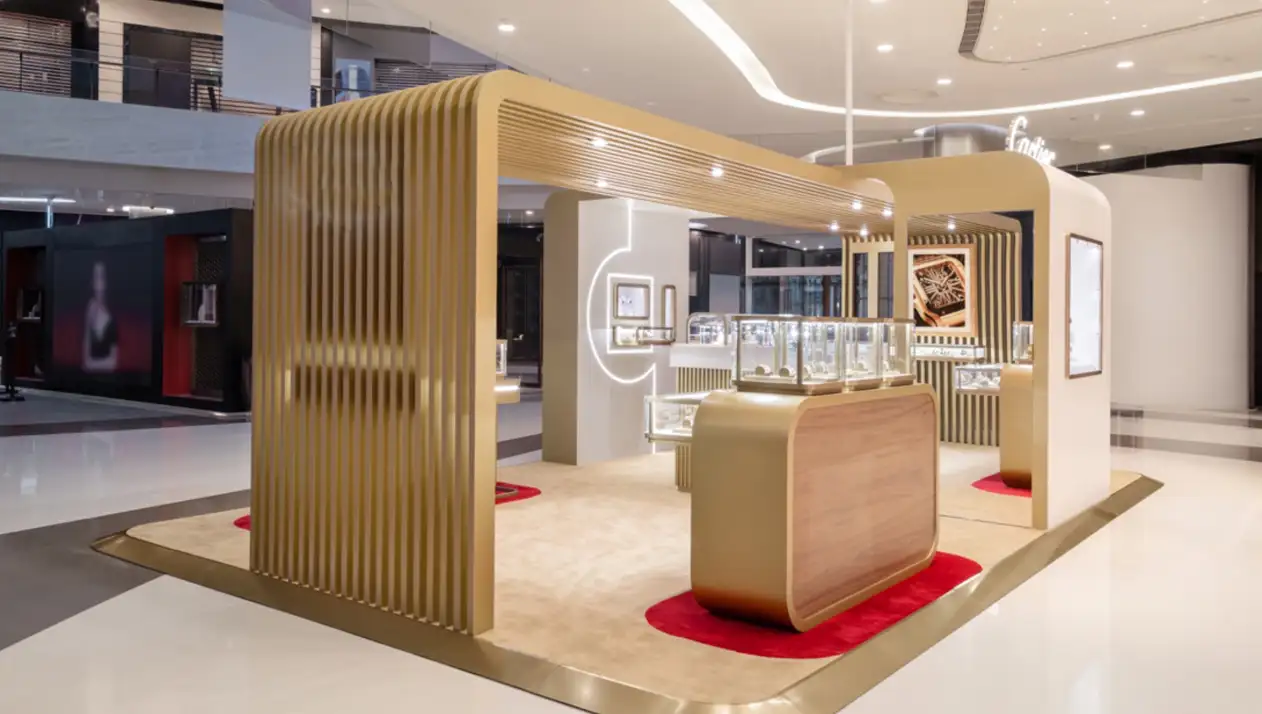
The fixture configuration usually depends on the products being sold and the daily operating needs of the business. Jewelry kiosks may use lockable glass showcases and illuminated counters, while optical, cosmetics, electronics, and accessory kiosks may combine open displays, shelves, drawers, mirrors, storage, and branded panels. For B2B buyers, a kiosk is therefore better understood as a customized retail fixture system that brings product display, security, storage, branding, and customer service together in one compact space.
What Types of Kiosks Are Used in Retail?
Different retail businesses require different kiosk layouts and display fixtures. The most suitable design depends on the merchandise, customer interaction, security needs, available space, and daily operating requirements.
| Kiosk Type | Common Products | Typical Display Fixtures | Main Requirements |
|---|---|---|---|
| Mall Retail Kiosk | Accessories, gifts, lifestyle products | Display counters, glass showcases, shelving, storage cabinets | Visibility, branding, storage, customer flow |
| Jewelry Kiosk | Jewelry, watches, luxury accessories | Lockable glass showcases, illuminated counters, drawers | Security, lighting, premium finishes |
| Optical Kiosk | Eyeglasses, sunglasses, accessories | Eyewear displays, display cabinets, mirrors, counters | Product visibility, lighting, storage |
| Cosmetics Kiosk | Makeup, skincare, perfume | Tester counters, illuminated displays, shelves, drawers | Easy cleaning, lighting, customer interaction |
| Electronics Kiosk | Phones, accessories, smart devices | Demo counters, glass cabinets, storage units | Security, cable management, electrical access |
| Pharmacy & Health Kiosk | Health, beauty and wellness products | Shelving, display cabinets, service counters | Organization, durability, accessible storage |
1. Mall Retail Kiosks
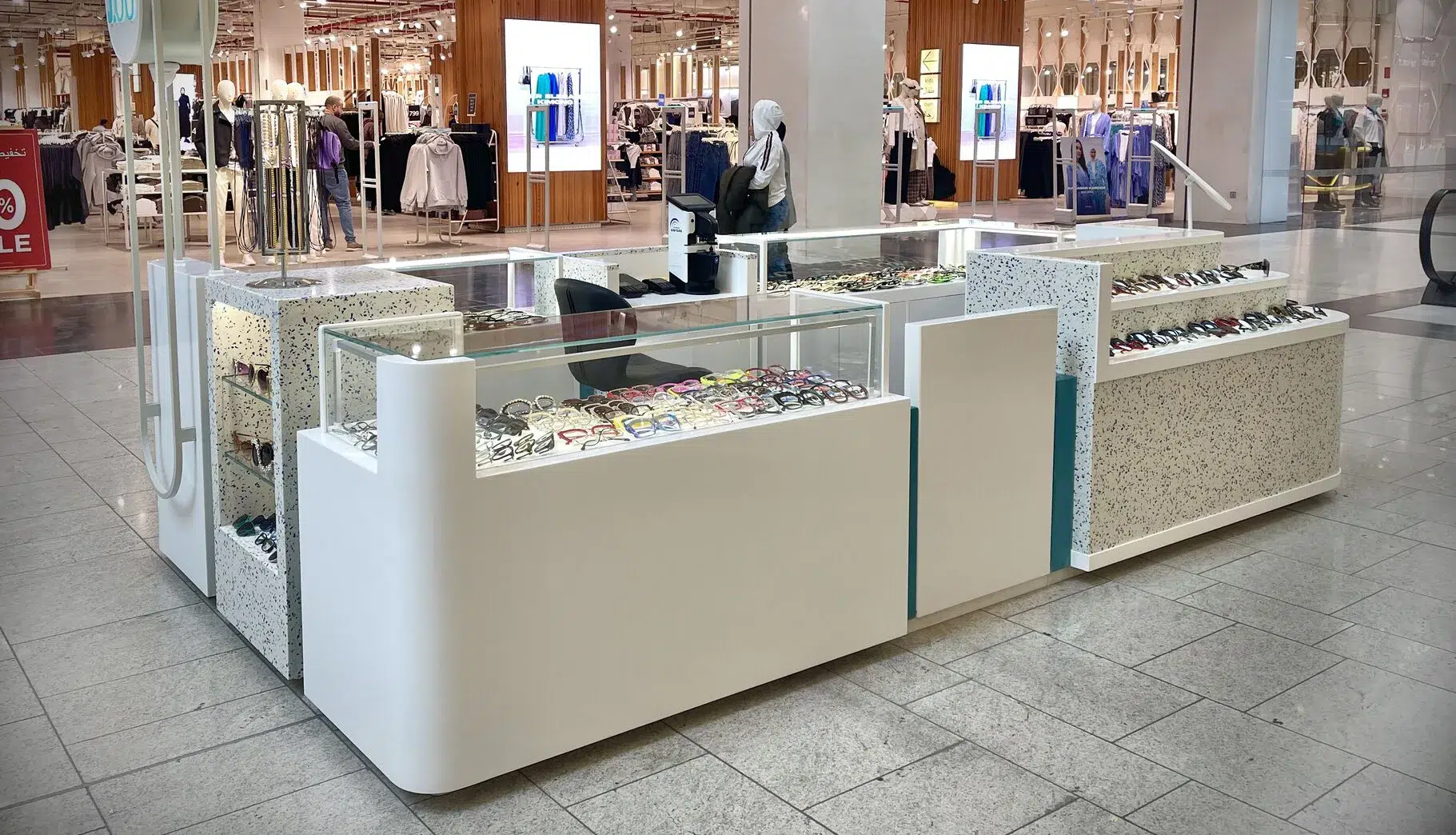
Mall retail kiosks are commonly installed in open circulation areas where customers can approach from several directions. Because there are usually no traditional storefront walls, the kiosk furniture itself becomes one of the most important elements of the brand presentation.
Custom showcases, counters, shelving, illuminated cabinets, and branded panels can help define the selling space and attract passing customers from different viewing angles. At the same time, sufficient storage should be planned for stock, packaging, POS equipment, and other daily supplies. A successful mall kiosk should therefore combine an open and attractive appearance with practical storage and an efficient working layout.
2. Jewelry Kiosks
Jewelry kiosks typically use a higher proportion of glass display showcases because valuable products need to remain visible while being protected from unauthorized access.
Common fixtures include lockable tempered-glass showcases, illuminated display counters, drawer cabinets, tower showcases, and concealed storage. Integrated LED lighting can help highlight rings, necklaces, watches, bracelets, and other small products.
Manufacturing quality is particularly important for jewelry fixtures because customers view the cabinets at close range. Glass joints, metal trims, drawer gaps, locks, handles, hinges, LED channels, and countertop edges should all be precisely fabricated and finished.
3. Optical Kiosks
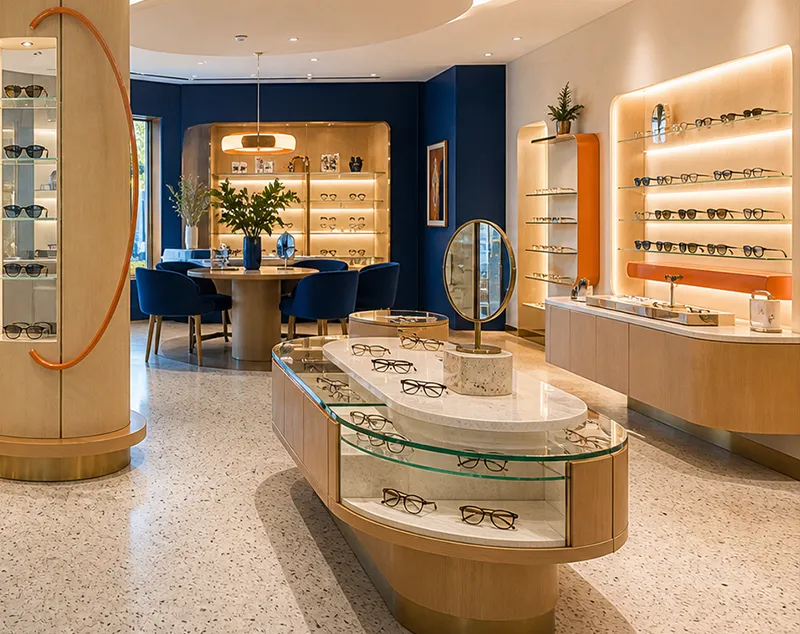
Optical kiosks are suitable for sunglasses, eyeglasses, reading glasses, eyewear accessories, seasonal collections, and compact optical retail concepts. Unlike jewelry kiosks, optical kiosks often combine open product displays with enclosed display cabinets. Frames should be easy for customers to browse and try on, while mirrors, illuminated shelving, service counters, drawers, and hidden stock storage support daily operations.
For optical brands operating multiple locations, consistent display fixtures are also important. Using the same materials, finishes, lighting details, showcase styles, and brand elements across kiosks and full-size stores can create a more consistent retail identity.
4. Cosmetics Kiosks
Cosmetics kiosks usually require both product display and customer interaction. Customers may want to pick up products, test samples, compare colors, or receive assistance from sales staff. Typical fixtures include tester counters, stepped displays, illuminated shelves, glass display cabinets, drawers, stock cabinets, mirrors, and branded lightboxes. Display surfaces should also be easy to clean because cosmetics fixtures are frequently touched during daily use.
Lighting can significantly influence how products and packaging appear. Integrated LED lighting inside shelves, display niches, showcases, and branding features can improve visibility and help create a more premium presentation.
5. Electronics Kiosks
Electronics kiosks are commonly used for mobile phones, headphones, chargers, smart devices, accessories, and other compact consumer electronics. The fixtures may include demonstration counters, lockable display cabinets, accessory shelving, drawers, storage units, and POS counters. Power outlets and cable management should be planned inside the furniture so that chargers, screens, and demo devices can be connected without creating a cluttered appearance.
Security is another important consideration. Higher-value electronics may require locking glass cabinets, secure drawers, concealed storage, or fixtures designed to accommodate additional security equipment.
6. Pharmacy and Health Kiosks
Pharmacy and health-related kiosks may display skincare, personal care products, wellness products, health accessories, and other retail merchandise permitted by local regulations. These kiosks usually require clear product organization, practical shelving, display cabinets, drawers, service counters, and accessible storage. Customers should be able to understand product categories quickly, while staff should be able to restock merchandise efficiently.
For this type of retail environment, durable and easy-to-maintain fixtures are often more important than overly complicated decoration. Commercial laminate, tempered glass, metal components, and well-designed display cabinetry can create a clean and professional appearance.
Which Materials Are Best for a Retail Kiosk?
Most custom retail kiosks use a combination of materials rather than a single material. The right selection depends on the required appearance, durability, product type, maintenance, budget, and shipping method.
| Material | Common Kiosk Applications | Main Advantages | Buying Considerations |
|---|---|---|---|
| Plywood | Main structures, cabinets, counters, storage | Strong, durable, good screw-holding ability | Thickness and grade should suit structural requirements |
| MDF | Decorative panels, painted cabinets, counters | Smooth surface, suitable for paint and lacquer | Better suited to controlled indoor environments |
| HPL / Laminate | Cabinet surfaces, countertops, high-touch areas | Durable, easy to clean, many finishes available | Practical for high-traffic retail environments |
| Tempered Glass | Display showcases, cabinet doors, shelves | Excellent product visibility, premium appearance | Glass thickness, edge finishing, and safety are important |
| Metal | Frames, trims, supports, decorative details | Strong, durable, modern appearance | Welding and powder-coating quality affect the final finish |
| Stainless Steel | Trims, countertops, work areas | Durable, clean, professional appearance | Usually increases fabrication cost |
| Acrylic | Logos, signage, product risers, dividers | Lightweight, customizable, suitable for branding | More easily scratched than glass |
| Veneer | Premium cabinet surfaces | Natural and high-end appearance | Requires careful finishing and maintenance |
| Lacquer | Branded counters, premium display cabinets | Smooth surface and customizable colors | Requires more production steps than laminate |
| Solid Surface | Countertops and premium surfaces | Seamless appearance, durable, customizable | Adds weight and fabrication cost |
| LED Lighting | Showcases, shelving, logos, display niches | Improves product visibility and presentation | Driver access and maintenance should be planned |
For many commercial kiosks, plywood or MDF is used to create the main cabinet structure, while laminate, lacquer, veneer, glass, metal, acrylic, or solid-surface materials are added according to the required appearance. The material combination should also match the merchandise. A jewelry showcase may combine cabinetry, tempered glass, metal trims, LED lighting, and secure locks. An optical display cabinet may use laminate, mirrors, acrylic branding, and integrated lighting. Cosmetics kiosks may require easy-to-clean surfaces, drawers, and illuminated shelves.
For international B2B projects, material selection should also take packing and transportation into account. Large glass showcases, metal structures, and heavy decorative surfaces can increase freight volume and weight, so the kiosk should be engineered with both appearance and logistics in mind.
How Much Does a Kiosk Cost?
The cost of a custom retail kiosk depends on its size, materials, structure, display requirements, and level of customization. A simple kiosk with laminate panels, open shelving, and standard storage will generally cost less than a premium unit with glass display showcases, lockable display cabinets, metal trims, integrated LED lighting, custom signage, and high-end finishes. For B2B buyers, the number and complexity of the display fixtures often have a major impact on the total project cost.
Materials and construction details also affect pricing. Tempered glass, stainless steel, lacquer, veneer, solid-surface countertops, curved showcases, custom hardware, and illuminated branding usually require more fabrication than standard rectangular cabinets. Kiosks for jewelry, optical, cosmetics, electronics, and other product-focused businesses may also require specialized display showcases, drawers, security locks, cable management, mirrors, or adjustable shelving.
Quantity, packing, shipping, and installation should also be considered when comparing quotations. A single custom kiosk includes design development and production setup, while larger rollouts can often use standardized modules and repeatable display cabinets.
What Should You Check Before Buying a Kiosk?
Before ordering a custom retail kiosk, B2B buyers should focus on the following key factors:
- Product Display Requirements: Start with the products you need to display. Jewelry may require lockable glass showcases, while eyewear, cosmetics, electronics, and accessories may work better with open shelving, illuminated displays, or a combination of open and enclosed display cabinets.
- Storage and Staff Workflow: A kiosk should provide enough hidden storage for inventory, packaging, POS equipment, and daily supplies. Drawers, under-counter cabinets, and lockable storage should be positioned so staff can work efficiently without affecting customer movement.
- Material and Finish Selection: Choose materials based on durability, appearance, maintenance, and budget. Common options include plywood, MDF, HPL, tempered glass, metal, acrylic, lacquer, veneer, and solid-surface materials.
- Lighting and Security: Integrated LED lighting can improve product visibility, especially for jewelry, eyewear, cosmetics, and premium merchandise. For higher-value products, consider lockable showcases, secure drawers, tempered glass, and concealed storage.
- Mall and Technical Requirements: Review the shopping center or landlord guidelines before production. Height limits, signage rules, electrical requirements, fire regulations, sightlines, and installation restrictions can all affect the final kiosk design.
- Manufacturer and Installation Capability: Choose a supplier that can manufacture the complete kiosk together with display showcases, display cabinets, counters, shelving, and storage fixtures. For international projects, also check whether the supplier can provide factory inspection, export packing, shipping support, and clear installation instructions.
In short, a good retail kiosk should balance product presentation, storage, durability, security, and ease of installation. For B2B buyers, working with an experienced retail fixture manufacturer also makes it easier to coordinate the kiosk structure, glass showcases, cabinets, counters, materials, finishes, and installation details within one project.
In Conclusion
A well-designed retail kiosk should balance product presentation, storage, durability, security, staff workflow, and installation. Choosing the right display showcases, cabinets, counters, shelving, and storage fixtures helps create a kiosk that looks professional and works efficiently in daily retail operations.
ONI Display provides custom kiosk and retail fixture solutions based on your layout, products, brand requirements, and project specifications. From design and material selection to manufacturing, packing, and delivery, we support complete kiosk projects. Send us your floor plan, dimensions, reference images, fixture requirements, quantity, and delivery destination for a customized proposal and quotation.
Frequently Asked Questions
1. What is the difference between a retail kiosk and a display showcase?
A retail kiosk is the complete compact selling space, while a display showcase is one of the fixtures used within the kiosk. A kiosk may include several glass showcases, display cabinets, counters, shelves, storage units, signage, and POS areas. For product-focused retailers, the design and quality of the showcases can have a major impact on both product presentation and daily operation.
2. Can a kiosk manufacturer also produce custom display cabinets?
Yes. For B2B retail projects, using the same manufacturer for both the kiosk and its display fixtures can make the project easier to coordinate. ONI Display manufactures custom kiosks together with glass display showcases, retail cabinets, counters, shelving, and storage units so that dimensions, materials, finishes, and installation details can remain consistent.
3. What information is needed to get a kiosk quotation?
For an initial quotation, provide the available dimensions or floor plan, product category, preferred style, reference images, required display showcases or cabinets, material preferences, quantity, delivery destination, and target opening date. Mall guidelines or existing technical drawings can also help the manufacturer prepare a more accurate proposal.
 Contact us today to start your custom display fixtures project.
 WhatsApp/Call: +86 186 2096 3396
 Email: sales1@onishopfitting.com
 Website: www.onidisplay.com
 Factory Location: Guangzhou, China
 Check out our social media case studies:Guangzhou ONI Shopfitting Limited