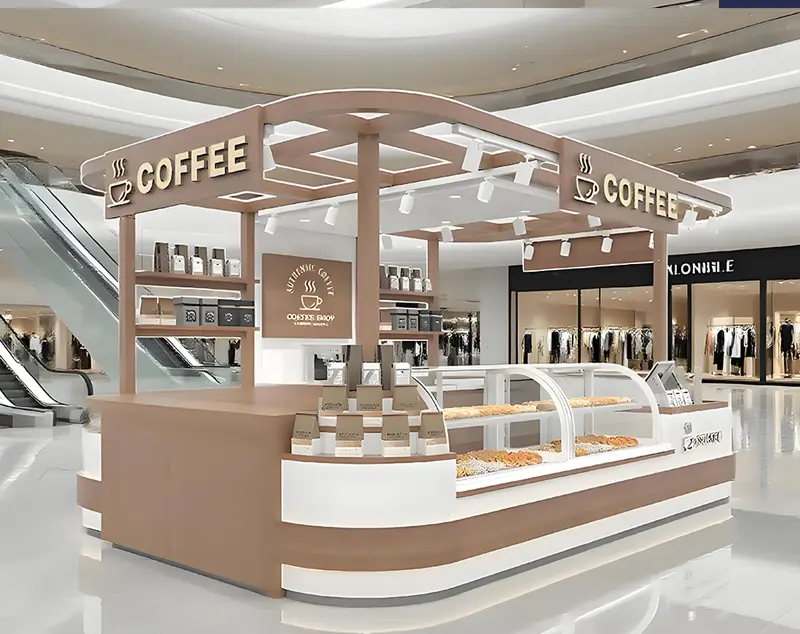
A coffee kiosk is a compact retail space that brings together ordering, drink preparation, storage, pickup and branding within a limited area. A well-planned kiosk should prioritize equipment placement, staff workflow and service efficiency instead of focusing only on visual design.
Before production begins, key details such as kiosk dimensions, equipment layout, water and electrical connections, storage needs and fixture materials should be clearly defined. This guide covers the main considerations for planning and manufacturing a custom coffee kiosk.
What Size Should a Coffee Kiosk Be?
There is no single standard coffee kiosk size because each project has different operating needs. The right footprint should be determined by the menu, number of staff, equipment list, storage requirements, expected customer volume and site limitations. The table below provides general planning ranges for several common coffee kiosk types.
| Coffee Kiosk Type | Typical Planning Footprint* | Typical Staffing | Suitable For | Main Fixture Requirements |
|---|---|---|---|---|
| Compact takeaway kiosk | 4-7.5 m² | 1-2 | Espresso, bottled drinks, simple takeaway menu | Front counter, espresso bench, under-counter storage |
| Standard mall coffee kiosk | 8-12 m² | 2-3 | Espresso, cold drinks, pastry and snacks | POS, coffee station, refrigeration, display, storage |
| High-volume coffee kiosk | 12-20 m² | 3-4 | Larger menus and high customer flow | Multiple work zones, larger storage and pickup counter |
| Premium island kiosk | 15-25+ m² | 3-5 | Shopping malls, airports and branded concepts | Full perimeter counters, signage, display and equipment integration |
When choosing the final size, the goal is to create enough working space around espresso machines, refrigerators, sinks, cabinets and staff circulation without wasting valuable floor area. A kiosk that is too small can create workflow conflicts, while an oversized design may increase fixture, rental and installation costs without improving efficiency.
Retails should also consider the coffee kiosk layout, staff movement, queue direction, pickup area, storage capacity and maintenance access. Final dimensions should be verified against landlord requirements and local food-service, accessibility, electrical, plumbing and fire-safety regulations before production begins.
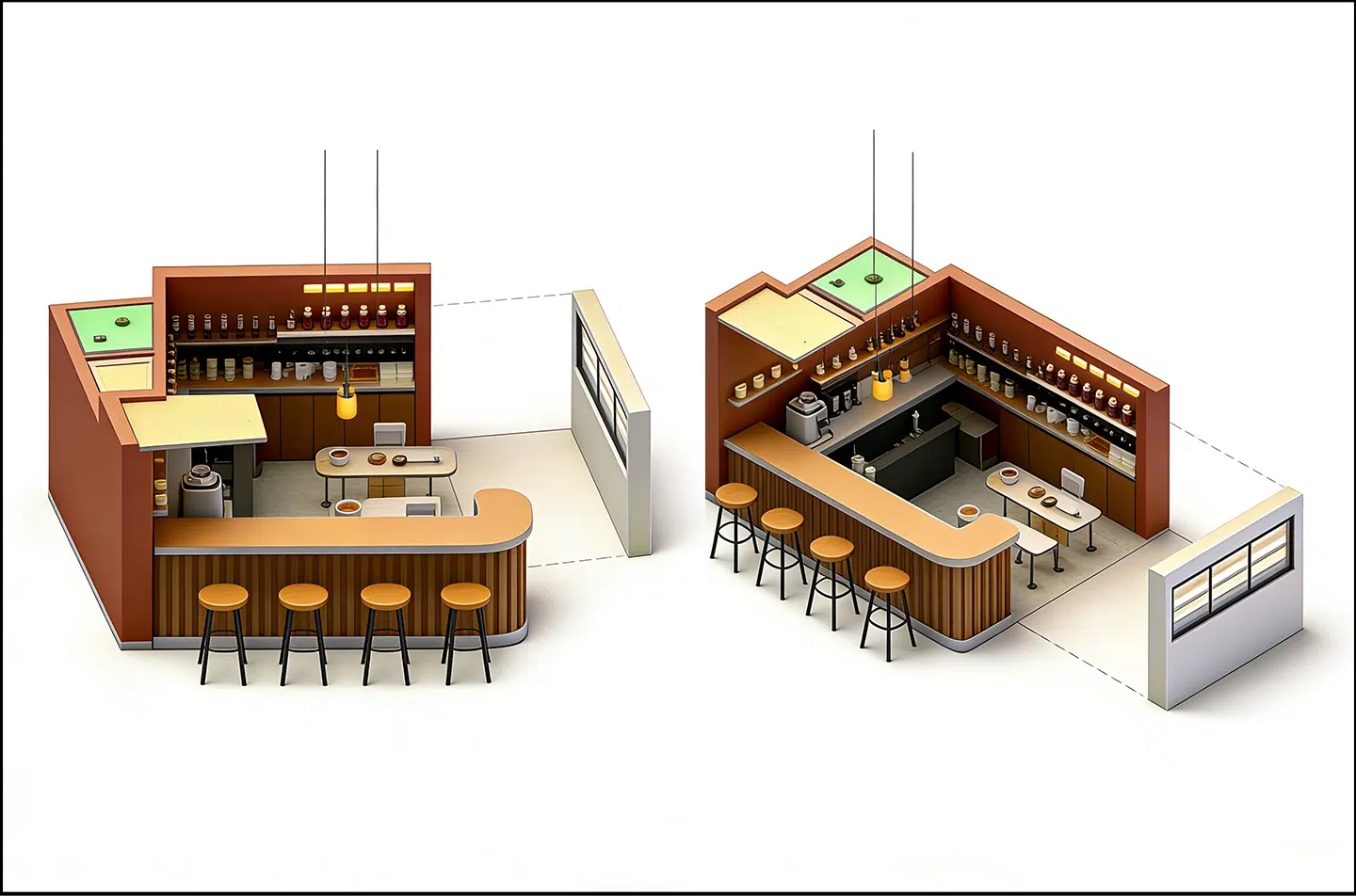
How Should a Coffee Kiosk Layout Be Divided Into Equipment Zones?
A practical coffee kiosk layout should follow the natural order workflow: Order – Payment – Coffee Preparation – Drink Finishing – Pickup
Dividing the kiosk into functional zones helps reduce unnecessary staff movement while keeping coffee kiosk equipment, storage and customer circulation organized.
1. Order and POS Zone
This customer-facing area typically includes the POS terminal, receipt printer, menu display and storage for cups, lids, bags or napkins. The ordering point should be easy to identify, and in higher-volume kiosks, separating the order and pickup areas can help reduce congestion.
2. Espresso and Grinder Zone
This zone usually contains the espresso machine, grinders, knock box and related coffee preparation accessories. Equipment models should ideally be confirmed before production drawings are finalized because machine dimensions, ventilation, water supply, drainage and electrical requirements directly affect the coffee kiosk counter and cabinet design.
3. Cold Drink and Preparation Zone
This area may include under-counter refrigeration, an ice maker, blender, milk storage, syrups and other beverage ingredients. Frequently used equipment and ingredients should stay within easy reach so employees can prepare drinks efficiently without repeatedly moving across the kiosk.
4. Washing and Water Zone
Depending on the menu and local requirements, this zone may include a hand-washing sink, utility sink, water filtration system or dishwasher. Water inlet, drainage and maintenance access should be coordinated early because they can affect cabinet dimensions and the overall equipment layout.
5. Pickup Zone
The pickup area provides a clear location for finished drinks and may also include lids, napkins, straws and condiments. For busy locations, a dedicated pickup counter helps keep customers collecting drinks away from the ordering area.
6. Storage Zone
Storage is usually integrated under counters, inside base cabinets or vertically where space allows. Daily-use items should be located close to the preparation area, while reserve stock and less frequently used supplies can be placed in deeper or taller cabinets.
How Much Storage Does a Coffee Kiosk Need?
Coffee kiosk storage should be planned according to daily consumption, menu complexity and delivery frequency. A kiosk receiving stock once per week will generally need more reserve storage than one receiving daily deliveries.
Frequently used items such as cups, lids, coffee beans, syrups and napkins should remain close to the working area. Backup stock, packaging and cleaning materials can be stored in enclosed cabinets or taller storage units.
For a small coffee kiosk, under-counter drawers, adjustable shelving and vertical cabinets are especially useful. Storage should be calculated during the coffee kiosk layout stage rather than added after the visual design is complete.
Which Materials Are Best for Coffee Kiosk Counters and Cabinets?
Material selection for coffee kiosk fixtures should consider appearance, moisture resistance, cleaning frequency, structural requirements, maintenance, transportation and budget.
| Material / Finish | Recommended Application | Main Advantages | Considerations |
|---|---|---|---|
| HPL / laminate | Cabinet faces, front counters and side panels | Durable, easy to maintain, many finish options | Edges require proper finishing |
| Commercial plywood | Cabinet carcasses and structural joinery | Strong with good screw-holding performance | Requires a suitable surface finish |
| MDF | Painted decorative panels | Smooth surface and flexible shaping | Requires moisture protection |
| Powder-coated metal | Frames, trims and shelving | Strong and modern appearance | Welding and coating quality are important |
| Stainless steel | Wet zones and preparation areas | Durable and easy to clean | More functional appearance |
| Solid surface | Customer-facing and preparation countertops | Seamless and premium appearance | Higher fabrication cost |
| Engineered stone | Premium countertops | Durable and high-end appearance | Heavy and requires stronger structural support |
| Tempered glass | Display areas and screens | Good visibility and clean presentation | Requires careful detailing and packing |
| Acrylic | Signage and decorative features | Lightweight and customizable | Can scratch in high-contact areas |
A typical coffee kiosk design often combines several materials rather than using one material throughout. For example, a kiosk may use a powder-coated metal frame, plywood cabinetry, laminate exterior panels, solid-surface countertops and illuminated acrylic signage.
The best combination depends on how each part of the kiosk is used. Wet areas require moisture-resistant materials, customer-facing surfaces need durable finishes, and branded areas may require decorative materials that support the overall visual identity.
What Determines the Cost of a Custom Coffee Kiosk?
The cost of a custom coffee kiosk depends on more than the overall footprint. Two kiosks with the same size can have very different prices because of differences in materials, construction details, signage and equipment integration.
| Cost Category | Examples | Usually Included in Fixture Quote? |
|---|---|---|
| Custom cabinetry | Base cabinets, drawers, doors and storage | Yes |
| Countertops | Laminate, solid surface, stainless steel or stone | Usually |
| Metalwork | Frames, trims and structural components | Usually |
| Glass and acrylic | Display panels and decorative features | Usually |
| Signage | Logos, light boxes and illuminated letters | Depends on scope |
| Lighting | Integrated fixture lighting | Depends on scope |
| Coffee equipment | Espresso machine, grinder and blender | Usually separate |
| Refrigeration | Under-counter or display refrigerator | Usually separate |
| Plumbing | Site pipework and final connection | Usually separate |
| Electrical work | Site cabling and final connection | Usually separate |
| Freight | International or domestic shipping | Usually separate |
| Installation | Site assembly and installation | Depends on project |
The final quotation is mainly affected by kiosk dimensions, material specifications, metalwork, countertops, signage, lighting, hardware, packaging method, order quantity and shipping destination. For accurate supplier comparisons, retails should ask different coffee kiosk manufacturers to quote against the same drawings, materials and project scope.
How Is a Custom Coffee Kiosk Manufactured?
Once the coffee kiosk layout, equipment schedule, materials and visual design are approved, the project moves into technical development and manufacturing. Each stage should connect design intent with actual production requirements, ensuring that dimensions, materials, equipment openings and fixture details are accurately translated into the final kiosk. The table below outlines the main stages involved in custom coffee kiosk manufacturing.
| Stage | Main Work | Why It Matters |
|---|---|---|
| Layout Review | Confirm kiosk dimensions, customer flow, staff workflow, equipment and storage | Helps prevent operational conflicts before detailed design |
| 3D Design | Develop the coffee kiosk design, branding, finishes and equipment positions | Allows buyers to review the overall concept |
| Production Drawings | Define dimensions, cabinet construction, metalwork, hardware and equipment openings | Converts the concept into manufacturable details |
| Material Confirmation | Confirm laminate, paint, metal, stone, acrylic and other finishes | Helps maintain finish consistency during production |
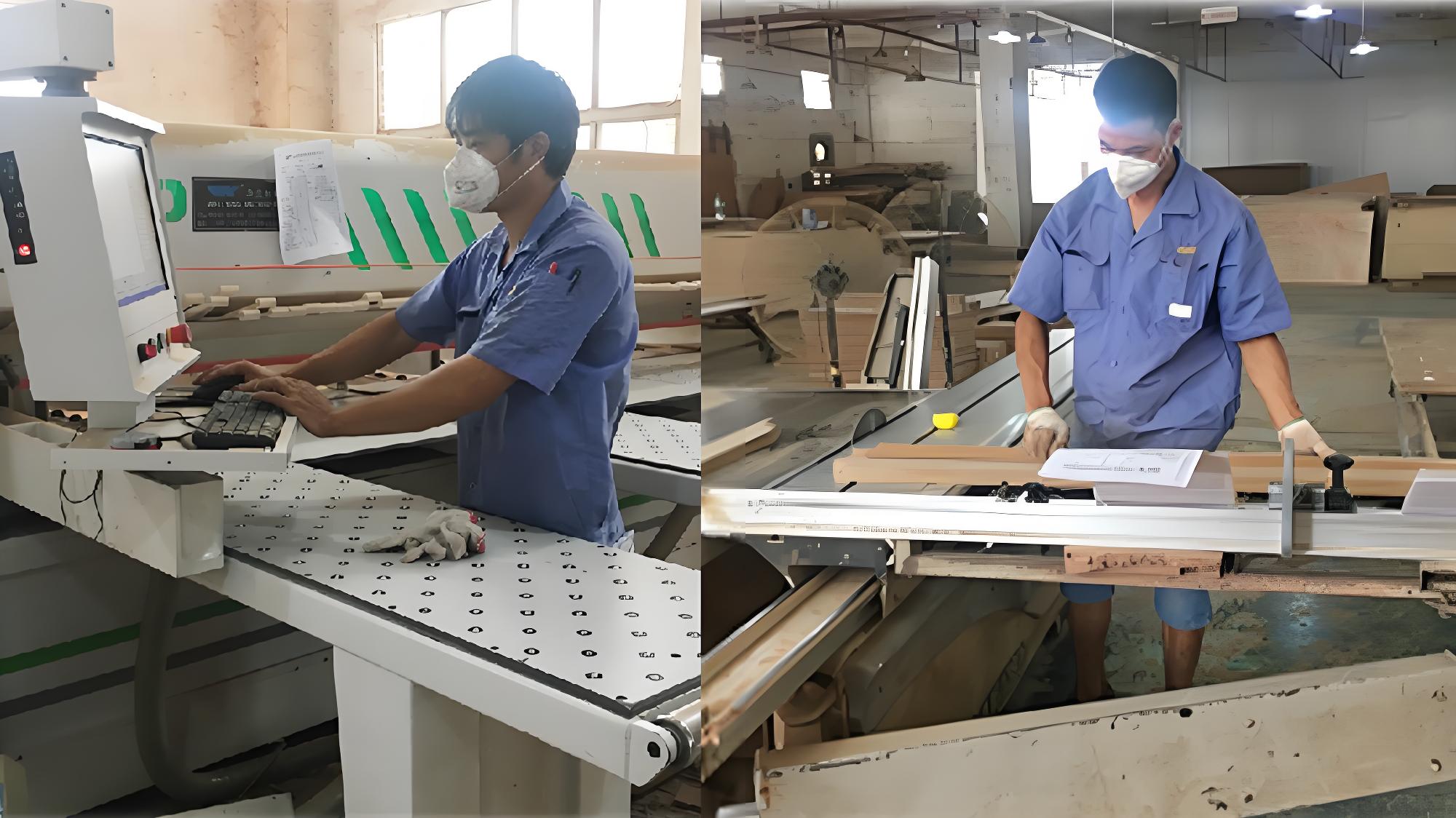
| Wood & Metal Fabrication | Produce counters, cabinets, frames, trims, panels and structural components | Creates the main fixture structure |
| Surface & Signage Production | Apply paint, powder coating, countertops, graphics, logos and lighting | Completes the branded and customer-facing elements |
| Trial Assembly & QC | Check dimensions, alignment, hardware, finish, lighting and component completeness | Helps identify issues before shipment |
| Packing & Delivery | Protect, label and pack components for transportation | Reduces shipping damage and simplifies installation |
A well-organized manufacturing process helps keep all coffee kiosk fixtures consistent in size, finish and function. Typical fixtures may include service counters, POS counters, espresso workstations, under-counter cabinets, storage units, display shelves, pickup counters and branded signage.
Working with a coffee kiosk manufacturer that can coordinate woodworking, metal fabrication, surface finishing, signage, assembly and quality inspection within one project can also reduce communication gaps and improve overall production consistency. ONI Display offers integrated coffee kiosk fixture manufacturing services, from fabrication and finishing to lighting, assembly, quality control and export packaging, helping maintain consistent quality, dimensions and branding throughout the project.
In Conclusion
A successful coffee kiosk starts with a practical coffee kiosk layout. Equipment positions, staff workflow, storage, materials and utility access should all be considered before custom coffee kiosk fixtures enter production. Planning these details early can reduce later design changes, improve service efficiency and make manufacturing and installation more predictable.
Frequently Asked Questions About Coffee Kiosks
1. What is the best size for a coffee kiosk?
There is no universal size. Compact takeaway kiosks may start around 4-7.5 m², while a standard mall coffee kiosk often requires approximately 8-12 m² or more. The final footprint should be determined by equipment, menu, staff requirements, storage and site regulations.
2. What equipment does a coffee kiosk need?
Typical coffee kiosk equipment may include an espresso machine, grinders, refrigeration, sinks, water filtration, POS equipment and storage. Depending on the menu, it may also include an ice maker, blender, dishwasher or refrigerated display.
3. What materials are commonly used for coffee kiosk fixtures?
Common materials for coffee kiosk fixtures include HPL or laminate, commercial plywood, MDF, powder-coated metal, stainless steel, solid surface, engineered stone, tempered glass and acrylic. The final combination should be selected according to durability, moisture resistance, appearance, maintenance requirements and budget.
 Contact us today to start your custom display fixtures project.
 WhatsApp/Call: +86 186 2096 3396
 Email: sales1@onishopfitting.com
 Website: www.onidisplay.com
 Factory Location: Guangzhou, China
 Check out our social media case studies:Guangzhou ONI Shopfitting Limited