


Choosing the wrong materials for optical store fixtures can do more than just affect aesthetics—it can directly impact product perception, operational efficiency, and long-term costs. Low-quality or mismatched materials may make eyewear appear less premium, wear out quickly under daily use, increase maintenance frequency, and complicate multi-store rollouts due to inconsistent performance. For example, a mid-range optical chain that used low-cost laminated wood and thin acrylic displays found that within months, surfaces chipped and displays scratched or yellowed, making premium frames look less valuable and forcing frequent replacements. In contrast, a well-planned material strategy enhances visual merchandising, improves durability in high-traffic environments, and supports more efficient long-term operations.
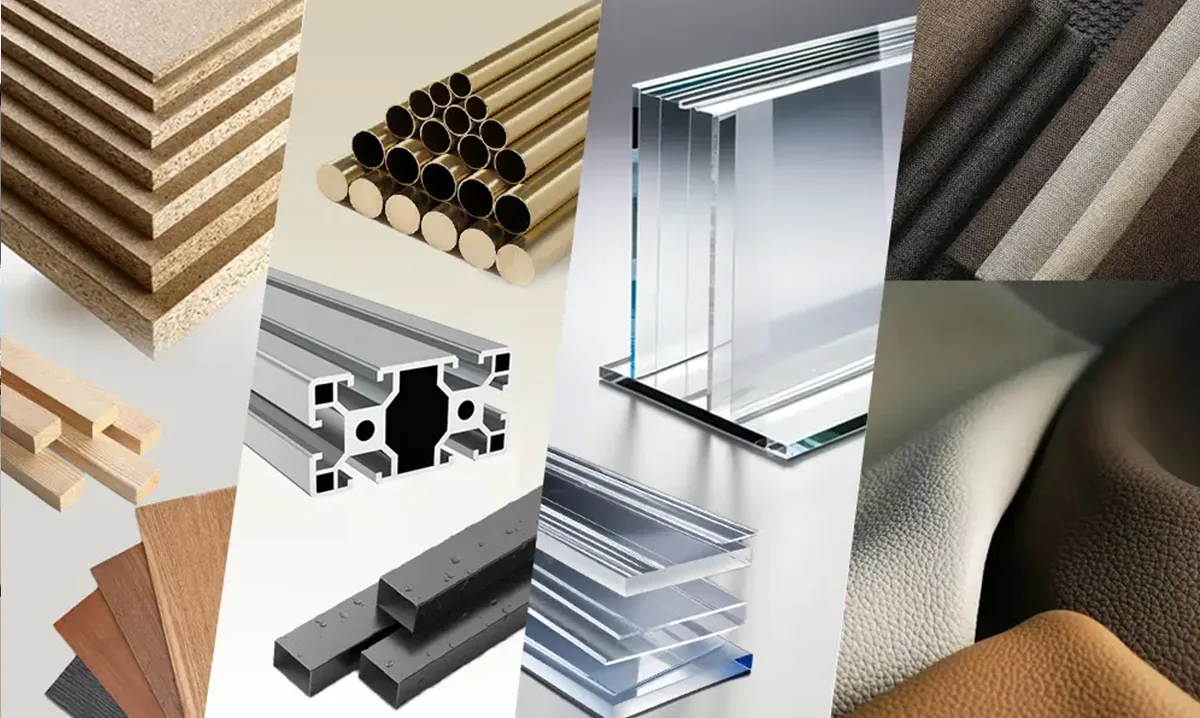
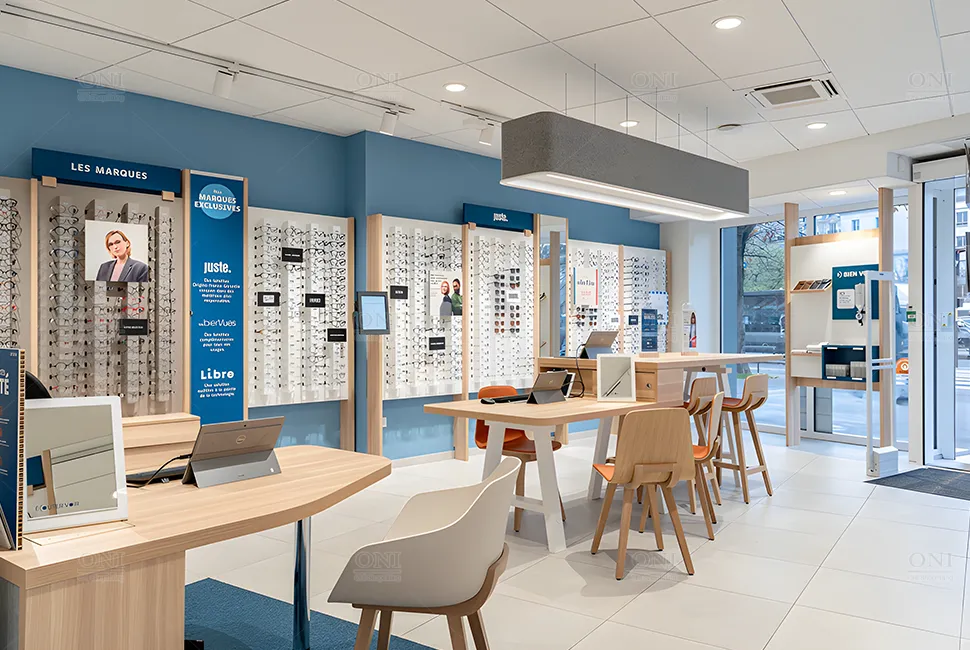
For optical store fixtures, wood adds warmth, metal provides structural strength, glass enhances premium product visibility, and acrylic enables flexible and cost-effective display solutions. The ideal material combination depends on factors such as store traffic, eyewear price positioning, lighting conditions, cleaning requirements, safety standards, installation efficiency, and whether the brand aims for a boutique atmosphere or scalable chain-store consistency.
Let’s compare the four core materials and where each one performs best.
Why Material Choice is Important in Optical Store Fixtures?
Eyewear products are small, detail-oriented, and highly dependent on presentation. A premium frame displayed on low-quality or worn fixtures can instantly lose its perceived value, while even budget frames can appear more organized and appealing when supported by well-designed materials, proper lighting, and clean finishes.
Beyond aesthetics, material choice impacts durability, maintenance, and scalability. It determines load-bearing strength for wall systems, resistance to scratches and wear, compatibility with LED lighting, ease of cleaning, and safety in customer-facing areas. For retailers planning multi-store expansion, consistent materials are essential to ensure fixtures are easy to reproduce, ship, install, and maintain across different locations while controlling long-term costs.
Wood Optical Store Fixtures: Warm, Premium, and Brand-Friendly
Wood is one of the most common materials for optical store fixtures because it creates warmth, comfort, and trust. This makes it especially useful for boutique optical stores, prescription eyewear retailers, family optical clinics, and premium consultation zones.
Wood works well for:
- Wall-mounted eyewear cabinets
- Reception counters
- Consultation tables
- Drawer storage units
- Display islands
- Lens consultation areas
- VIP eyewear presentation zones
Common options include MDF with lacquer, plywood with laminate, natural wood veneer, and engineered panels. MDF is often used when the project needs smooth painted surfaces. Plywood is stronger and better for structural applications. Wood veneer creates a more premium natural appearance, while laminate is practical for chain stores because it is durable and easier to maintain.
The biggest advantage of wood is design flexibility. It can be routed, curved, painted, laminated, veneered, and combined with lighting or metal trims. For optical stores that want a warmer customer experience, wood is often the best foundation material.
However, wood must be specified carefully. Retailers should consider moisture resistance, edge sealing, surface coating, panel thickness, formaldehyde compliance, and transport durability. For markets with strict material requirements, checking composite wood standards such as the EPA Formaldehyde Emission Standards for Composite Wood Products can help guide safer material choices.
Metal Optical Store Fixtures: Strong, Precise, and Scalable
Metal is the structural backbone of many modern optical store fixtures. It is often used in frames, brackets, shelving supports, modular wall systems, display towers, and high-traffic retail areas.
Common metal choices include powder-coated steel, stainless steel, aluminum, and electroplated finishes. Powder-coated steel is practical for durable retail fixtures. Stainless steel is suitable for premium trims and corrosion-resistant details. Aluminum is lightweight and works well for modular systems or profiles.
Metal is ideal for:
- High-traffic optical stores
- Chain eyewear retailers
- Modular wall display systems
- Heavy drawer units
- Freestanding display racks
- Adjustable shelving
- Industrial or minimalist store concepts
The main benefit of metal is strength. It provides stability, clean lines, and reliable repeatability for large-scale rollouts. For retailers opening many stores, metal components can be standardized to reduce installation time and keep the visual identity consistent.
Metal also pairs well with glass, wood, acrylic, and LED lighting. A black metal frame can create a sharp modern look. Brushed stainless steel can feel clinical and professional. Champagne or brass-tone finishes can support a luxury eyewear atmosphere.
Glass Optical Store Fixtures: Transparent, Elegant, and Premium
Glass is widely used in optical stores because it keeps attention on the eyewear. It feels clean, transparent, and premium, which makes it ideal for designer frames, sunglasses, luxury collections, and locked showcase displays.
Glass is commonly used for:
- Display shelves
- Lockable showcases
- Countertop display cases
- Wall cabinet doors
- Premium sunglasses zones
- Jewelry-style eyewear presentation
Tempered glass is usually preferred for retail environments because it offers better safety performance than standard glass. Retailers should consider glass thickness, edge polishing, load capacity, hardware quality, and transport protection. In customer-facing areas, safety standards and local building requirements should always be checked.
The advantage of glass is visibility. It does not visually compete with the product, and it works beautifully with LED lighting. A glass shelf with controlled lighting can make frames appear lighter, cleaner, and more valuable.
The limitations are weight, cleaning, breakage risk, and shipping complexity. Fingerprints and dust show easily, so glass works best in areas where staff can maintain presentation quality. For high-volume self-service zones, retailers may prefer acrylic or metal-supported shelving instead.
A good optical store design often uses glass selectively: premium areas, locked displays, and hero collections, rather than every shelf in the store.
Acrylic Optical Store Fixtures: Lightweight, Flexible, and Cost-Efficient
Acrylic is a useful material for optical display accessories and promotional fixtures. It is lighter than glass, clearer than many plastics, and easy to shape into custom holders, risers, signage, and countertop displays.
Acrylic is suitable for:
- Eyewear holders
- Countertop display stands
- Seasonal campaign props
- Promotional product displays
- Logo blocks and brand signage
- Lightweight visual merchandising tools
- Temporary launch displays
The strongest advantage of acrylic is flexibility. It can be laser-cut, bent, polished, printed, frosted, colored, or formed into custom shapes. This makes it useful when optical retailers need fast updates for product launches, seasonal promotions, or brand campaigns.
Clear acrylic can create a minimalist look, while colored acrylic can support stronger visual merchandising themes. For sunglasses or youth eyewear brands, acrylic can make the store feel more energetic and campaign-driven.
Its main weakness is scratch resistance. Acrylic can look worn if used in areas with heavy customer contact or poor cleaning methods. It should be cleaned with suitable materials and placed where lightweight display value matters more than heavy-duty durability.
For chain optical stores, acrylic is often best used as a replaceable accessory rather than a permanent structural material.
Best Material Combinations for Different Optical Store Types
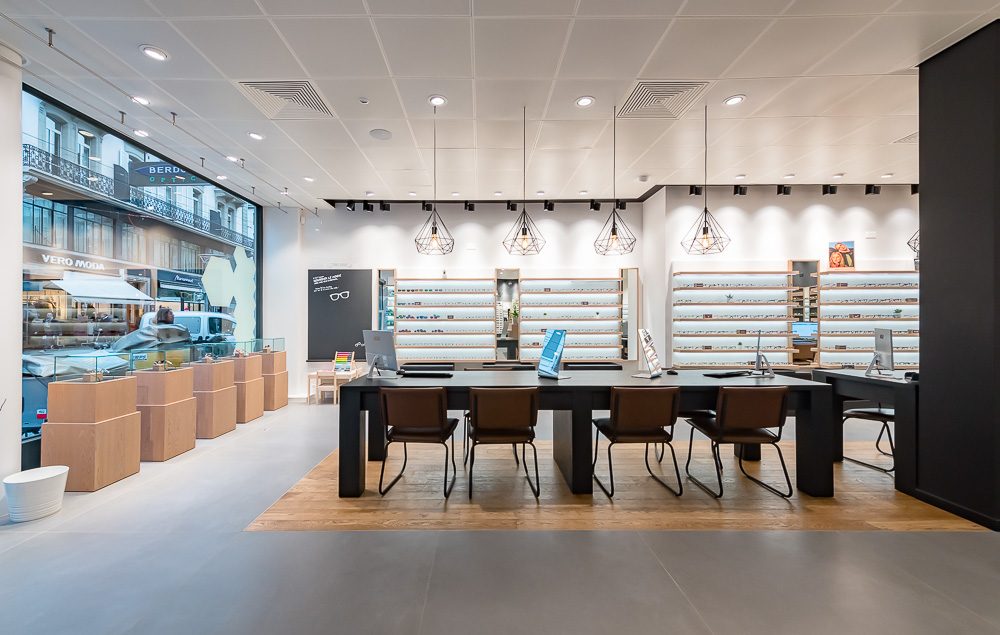
A premium optical boutique typically combines wood veneer cabinets, glass showcases, brushed metal trims, warm LED lighting, and discreet acrylic holders. This mix creates a refined and welcoming environment that highlights craftsmanship and product value. The natural texture of wood adds warmth, while glass ensures visibility, and metal details introduce a sense of precision and quality, ideal for showcasing high-end frames and designer brands.
A chain optical store focuses on scalability and consistency by using powder-coated metal frames, laminate wood panels, standardized acrylic holders, and selected glass shelves. This combination allows for controlled costs, efficient mass production, and faster installation across multiple locations. It also ensures a consistent brand image while maintaining durability in high-traffic retail environments.
A pharmacy optical corner requires compact and highly functional solutions, often using laminate fixtures, reinforced metal support systems, lockable glass sections, and acrylic promotional displays. These materials help maximize limited space, ensure hygiene and safety, and allow for easy maintenance, while still providing clear product visibility in a busy, multi-purpose retail setting.
A budget eyewear store typically uses MDF or laminate panels, simple metal structures, and acrylic display accessories with minimal glass usage. This approach keeps initial investment low while still offering organized and functional displays. The focus is on cost efficiency, quick installation, and easy replacement, making it suitable for fast retail turnover environments.
A luxury sunglasses store emphasizes visual impact and brand identity by incorporating large glass surfaces, high-gloss lacquer finishes, stainless steel elements, and integrated LED lighting. High-contrast materials and reflective surfaces enhance the perception of exclusivity, making each product feel like a fashion statement rather than just a functional item, while also encouraging customer interaction and longer browsing time.
ONI Display Supports Your Optical Store Fixture Projects
ONI Display partners with global retailers, design firms, contractors, and regional shopfitting companies to transform material concepts into fully engineered, production-ready fixture systems. We go beyond basic manufacturing by helping clients evaluate materials not only for aesthetics, but also for durability, cost efficiency, and long-term retail performance.
With 25 years of industry experience and a 30,000-square-meter manufacturing headquarters in Guangzhou, we provide end-to-end support including design development, material engineering, CAD detailing, prototyping, production, quality control, packing, and global logistics.
For optical retailers, this means wood, metal, glass, and acrylic are not treated as separate elements, but engineered as a cohesive system based on store format, brand positioning, product value, installation requirements, and multi-store rollout needs. Our turnkey shopfitting solutions help reduce coordination risks by combining technical detailing, trial assembly, and delivery support into one streamlined process.
In Conclusion
The best optical store fixtures combine wood, metal, glass, and acrylic according to brand image, durability, safety, maintenance, and rollout efficiency. Each material plays a specific role, wood adds warmth, metal ensures structural strength, glass enhances product visibility, and acrylic provides flexibility for display solutions.
A successful fixture strategy is not about choosing one material, but about integrating them effectively to match store positioning, customer experience, and operational needs. By selecting the right material combination, optical retailers can improve product presentation, reduce long-term costs, and ensure consistency across single stores or large-scale retail rollouts.
Frequently Asked Questions
1. What is the best material for optical store fixtures?
There is no single best material. Wood is best for warmth, metal for strength, glass for premium visibility, and acrylic for flexible promotional displays. Most optical stores need a balanced combination.
2. Is glass safe for eyewear display fixtures?
Yes, when properly specified. Tempered glass, polished edges, suitable thickness, strong hardware, and secure installation are important for optical retail environments.
3. How can I reduce fixture costs without making the store look cheap?
Use premium materials in high-impact areas, such as entrance displays and hero showcases, while using durable laminate, metal structures, and acrylic accessories in secondary zones.
👉 Get in touch with us today to start your project.
🌐 Website: www.onidisplay.com | www.onishopfitting.com