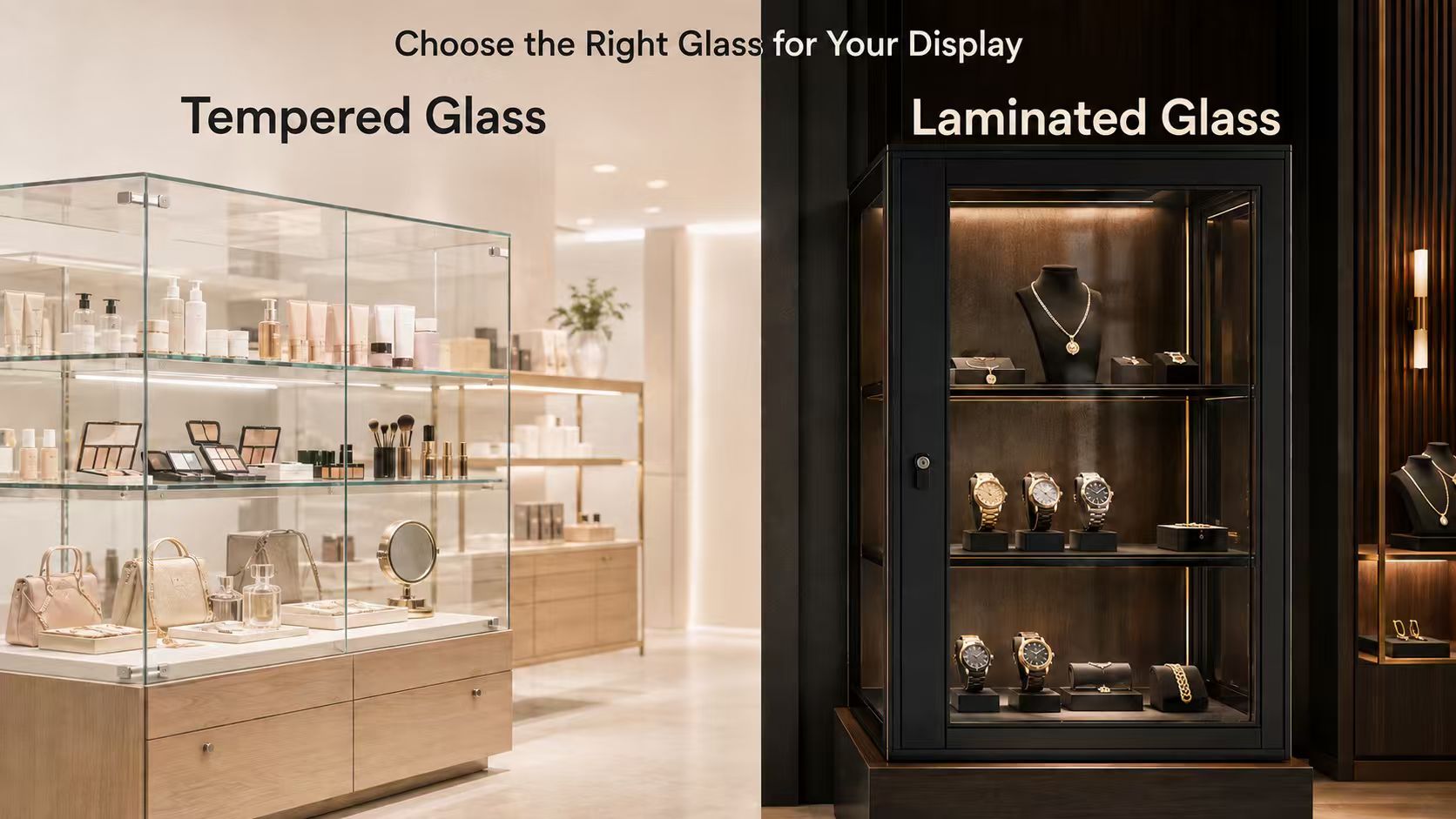
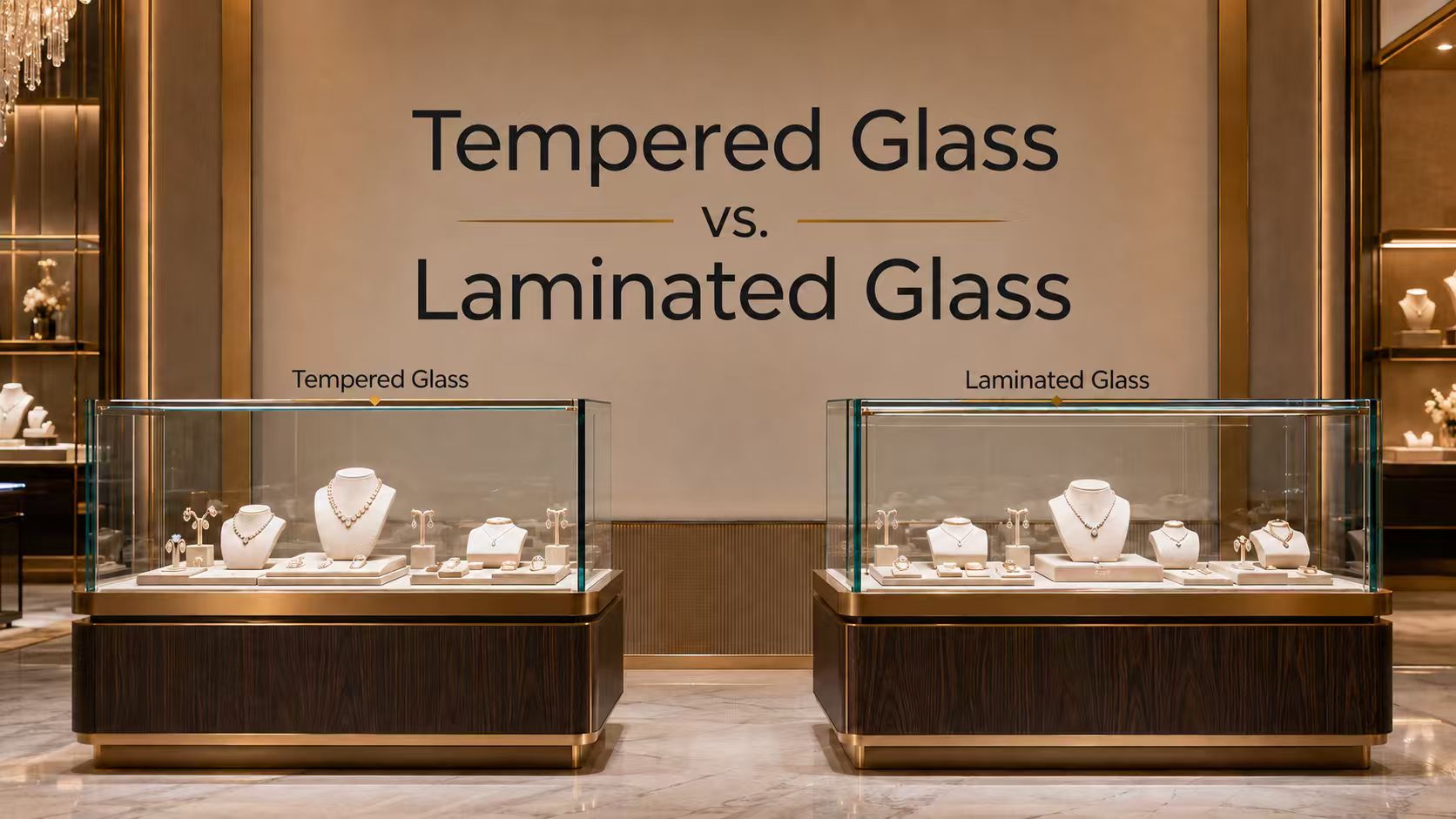
Choosing the right glass helps display cabinets look premium, protect products, and perform reliably in daily retail environments. The best display cabinet glass depends on product value, cabinet structure, store traffic, safety needs, lighting design, and budget. Tempered glass is practical for most retail showcases, while laminated glass is better for high-value or security-focused displays.
To help you choose the right option for your retail environment, let’s compare tempered and laminated glass in more detail.
Why Glass Selection is Important for Custom Display Cabinets
Glass is one of the most important parts of a custom display cabinet. It affects visibility, product protection, safety, lighting performance, fixture weight, and the customer’s first impression. In jewelry stores, cosmetics shops, optical stores, electronics stores, pharmacies, duty-free shops, and luxury boutiques, glass is not only a transparent surface. It is part of the cabinet’s structure and merchandising strategy.
For global retail brands and contractors, the choice of glass should be confirmed early in the fixture development process. Different glass types may require different frame structures, hinges, locks, edge treatments, packaging methods, and installation details. A cabinet designed for tempered glass may need stronger hardware if it is later changed to laminated glass.
When planning custom jewelry store fixtures or high-end glass showcases, buyers should consider both appearance and function. A beautiful cabinet is valuable only when it can protect products, support daily staff operation, and survive transportation and installation.
What Is Tempered Glass?
Tempered glass is a type of safety glass made through a heating and rapid cooling process. This treatment increases its strength compared with ordinary annealed glass. When broken, tempered glass usually shatters into small granular pieces instead of sharp large shards, which makes it suitable for many commercial display environments.
Tempered glass is widely used in display cabinet doors, glass shelves, side panels, countertop showcases, and front viewing panels. It offers good clarity, reliable durability, and relatively efficient production cost. For many standard retail projects, it is the most practical choice.
However, tempered glass must be cut, drilled, polished, and shaped before tempering. After the tempering process, it cannot be re-cut or modified. This means all drawings, hinge holes, lock holes, handle positions, LED openings, and edge details must be confirmed before production.
What Is Laminated Glass?
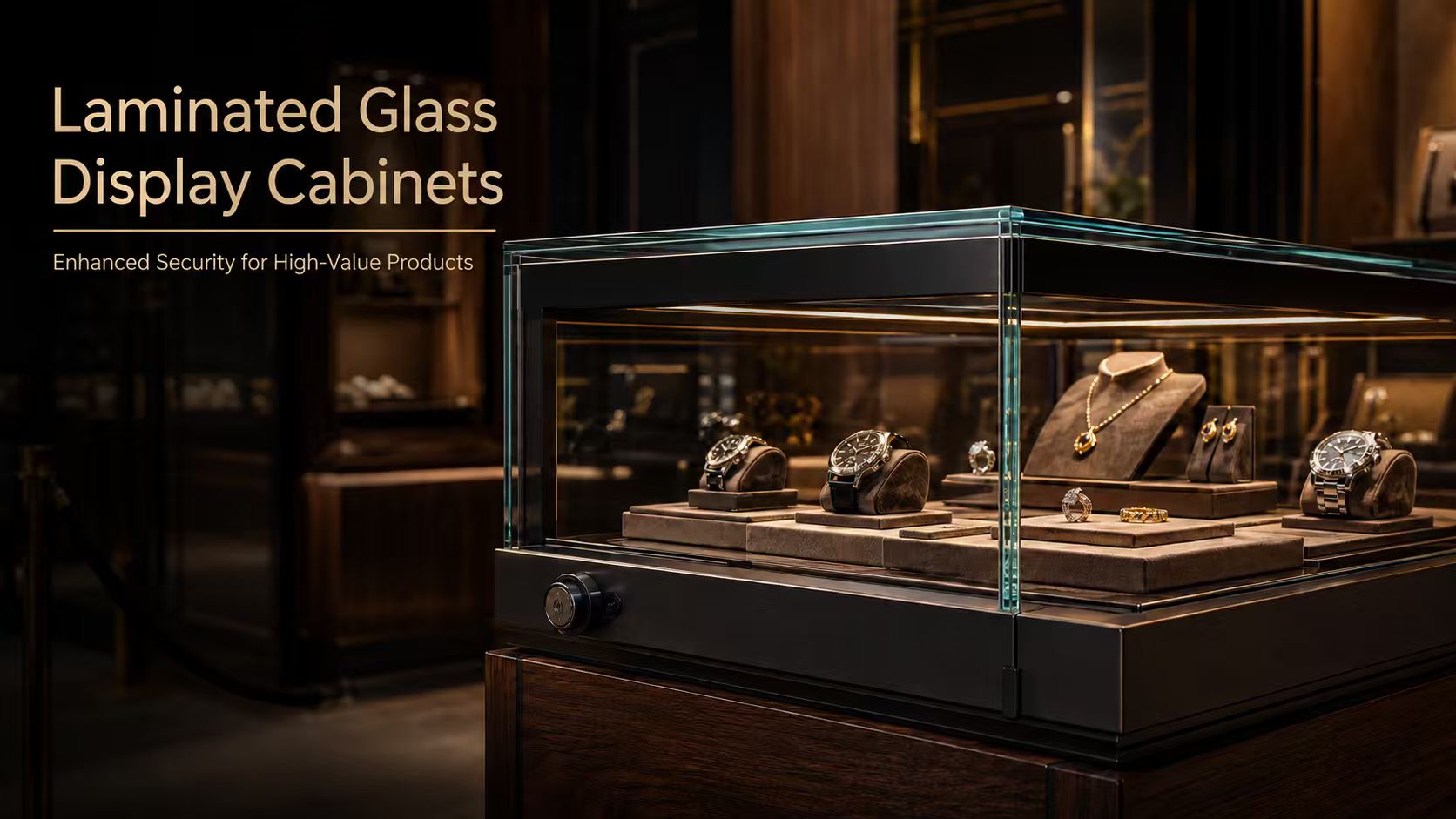
Laminated glass is made by bonding two or more layers of glass with an interlayer, often PVB, EVA, or SGP depending on the performance requirement. If the glass breaks, the interlayer helps hold the broken pieces together. This makes laminated glass useful when safety, security, and fragment retention are important.
A laminated glass showcase is especially suitable for jewelry, watches, luxury accessories, collectibles, premium electronics, museum retail, and high-traffic commercial spaces. It can help reduce the risk of loose broken glass and maintain a temporary barrier after impact.
Compared with tempered glass, laminated glass is usually heavier, thicker, and more expensive. It also requires stronger frames, more accurate tolerances, and careful edge finishing. For this reason, laminated glass is often used in selected cabinet areas rather than the entire fixture.
Tempered Glass vs Laminated Glass: Key Comparison
When comparing a tempered glass vs laminated glass display case, buyers should look beyond material price. The right display cabinet glass affects product visibility, safety, security, fixture weight, hardware design, shipping protection, and long-term store maintenance.
| Factor | Tempered Glass | Laminated Glass |
|---|---|---|
| Structure | Single glass panel strengthened by heat treatment | Two or more glass layers bonded with an interlayer |
| Safety | Breaks into small pieces | Broken pieces tend to stay attached to the interlayer |
| Security | Good for general retail use | Better for high-value merchandise |
| Clarity | Very clear | Clear, but interlayer quality affects appearance |
| Weight | Lighter | Heavier |
| Cost | Usually more cost-effective | Usually higher cost |
| Processing | Must be finished before tempering | Requires precise lamination and edge treatment |
| Best Use | General display cabinets, shelves, doors, side panels | Jewelry showcases, luxury counters, secure front panels |
Tempered glass is ideal when the project needs clear visibility, strong daily performance, and controlled cost. It works well for many types of custom retail store fixtures, including cosmetic cabinets, optical displays, pharmacy fixtures, fashion accessory displays, and general merchandise showcases.
Laminated glass is better when product value and security are more important. It is commonly used for luxury jewelry counters, watch display cabinets, premium electronics showcases, and public-facing glass panels in high-traffic stores.
When to Use Tempered Glass for Display Cabinets
Tempered glass is a strong option for most standard retail display cabinets. It is suitable for glass shelves, cabinet doors, side panels, countertop displays, and transparent partitions where customers need a clear view of the products.
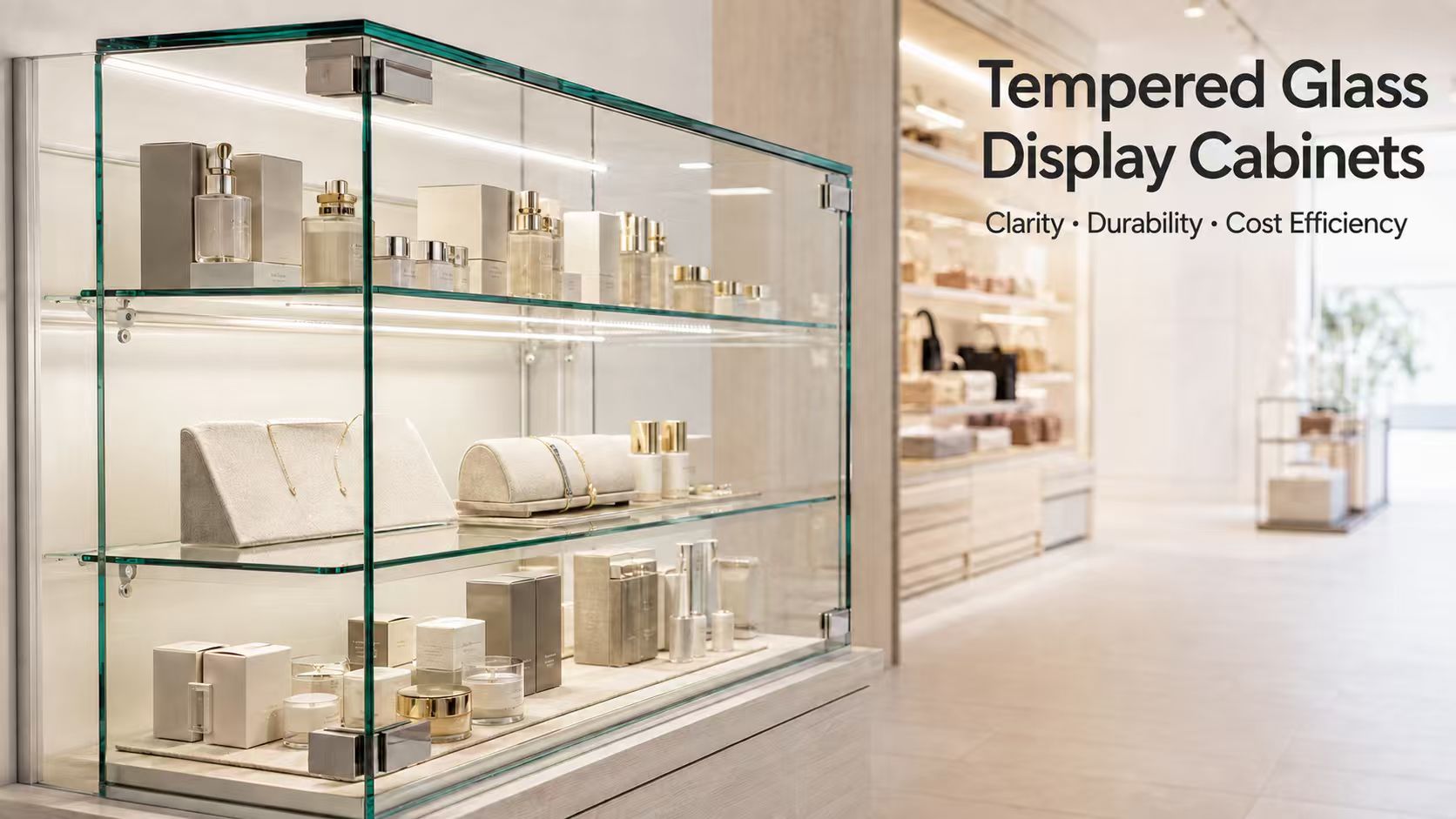
For stores with frequent customer interaction, a safety glass display cabinet using tempered glass can reduce everyday risk while keeping products visible and easy to present. This is useful in optical shops, cosmetics stores, pharmacies, apparel accessory areas, and electronics stores where staff often open and close cabinets throughout the day.
Tempered glass is also useful for multi-store rollouts. It helps brands maintain a consistent fixture appearance while controlling production and shipping costs. For example, an optical store sunglass cabinet can use tempered glass shelves and doors to balance product visibility, durability, and cost efficiency.
When to Use Laminated Glass for Display Cabinets
Laminated glass is recommended for display cabinets that require stronger protection. It is often used in jewelry stores, watch boutiques, luxury retail counters, museum-style displays, duty-free stores, and other environments where the displayed products have high value.
A laminated glass showcase can improve security performance because the interlayer helps hold broken glass together after impact. This does not make the cabinet completely theft-proof, but it can add an extra layer of protection and reduce the chance of glass scattering into the sales area.
Laminated glass is also useful for large front-facing panels or cabinets placed in busy public areas. In high-traffic retail environments, customers may lean on counters, touch glass surfaces, or move closely around fixtures. Laminated glass can provide additional safety confidence in these conditions.
Can Tempered and Laminated Glass Be Used Together?
Yes. Many custom display cabinet projects use both tempered and laminated glass. This helps balance safety, security, cost, weight, and appearance.
| Cabinet Area | Recommended Glass Option | Reason |
|---|---|---|
| Front panel for high-value products | Laminated glass | Better security and fragment retention |
| Side panels | Tempered glass | Clear, durable, and cost-effective |
| Glass shelves | Tempered glass | Good strength and easier production |
| Sliding doors | Tempered or laminated glass | Depends on lock design and product value |
| Countertop showcase top | Tempered glass | Good clarity and daily durability |
| VIP jewelry display zone | Laminated glass | Better protection for premium merchandise |
For example, a jewelry cabinet may use laminated glass on the front panel and tempered glass on shelves and side panels. A cosmetics store may use mostly tempered glass, while adding laminated glass only for locked fragrance or luxury skincare areas. A duty-free store may use different glass types across perfume displays, liquor cabinets, cosmetics counters, and premium product zones.
Glass Thickness Considerations
Glass thickness should be selected according to cabinet size, panel span, product weight, opening method, frame structure, and safety expectations. Common display cabinet glass thicknesses include 5 mm, 6 mm, 8 mm, 10 mm, and 12 mm. Laminated glass is often specified as a combination, such as 5+5 mm or 6+6 mm.
| Application | Common Option | Notes |
|---|---|---|
| Small cabinet doors | 5-6 mm tempered glass | Lightweight and practical |
| Standard display panels | 6-8 mm tempered glass | Suitable for many retail cabinets |
| Glass shelves | 8-10 mm tempered glass | Depends on shelf span and load |
| Luxury showcase front | Laminated glass | Better for security-focused displays |
| Large public-facing panels | Laminated or thicker tempered glass | Requires engineering review |
Thicker glass may look more premium and feel more solid, but it also increases weight. This can affect hinges, sliding systems, packaging, and installation. The best specification should be decided together with the fixture manufacturer during engineering development.
Edge Treatment and Hardware Compatibility
Glass edge treatment affects both safety and appearance. Polished edges, beveled edges, rounded corners, drilled holes, notches, lock cutouts, hinge holes, and handle positions should be reviewed carefully before production.
This is especially important for tempered glass because it cannot be modified after tempering. If a hole position or edge size is wrong, the glass panel usually needs to be remade. For laminated glass, edge quality is also important because poor edge finishing can affect appearance and long-term durability.
Hardware must match the selected glass type and thickness. Hinges, locks, sliding rails, brackets, shelf supports, and metal frames should be strong enough for the glass weight. Laminated glass usually requires more careful hardware selection because it is heavier than tempered glass.
Shipping and Packaging Considerations
Glass display cabinets need strong packaging, especially for international delivery. Tempered glass is durable in daily use, but its edges and corners still need protection during transport. Laminated glass is heavier, so packaging must consider weight distribution, crate strength, loading direction, and protection for surrounding materials.
For multi-store projects, store-by-store packaging can make installation easier. Each store’s fixture parts, glass panels, lighting components, hardware, and accessories should be clearly organized to reduce site confusion. This is valuable for shopping malls, airport retail, department stores, and chain store rollouts.
ONI Display’s custom retail display manufacturing facility supports design, engineering, woodworking, metal fabrication, lighting, production, quality control, packaging, and global delivery, helping buyers reduce project friction from sampling to final shipment.
Application Guide by Retail Category
| Retail Category | Suggested Glass Option | Reason |
|---|---|---|
| Jewelry stores | Laminated glass for main showcases, tempered glass for shelves | Balances security and display clarity |
| Watch boutiques | Laminated glass for premium counters | Better protection for high-value items |
| Cosmetics stores | Tempered glass | Clear, elegant, and cost-effective |
| Optical shops | Tempered glass | Good visibility and easy maintenance |
| Electronics stores | Tempered or laminated glass | Depends on product value and access control |
| Pharmacy stores | Tempered glass | Practical for organized product display |
| Duty-free stores | Mixed tempered and laminated glass | Different zones require different security levels |
Different retail categories need different glass strategies. A jewelry store may prioritize security and premium detail. A cosmetics store may focus on clarity, lighting, and easy cleaning. An optical store may need transparent shelving and frequent staff access. A duty-free store may need multiple cabinet types with different levels of protection.
Procurement Tips for Custom Glass Display Cabinets
Before placing an order, buyers should confirm product value, display layout, cabinet dimensions, glass thickness, opening method, lock system, lighting position, hardware material, packaging requirements, and local safety expectations.
Designers should also provide clear drawings, 3D renderings, or reference images. Contractors should confirm site conditions, delivery routes, installation timing, and access limitations. Retail brands should consider whether the same cabinet design will be used for one store, a flagship project, or a multi-location rollout.
A well-prepared procurement brief helps manufacturers quote accurately, avoid production delays, and ensure the finished cabinets meet both visual and operational requirements. Buyers should also clarify quantity, target budget, lead time, branding details, required certifications, and after-sales support before confirming the order.
ONI Display Supports Your Glass Display Cabinet Projects
ONI Display provides custom retail fixtures and turnkey shopfitting solutions for global brands, designers, contractors, project managers, and shopfitting partners. With 25 years of experience and a 30,000-square-meter headquarters in Guangzhou, China, ONI Display integrates design, engineering, woodworking, metal fabrication, lighting, production, quality control, packaging, and global delivery.
For custom glass display cabinet projects, ONI Display can help evaluate tempered glass, laminated glass, mixed-glass structures, frame materials, LED lighting, lock systems, product capacity, shipping protection, and store rollout requirements. The goal is to make each cabinet visually attractive, structurally reliable, manufacturable, and practical for daily retail use.
Whether the project is a single boutique, a flagship store, a department store counter, or a multi-store rollout, ONI Display helps buyers turn design concepts into production-ready retail fixtures with consistent quality and international delivery support.
Summary
Tempered glass suits most display cabinets, while laminated glass is better for security-focused showcases. The right choice depends on product value, safety needs, structure, and budget.
Frequently Asked Questions
What is the best display cabinet glass for retail stores?
Tempered glass is suitable for most retail display cabinets because it is clear, strong, and cost-effective. Laminated glass is better for high-value products and security-focused showcases.
Is laminated glass better than tempered glass for jewelry showcases?
For main jewelry showcase panels, laminated glass is often better because it offers stronger fragment retention and improved security performance. Tempered glass can still be used for shelves and side panels.
Can ONI Display customize safety glass display cabinets?
Yes. ONI Display can customize display cabinets with tempered glass, laminated glass, lighting, locks, metal frames, wood finishes, packaging, and global delivery support for retail projects.
 Contact us today to start your custom display fixtures project.
 WhatsApp/Call: +86 186 2096 3396
 Email: sales1@onishopfitting.com
 Website: www.onidisplay.com
 Factory Location: Guangzhou, China
 Check out our social media case studies:Guangzhou ONI Shopfitting Limited