


Behind every well-designed optical store is a carefully controlled factory process that transforms retail display concepts into functional, durable, and brand-consistent fixtures.
In ONI DISPLAY, optical store fixtures are developed through a structured workflow that includes layout planning, 3D visualization, decoration coordination, material selection, cost estimation, detailed production drawings, manufacturing, progress monitoring, quality inspection, secure packaging, international shipping, and installation support. Typical products include eyewear display cabinets, wall-mounted shelving, island display counters, LED-lit showcases, lockable storage units, and custom branded fixtures.
The following section explains how our factory manages each stage of the optical store fixture production process from concept to installation.
1. Spatial Strategy & Layout Planning
The first step in making optical store fixtures is understanding how the store will actually operate. An optical store is not a simple product shelf environment. Customers browse frames, compare styles, try on glasses, consult with staff, check lens options, wait for adjustments, and often return for after-sales service. Because of this, the fixture layout must support both product display and professional service.
During spatial strategy and layout planning, the floor plan, storefront width, entrance direction, ceiling height, wall length, customer circulation, staff workflow, product categories, storage demand, display quantity, and brand positioning are carefully reviewed. The store is then divided into clear functional zones, such as eyewear wall display cabinets, central island display counters, optical frame display racks, cashier counters, consultation desks, lens display areas, mirror zones, waiting areas, storage rooms, and promotional display zones.
For optical store fixture planning, the display cabinet system must be designed around customer behavior. Wall-mounted eyewear display cabinets are often used to present large frame collections in a clean and organized way. Freestanding glass display showcases are suitable for premium eyewear, sunglasses, designer frames, and new arrivals. Island display counters create product focus in the center of the store, while lockable storage cabinets support staff operation and product security.
For optical chain stores, the layout also needs to be repeatable. A successful retail display fixture system should be flexible enough to fit different store sizes while keeping the same brand image. This allows the retailer to open new branches faster and maintain consistent visual merchandising standards across multiple locations.
Good spatial planning improves product exposure, guides customer movement, reduces dead corners, and helps staff serve customers more efficiently. It is the foundation of the whole optical store fixture manufacturing process. For additional layout thinking, see this eyewear display layout guide.
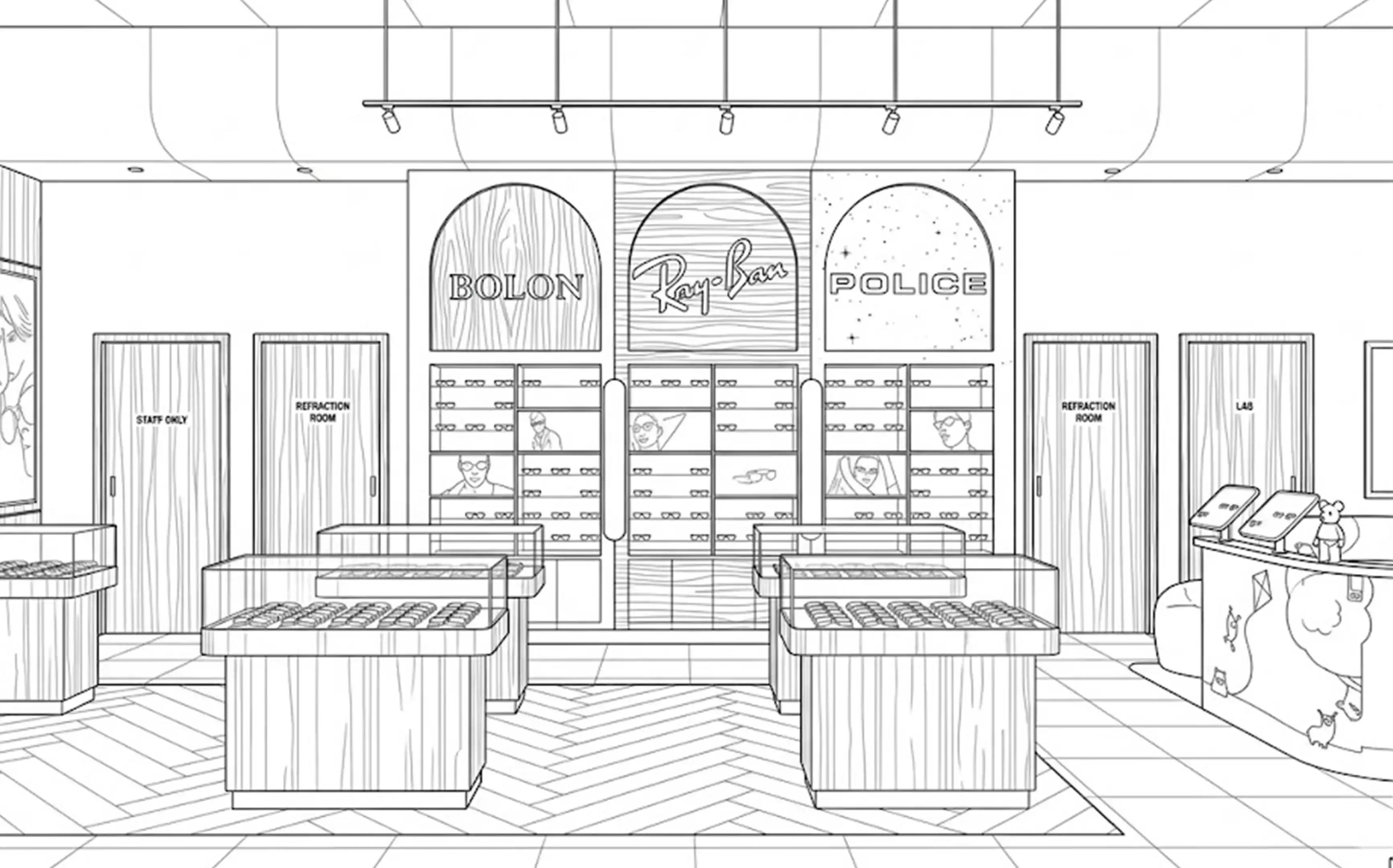
2. Photorealistic 3D Renders
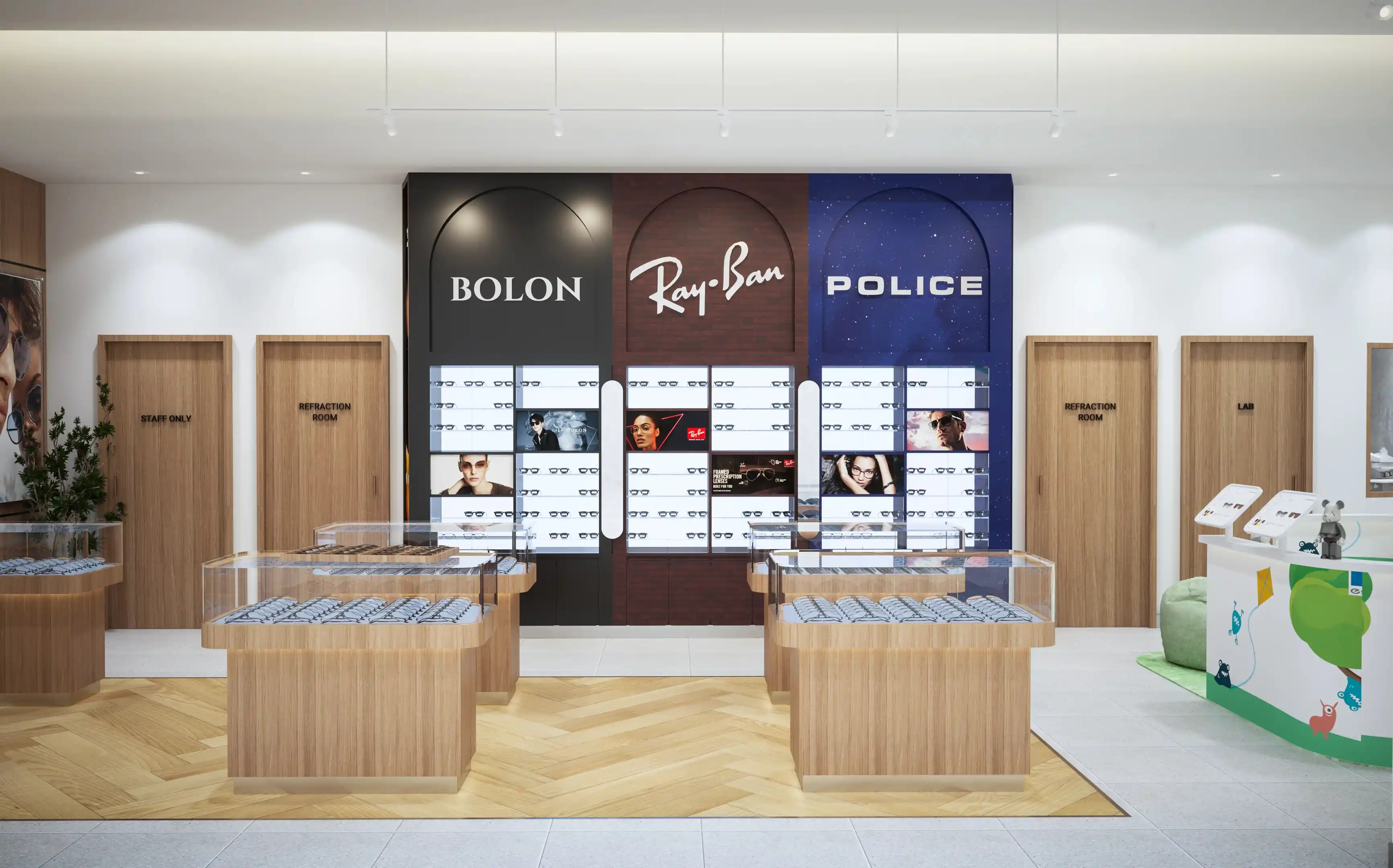
After the layout is confirmed, photorealistic 3D renderings are created to show the final store effect before production. This step helps clients clearly understand how the store will look, including optical display cabinet style, eyewear showcase layout, material texture, lighting effect, color tone, display capacity, brand logo placement, counter position, and customer service areas.
For optical stores, 3D renders are especially important because the products are small and displayed in large quantities. A small change in shelf spacing, LED lighting angle, wall display shelving depth, or glass showcase structure can influence the overall shopping experience. The 3D rendering stage also allows the client to compare different design directions before manufacturing starts.
A premium optical boutique may choose custom glass display cabinets, warm wood finishes, champagne metal trims, soft LED lighting, and lockable display showcases. A modern eyewear chain may prefer white wall display shelving, black metal frames, acrylic eyewear holders, illuminated display cabinets, and modular retail display fixtures. A medical-style optical center may need a cleaner, more professional atmosphere with stronger functional zoning and practical storage cabinets.
At this stage, the visual design also needs to be checked for manufacturability. A beautiful optical showcase must still be stable, safe, easy to clean, easy to install, and suitable for daily retail use. The design and engineering process must balance appearance, structure, material, lighting, and budget. Related reference: custom shopfitting service.
3. Decoration Guide
The decoration guide is the bridge between the 3D design and the real construction site. It provides detailed references for how the store should be decorated, including fixture positions, optical display cabinet styles, partition design, counter types, ceiling coordination, wall treatment, display area planning, lighting points, signage locations, and customer service zones.
For optical store projects, the decoration guide may include eyewear display walls, reception counters, fitting mirrors, frame selection areas, lens consultation desks, VIP service areas, waiting lounges, and storage partitions. This guide is useful because optical store projects often involve several teams at the same time. The design team controls the visual concept, the factory produces the custom retail fixtures, the contractor handles site construction, and the local installation team completes the final assembly.
For example, a wall display cabinet may require accurate coordination with wall structure, power supply, LED wiring, and decorative panels. A glass display showcase may need special attention to lighting position, anti-scratch protection, lock placement, and customer viewing angle. An island display counter must be positioned carefully so customers can walk around it comfortably while staff still has enough space to work.
The decoration guide helps control details such as where display fixtures meet walls, how lights align with cabinets, how counters connect with power sockets, how mirrors are positioned, and how customer traffic moves through the space. A strong decoration guide reduces confusion, improves installation efficiency, and helps the store achieve a more professional final appearance.
4. Material Confirmation and Final Quotation
Material confirmation is one of the most important steps before optical store fixture production begins. Different materials create different visual effects, costs, durability levels, and maintenance requirements. Optical store fixtures and display cabinets commonly use MDF, plywood, stainless steel, aluminum, tempered glass, acrylic, LED lighting, laminate, veneer, lacquer, powder-coated metal, mirrors, stone-effect panels, hinges, locks, drawer slides, and high-quality hardware.
MDF with lacquer finish can create a smooth and premium appearance for optical display cabinets. Plywood may offer better strength for long-term commercial use. Stainless steel and aluminum are often used for modern frame structures, showcase trims, and decorative details. Tempered glass is suitable for display shelves, glass display cabinets, and eyewear showcases. Acrylic is useful for eyewear holders, signage, logo panels, and transparent product display details. LED lighting improves product visibility and highlights frame colors.
For different fixture types, material selection must be handled differently. Wall-mounted display cabinets need strong load-bearing structure and precise wall installation details. Freestanding eyewear display showcases require stable bases, safe glass, and secure locking systems. Island display counters need durable surfaces because customers touch them frequently. Storage cabinets need reliable drawers, hinges, locks, and internal organization.
Materials should be selected based on brand positioning, store budget, market location, shipping requirements, expected service life, and daily maintenance needs. A fixture used in a flagship store may require more premium finishes, while fixtures for a large chain rollout may need stronger cost control and easier reproduction. Related reference: optical store fixture materials guide.
5. Final Production Drawing
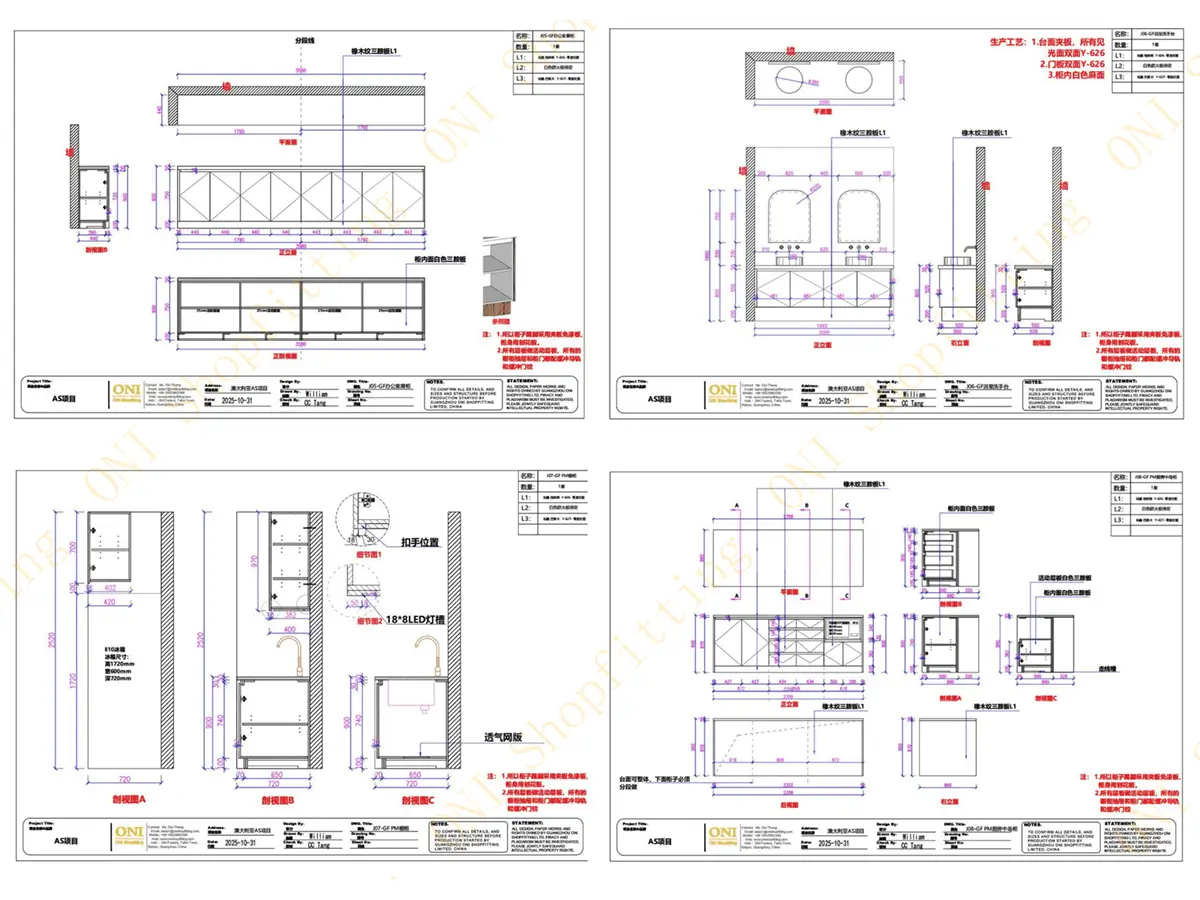
Final production drawings are the technical foundation of fixture manufacturing. While 3D renderings show what the store will look like, production drawings explain how each optical display cabinet, eyewear showcase, display rack, wall shelving system, island counter, cashier desk, and storage cabinet should be built.
These drawings include exact dimensions, section views, elevation drawings, structure details, material specifications, glass sizes, metal profiles, acrylic holder details, hardware locations, lighting positions, cable routes, installation points, and connection methods. For optical store fixtures, this step must be extremely accurate because eyewear displays often include small product slots, tilted shelves, acrylic holders, lockable storage drawers, LED light strips, glass panels, mirrors, logo elements, and concealed wiring.
A glass eyewear display cabinet must define glass thickness, edge polishing, shelf support method, lock type, hinge position, LED channel, and anti-tip structure. A wall-mounted optical frame display needs accurate frame holder spacing, wall fixing points, lighting cable access, and panel connection details. An island display counter needs clear cabinet height, drawer structure, customer viewing angle, and base stability.
Engineering review checks whether the design can be manufactured efficiently and safely. If a design detail is too fragile, too expensive, or difficult to install, practical improvements may be suggested while keeping the original design effect as much as possible. Clear production drawings also help local workers understand how each cabinet, panel, light, shelf, and connector should be assembled on site.
6. Production Stage – Progress Tracking
Once drawings, materials, and quotation are approved, the optical store fixtures enter the production stage. The manufacturing process usually includes material purchasing, panel cutting, CNC machining, edge banding, drilling, wood assembly, metal cutting, welding, polishing, powder coating, painting, glass processing, acrylic processing, electrical preparation, LED installation, hardware fitting, and trial assembly.
Each fixture follows the approved production drawing. Wall display cabinets must match the store wall dimensions. Island display counters must be stable and comfortable for browsing. Cashier counters must include storage and cable management. Glass display showcases must provide secure product protection and clear product visibility. LED display cabinets must offer balanced lighting without glare. Lockable storage cabinets must open smoothly and support daily staff operation.
During optical display cabinet manufacturing, many production details require attention. Wood panels must be cut accurately. Edges must be smooth and well sealed. Painted surfaces must be even and clean. Metal frames must be welded firmly and polished carefully. Glass shelves must be processed safely. Acrylic eyewear holders must match the required angle and spacing. LED light strips must be installed neatly and tested before assembly.
Production progress tracking through photos and videos allows clients to see key stages such as raw material preparation, cabinet structure assembly, surface finishing, lighting testing, hardware fitting, trial assembly, and packing preparation. This transparency is valuable for international optical brands, architectural firms, contractors, and regional shopfitting companies that need to monitor production remotely and keep project schedules under control.

7. Strict QC System
Quality control is not a single final check. It runs through the entire optical store fixture production process. Before production, materials are checked for thickness, color, surface quality, and strength. During production, components are inspected for size accuracy, edge treatment, welding quality, paint finish, hardware position, lighting placement, and assembly structure.
Before packing, finished optical display cabinets, eyewear showcases, retail display counters, wall display shelving, and storage cabinets are checked again to make sure they meet the approved drawings and visual standards. For optical store fixtures, quality inspection should focus on surface finish, lighting effect, glass safety, drawer movement, cabinet stability, mirror clarity, logo position, product display angle, lock function, and customer-facing details.
Lighting inspection is especially important. LED display cabinets must have consistent brightness and color temperature. Wiring must be organized and safe. Switches, connectors, transformers, and power access points must be tested before shipment. For illuminated eyewear display walls, lighting must highlight the frames without creating uncomfortable glare.
The QC process also checks whether fixtures are practical for daily use. Drawers should slide smoothly. Cabinet doors should close correctly. Locks should work reliably. Glass should be secure. Acrylic holders should be firmly installed. Counters should be stable. Packaging should match the product structure. Quality management is closely connected with repeatable processes, which is why many manufacturers refer to ISO 9001 quality management when building inspection systems.
8. Secure Packing & Global Logistics
After quality inspection, fixtures must be packed safely for international transportation. Optical store fixtures often include fragile and high-value components, such as glass shelves, acrylic eyewear holders, painted panels, metal trims, mirrors, LED lights, lockable display cabinets, and custom island counters. Without proper packing, these components can be scratched, cracked, bent, or damaged during loading, shipping, and unloading.
Protective packing methods should be selected according to product structure and destination. Common packing materials include foam sheets, pearl cotton, corner guards, plastic film, cartons, wooden crates, pallets, labels, and part-number stickers. Fragile items such as glass display cabinet doors, glass shelves, mirrors, and acrylic holders are packed separately or with stronger protection.
For large optical store fixture packages, packing organization is just as important as protection. Each display cabinet, panel, shelf, light component, hardware bag, and installation accessory must be labeled clearly. Part numbers should match the installation drawings so the local team can identify each item quickly.
For global logistics, every step from export packaging and container loading to transport coordination, customs documentation, and final delivery planning plays a critical role in ensuring a smooth international shipment. The focus is not only on moving the equipment out of the factory but also on protecting every component during transit, optimizing container space, and ensuring all regulatory requirements are properly met for customs clearance.
9. Final Installation & Turnkey Result
The final stage is turning factory-made fixtures into a finished optical store. Installation drawings, assembly manuals, part labels, and remote or on-site guidance help the local installation team understand where each display cabinet should be placed, how panels connect, how lights are wired, how glass shelves are installed, how acrylic holders are fixed, and how the final store should match the approved design.
For optical stores, installation accuracy is very important. Wall display cabinets must align properly. Freestanding eyewear showcases must be level and stable. Island display counters must support smooth customer movement. Mirrors must be placed at comfortable heights. LED lighting must highlight products without glare. Storage cabinets must be accessible to staff but not interrupt the customer experience.
A successful turnkey result means the store is not only visually attractive, but also ready for commercial operation. Eyewear products can be displayed clearly, customers can browse comfortably, staff can work efficiently, and the brand image is presented consistently.
From optical display cabinet production to final shopfitting installation, every step affects the final store quality. This is why many retailers prefer working with a factory that can manage design, engineering, manufacturing, packing, logistics, and installation guidance under one system. Project inquiry: contact a shopfitting specialist.
ONI Display Optical Store Fixture Case Insight
For one international optical retail project, ONI Display supported the client from initial store layout to final fixture delivery.
The client wanted to create a clean, modern, and professional eyewear store that could present different frame collections clearly while improving the customer consultation experience. The store needed wall-mounted optical display cabinets for large product collections, glass eyewear display showcases for premium frames, island display counters for featured products, a reception counter, lens consultation area, mirror zones, waiting seats, and lockable storage cabinets for daily operation.
ONI Display first reviewed the client’s floor plan and store requirements. The customer route was planned from entrance to browsing, fitting, consultation, and checkout. The wall display cabinets were arranged to maximize frame visibility, while the island display counters were designed to guide customers naturally through the store.
After the layout was confirmed, ONI Display created photorealistic 3D renderings. These renderings helped the client review the overall store atmosphere, including fixture color, display cabinet structure, material combination, LED lighting effect, logo wall, display density, and counter placement. Several details were adjusted before production, including shelf spacing, lighting position, acrylic eyewear holder angle, and storage configuration.
For materials, the project used a combination of wood finish panels, metal decorative trims, tempered glass shelves, acrylic eyewear holders, lockable drawers, and integrated LED lighting. This combination helped the store achieve a balance between modern visual style, product visibility, durability, security, and cost control.
During production, ONI Display provided progress photos and videos for key stages, including woodwork, metal processing, surface finishing, glass preparation, acrylic processing, lighting installation, trial assembly, and packing. Before shipment, each optical display cabinet and eyewear showcase was inspected for size accuracy, surface finish, lighting performance, glass safety, hardware function, lock operation, and installation compatibility.
The final fixture package was securely packed and shipped overseas with clear labels and installation references. After installation, the client received a complete optical retail environment with organized product presentation, comfortable customer flow, efficient staff operation, and a consistent brand image.
Summary
Optical store fixtures at ONI Display are developed through a fully integrated process that covers planning, 3D rendering, material confirmation, engineering drawings, precision manufacturing, strict quality control, professional packing, global logistics, and on-site installation support. This end-to-end system ensures consistent quality, efficient communication, and reliable project delivery for optical retail brands worldwide.
Frequently Asked Questions
1. What types of optical display cabinets can be customized?
Wall-mounted optical display cabinets, glass eyewear showcases, LED display cabinets, island display counters, lockable storage cabinets, cashier counters, consultation desks, and modular retail display fixtures can all be customized.
2. What materials are commonly used for eyewear display showcases?
Common materials include MDF, plywood, stainless steel, aluminum, tempered glass, acrylic, LED lighting, laminate, veneer, lacquer, powder-coated metal, mirrors, hinges, locks, and drawer slides.
3. Why is quality control important for optical store fixtures?
Quality control ensures display cabinets are stable, lighting works properly, glass is safe, surfaces are clean, locks function well, and fixtures can be installed smoothly on site.