Glass plays an important role in the appearance and performance of custom display cabinets. It affects product visibility, color presentation, lighting performance, safety, and the overall look of the fixture. For retail projects where customers view products through glass at close range, even a small difference in clarity can influence the final presentation.
Two commonly used options are low-iron glass and standard clear glass. While both can provide good transparency, they differ in iron content, color neutrality, edge appearance, light transmission, and cost. For B2B buyers planning retail display cabinets, glass showcases, display counters, or complete custom retail store fixtures, understanding these differences can help determine which option is more suitable for the project.
What Is Low-Iron Glass?
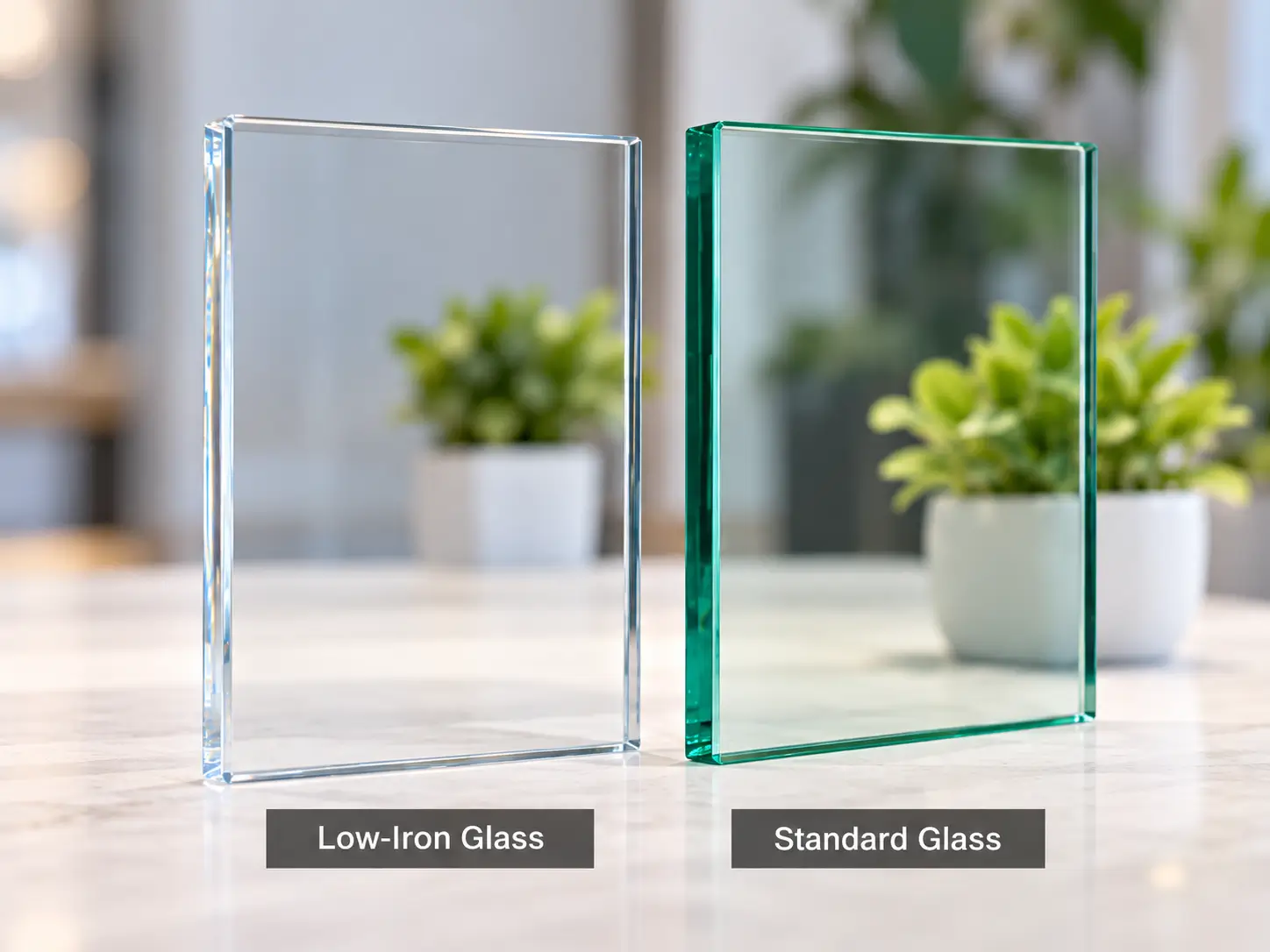
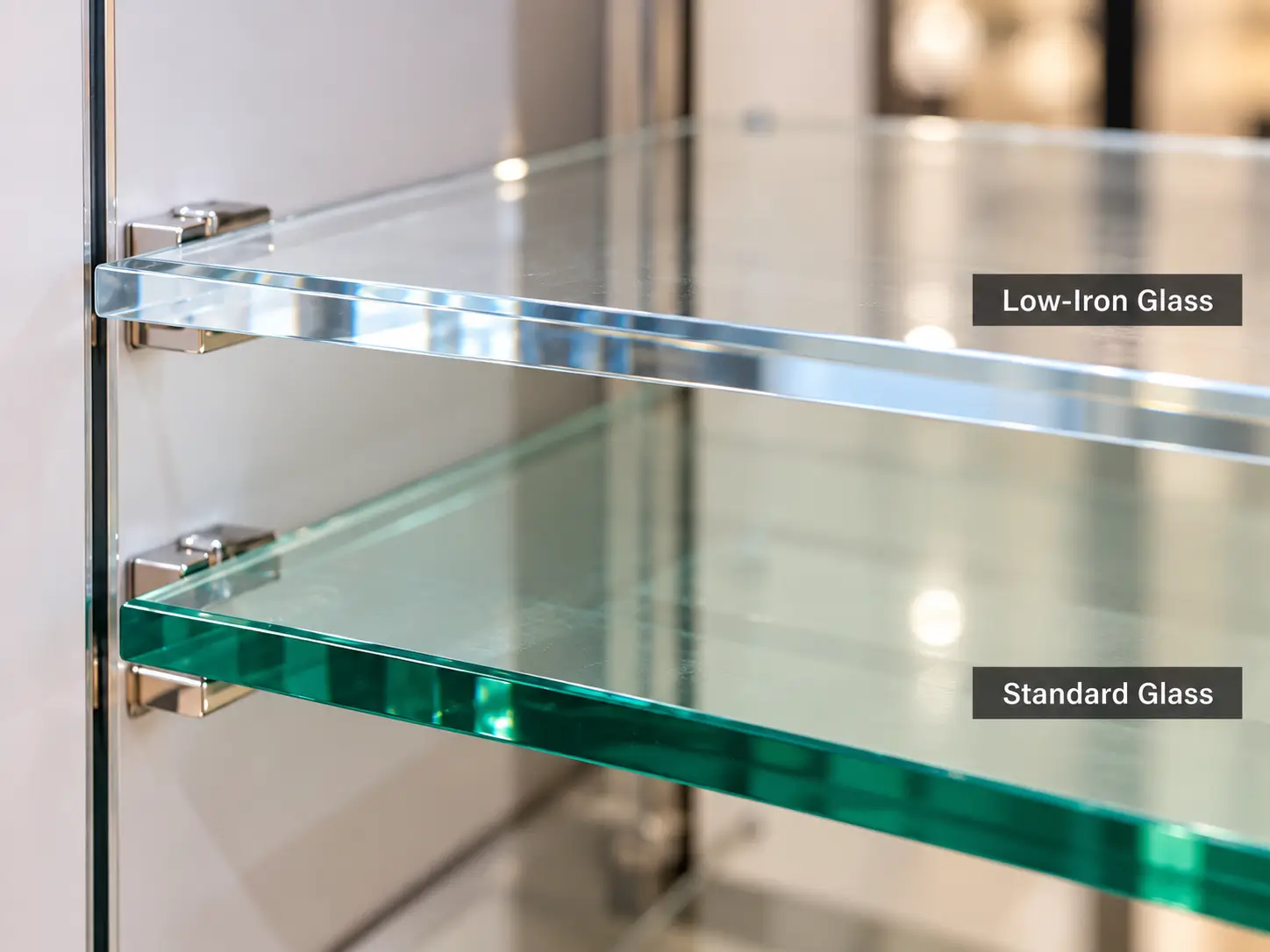
Low-iron glass is a type of clear float glass manufactured with a lower iron content than standard clear glass. Because it contains less iron, it has less of the green tint normally seen in conventional glass and provides a clearer, more color-neutral appearance.
This makes low-iron glass especially suitable for jewelry showcases, watch display cabinets, perfume displays, cosmetic showcases, eyewear displays, etc and luxury retail fixtures, where product visibility and accurate color presentation are important.
What Is Standard Glass?
Standard glass, also known as standard clear float glass, is one of the most commonly used glass materials in commercial display cabinets and retail fixtures. It provides good transparency but normally contains more iron than low-iron glass, which can create a slight green tint.
This green tone is usually more noticeable along polished glass edges and in thicker panels. However, for many custom display cabinets, retail shelving, counters, partitions, and general commercial fixtures, standard clear glass provides sufficient visibility at a more economical cost.
Low-Iron Glass vs Standard Glass: Quick Comparison
| Comparison | Low-Iron Glass | Standard Clear Glass |
|---|---|---|
| Appearance | Highly transparent and neutral | Clear with a slight green tint |
| Iron Content | Lower | Higher |
| Edge Appearance | Cleaner and more neutral | More noticeable green edge |
| Light Transmission | Higher | Slightly lower |
| Color Presentation | More natural and accurate | May introduce a slight green tone |
| Thick Glass Appearance | Maintains better clarity | Green tint becomes more noticeable |
| Cost | Generally higher | More economical |
| Availability | May require more careful sourcing | Widely available |
| Tempering | Can generally be tempered | Can generally be tempered |
| Best Applications | Premium and color-sensitive displays | General commercial displays |
1. Transparency and Green Tint
The most noticeable difference between low-iron glass and standard glass is transparency. Standard clear glass normally has a subtle green tint caused by its iron content, while low-iron glass reduces this effect and provides a clearer, more neutral view through the panel.
The difference may be less obvious with thin glass, but it becomes easier to notice with thicker panels, exposed edges, or multiple layers of glass. For premium custom display cabinets, low-iron glass can help keep the merchandise as the main visual focus.
2. Product Color Accuracy
Accurate color presentation is especially important for products such as cosmetics, perfumes, jewelry, watches, eyewear, luxury accessories, and branded merchandise. The green tint in standard glass can slightly influence the appearance of white, silver, transparent, and light-colored products.
Low-iron glass provides a more neutral view, allowing product colors, packaging, finishes, and materials to appear closer to their natural appearance. This can be particularly valuable in high-end retail display showcases where visual presentation is an important part of the customer experience.
3. Glass Edge Appearance
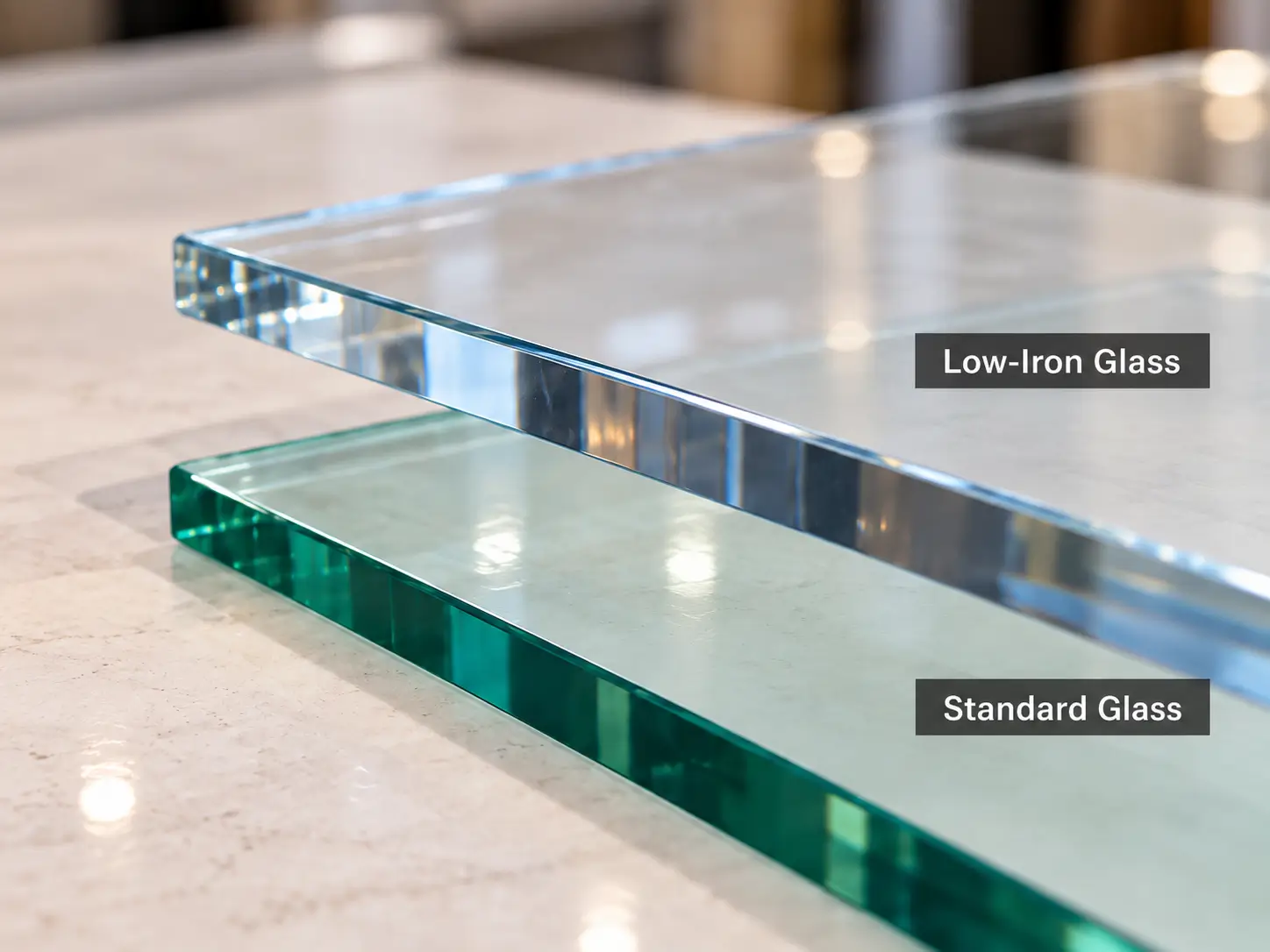
Standard clear glass usually shows a more noticeable green color along polished edges. This becomes increasingly visible as the glass becomes thicker and can affect the appearance of frameless or minimalist display cabinet designs.
Low-iron glass has cleaner and more neutral-looking edges, making it suitable for showcases with exposed glass panels, shelves, or frameless doors. It can also complement materials such as white lacquer, stainless steel, mirrors, stone, and polished metal.
4. Light Transmission and Display Lighting
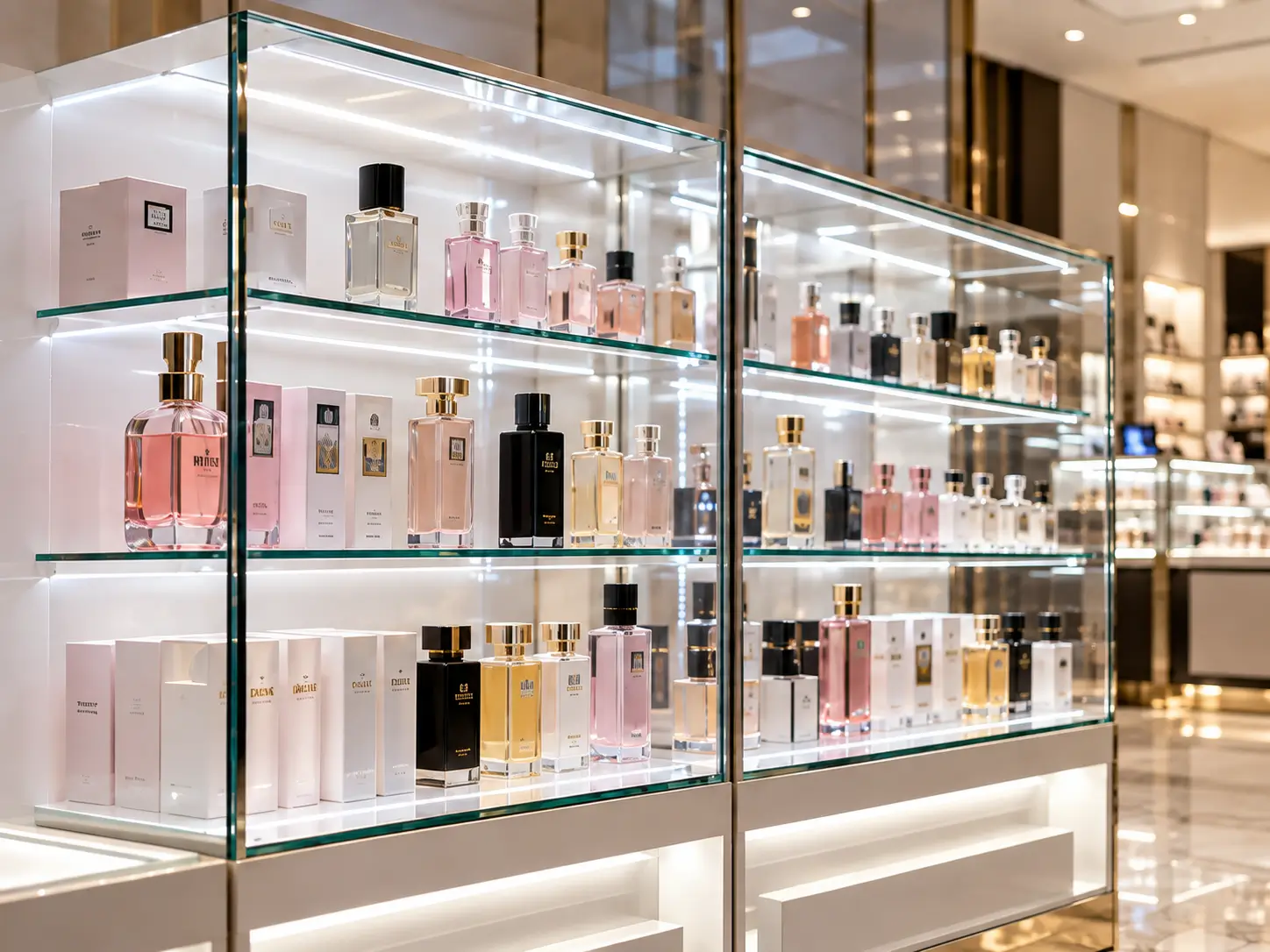
Low-iron glass generally allows slightly more visible light to pass through than standard clear glass. Combined with its reduced green tint, this can create a brighter and cleaner appearance inside illuminated display cabinets.
This difference can be useful for showcases using LED strip lighting, illuminated shelves, spotlights, or multiple glass layers. However, the final result should still be considered together with lighting color temperature, cabinet finishes, shelf positions, and reflections.
5. Glass Thickness
The difference between low-iron glass and standard glass becomes more noticeable as the glass gets thicker. Standard glass may appear almost clear in thinner panels, but the green tint becomes more visible in thick glass and along exposed polished edges.
For large glass showcases, freestanding display cabinets, counters, and premium retail fixtures, low-iron glass can provide a cleaner appearance. For thinner panels with concealed edges, standard glass may still provide more than enough visual clarity.
6. Strength and Safety
Low-iron glass is not automatically stronger or safer than standard glass. The terms low-iron and standard glass mainly describe the composition and optical appearance of the base glass rather than its safety performance.
Both types of glass can generally be processed as tempered glass or laminated glass, depending on the design and safety requirements. A project may therefore use low-iron tempered glass for greater clarity and safety, or standard clear tempered glass when cost efficiency is a higher priority.
7. Cost and Project Budget
Low-iron glass generally costs more than standard clear glass. The final cost can also be affected by thickness, panel dimensions, polishing, drilling, cut-outs, tempering, lamination, quantity, packaging, and transportation.
For larger custom retail fixture projects, it is often better to evaluate where the higher clarity of low-iron glass provides a real visual benefit. Premium feature showcases may justify the additional cost, while standard tempered glass may offer better value for general display areas or less visible components.
8. Low-Iron Glass vs Standard Glass for Different Retail Applications
Different retail environments have different requirements for clarity, appearance, durability, and budget.
| Retail Application | Suggested Glass Approach | Main Consideration |
|---|---|---|
| Jewelry Display Cabinets | Low-iron tempered glass | Maximum visibility and premium appearance |
| Watch Showcases | Low-iron tempered glass | Accurate presentation of metals and dials |
| Perfume Display Cabinets | Low-iron or selective low-iron glass | Bottle color and lighting |
| Cosmetic Displays | Low-iron glass for key showcases | Accurate product and packaging colors |
| Optical Store Fixtures | Low-iron glass for premium displays | Clear visibility and neutral presentation |
| Luxury Boutique Displays | Low-iron glass for feature cabinets | Premium and minimalist appearance |
| Electronics Displays | Depends on design | Screens and finishes may benefit from neutral glass |
| Pharmacy Display Cabinets | Standard tempered glass often sufficient | Durability, visibility, and cost |
| Convenience Store Fixtures | Standard tempered glass often sufficient | Cost efficiency and daily commercial use |
| General Retail Shelving | Standard glass often sufficient | Extreme clarity is usually unnecessary |
These recommendations are not fixed rules. Glass thickness, lighting, fixture structure, customer viewing distance, product type, safety requirements, and project quantity should all be considered before confirming the final specification.
How to Choose Between Low-Iron Glass and Standard Glass
When selecting glass for custom display cabinets and retail fixtures, the choice should not be based only on price or appearance. Product type, cabinet structure, lighting, glass thickness, safety requirements, and project scale should all be considered together.
- Product Type: Low-iron glass is more suitable for jewelry, watches, perfumes, cosmetics, eyewear, and other products where accurate color and high transparency are important. For general retail merchandise, standard clear glass is often sufficient.
- Glass Thickness and Exposed Edges: The green tint of standard glass becomes more noticeable with thicker panels and polished exposed edges. For frameless showcases, thick shelves, or premium glass structures, low-iron glass can provide a cleaner and more neutral appearance.
- Lighting and Cabinet Design: Cabinets with white interiors, reflective finishes, LED lighting, or illuminated shelves can make the difference between the two glass types more visible. Low-iron glass usually works better where clarity, brightness, and premium presentation are important.
- Project Positioning and Budget: Luxury boutiques, flagship stores, and premium display showcases may justify the additional cost of low-iron glass. For general commercial fixtures or cost-sensitive projects, standard tempered glass can provide a better balance between appearance and budget.
- Project Scale and Safety Requirements: For chain stores, multi-store rollouts, and full-store shopfitting projects, glass costs can increase significantly when large quantities are required, so low-iron glass can be used selectively in key display areas. Safety should also be evaluated separately, with tempered or laminated glass specified according to the fixture design and application.
In Conclusion
When comparing low-iron glass vs standard glass for custom display cabinets, neither option is suitable for every project. Low-iron glass provides better transparency, less green tint, cleaner polished edges, and more neutral product color presentation, making it particularly suitable for luxury and color-sensitive retail displays. Standard clear glass remains a practical and economical choice for many commercial display cabinets where these visual differences are less important. The best solution is to consider glass type together with thickness, tempering, cabinet structure, lighting, merchandise, project quantity, and budget before manufacturing begins.
FAQs
Is Low-Iron Glass the Same as Ultra-Clear Glass?
Low-iron glass is commonly marketed under names such as ultra-clear glass, extra-clear glass, or high-transparency glass. However, specifications may vary between manufacturers, so buyers should confirm the actual glass type, thickness, optical performance, and processing requirements before placing an order.
Is Low-Iron Glass Stronger Than Standard Glass?
Not automatically. Low-iron glass mainly refers to the optical composition of the glass rather than its strength. Both low-iron and standard clear glass can be tempered or laminated depending on the safety and structural requirements of the display cabinet.
Is Low-Iron Glass Worth It for Custom Display Cabinets?
It can be worth the additional cost when product color, transparency, exposed glass edges, thick panels, premium lighting, or luxury presentation are important. For general commercial fixtures where extreme clarity is unnecessary, standard tempered glass may provide better overall value.
Custom Glass Display Cabinets for Your Next Project
Choosing between low-iron glass and standard glass is only one part of developing reliable custom display cabinets and custom retail store fixtures. Glass thickness, tempering, edge polishing, shelf loading, hardware, LED lighting, cabinet structure, surface finishes, packaging, transportation, and installation should all be considered during the design and engineering stage.
At ONI Display, we can help select suitable glass, MDF, plywood, metal, acrylic, lighting, hardware, and other materials according to your merchandise, store design, budget, and project requirements. Whether you are developing a single flagship store, a chain-store rollout, multi-store project, or complete retail shopfitting project, proper material selection can help achieve a better balance between appearance, durability, safety, and cost.
 Contact us today to start your custom display fixtures project.
 WhatsApp/Call: +86 186 2096 3396
 Email: sales1@onishopfitting.com
 Factory Location: Guangzhou, China