When planning custom display cabinets or custom retail store fixtures, buyers often focus on dimensions, lighting, finishes, storage, branding, and overall appearance. However, the type of glass used in the fixture can have a major impact on safety, durability, maintenance, production, and long-term performance.
This becomes particularly important in retail environments, where glass display cabinets are exposed to frequent daily use. Staff may open and close them repeatedly, customers often move close to the fixtures, and the glass may also support or protect valuable merchandise. In addition, display cabinets used in multi-store projects must withstand transportation, installation, and ongoing operation across different locations. For these reasons, selecting the right glass specification is essential to reducing the risk of breakage, minimizing replacement and maintenance costs, and ensuring the long-term reliability of the overall custom retail fixture project.
So, when comparing tempered glass vs normal glass, what are the main differences, and which option is more suitable for commercial display projects? Understanding their strength, safety, fabrication, appearance, and cost can help B2B buyers choose the right material for custom glass display cabinets and retail store fixtures before production begins.
What Is Normal Glass?
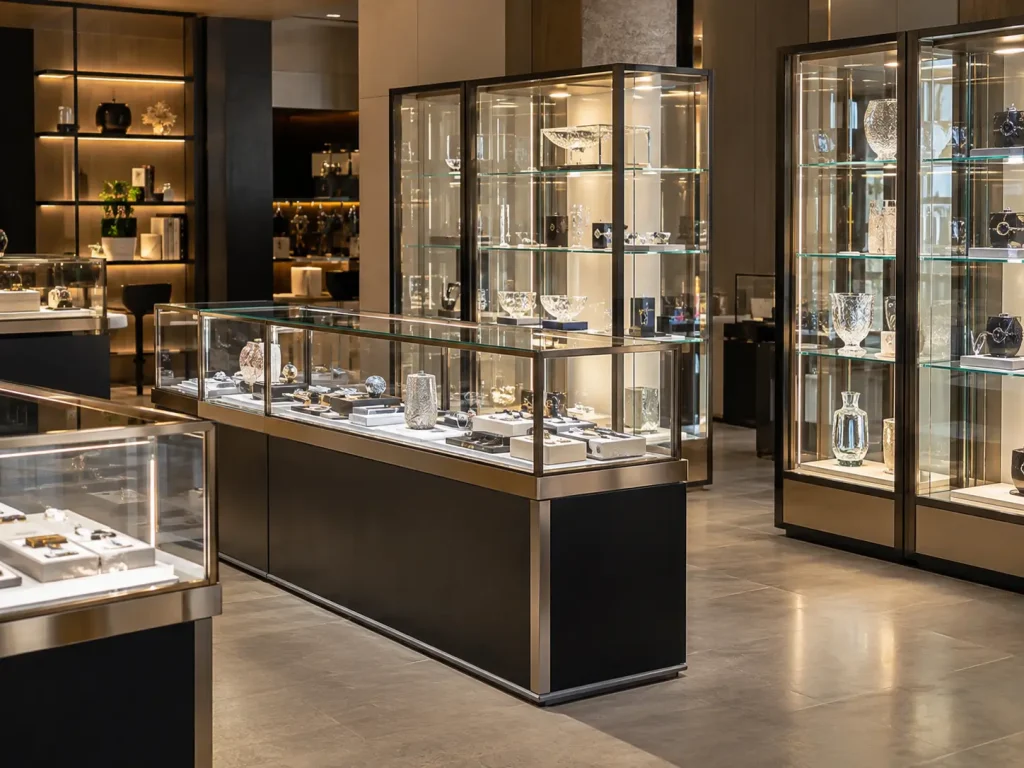
Normal glass, commonly referred to as annealed glass, is standard glass that cools gradually during the manufacturing process. This controlled cooling reduces internal stress and allows the glass to remain relatively easy to cut, drill, polish, shape, and process during the production of custom display cabinets and other retail fixtures.
Annealed glass is widely available and usually more economical than tempered glass. However, when it breaks, it can form relatively large and sharp fragments. For this reason, normal glass is generally more suitable for protected, decorative, or lower-risk components within custom retail store fixtures rather than exposed areas where customers and employees frequently interact with the fixture.
What Is Tempered Glass?
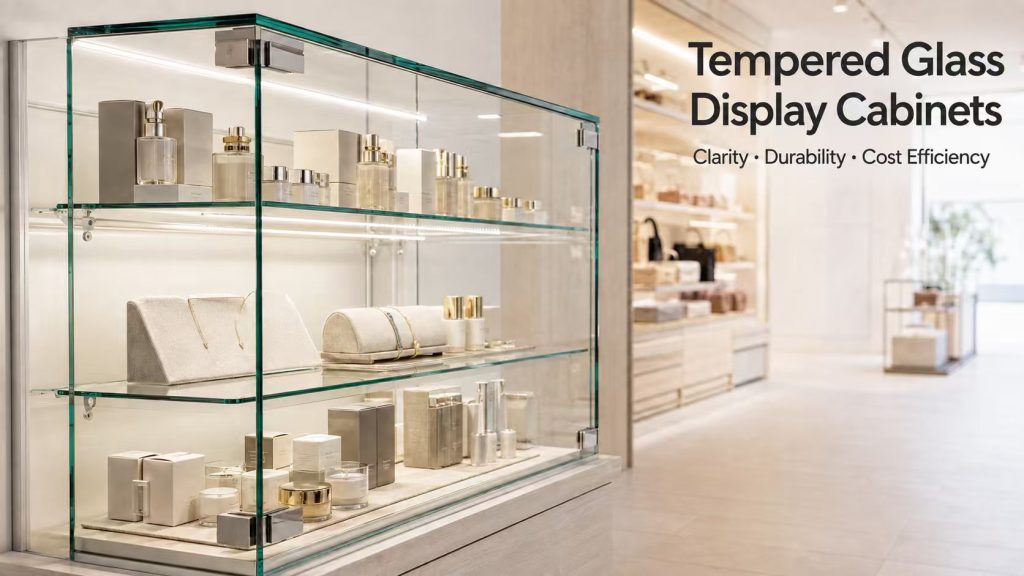
Tempered glass, also known as toughened glass, starts as annealed glass but undergoes an additional heat-treatment process. The glass is heated to a high temperature and then rapidly cooled, creating compressive stress on the surface and improving its resistance to mechanical impact and temperature changes.
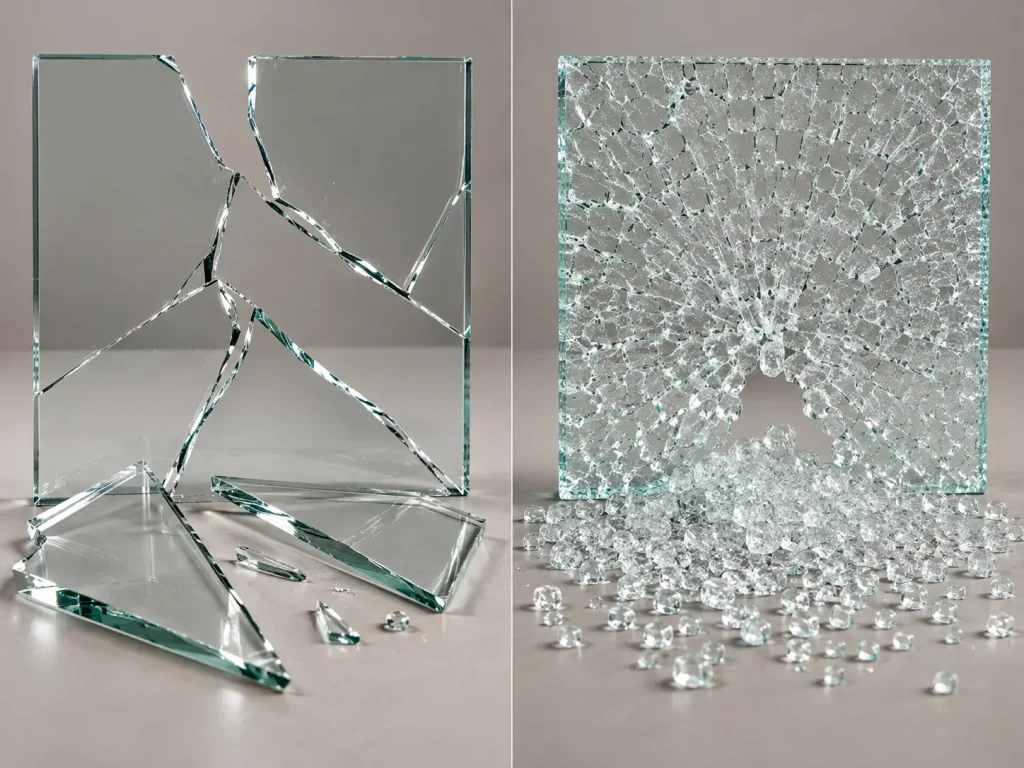
One of the most important characteristics of tempered glass is its breakage pattern. When properly manufactured tempered glass fails, it is designed to break into many relatively small fragments rather than large sharp shards. This combination of improved strength and safer breakage behavior makes tempered glass a common choice for custom display cabinets, glass shelves, showcase doors, retail counters, and customer-facing custom retail store fixtures.
Tempered Glass vs Normal Glass: Quick Comparison
Although tempered glass and normal glass can look very similar after installation, their physical performance, manufacturing requirements, and typical applications are quite different. These differences become particularly important when glass is used as a structural or frequently handled component of custom display cabinets.
For B2B buyers, the decision should not be based only on the appearance or price of the glass. It is also important to consider where the panel will be installed, how frequently customers or employees will interact with it, what products it will support, and whether the cabinet forms part of a larger custom retail store fixtures project.
| Comparison Point | Tempered Glass | Normal / Annealed Glass | Custom Display Cabinet Consideration |
|---|---|---|---|
| Manufacturing Process | Receives additional heat treatment after cutting and processing | Gradually cooled during standard glass production | Tempered glass dimensions and holes normally need to be finalized before production |
| Strength | Higher resistance to mechanical impact and bending | Lower impact resistance | Often preferred for doors, shelves, and exposed panels |
| Breakage Pattern | Breaks into many relatively small fragments | Can break into larger, sharper pieces | Important for customer-facing custom retail store fixtures |
| Safety | Commonly used for safety-glazing applications when manufactured to relevant standards | Generally not considered safety glazing | Suitable for fixtures near customers, aisles, and checkout areas |
| Thermal Resistance | Better resistance to temperature differences and thermal stress | More sensitive to sudden temperature changes | Useful near lighting, windows, or changing retail conditions |
| Fabrication Flexibility | Cannot normally be cut or drilled after tempering | Can be cut, drilled, and modified more easily | Accurate shop drawings are especially important |
| Appearance | Clear and visually similar to ordinary glass | Clear and visually similar to tempered glass | Both provide strong merchandise visibility |
| Initial Cost | Usually higher because of additional processing | Generally lower | Cost should be balanced with safety and long-term performance |
| Typical Retail Use | Shelves, doors, front panels, side panels, showcases, counters | Decorative or protected glass components | Glass type can be selected according to each cabinet component |
| Commercial Suitability | Well suited to frequent-use and customer-facing environments | More appropriate for selected lower-risk applications | Retail environment and fixture function should guide selection |
| Custom Fixture Integration | Suitable for engineered display cabinet systems | Easier to modify during fabrication | Final choice depends on drawings, hardware, and fixture structure |
| Multi-Store Projects | Supports standardized specifications for repeated production | Suitable for selected low-risk components | Consistent specifications help simplify custom retail fixture rollouts |
The comparison shows that tempered glass offers clear advantages when strength, safety, and frequent commercial use are priorities. Normal glass, however, still has value where easy fabrication, lower cost, or protected installation conditions are more important.
For custom glass display cabinets and custom retail store fixtures, manufacturers may combine different glass types depending on the position and function of each component. The most suitable specification should therefore be determined during the design and engineering stage rather than applying one glass type automatically to every panel.
1. Strength: Tempered Glass Is More Resistant to Impact
Strength is one of the most significant differences when comparing tempered glass vs normal glass. The tempering process creates compressive stress on the glass surface, allowing tempered glass to withstand more mechanical stress than standard annealed glass of a similar thickness.
This additional strength can be valuable in commercial environments where custom display cabinets are exposed to frequent movement and accidental contact. A glass cabinet door may be opened dozens of times each day, while shelves need to support merchandise continuously. Freestanding showcases and counters may also experience contact from customers, shopping bags, trolleys, equipment, or surrounding retail fixtures.
For this reason, tempered glass is commonly considered for custom glass display cabinet doors, retail shelving, front showcase panels, countertop displays, and exposed side panels. However, the glass thickness, panel size, support method, edge condition, hardware, and expected merchandise load must still be properly engineered because tempered glass is stronger than ordinary glass, but it is not unbreakable.
2. Safety: The Breakage Pattern Is Very Different
Safety is another major factor for B2B buyers comparing tempered glass and normal glass. Standard annealed glass can break into relatively large and sharp pieces, creating a greater cutting hazard in areas where employees or customers are nearby.
Tempered glass behaves differently because of the internal stresses created during heat treatment. If it breaks, it generally fragments into many smaller pieces instead of producing the same large sharp shards associated with annealed glass. This characteristic is one of the reasons tempered glass is widely used in many safety-related glazing applications.
In custom retail store fixtures, this becomes especially relevant for display cabinets installed beside walkways, checkout areas, store entrances, promotional zones, or frequently accessed merchandise. When customers can touch, lean near, or move around a custom display cabinet, the way the glass behaves after accidental damage can be just as important as its resistance to the initial impact.
3. Thermal Resistance: Tempered Glass Performs Better
Glass in a commercial display environment may experience more than physical impact. Temperature differences caused by sunlight, lighting, air-conditioning, heating systems, equipment, or surrounding store conditions can also create thermal stress within a glass panel.
Tempered glass generally has better resistance to thermal stress than ordinary annealed glass. This can be beneficial for custom display cabinets installed near storefront windows, strong lighting systems, entrances, or environments where different parts of the glass may be exposed to noticeably different temperatures.
This does not mean every custom retail store fixture exposed to LED lighting automatically requires tempered glass. The overall design still needs to consider the type of lighting, distance between the light source and glass, ventilation, glass dimensions, installation conditions, and surrounding temperature. Thermal performance should therefore be evaluated as part of the complete retail fixture design.
4. Fabrication: Normal Glass Is Easier to Modify
One important advantage of normal annealed glass is its fabrication flexibility. Before installation, it can usually be cut, drilled, polished, notched, or processed into different shapes relatively easily, giving manufacturers more flexibility during the production of custom display cabinets.
Tempered glass requires more careful planning. Glass dimensions, hinge holes, lock holes, handle openings, corner shapes, notches, and most other processing normally need to be completed before the tempering process. Once the glass has been fully tempered, attempting to cut or drill it can cause the entire panel to break.
For custom retail store fixtures, this makes accurate technical drawings particularly important. B2B buyers and manufacturers should confirm glass dimensions, hardware positions, opening directions, shelf locations, edge treatments, and accessory requirements before production. For multi-store projects, standardized drawings can also help maintain consistency across large quantities of custom retail display fixtures and store fixtures.
5. Appearance: Can You See the Difference?
From a normal viewing distance, clear tempered glass and clear annealed glass usually look very similar. Tempering primarily changes the mechanical properties of the glass rather than dramatically changing its transparent appearance.
This is an important advantage for custom display cabinets. Retailers can use tempered glass to improve safety and durability without sacrificing the clear product visibility expected from jewelry showcases, cosmetics counters, optical displays, electronics cabinets, or premium retail fixtures.
The appearance of custom retail store fixtures can also be customized further through different glass options. Depending on the project, buyers may consider ultra-clear glass, tinted glass, frosted glass, printed glass, mirrored glass, curved glass, or laminated glass. These materials can then be combined with metal, stainless steel, wood finishes, acrylic, LED lighting, graphics, and branding to create a coordinated retail presentation.
6. Tempered Glass vs Normal Glass Cost
Cost is an important consideration in almost every custom display cabinet and retail fixture project. Normal annealed glass generally has a lower initial price because it does not require the additional heat-treatment process associated with tempered glass.
Tempered glass usually costs more due to additional production steps, specialized equipment, processing control, and the need to finalize cutting and drilling before tempering. Glass thickness, custom shapes, polished edges, holes, curved designs, order quantity, packaging, and transportation requirements can also influence the final cost of custom glass display cabinets.
However, B2B buyers should evaluate more than the initial material price. A lower-cost glass specification may not provide the best value if the custom retail store fixtures are installed in busy stores, opened frequently, exposed to customers, or difficult to replace after installation. For chain stores and multi-location fixture projects, durability, replacement requirements, maintenance, safety, consistency, and total project cost should all be considered.
Tempered Glass for Different Retail Environments
Different retail sectors use custom display cabinets and custom retail store fixtures in different ways. The appropriate glass specification should reflect customer traffic, merchandise value, cabinet structure, daily usage, security requirements, and the overall visual style of the store.
- Jewelry and Watch Stores: Custom glass display cabinets are widely used for watches, jewelry, and luxury accessories. Tempered glass can be specified for showcase panels, shelves, doors, and sales counters, while higher-security projects may require laminated or specialized security glazing.
- Cosmetics and Perfume Stores: Custom retail store fixtures often combine tempered glass shelves and showcase panels with integrated LED lighting. Transparent glass keeps the focus on perfume bottles, skincare products, cosmetics packaging, and promotional merchandise.
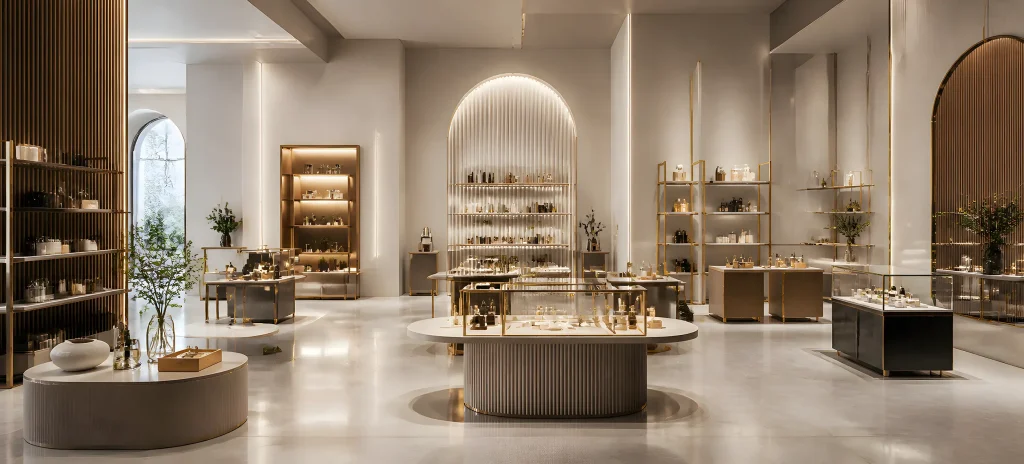
- Optical Stores: Custom display cabinets, wall displays, and glass shelving provide an open presentation for eyeglasses and sunglasses. Tempered glass can be used for frequently handled shelving and customer-facing display areas.
- Electronics Stores: Custom retail fixtures may include lockable glass cabinets and illuminated showcases for phones, cameras, accessories, gaming products, and other electronic devices. Tempered glass can provide additional durability where customers regularly interact with fixtures.
- Convenience Stores: Custom retail store fixtures positioned near checkout counters, entrances, aisles, and promotional areas can experience frequent customer contact. Tempered glass may be suitable for exposed panels, shelves, and doors in these high-traffic areas.
- Luxury Boutiques: Premium custom display cabinets often combine glass with stainless steel, metal finishes, wood veneers, stone-effect materials, and integrated lighting. Clear tempered glass helps maintain an elegant appearance while keeping merchandise visually prominent.
- Smoke and Vape Shops: Custom glass display cabinets can provide organized product presentation and controlled customer access. Tempered glass doors, shelves, and front panels are commonly considered for fixtures that experience frequent daily use.
- Shopping Mall Kiosks: Custom retail store fixtures for mall kiosks are typically surrounded by customer circulation on several sides. Tempered glass can be used for display counters, showcases, shelving, and transparent panels according to the kiosk structure and merchandising requirements.
In Conclusion
When comparing tempered glass vs normal glass, the most important differences involve strength, safety, thermal resistance, fabrication flexibility, and cost. Normal annealed glass is easier to process and usually more economical, while tempered glass provides improved mechanical strength and a safer breakage pattern that makes it particularly useful for many customer-facing commercial applications. For B2B retailers, brands, contractors, and store designers developing custom display cabinets or custom retail store fixtures, the right glass should be selected according to cabinet structure, merchandise load, customer interaction, daily usage, project environment, applicable safety requirements, and overall fixture budget.
FAQs About Tempered Glass vs Normal Glass
1. Which Glass Is Better for Custom Retail Display Cabinets?
For many custom display cabinets, tempered glass is the more commonly selected option for doors, shelves, front panels, and exposed side panels because of its increased strength and safer breakage characteristics.
2. Is Tempered Glass More Expensive Than Normal Glass?
Yes, tempered glass usually has a higher initial cost because it requires additional heat treatment and more careful production planning. Custom holes, edge polishing, unusual shapes, special dimensions, and small production quantities can further affect the price of custom glass display cabinets.
3. Can Tempered Glass Be Cut or Drilled After Tempering?
Normally, no. Cutting, drilling, or significantly modifying fully tempered glass after the tempering process can cause the entire glass panel to break. For this reason, all important dimensions, holes, notches, edge polishing, corner treatments, hinge positions, and hardware openings should be confirmed before tempering. Accurate technical drawings are especially important for custom display cabinets, custom retail store fixtures, and large B2B retail fixture orders.
Planning Custom Display Cabinets or Custom Retail Store Fixtures?
Selecting the right glass is only one part of creating reliable custom display cabinets and retail store fixtures. Cabinet structure, materials, hardware, lighting, merchandise load, storage, branding, installation, and daily customer interaction should all be considered together during the design stage.
ONI Display provides custom display cabinets, custom retail store fixtures, custom glass showcases, retail display counters, shelving systems, and other commercial store fixtures using materials such as tempered glass, metal, stainless steel, wood, MDF, plywood, acrylic, and integrated LED lighting. Dimensions, finishes, shelving, locks, storage, lighting, graphics, and branding can be customized according to different retail environments and product categories.
 Contact us today to start your custom display fixtures project.
 WhatsApp/Call: +86 186 2096 3396
 Email: sales1@onishopfitting.com
 Factory Location: Guangzhou, China