

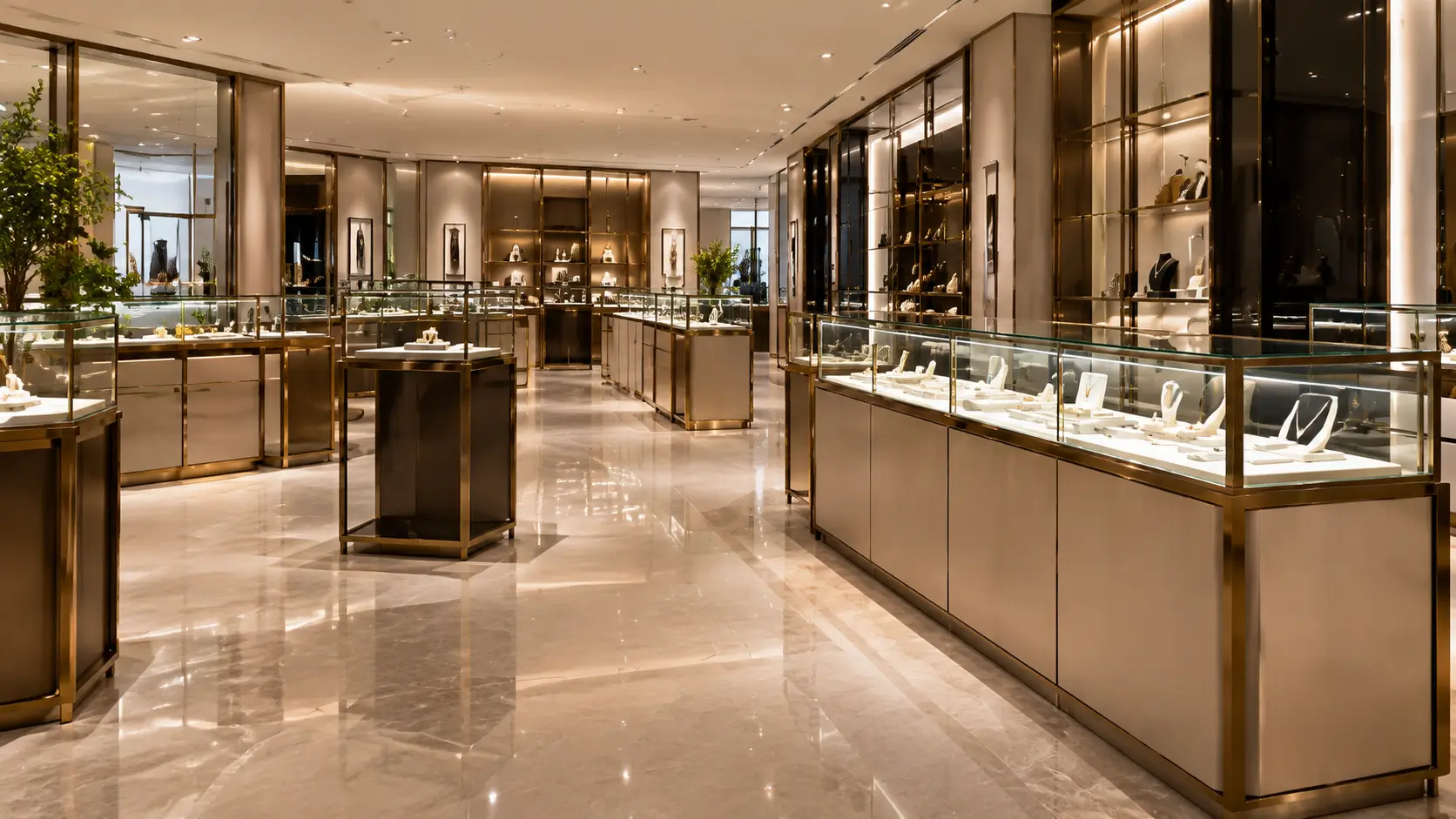
Choosing the right metal for custom store fixtures can be challenging, especially when comparing stainless steel and aluminum. Both are widely used in retail display cabinets, shelving, counters, and display stands, but they differ in strength, weight, appearance, and cost.
An unsuitable material choice can increase production costs, complicate installation, and affect the long-term performance of retail fixtures. These challenges become even more important for retail chains and multi-store rollout projects.
Understanding stainless steel vs aluminum helps retailers select suitable materials for different applications. This guide compares their key properties, costs, finishes, and uses in custom retail fixtures to support better material decisions.
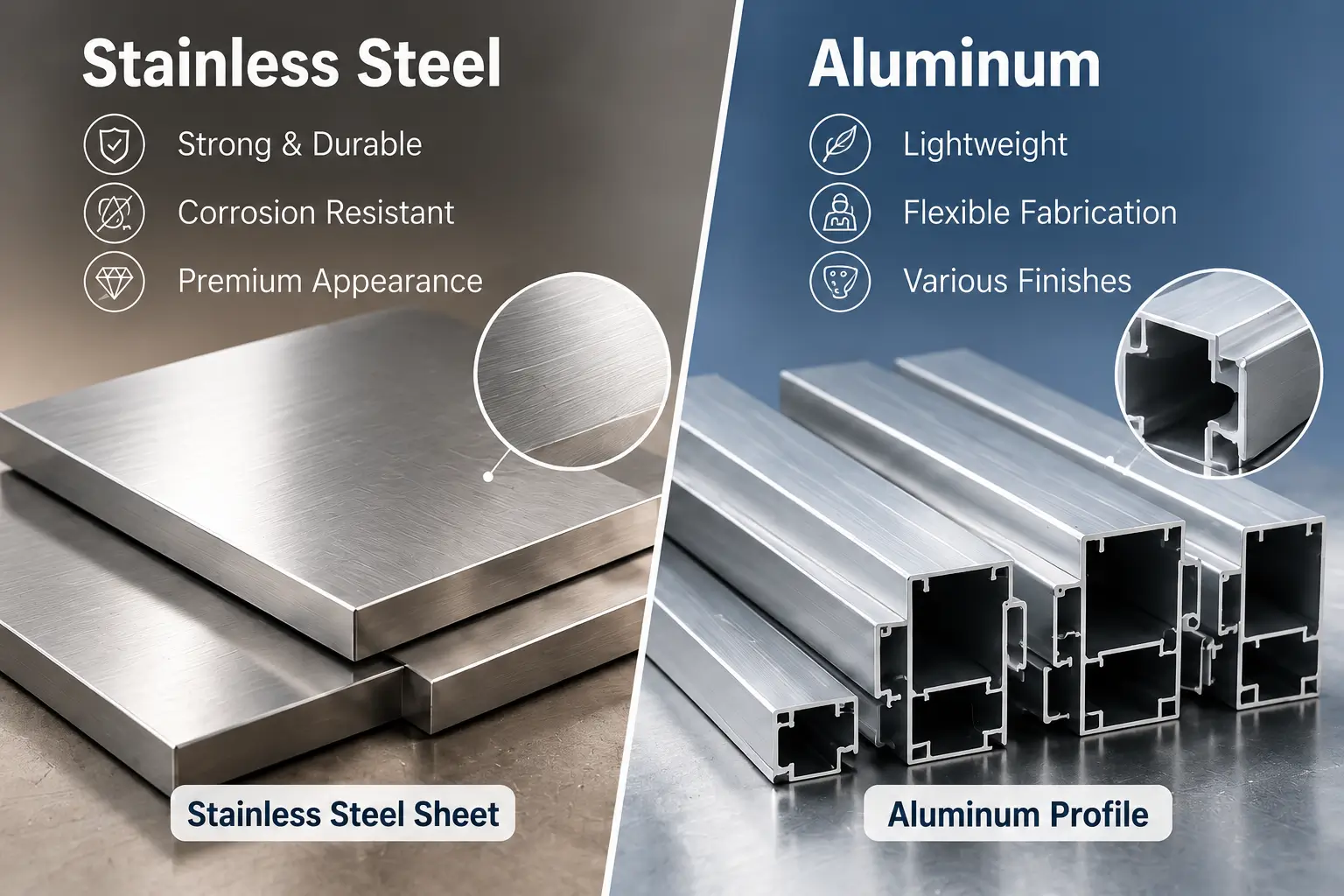
What Is Stainless Steel?
Stainless steel is a durable, corrosion-resistant metal widely used in custom store fixtures, retail display cabinets, counters, and decorative frames. Its strength, rigidity, and premium appearance make it suitable for retail environments requiring long-lasting and attractive display solutions.
Common stainless steel grades include:
- 304 Stainless Steel: Offers good corrosion resistance and durability for most indoor retail applications.
- 316 Stainless Steel: Provides enhanced corrosion resistance for coastal or high-humidity environments.
- 201 Stainless Steel: A lower-cost option for selected decorative applications in less demanding environments.
What Is Aluminum?
Aluminum is a lightweight, corrosion-resistant metal commonly used in custom retail fixtures, modular shelving, display frames, and wall-mounted display systems. Its low weight, flexible fabrication options, and variety of surface finishes make it suitable for modern retail environments.
Common aluminum alloys include:
- 6063 Aluminum: Commonly used for decorative profiles, display frames, and modular systems.
- 6061 Aluminum: Suitable for fabricated components requiring good strength and machinability.
- 5052 Aluminum: Often used for metal panels, covers, and formed fixture components.
Stainless Steel vs Aluminum: Quick Comparison
Both stainless steel and aluminum are suitable for manufacturing metal display fixtures, but their different physical and manufacturing characteristics influence their applications.
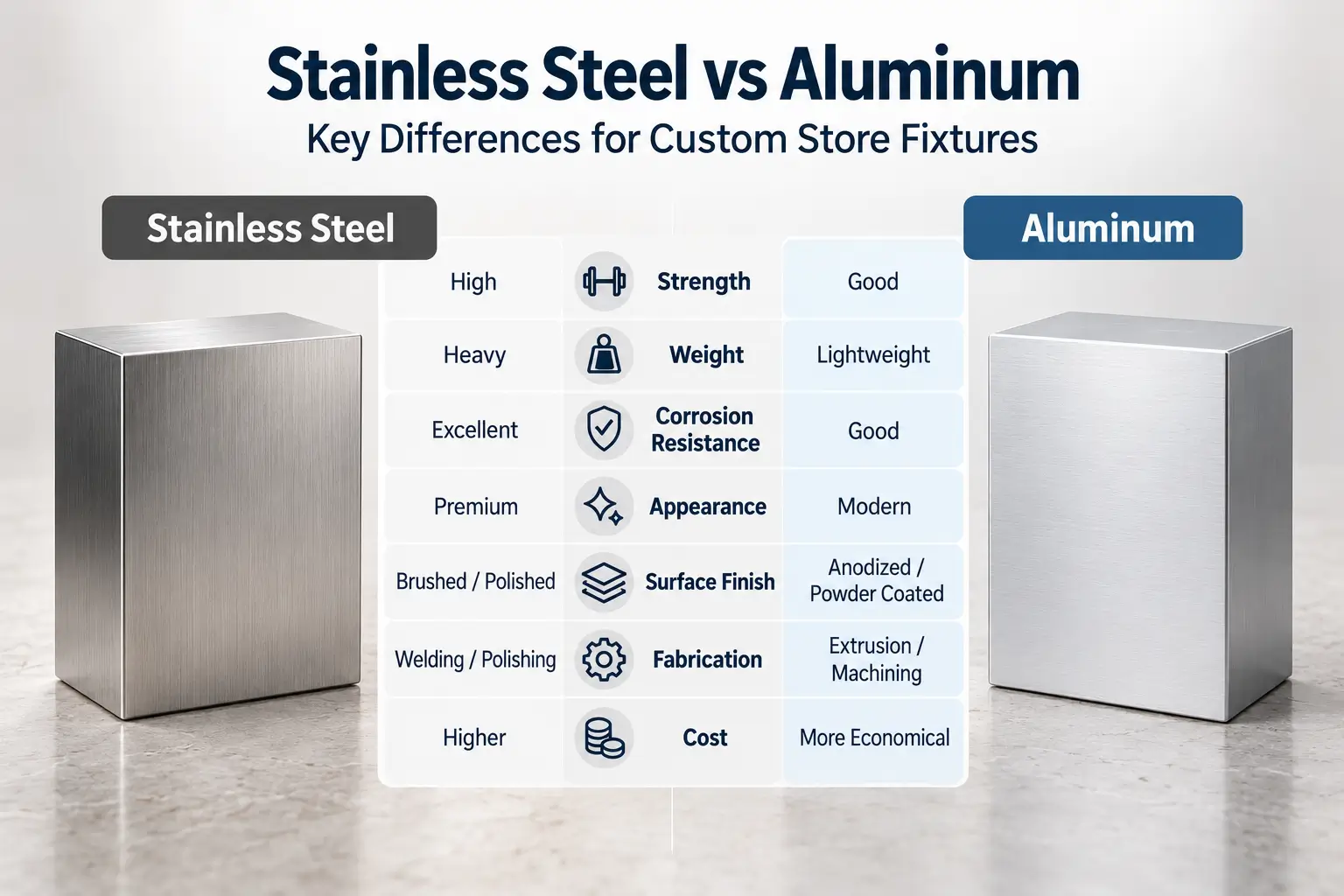
The following table provides a general comparison for retail display cabinets, shelving systems, and other custom store fixtures.
| Comparison Factor | Stainless Steel | Aluminum |
|---|---|---|
| Strength & Durability | High rigidity and good resistance to deformation in comparable designs | Good strength-to-weight ratio; structural performance depends on alloy and profile |
| Weight | Relatively heavy | Lightweight |
| Corrosion Resistance | Excellent with appropriate grades and maintenance | Good, particularly with suitable alloy and protective finish |
| Appearance | Premium metallic appearance | Modern, clean appearance |
| Surface Finishes | Brushed, polished, satin, and selected coatings | Anodized, powder-coated, brushed, and other finishes |
| Fabrication | Cutting, bending, welding, polishing | Cutting, bending, machining, extrusion, assembly |
| Installation | Heavier components may require additional handling | Easier handling for lightweight or modular systems |
| Cost | Often higher material and finishing costs | Can be economical for standardized profiles; varies by design |
| Maintenance | Regular cleaning; finish and environment affect upkeep | Regular cleaning; coatings and surfaces require suitable care |
| Typical Applications | Premium showcases, retail counters, decorative frames | Modular displays, shelving frames, wall displays |
Stainless steel is often selected for premium retail display fixtures requiring rigid construction and distinctive metal finishes. Aluminum is especially suitable for lightweight and modular systems where transportation, assembly, and flexibility are important.
However, the final material choice should depend on fixture dimensions, expected loads, design requirements, surface treatments, and project budgets rather than the metal type alone.
Stainless Steel vs Aluminum: Key Differences for Custom Store Fixtures
When selecting materials for custom store fixtures, understanding the differences between stainless steel and aluminum is essential. Both metals offer advantages in strength, weight, corrosion resistance, appearance, fabrication, and cost. The following comparison explains how these factors influence material selection for retail display cabinets, shelving systems, counters, and other store fixtures.
1. Strength & Durability
Stainless steel offers excellent strength, rigidity, and durability, making it suitable for custom store fixtures that require stable structures and long-term performance. It is commonly used in retail display cabinet frames, checkout counters, and metal supports, particularly in high-traffic retail environments where fixtures experience frequent customer interaction.
Aluminum provides a good strength-to-weight ratio and can achieve reliable structural performance when properly designed. Although it is generally less rigid than stainless steel, aluminum is suitable for modular shelving, lightweight display stands, and adjustable retail fixtures that require both durability and flexibility.
2. Weight & Structural Performance
Aluminum is approximately one-third the density of stainless steel, making it significantly lighter and easier to transport, assemble, and install. This advantage is especially valuable for large display structures, modular retail fixtures, and multi-store rollout projects where transportation and installation efficiency are important.
Stainless steel is heavier but generally provides greater stiffness in comparable sections, making it suitable for rigid display cabinet frames, retail counters, and structural supports. However, the final structural performance also depends on material thickness, fixture dimensions, connections, and load requirements.
3. Corrosion Resistance
Stainless steel provides excellent corrosion resistance when the appropriate grade is selected. Grade 304 is commonly suitable for indoor custom store fixtures, while grade 316 offers additional protection in coastal locations, high-humidity environments, and certain demanding conditions. Proper maintenance helps preserve its appearance and performance.
Aluminum naturally forms a protective oxide layer that helps resist corrosion. Surface treatments such as anodizing and powder coating can further improve protection and provide decorative finishes. For retail display fixtures, the selection should consider environmental exposure, cleaning methods, and long-term maintenance requirements.
4. Appearance & Surface Finishes
Stainless steel offers a premium metallic appearance and is available in brushed, polished, satin, and mirror finishes. These finishes are commonly used in luxury retail display cabinets, jewelry showcases, watch displays, and decorative store fixtures where material appearance contributes to the overall brand presentation.
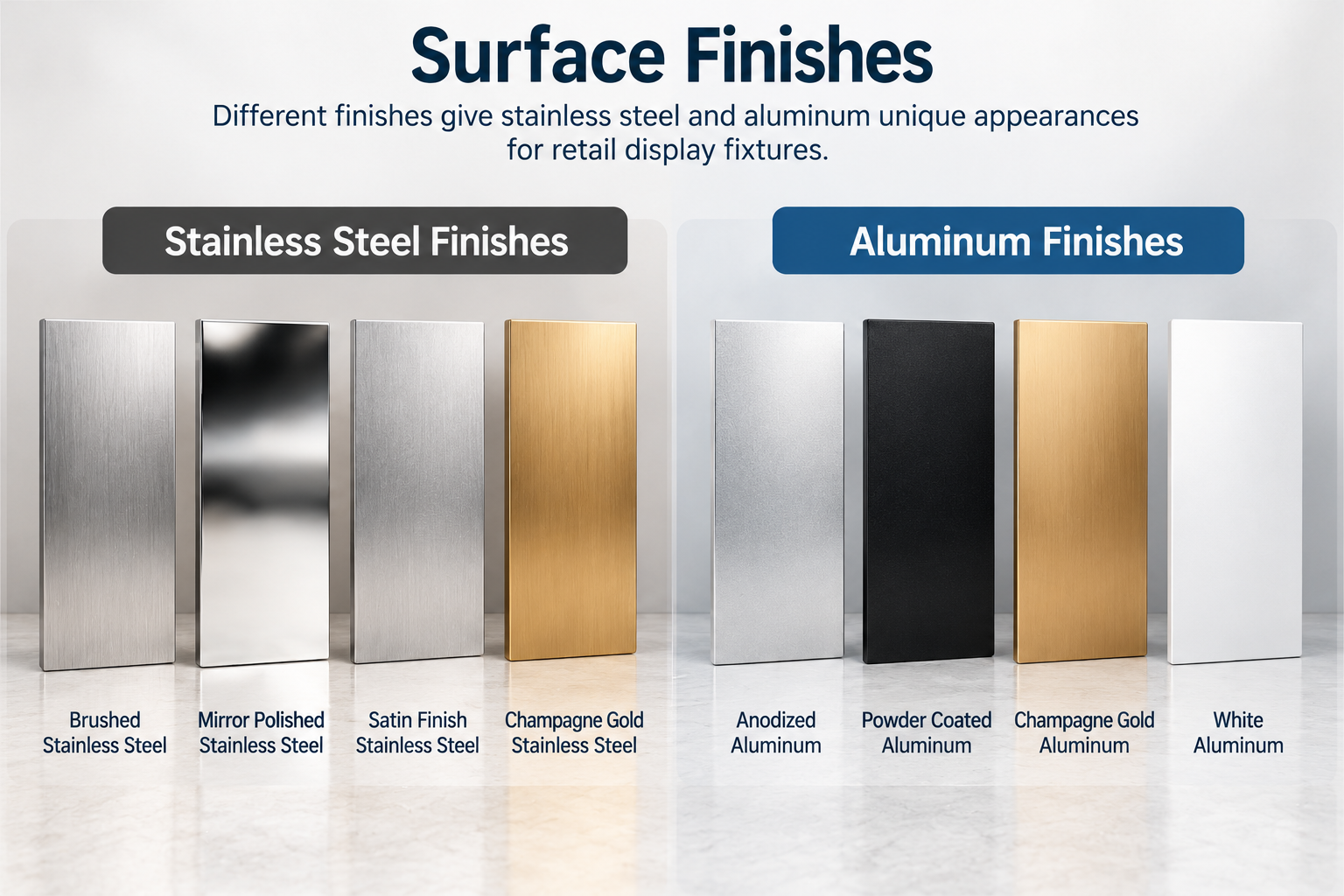
Aluminum offers extensive flexibility in colors and surface treatments, including anodized, brushed, and powder-coated finishes. It can be customized to match different retail design concepts, making it suitable for modern cosmetic stores, clothing boutiques, optical stores, and branded display systems.
5. Fabrication & Customization
Stainless steel can be cut, bent, welded, and polished to manufacture custom display cabinets, metal frames, retail counters, and decorative components. Its fabrication flexibility supports different fixture designs, although complex structures and high-quality decorative finishes may require additional processing and skilled workmanship.
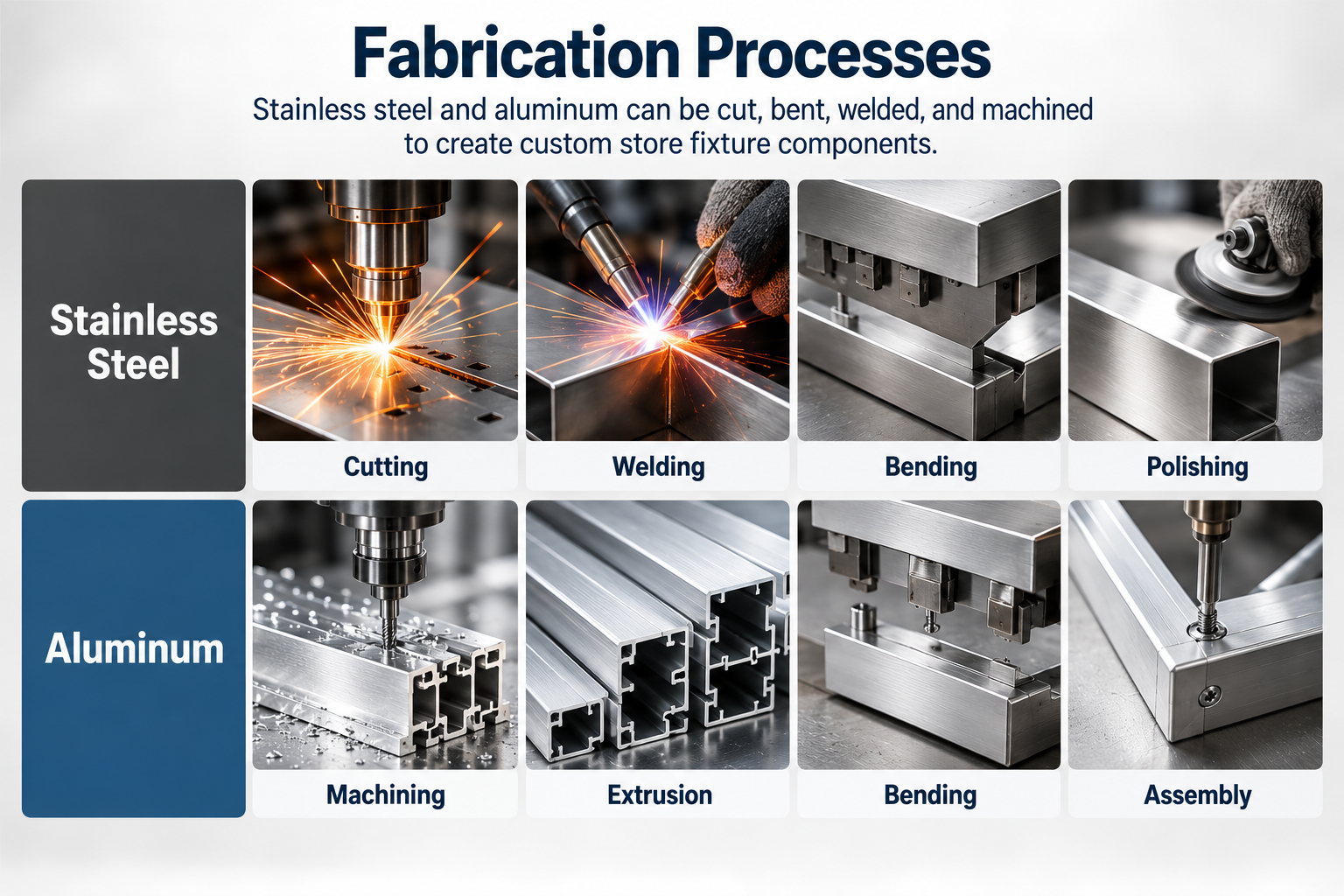
Aluminum is well suited to machining, cutting, extrusion, and modular assembly. Extruded aluminum profiles allow manufacturers to create standardized frames and repeatable components, making them particularly practical for custom retail fixtures used in chain stores and multi-store rollout projects. However, specialized profiles may require additional tooling costs.
6. Cost & Maintenance
Stainless steel often has higher material, fabrication, and finishing costs, particularly when complex welding or decorative polishing is required. However, its durability, rigidity, and premium appearance can provide long-term value for custom store fixtures used in demanding or high-end retail environments.
Aluminum can offer cost advantages for lightweight display structures, modular shelving, and standardized retail fixtures. Its lower weight may also help reduce transportation and installation expenses. However, specialized alloys, extruded profiles, and surface finishes can affect pricing, so retailers should compare total project costs rather than material prices alone.
Stainless Steel vs Aluminum for Different Custom Store Fixture Components
Different components of custom store fixtures require different levels of strength, weight, durability, and visual appeal. Selecting the appropriate metal for each application helps retailers balance functionality, appearance, and production costs.
- Retail Display Cabinet Frames: Stainless steel is suitable for rigid, premium cabinet frames, while aluminum offers lightweight construction for modular and glass display cabinets.
- Retail Display Stands: Stainless steel works well for durable, decorative display stands, while aluminum is suitable for lightweight, movable, and modular displays.
- Wall-Mounted Display Fixtures: Aluminum is often preferred for lightweight wall displays, while stainless steel can provide strong supports and premium decorative details.
- Retail Checkout Counters: Stainless steel is suitable for counter structures, decorative trims, and premium finishes. Aluminum is practical for lightweight frames and modular counter systems.
- Retail Shelving Systems: Aluminum supports adjustable and modular shelving designs, while stainless steel is suitable for rigid supports and applications requiring specific durability characteristics.
- Glass Display Showcases: Stainless steel is commonly used for premium metal frames and decorative details, while aluminum works well for slim-profile and standardized glass showcases.
- Decorative Metal Trims & Panels: Stainless steel provides brushed, polished, and mirror finishes, while aluminum offers lightweight profiles and flexible color options.
- Modular Fixtures for Retail Chains: Aluminum is suitable for standardized, lightweight display systems, while stainless steel may be selected for specific structural requirements and consistent premium finishes.
How to Choose Between Stainless Steel and Aluminum for Custom Store Fixtures
Choosing between stainless steel and aluminum for custom store fixtures depends on the fixture function, store environment, design requirements, and project budget. Before confirming production, retailers and shopfitting contractors should compare the following factors.
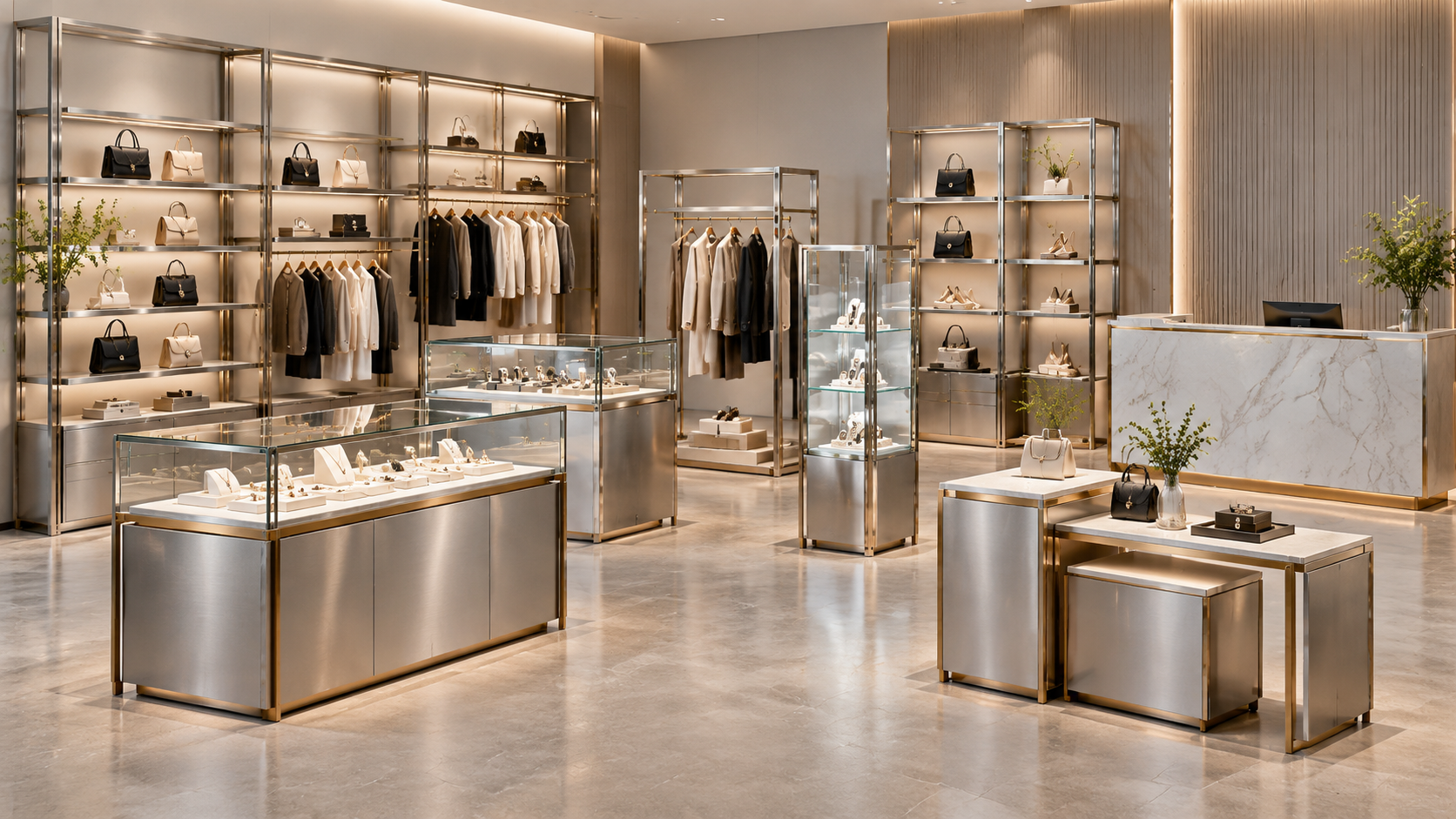
- Fixture Function & Load Requirements: Stainless steel provides higher strength for heavy-duty shelving, structural frames, and high-load fixtures, while aluminum is suitable for lightweight display structures and movable stands
- Retail Store Environment: Stainless steel offers excellent corrosion resistance and is well suited to humid or demanding retail environments. Aluminum also provides good corrosion resistance and can be used for indoor and selected outdoor applications.
- Brand Identity & Appearance: Stainless steel can create a premium appearance with brushed, polished, or colored finishes, while aluminum offers modern finishes such as anodized, powder-coated, and champagne gold surfaces.
- Fixture Size & Weight: Stainless steel is heavier and provides a solid, substantial structure, while aluminum is significantly lighter, making it easier to handle, transport, and install for large or movable display fixtures.
- Manufacturing & Customization: Stainless steel is commonly fabricated through cutting, bending, welding, and polishing. Aluminum supports extrusion, machining, bending, and other flexible fabrication methods for customized fixture components.
- Project Budget & Lifecycle Cost: Stainless steel generally has a higher material and fabrication cost but offers excellent durability. Aluminum can provide a more economical solution when low weight, easier handling, and efficient fabrication are priorities.
- Single-Store vs Multi-Store Projects: For stainless steel and aluminum fixtures used in chain stores and multi-store rollouts, standardized dimensions, consistent finishes, and repeatable production specifications are important for maintaining brand consistency.
- Long-Term Maintenance: Stainless steel requires relatively low maintenance and maintains its appearance well in demanding environments. Aluminum is also low-maintenance, while the selected anodized or powder-coated finish can affect long-term appearance and durability.
Working with an experienced custom retail fixtures manufacturer can help retailers evaluate material specifications, production methods, finishes, and costs before manufacturing begins.
In Conclusion
When comparing stainless steel vs aluminum for custom store fixtures, both materials offer distinct advantages. Stainless steel provides strength, durability, and premium finishes, while aluminum offers lightweight construction, flexibility, and suitability for modular display systems. The best choice depends on fixture design, store environment, budget, and project requirements. Selecting the right material helps retailers create functional, attractive, and long-lasting retail display fixtures.
FAQs
Is Stainless Steel or Aluminum Better for Retail Display Cabinets?
Both materials can be suitable for retail display cabinets. Stainless steel is often selected for premium showcases requiring rigid frames and decorative metallic finishes. Aluminum is commonly used for lightweight cabinet frames, modular systems, and profile-based construction. The final choice should consider cabinet dimensions, glass weight, load requirements, appearance, and budget.
Is Aluminum Strong Enough for Custom Store Fixtures?
Yes. Aluminum can provide sufficient structural performance for many custom store fixtures when the alloy, profile thickness, connections, and overall design are properly specified. It is commonly used in retail shelving, display frames, wall-mounted displays, and modular fixtures. Structural requirements should be verified for the intended loads.
Which Material Is More Cost-Effective for Retail Chain Store Projects?
Aluminum may be cost-effective for standardized modular systems because of its lightweight construction and repeatable profiles. Stainless steel may provide better long-term value for certain premium or demanding applications. For retail chains, the most cost-effective choice depends on fixture specifications, manufacturing quantities, transportation, installation, maintenance, and expected service life.
Custom Store Fixtures for Your Next Retail Project
At ONI Display, we provide custom store fixtures and retail display solutions for jewelry stores, watch retailers, cosmetics brands, perfume stores, clothing stores, optical shops, and retail chains. Our manufacturing services cover custom display cabinets, retail counters, metal display stands, shelving systems, and other store fixtures based on project drawings, materials, finishes, dimensions, and display requirements.
Whether you are planning a single retail store or a multi-store rollout project, our team can help review your fixture requirements and recommend suitable materials and manufacturing solutions. From design development and material selection to custom production, quality control, export packaging, and delivery coordination, we support your retail fixture project from concept to completion.
 Contact us today to start your custom display fixtures project.
 WhatsApp/Call: +86 186 2096 3396
 Email: sales1@onishopfitting.com
 Factory Location: Guangzhou, China