Choosing the right surface material is an important part of designing and manufacturing custom retail fixtures. The finish not only affects how display cabinets, counters, shelving, and wall units look, but also influences durability, maintenance, production cost, and long-term performance in a retail environment.
Two commonly used options are wood veneer and laminate. Wood veneer offers a natural wood appearance and a more refined finish, while laminate provides greater consistency, durability, and flexibility for commercial applications.
So, wood veneer vs laminate for custom retail fixtures: which should you choose? The right option depends on your store concept, budget, fixture location, expected traffic, project quantity, and brand positioning. This guide compares the two materials to help retailers, designers, contractors, and B2B buyers make a more practical decision.
What Is Wood Veneer?
Wood veneer is a thin layer of real wood that is bonded to a substrate such as MDF or plywood. Because the visible surface is made from genuine wood, veneer retains the natural grain, texture, and color variations of different wood species. Common veneer options include oak, walnut, ash, maple, cherry, and other decorative woods.
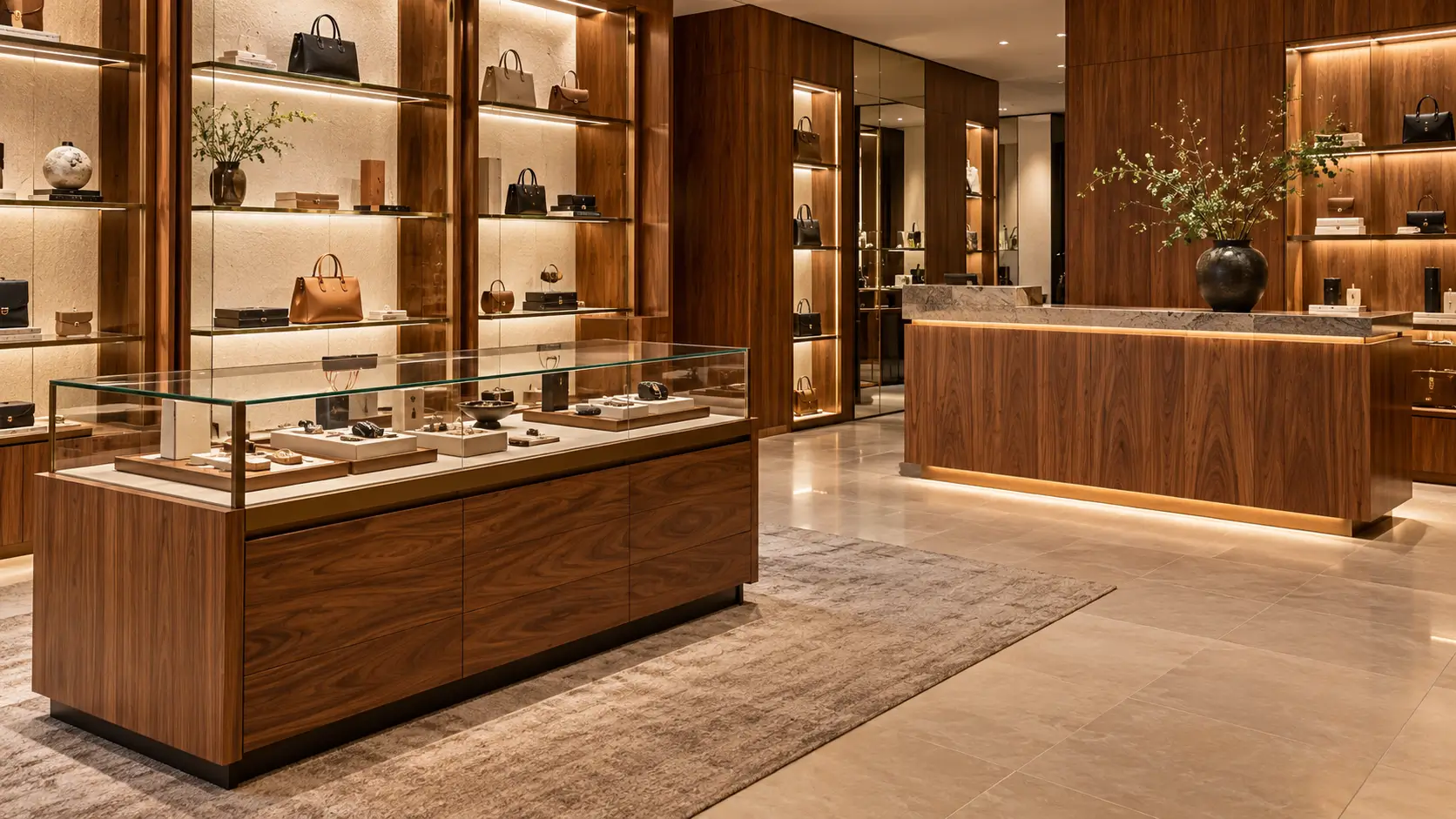
For custom retail fixtures, wood veneer is often selected when the project requires a warm, natural, or premium appearance. It can be stained, colored, or protected with different coatings and is commonly used for display cabinets, reception counters, shelving, wall panels, and other decorative shopfitting elements.
What Is Laminate?

Laminate is a manufactured decorative surface that is normally bonded to substrates such as MDF, plywood, or particleboard. High Pressure Laminate (HPL) is commonly used for commercial retail fixtures because it offers good resistance to daily wear, scratches, stains, and cleaning.
Laminate is available in a wide range of solid colors, wood grains, stone effects, textures, matte finishes, and other decorative surfaces. For custom retail fixtures, it is widely used for counters, cabinets, shelving, wall displays, storage units, gondolas, and other fixtures where durability, consistency, and cost control are important.
Wood Veneer vs Laminate: Quick Comparison
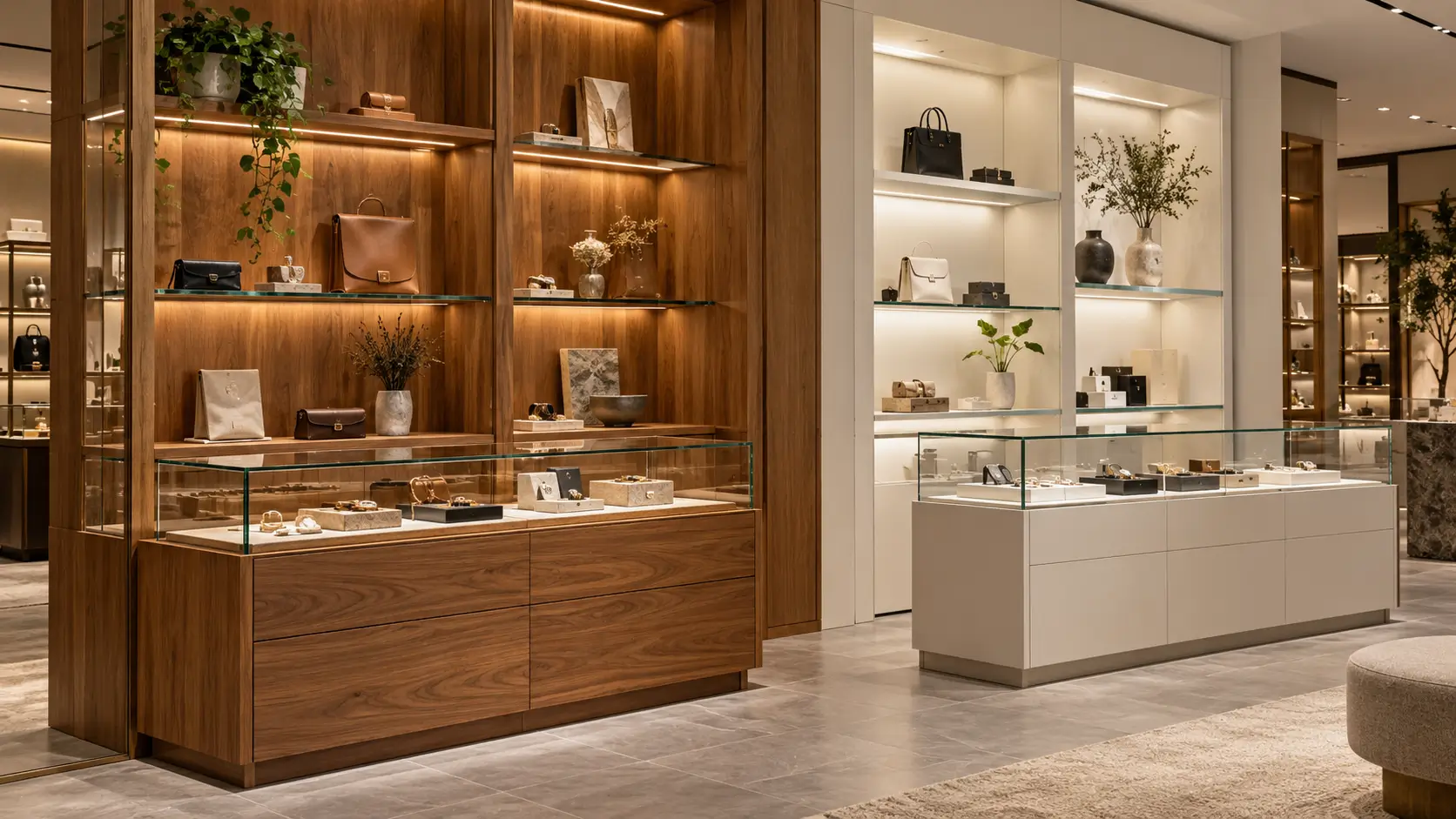
Wood veneer and laminate can both be used to create attractive and functional retail fixtures, but they offer different advantages. Wood veneer focuses more on the natural appearance and texture of real wood, while laminate is designed to provide consistent finishes, practical durability, and greater decorative flexibility.
The table below provides a quick comparison of the main differences between wood veneer vs laminate for custom retail fixtures.
| Feature | Wood Veneer | Laminate |
|---|---|---|
| Material | Thin layer of real wood | Manufactured decorative surface |
| Appearance | Natural wood grain with unique variations | Consistent colors, patterns, and textures |
| Style | Warm, premium, and natural | Modern, versatile, and highly customizable |
| Durability | Good with proper surface finishing | Very good for everyday commercial use |
| Scratch Resistance | Moderate and depends on protective coating | Generally higher, especially with HPL |
| Impact Resistance | Moderate | Generally better for high-use surfaces |
| Moisture Resistance | Depends on coating, edges, and substrate | Good surface resistance when properly installed |
| Maintenance | Requires more careful cleaning | Easy to clean and maintain |
| Color Consistency | Natural variation between sheets | High consistency between fixtures |
| Design Options | Mainly natural wood species and stains | Wood, stone, solid colors, patterns, textures, etc. |
| Surface Finishing | Can be stained, painted, or clear-coated | Usually supplied with a finished decorative surface |
| Repairability | Minor damage may sometimes be refinished | Damaged surface usually requires replacement |
| Production Process | Requires more finishing and workmanship | Generally faster and easier to process |
| Cost | Usually higher | Usually more economical |
| Multi-Store Consistency | More difficult due to natural variation | Easier to standardize across stores |
| Best Applications | Premium and decorative retail fixtures | High-traffic and large-scale commercial fixtures |
For many custom retail fixture projects, materials can also be selected by component rather than using the same surface throughout the entire fixture. This allows designers and manufacturers to balance appearance, durability, and cost more effectively.
1. Wood Veneer vs Laminate: Appearance and Visual Quality
One of the biggest advantages of wood veneer is its natural appearance. Since it is made from real wood, every veneer sheet has slightly different grain patterns, colors, and textures. These natural variations can give retail fixtures a warmer, richer, and more premium appearance.
Laminate provides a more standardized and controlled visual effect. Modern laminates can reproduce wood grain, stone, concrete, solid colors, and many other finishes with good consistency, making them suitable for brands that require the same appearance across different fixtures or store locations.
2. Wood Veneer vs Laminate: Durability
Wood veneer can provide good long-term performance when it is correctly bonded, sealed, and protected with a suitable surface coating. However, because the visible layer is natural wood, it may be more sensitive to scratches, dents, moisture, and frequent contact if the protective finish is damaged.
Laminate, especially commercial-grade HPL, is generally more resistant to everyday wear, abrasion, stains, and frequent cleaning. This makes it a practical option for custom retail fixtures used in busy stores where surfaces are regularly touched, cleaned, or exposed to product movement.
3. Wood Veneer vs Laminate: Scratch and Impact Resistance
Wood veneer has a natural wood surface that may be scratched or dented by sharp objects, heavy merchandise, or repeated impacts. Protective coatings can improve its performance, but care is still required, particularly on countertops, shelving, and other high-contact areas.
Laminate generally offers stronger scratch and impact resistance for commercial use. For checkout counters, work surfaces, shelves, cabinets, and other frequently used retail fixtures, laminate can reduce visible wear and make long-term maintenance easier.
4. Wood Veneer vs Laminate: Moisture Resistance
The moisture resistance of wood veneer depends on several factors, including the substrate, adhesive, protective coating, edge treatment, and overall manufacturing quality. Proper sealing can provide good performance in normal indoor retail environments, but prolonged exposure to water should still be avoided.
Laminate has relatively good surface resistance to moisture, making it practical for many commercial environments. However, the complete fixture is not automatically waterproof because moisture can still enter through joints, exposed edges, screw holes, or damaged areas and affect the substrate underneath.
5. Wood Veneer vs Laminate: Maintenance and Cleaning
Wood veneer normally requires more careful cleaning and maintenance. Soft cloths and suitable cleaning products should be used to protect the surface coating, while excessive moisture, abrasive cleaners, and strong chemicals should generally be avoided.
Laminate is easier to clean and maintain during everyday store operations. Its durable surface makes it suitable for retail environments where fixtures require frequent cleaning, such as convenience stores, pharmacies, supermarkets, cosmetics stores, and other high-traffic locations.
6. Wood Veneer vs Laminate: Design Flexibility
Wood veneer offers strong design flexibility when a project requires an authentic natural wood appearance. Different wood species, grain directions, stains, colors, and protective coatings can be selected to create different styles, ranging from light and minimalist interiors to darker and more luxurious retail concepts.
Laminate provides an even wider range of decorative options, including wood grains, solid colors, stone effects, concrete textures, metallic effects, matte surfaces, and other finishes. This makes laminate especially useful when custom retail fixtures need to match specific brand colors, interior themes, or visual standards.
7. Wood Veneer vs Laminate: Color and Grain Consistency
Natural variation is one of the main characteristics of wood veneer. Even veneers produced from the same wood species may have differences in grain, tone, and pattern, so manufacturers may need to carefully select and match veneer sheets for large panels, counters, or adjoining fixtures.
Laminate provides much greater visual consistency because the decorative surface is manufactured to standardized specifications. This can be particularly important for chain stores, franchise projects, and multi-store rollouts, where the same fixture designs need to maintain a similar appearance across different locations.
8. Wood Veneer vs Laminate: Cost
Wood veneer is generally more expensive because it uses real wood and requires additional manufacturing processes. Veneer selection, grain matching, bonding, sanding, staining, surface coating, and finishing can all increase the material and labor costs of the fixture.
Laminate is usually a more economical option for commercial production. Its standardized surface and relatively efficient manufacturing process can help control costs, particularly when producing large quantities of custom retail fixtures for full-store or multi-store projects.
9. Wood Veneer vs Laminate: Production Efficiency
Wood veneer requires several production stages, including cutting, matching, bonding, sanding, staining, and protective surface finishing. These processes require skilled workmanship and additional quality control, which can increase the overall manufacturing time.
Laminate is generally easier and faster to process because the decorative surface is already finished before being bonded to the substrate. This makes it particularly useful for projects involving large fixture quantities, standardized designs, short production schedules, or multi-store rollouts.
10. Wood Veneer vs Laminate: Repair and Long-Term Use
Depending on the thickness of the veneer and the type of damage, minor scratches or surface wear may sometimes be repaired through sanding, staining, or refinishing. This can help maintain the appearance of premium veneer fixtures over a longer service life.
Laminate cannot normally be sanded or refinished in the same way. Deep scratches, chips, or significant surface damage may require replacement of the affected panel, but its good resistance to everyday wear can reduce the frequency of repair under normal retail use.
Wood Veneer vs Laminate for Different Custom Retail Fixture Components
Different parts of a retail fixture have different requirements for appearance, durability, cleaning, and daily use. Instead of using one material throughout the entire fixture, wood veneer and laminate can be selected according to the function of each component.
| Fixture Component | Wood Veneer | Laminate |
|---|---|---|
| Display Cabinets | Suitable for premium display cabinets where natural materials help enhance product presentation and brand image. | More practical for frequently used cabinets where durability, consistency, and easier maintenance are priorities. |
| Checkout Counters | Can be used on decorative front panels or visible areas to create a more premium appearance. | Often used on high-contact surfaces because checkout counters are frequently exposed to merchandise movement, customer contact, and cleaning. |
| Wall Display Units | Provides a warm, natural, and architectural appearance for wall-mounted retail displays. | Offers a wider range of colors, patterns, and decorative finishes for different store concepts. |
| Shelving | Suitable for decorative shelving in luxury boutiques and other premium retail environments. | Often more practical for shelves with frequent product movement because of its scratch and abrasion resistance. |
| Reception Counters | Commonly used when the design requires a natural, warm, and sophisticated appearance. | A practical option when the project requires specific brand colors, modern finishes, or easier maintenance. |
| Store Wall Panels | Creates a natural and premium wall finish, especially for fashion, jewelry, cosmetics, perfume, and luxury retail projects. | Provides better consistency and can be more suitable when large quantities of decorative panels are required. |
| Storage Cabinets | Usually less necessary for back-of-house areas where the surface is not highly visible to customers. | Generally more practical because it is durable, economical, and easy to clean. |
| Display Tables | Suitable for feature tables and central displays where visual presentation and material quality are important. | Better suited to surfaces that experience frequent product handling and daily customer interaction. |
| Gondola Displays | Can be used selectively for decorative or premium-facing sections. | Often preferred because gondola displays require durability, repeatability, and cost-efficient batch production, especially for chain stores and large retail projects. |
The most suitable material can therefore vary from one fixture component to another. Using wood veneer only where its visual value is most important and laminate where durability and maintenance matter more can help create a more practical and cost-effective retail fixture solution.
How to Choose Between Wood Veneer and Laminate for Custom Retail Fixtures
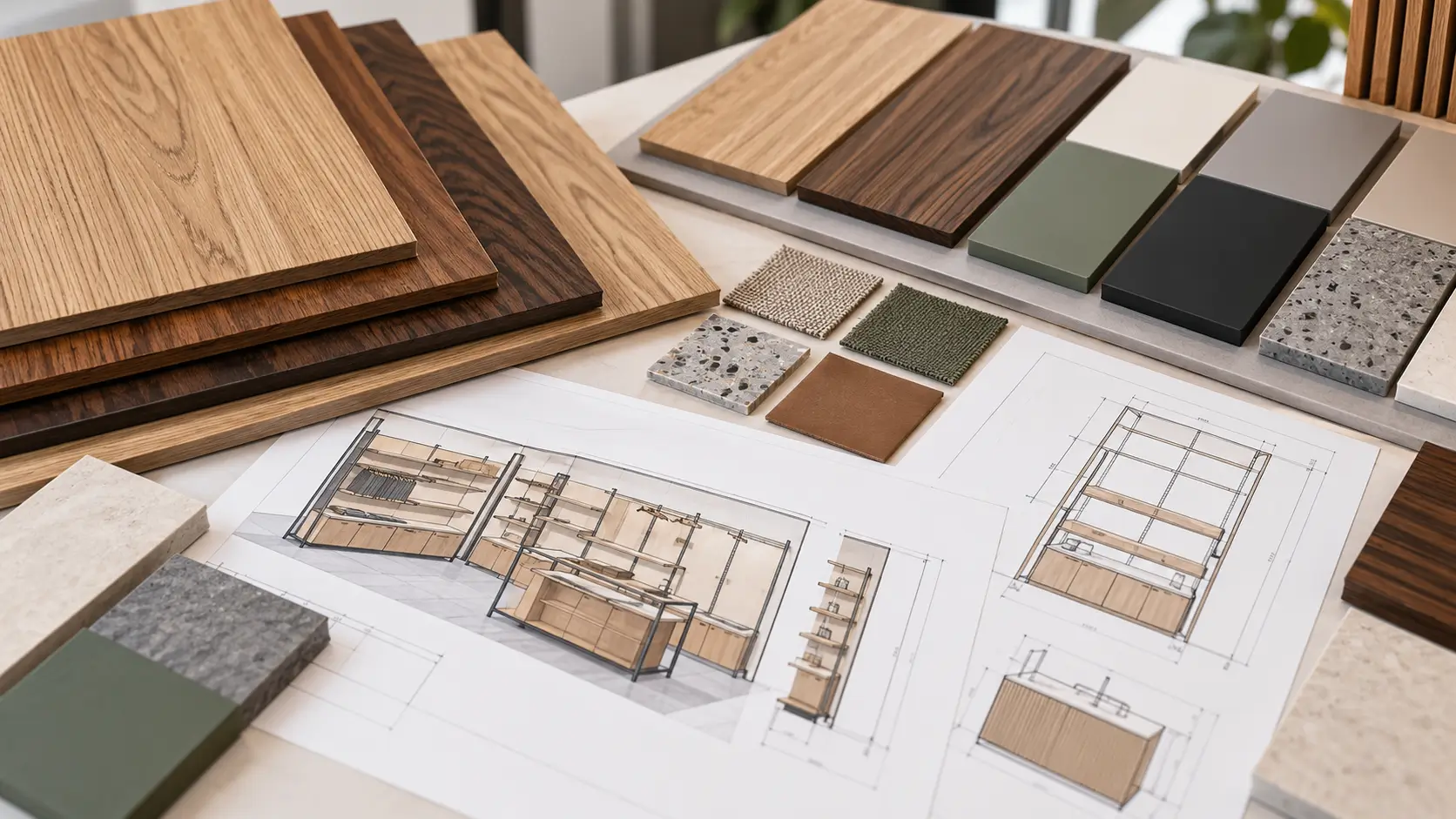
When choosing between wood veneer and laminate, consider the following factors:
- Consider your brand positioning: Premium and luxury brands may benefit from the authentic appearance of natural wood veneer, while commercial brands may prefer the consistency and flexibility of laminate.
- Evaluate fixture location and usage: Frequently touched surfaces, shelves, countertops, and working areas may benefit from laminate, while decorative panels and feature areas can use wood veneer.
- Consider maintenance requirements: If store staff need to clean fixtures frequently, laminate generally offers easier everyday maintenance.
- Review project quantity: For chain stores, franchise stores, large fixture quantities, and multi-store rollouts, laminate can provide better consistency and cost control.
- Compare the project budget: Consider material prices together with manufacturing, finishing, maintenance, repair, and replacement costs.
- Check your design requirements: If the design requires the depth, grain, and natural variation of real wood, veneer may be more suitable. If exact colors, textures, or repeated patterns are required, laminate may offer greater flexibility.
The choice does not always need to be wood veneer or laminate for the entire project. Different materials can be specified for different components according to visibility, usage, durability requirements, and budget.
For example, premium veneer may be used for visible decorative panels, while laminate can be selected for internal storage, shelves, work surfaces, or other high-use areas. This approach can provide a better balance between appearance, durability, functionality, and cost.
In Conclusion
When comparing wood veneer vs laminate for custom retail fixtures, wood veneer offers a natural and premium appearance, while laminate provides better consistency, durability, easier maintenance, and cost efficiency. The right choice depends on your store concept, fixture usage, project quantity, brand requirements, and budget, and in many retail projects, combining different surface materials can provide a better balance of appearance, performance, and overall cost.
FAQs
Is Wood Veneer More Expensive Than Laminate?
Generally, yes. Wood veneer usually costs more because it uses real wood and requires additional processes such as veneer selection, grain matching, bonding, sanding, staining, and protective finishing, although the final cost will also depend on the wood species, substrate, surface treatment, fixture design, and project quantity.
Is Laminate Suitable for High-End Retail Fixtures?
Yes. Modern premium laminates are available in realistic wood grains, stone effects, matte textures, metallic finishes, and other sophisticated surfaces, and when combined with high-quality glass, metal, lighting, stone, hardware, and detailed manufacturing, they can be used effectively for high-end custom retail fixtures.
Which Is Better for Chain Store and Multi-Store Projects?
Laminate is often more practical for chain stores, franchise stores, and multi-store rollout projects because it offers better finish consistency, efficient batch production, easier maintenance, and stronger cost control, while wood veneer can still be used selectively for feature areas when the brand requires a more natural or premium appearance.
Custom Retail Fixtures for Your Next Project
Choosing the right materials for custom retail fixtures requires balancing appearance, durability, manufacturing cost, maintenance, and store operation requirements. Rather than selecting materials based only on appearance, each fixture component should be evaluated according to where it will be installed and how it will be used.
At ONI Shopfitting, we manufacture custom retail display cabinets, showcases, counters, shelving, wall displays, display stands, and complete store fixture solutions using wood veneer, laminate, MDF, plywood, metal, glass, acrylic, stone, lighting, and other materials. From individual stores to chain stores, multi-store rollouts, and full-store shopfitting projects, our team can support material selection, design development, manufacturing, quality inspection, export packing, and delivery.
 Contact us today to start your custom display fixtures project.
 WhatsApp/Call: +86 186 2096 3396
 Email: sales1@onishopfitting.com
 Factory Location: Guangzhou, China