Choosing the right surface material is an important part of designing and manufacturing custom retail fixtures. The surface finish affects not only the appearance of a display cabinet, counter, shelving unit, or wall fixture, but also how well it performs during daily retail use. Scratch resistance, cleaning frequency, customer contact, moisture exposure, and expected service life should all be considered before selecting a material.
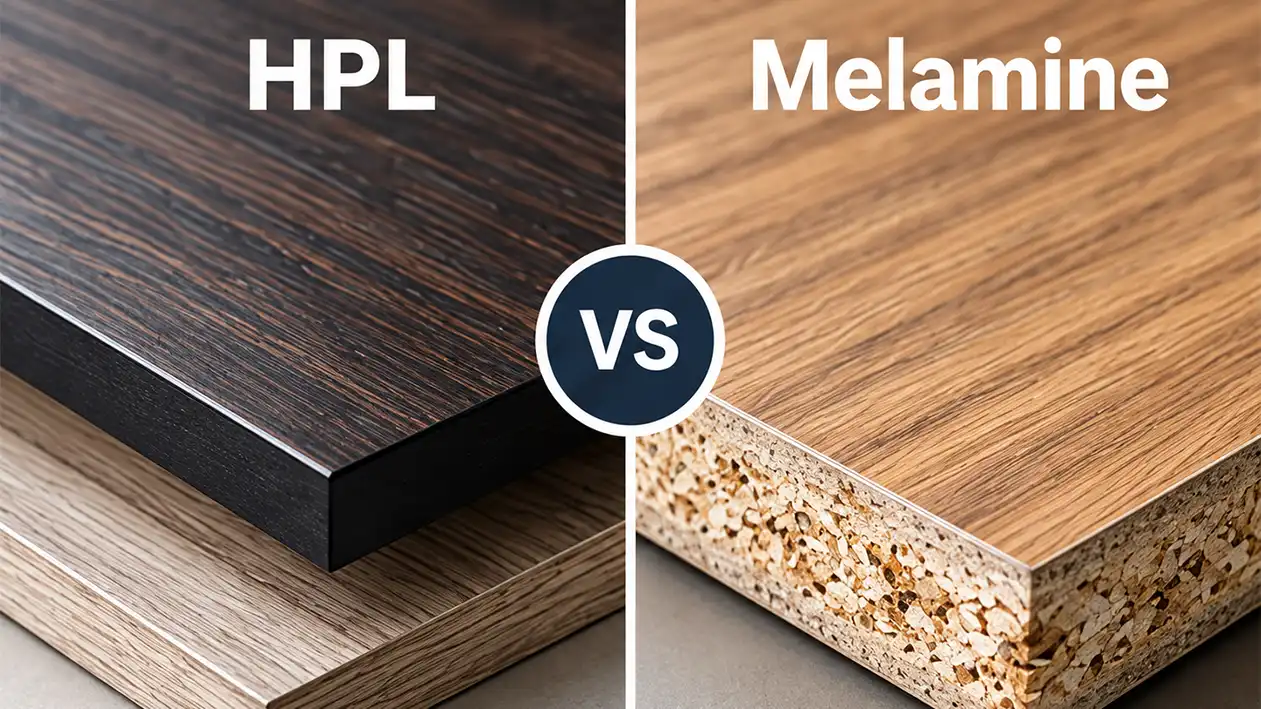
Two common surface materials used in custom retail fixtures are HPL (High-Pressure Laminate) and melamine. Both can provide solid colors, wood grains, stone patterns, matte finishes, and other decorative effects, but their construction and performance are different. HPL is generally chosen for areas that require greater durability, while melamine is often used where cost control and a clean decorative finish are more important.
For retailers, brands, contractors, designers, and shopfitting companies, understanding these differences can help with material specification during the design stage. The right choice may vary between retail display cabinets, checkout counters, wall displays, shelving, storage cabinets, gondola units, and complete custom retail fixture packages.
What Is HPL?
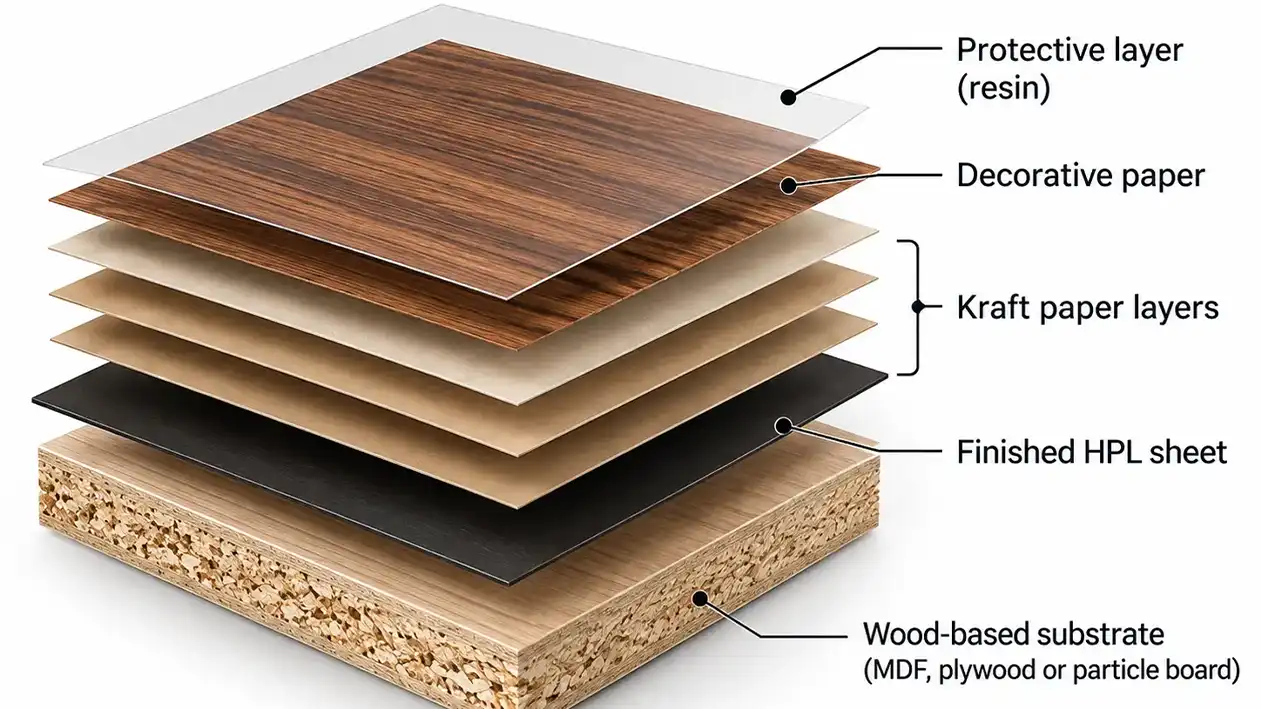
HPL stands for High-Pressure Laminate. It is produced by combining multiple layers of kraft paper, decorative paper, and resin, then pressing them together under high temperature and pressure. The result is a dense decorative sheet designed for commercial furniture and interior applications.
The finished HPL sheet is normally bonded to a substrate such as MDF, plywood, or particle board. The base panel provides structural support, while the HPL surface provides the decorative finish and additional protection against scratches, abrasion, stains, and daily wear.
For custom retail fixtures, HPL is commonly used on countertops, display tables, cashier counters, customer-facing panels, shelving, and other areas that receive frequent contact. A wide selection of wood grains, solid colors, stone patterns, textured finishes, matte surfaces, and gloss surfaces also gives designers more flexibility when matching a store’s visual identity.
What Is Melamine?
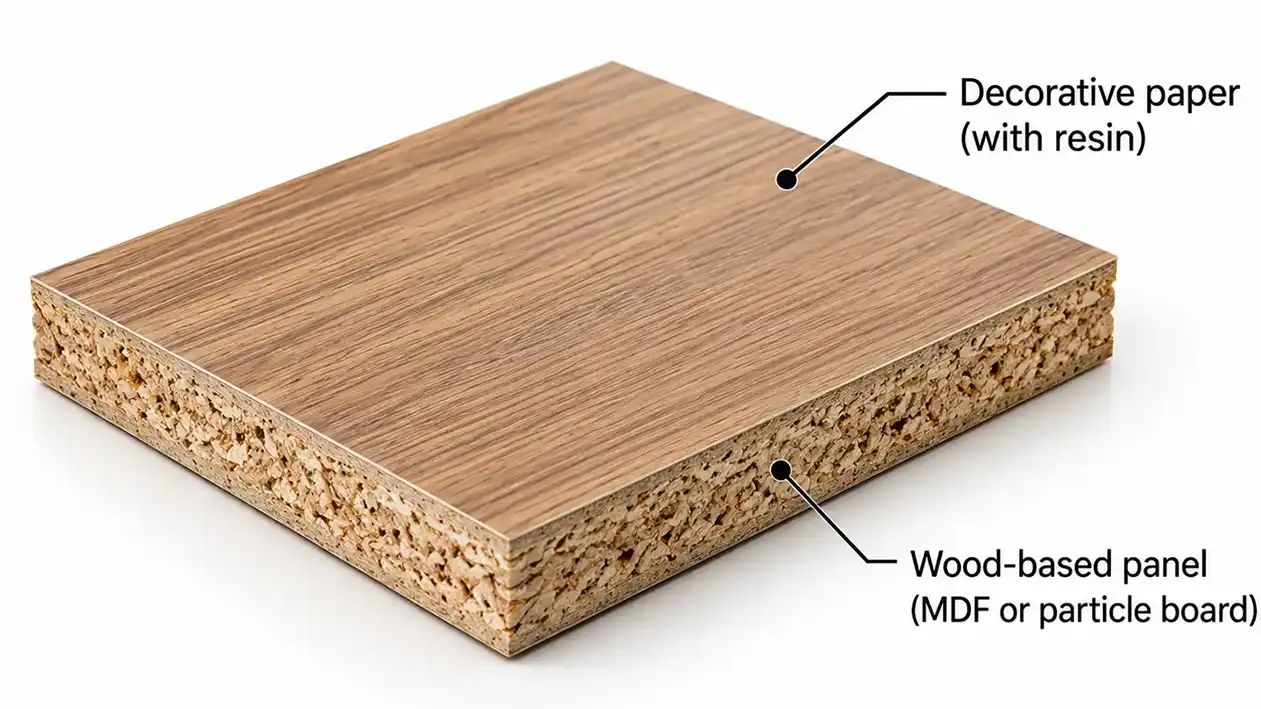
Melamine is a decorative surface made by pressing resin-treated decorative paper directly onto a wood-based panel such as MDF or particle board. Unlike HPL, it is not normally produced as a separate thick laminate sheet that is later bonded to the substrate.
Because the decorative layer is already applied to the panel during manufacturing, melamine boards can be efficient and economical to process. They provide consistent colors and patterns and are widely available in wood grains, solid colors, neutral finishes, and other common retail furniture styles.
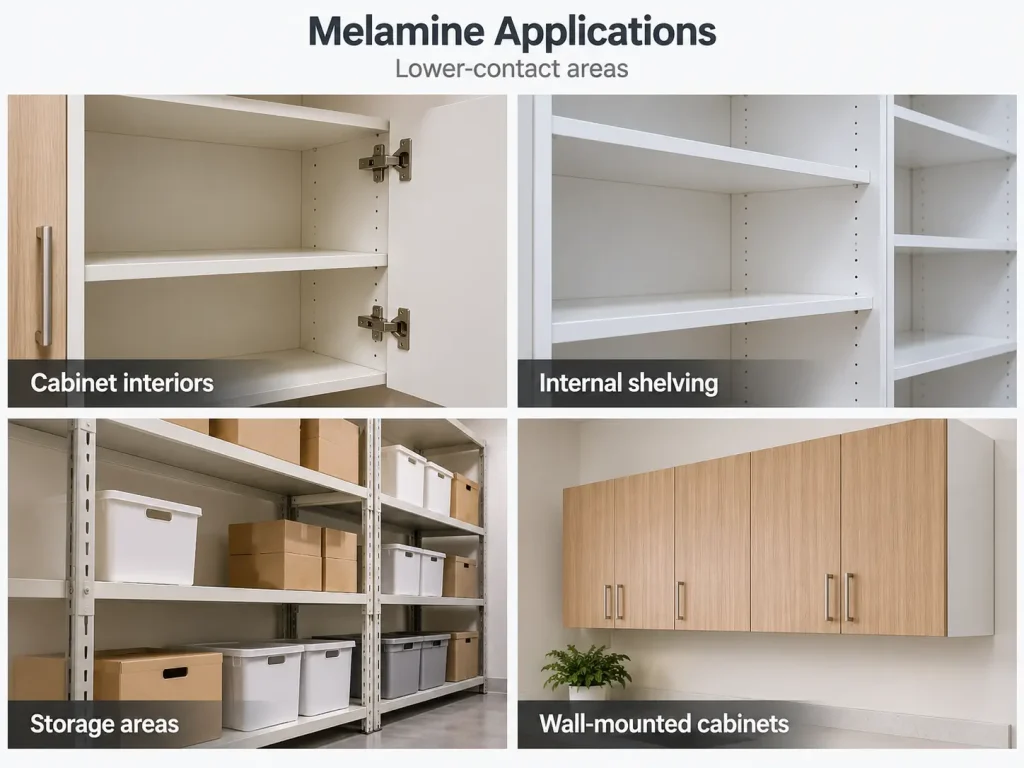
In custom retail fixtures, melamine is frequently used for cabinet interiors, internal shelving, storage areas, back panels, side panels, and wall-mounted cabinets. It is particularly practical for areas that require a clean appearance but do not experience the same level of wear as countertops or heavily used customer-facing surfaces.
HPL vs Melamine: Quick Comparison
The table below summarizes the main differences between HPL and melamine for custom retail fixtures.
| Feature | HPL | Melamine |
|---|---|---|
| Construction | Separate laminate sheet bonded to a base panel | Decorative paper pressed directly onto the panel |
| Durability | High | Moderate |
| Scratch Resistance | Very good | Good for normal use |
| Impact Resistance | Better | Moderate |
| Moisture Resistance | Good when properly sealed | Moderate |
| Heat Resistance | Better | Moderate |
| Finish Options | Very wide range | Wide range |
| Surface Thickness | Thicker decorative surface | Thinner decorative layer |
| Processing | Requires additional lamination | Ready-faced panel |
| Cost | Higher | More economical |
| Best Use | High-contact and high-traffic areas | General cabinets and lower-contact areas |
The biggest difference is not simply appearance. Both materials can look attractive, but HPL is generally designed for more demanding commercial use, while melamine provides a more economical surface solution for areas with lighter daily contact. For many custom retail fixture projects, the decision does not need to be HPL or melamine for the entire store. Manufacturers can use different materials for different parts of the same fixture according to function, visibility, expected wear, and project budget.
1. Durability
HPL generally offers better durability because its decorative sheet is produced under high pressure and then bonded to the base panel. The stronger surface can better withstand repeated contact, abrasion, product movement, and general wear, making it suitable for custom retail fixtures used in busy commercial environments.
This is especially useful for checkout counters, cosmetic tester tables, display countertops, service counters, product tables, and other surfaces that are used throughout the day. Melamine can still perform well in normal retail conditions, but it is more commonly selected for cabinet interiors, storage units, back panels, and other areas that receive less direct contact.
2. Scratch and Wear Resistance
Retail fixtures are constantly exposed to product boxes, shopping bags, keys, cleaning tools, trays, bottles, packaging, and other objects. Over time, repeated movement across the same surface can create scratches, scuff marks, or visible wear, particularly in high-traffic stores.
HPL generally provides stronger scratch and abrasion resistance than melamine. For custom retail fixtures where customers frequently touch the surface or staff regularly move products, HPL can help maintain a more consistent appearance over a longer period. Melamine is suitable for normal use but may show wear sooner when used in heavily contacted areas.
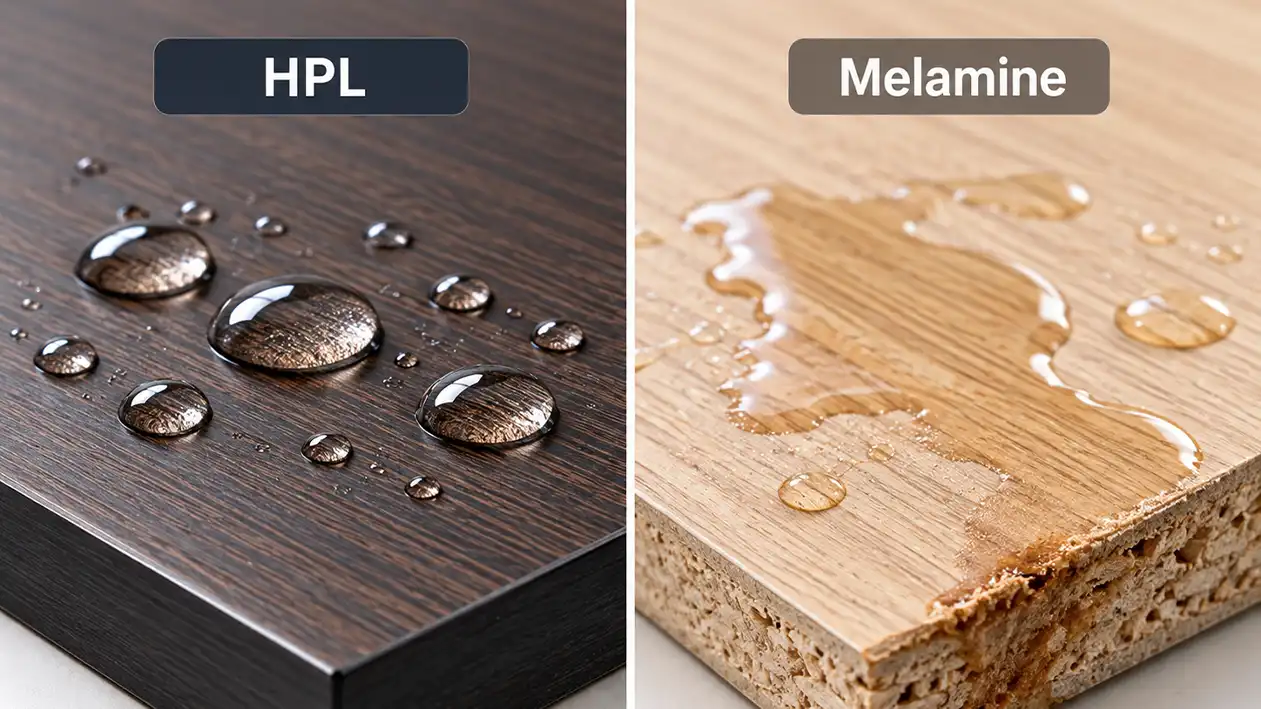
3. Moisture Resistance
HPL provides good resistance to everyday moisture and spills when it is correctly installed and properly sealed. This can be useful for custom retail fixtures in cosmetics stores, pharmacies, convenience stores, supermarkets, and other environments where fixtures may be wiped or cleaned frequently.
However, the entire panel should not automatically be considered waterproof. The edges, joints, screw holes, and exposed areas still need proper treatment because the MDF, plywood, or particle board underneath may absorb moisture. Melamine also provides a relatively sealed decorative surface, but damage or exposed edges may allow moisture to reach the base panel more easily.
4. Appearance and Finish Options
Both HPL and melamine are available in a wide range of decorative finishes, allowing them to match different retail concepts. Common options include solid colors, wood grains, marble effects, stone patterns, concrete textures, matte finishes, gloss finishes, and textured surfaces.
HPL usually offers a broader range of premium textures and specialized surface effects, which can be useful for flagship stores, branded retail environments, and high-end custom retail fixtures. Melamine also offers many attractive and consistent finishes and is often sufficient for cabinet interiors, large wall units, storage areas, and projects where controlling the overall cost is important.
5. Cost
Melamine is usually more economical because the decorative surface is already pressed onto the board. This simplifies material processing and can reduce both material and manufacturing costs, particularly when producing a large quantity of custom retail fixtures.
HPL normally costs more because it requires a separate laminate sheet, adhesive, bonding, and additional processing. However, higher material cost does not mean HPL needs to be used everywhere. Many projects use HPL only for visible, high-contact areas and melamine for internal or lower-contact sections, helping control the overall fixture budget.
6. Maintenance and Cleaning
Both HPL and melamine are relatively easy to maintain under normal retail conditions. Dust, fingerprints, and light surface dirt can usually be removed with a soft cloth and suitable mild cleaning products.
HPL generally performs better when a fixture needs frequent cleaning because its surface is more resistant to repeated wiping and wear. This can make it useful for custom retail fixtures used in cosmetics stores, pharmacies, supermarkets, convenience stores, duty-free stores, and other high-traffic retail environments. Melamine is also easy to maintain, but excessive moisture around joints and exposed edges should be avoided.
7. Edge Treatment
The quality of the edge treatment can affect both the appearance and durability of custom retail fixtures. Even when the main panel surface is durable, poorly finished edges may chip, absorb moisture, or reduce the overall visual quality of the fixture.
Common edge treatments include PVC edge banding, ABS edge banding, matching laminate strips, solid wood edging, and metal trims. The most suitable option depends on the panel type, design, edge thickness, finish, and expected use. For B2B custom fixture projects, edge details should normally be confirmed in the shop drawings or sample before mass production.
HPL vs Melamine for Different Custom Retail Fixture Components
Different parts of the same custom retail fixture are exposed to different levels of wear, so one material does not need to be used throughout the entire unit.
- Display Countertops: HPL is often preferred for countertops because they receive frequent customer contact, product movement, and cleaning. A stronger surface can help reduce scratches and visible wear.
- Cabinet Bodies: Melamine is commonly used for cabinet bodies, internal panels, and less exposed areas. It provides a clean finish while helping keep the fixture cost under control.
- Product Shelving: HPL may be more suitable for shelves where products are regularly moved or replaced. Melamine can work well for lighter-use shelves or internal storage shelving.
- Wall Display Units: Melamine can be used for large background panels, cabinet structures, and storage sections, while HPL can be added to customer-facing or frequently touched areas.
- Checkout Counters: HPL is often used on the top surface and visible front sections because checkout counters experience continuous daily use. Melamine can be used inside drawers, cabinets, and storage compartments.
- Storage Cabinets: Melamine is a practical choice for back-of-house storage and internal cabinetry where surfaces are less exposed to customers and heavy contact.
- Customer-Facing Panels: HPL can provide better resistance to scratches and wear while also offering premium decorative finishes for visible parts of custom retail fixtures.
- Display Tables: HPL is commonly suitable for tabletops where products are repeatedly placed, removed, or rearranged throughout the day.
- Internal Partitions: Melamine can be used for internal dividers and partitions where high surface durability is not essential.
This type of material allocation allows manufacturers to match the material to the actual function of each component instead of applying the same specification to every part of the fixture.
How to Choose Between HPL and Melamine for Custom Retail Fixtures
When selecting materials for custom retail fixtures, consider how each part of the fixture will actually be used rather than choosing only according to appearance.
- Store Traffic: High-traffic stores usually require more durable surfaces. HPL may be more suitable for areas regularly used by customers and staff.
- Customer Contact: Counters, product tables, tester stations, and customer-facing surfaces receive more frequent contact and may benefit from HPL.
- Fixture Function: Cabinet interiors, storage compartments, back panels, and lower-contact sections can often use melamine without affecting normal performance.
- Project Budget: Melamine can help control material costs, especially when producing a large number of custom retail fixtures.
- Brand Positioning: Premium brands or flagship stores may prefer HPL where more distinctive textures, finishes, or higher surface durability are required.
- Expected Service Life: Fixtures designed for long-term use may require more durable materials on exposed surfaces, while temporary stores or short-term installations may not need the same specification.
- Project Quantity: For chain stores, franchise programs, and multi-store rollouts, even a small difference in material cost can become significant when multiplied across many fixtures.
- Cleaning Frequency: Stores that clean fixtures several times a day may benefit from using HPL on frequently wiped surfaces.
- Product Type: Heavy products, cosmetic testers, bottles, electronics, jewelry trays, or frequently moved merchandise may create different levels of surface wear.
- Store Location: Fixtures used in airports, shopping malls, convenience stores, and other high-traffic locations may require stronger surface materials than fixtures used in lower-traffic environments.
- Visible vs Internal Areas: Premium materials can be focused on visible customer-facing surfaces, while more economical materials can be used internally.
The most practical solution is often to review the fixture component by component and select HPL or melamine according to the actual requirement of each area.
In Conclusion
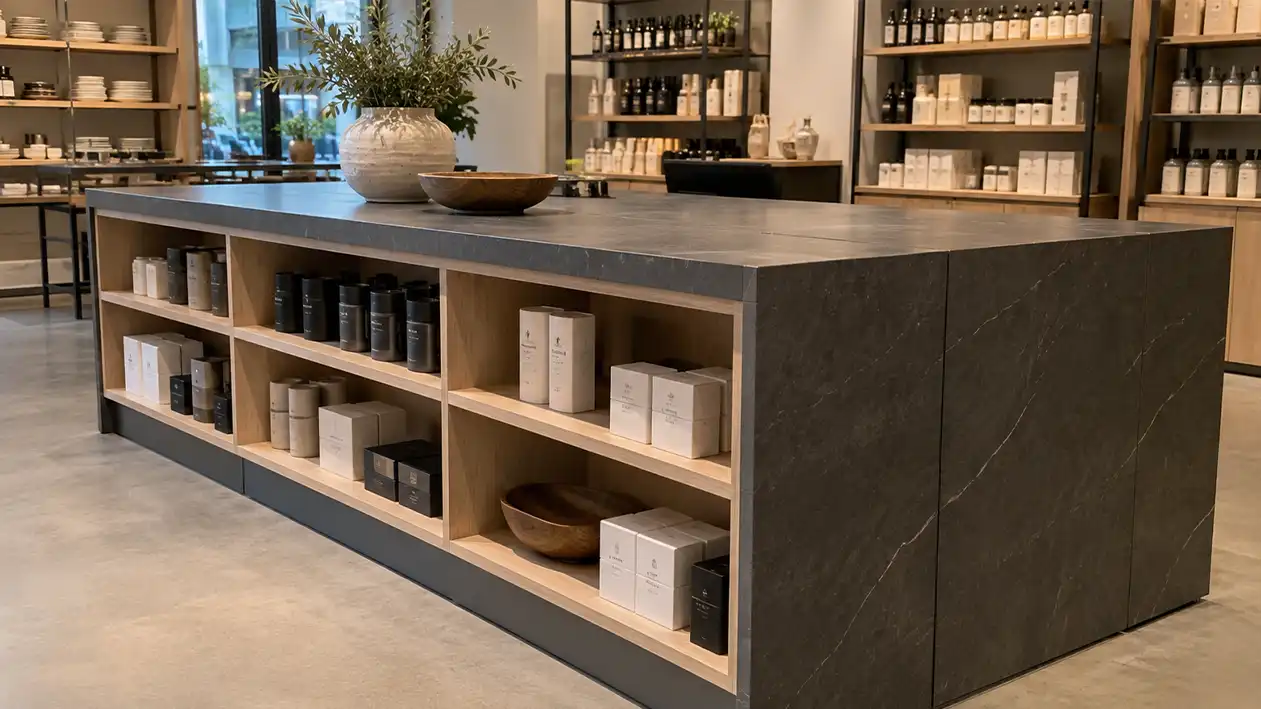
Both HPL and melamine are widely used in custom retail fixtures, but they serve different purposes. HPL offers better durability, scratch resistance, and long-term performance for high-contact surfaces, while melamine provides an economical and practical finish for cabinet interiors, storage units, wall panels, and lower-contact areas. In many retail projects, combining both materials is the most practical way to balance appearance, durability, function, and cost.
FAQs
Why Material Selection Matters for Custom Retail Fixtures
Material selection affects the durability, appearance, cost, and service life of custom retail fixtures. Choosing the right combination of HPL, melamine, wood panels, metal, glass, and hardware helps ensure consistent quality and performance.
Is melamine suitable for custom retail fixtures?
Yes. Melamine is commonly used for cabinet interiors, storage units, back panels, wall cabinets, and other lower-contact areas. It provides a clean appearance while helping control project costs.
Can HPL and melamine be used in the same custom retail fixture?
Yes. HPL can be used for countertops and customer-facing surfaces, while melamine can be used for interiors, storage areas, and lower-contact sections. This combination helps balance durability and cost.
Custom Retail Fixtures for Your Next Project
Choosing between HPL and melamine is only one part of developing reliable custom retail fixtures. The final result also depends on panel structure, material thickness, edge treatment, metal components, tempered glass, lighting, hardware, surface finishes, and manufacturing quality. These details should be considered together during the design and shop drawing stage.
At Guangzhou ONI Shopfitting Limited, we manufacture custom retail fixtures, retail display cabinets, store furniture, display showcases, counters, shelving, and complete shopfitting solutions for international retail projects. Whether you are developing one store, a chain-store rollout, multiple retail locations, or a full-store shopfitting project, you can send us your floor plan, drawings, quantity, and material requirements to start your project.
 WhatsApp/Call: +86 186 2096 3396
 Email: sales1@onishopfitting.com
 Factory Location: Guangzhou, China