Choosing the right material is an important step in the design and manufacturing of custom retail display cabinets, and store fixtures. The panel material can affect the appearance, structural strength, weight, surface finish, hardware installation, production cost, transportation, and long-term performance of the finished fixture.
Among the materials commonly used for custom retail store fixtures, shopfitting fixtures, and retail display showcases, MDF and Plywood are two popular choices. Both are engineered wood products, but their internal structures and performance characteristics are quite different. MDF is manufactured from compressed wood fibers, while Plywood is made by bonding multiple layers of wood veneer together.
So, when comparing MDF vs plywood for custom retail display cabinets, which material should B2B buyers choose? Rather than looking for one material that is suitable for every project, it is more practical to understand the advantages and limitations of each material and select them according to the cabinet structure, merchandise, store environment, surface finish, and project budget.
MDF vs Plywood: Key Differences for Retail Display Cabinets
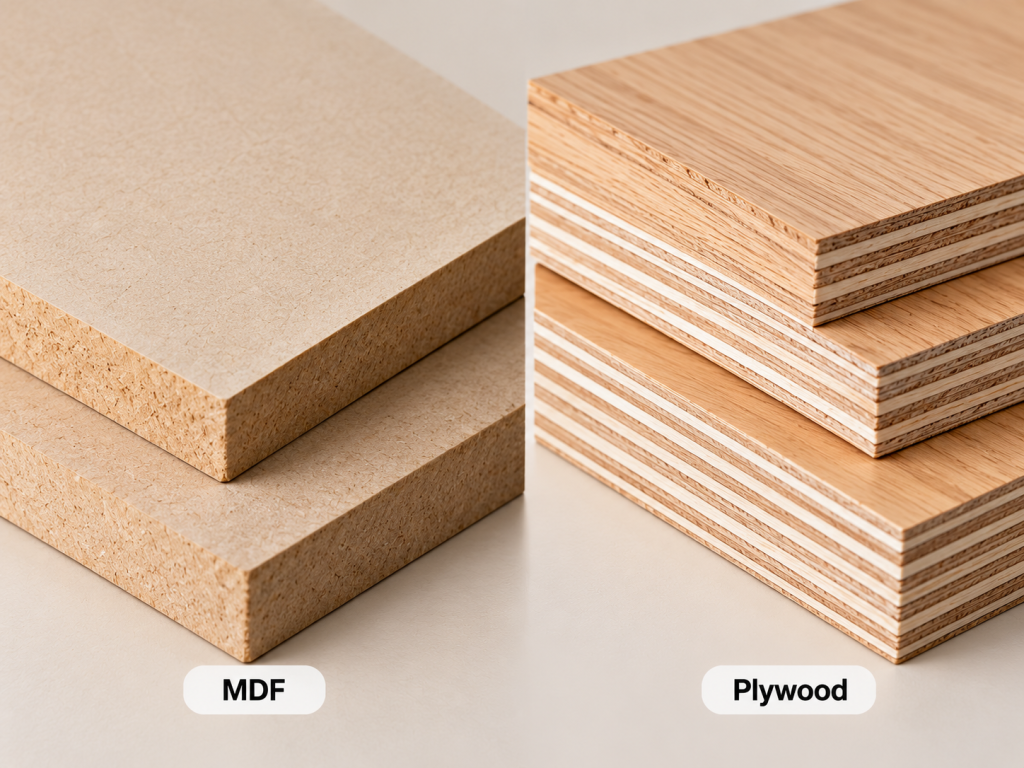
The following table provides a quick overview of the main differences between MDF and plywood when they are used in custom retail display fixtures, store display cabinets, retail counters, and merchandising fixtures.
| Feature | MDF | Plywood |
|---|---|---|
| Material Structure | Made from compressed wood fibers combined with resin, creating a dense and uniform panel | Made from multiple thin layers of wood veneer bonded in alternating grain directions |
| Surface Smoothness | Very smooth and consistent, making it highly suitable for painted retail display cabinets and decorative surfaces | Generally smooth, although wood grain and veneer characteristics may remain visible |
| Paint Finish | Excellent for painted, lacquered, high-gloss, and matte retail fixtures | Suitable for painting but may require more surface preparation |
| Structural Strength | Suitable for many standard display cabinet and retail counter applications | Higher structural strength and better resistance to bending |
| Screw Holding Strength | Moderate and requires correct screws, inserts, and installation methods | Generally stronger because screws grip multiple layers of wood veneer |
| Moisture Resistance | Standard MDF is sensitive to prolonged moisture exposure; moisture-resistant grades are available | Generally offers better moisture resistance depending on the plywood grade and adhesive |
| Weight | Dense and often relatively heavy | Usually provides a better strength-to-weight ratio |
| CNC Machining | Excellent for branded displays, custom profiles, grooves, and decorative details | Suitable for CNC machining, although layered edges may need additional finishing |
| Edge Treatment | Smooth and uniform but edges normally require sealing or edge finishing | Layered edges are visible and commonly require edge banding, veneer, or decorative treatment |
| Cost | Usually more economical and suitable for cost-controlled retail fixture projects | Generally more expensive, especially for higher-grade plywood |
1. Material Structure
MDF, or Medium-Density Fiberboard, is produced by breaking wood into fine fibers and combining them with resin before compressing the mixture under heat and pressure. This manufacturing process creates a highly consistent panel with almost the same density throughout the material. There are no natural knots, large grain variations, or veneer layers. This uniform construction makes MDF particularly useful for custom display cabinets, retail display cases, retail counters, wall display units, and branded store fixtures with decorative surfaces or detailed machining.
Plywood has a very different construction. It consists of multiple layers of wood veneer bonded together, usually with the grain direction alternating between adjacent layers. This cross-laminated structure gives plywood greater structural stability and strength, making it suitable for cabinet carcasses, retail shelving units, storage cabinets, freestanding display fixtures, and other load-bearing components.
2. Surface Smoothness
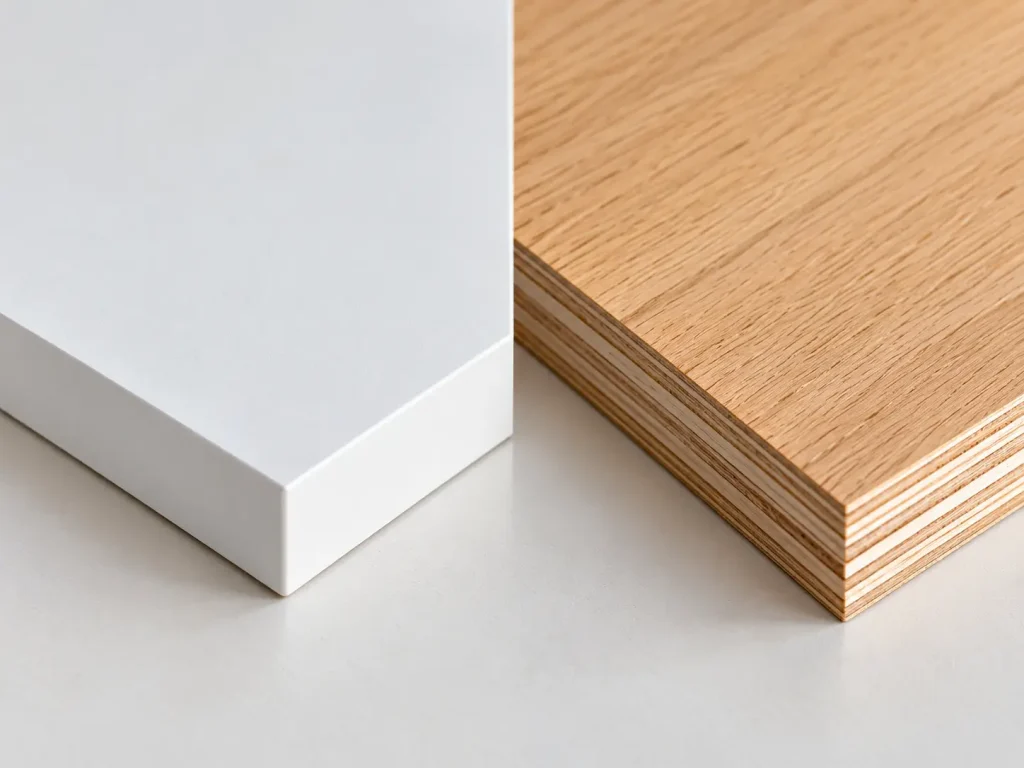
One of the main advantages of MDF is its extremely smooth surface. Because MDF is made from fine wood fibers instead of visible layers of wood veneer, its face has very little natural texture. This provides an excellent base for paint, lacquer, laminate, veneer, and various decorative finishes.
For retail display cabinets and custom retail display showcases, surface consistency can be especially important when the fixture needs to match a brand’s specific color palette. Cosmetics stores, perfume stores, fashion stores, jewelry stores, optical stores, and branded shop-in-shop displays often require smooth painted surfaces with very consistent colors and finishes.
Plywood can also provide an attractive surface, but its appearance depends significantly on the quality of the outer veneer. Higher-grade plywood can look very clean, while lower grades may contain visible grain patterns or surface variations. When store fixtures or retail display showcases will be covered with laminate or decorative veneer, these differences become less important.
3. Paint and Surface Finish
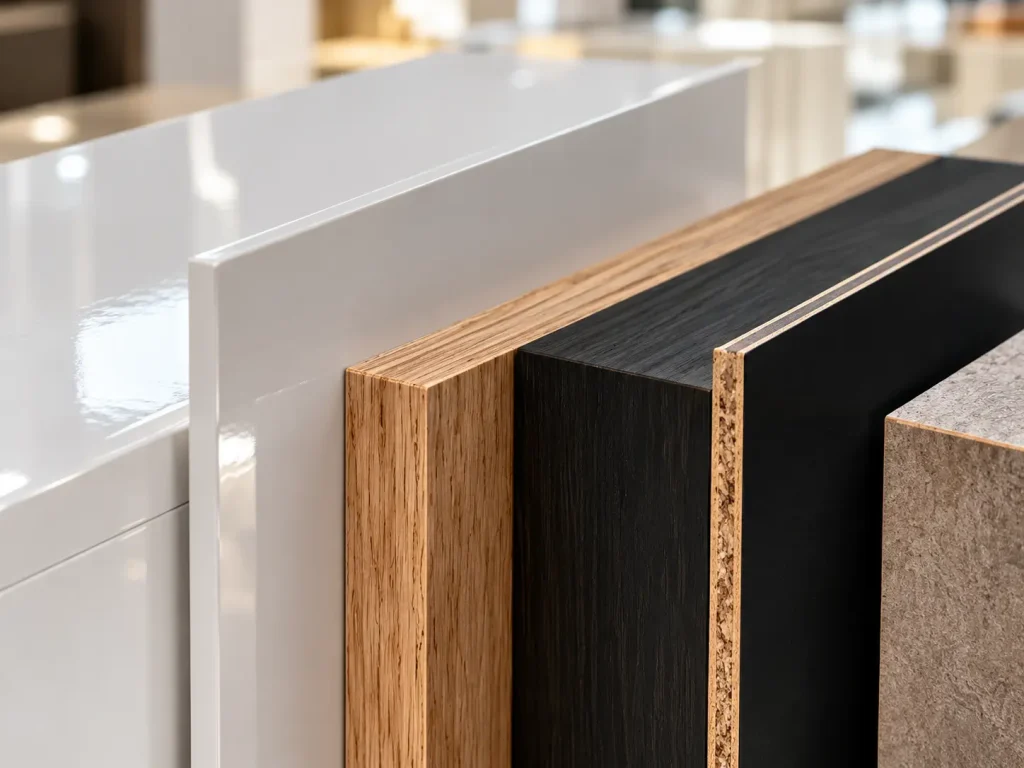
MDF is commonly selected for painted retail display cabinets, retail counters, display showcases, and custom shopfitting fixtures because it provides a stable and smooth base for different coating systems. High-gloss paint, matte paint, lacquer, and other decorative coatings can create a clean finish when the MDF surface and edges are properly prepared.
Plywood can also be painted, laminated, or veneered. However, visible wood grain or veneer joints may require additional preparation when a completely smooth painted finish is required. Plywood is especially useful when the retail store design intentionally retains a natural wood appearance or uses wood veneer as part of the shopfitting concept.
4. Structural Strength
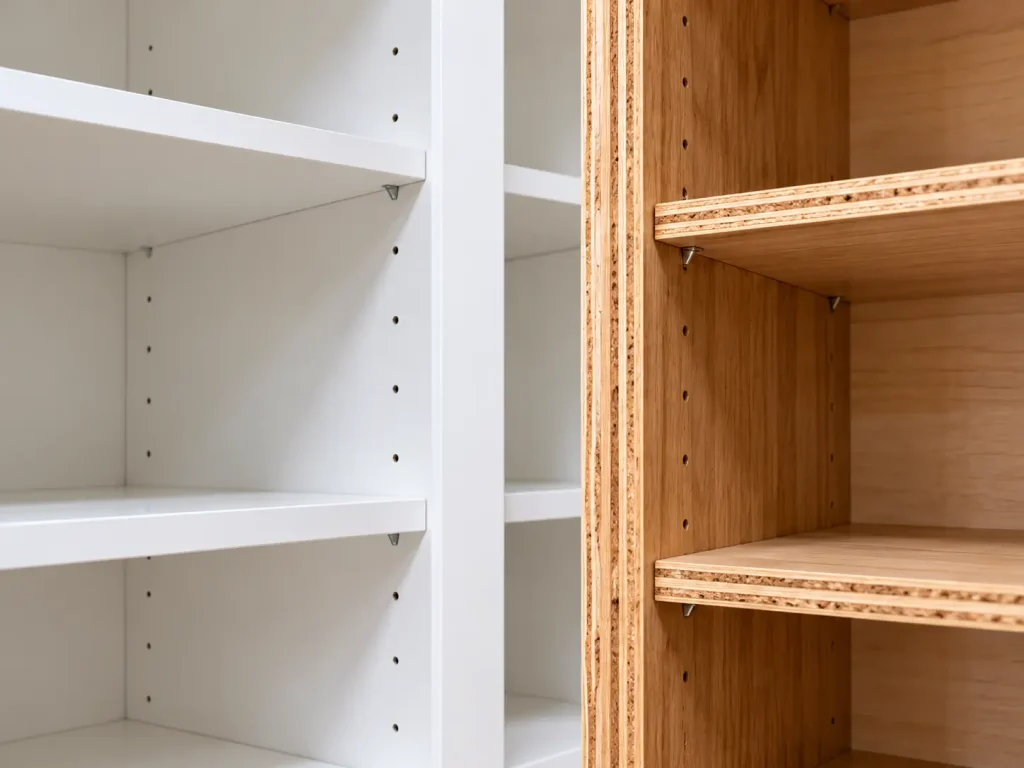
Plywood generally provides greater structural strength than MDF. Its cross-layered veneer construction helps distribute loads across the panel and improves resistance to bending, making it suitable for display cabinet carcasses, retail shelving, storage cabinets, glass display cases, and freestanding retail fixtures. This characteristic becomes more important when retail fixtures need to support relatively heavy merchandise. Electronics, wine bottles, packaged food products, tools, shoes, and other heavier products can place considerable loads on retail shelves and merchandising fixtures, particularly when the shelf span is long.
MDF still provides sufficient strength for many normal commercial applications. The final performance depends on panel thickness, shelf length, internal supports, metal reinforcement, cabinet construction, and merchandise weight. For this reason, professional retail fixture manufacturers usually determine the material and thickness according to the actual structural requirements rather than using the same specification throughout the entire display cabinet.
5. Screw Holding Strength
Hardware is an important part of any custom retail display cabinet, retail display case, or store fixture. Hinges, drawer runners, shelf brackets, locks, handles, connectors, and other fittings depend on secure fixing points within the cabinet structure.
Plywood generally offers stronger screw holding because the fastener passes through several layers of wood veneer. This makes plywood particularly useful in areas where hardware needs to support significant weight or where retail cabinets, display counters, and modular store fixtures may be frequently opened, adjusted, assembled, or dismantled.
MDF can also provide reliable hardware installation when the appropriate screws, threaded inserts, fittings, and manufacturing techniques are used. However, repeatedly removing and reinstalling screws in the same MDF location may gradually reduce holding strength. Hardware location and fixing methods should therefore be considered during the custom retail fixture design stage.
6. Moisture Resistance
Standard MDF is relatively sensitive to prolonged exposure to moisture. If unprotected edges or damaged surfaces absorb excessive water, the board may swell or lose dimensional stability. Proper edge sealing and surface finishing are therefore particularly important for commercial fixtures.
Plywood generally provides better resistance to moisture, especially when an appropriate grade and adhesive system are specified. This can make it useful for convenience store fixtures, supermarket shelving, food retail displays, retail counters, café fixtures, and commercial display cabinets installed in humid climates. Nevertheless, plywood should also be properly sealed and finished when moisture exposure is expected.
7. Weight
MDF has a high density and can therefore be relatively heavy. In a small countertop display case the difference may not be particularly important, but weight can become a significant consideration for large retail fixture packages.
For international B2B projects, fixture weight affects more than just installation. It can influence packaging design, loading, container utilization, freight costs, manual handling, and the ease of assembling retail display cabinets, wall display units, floor display units, and shopfitting fixtures on site.
Plywood often provides a better strength-to-weight ratio than MDF. This can be beneficial for large freestanding fixtures, modular retail fixtures, or display cabinets that need to be relocated frequently. However, the total weight of a retail display showcase also depends on glass, metal frames, countertops, lighting systems, hardware, and other materials.
8. CNC Machining and Custom Shapes
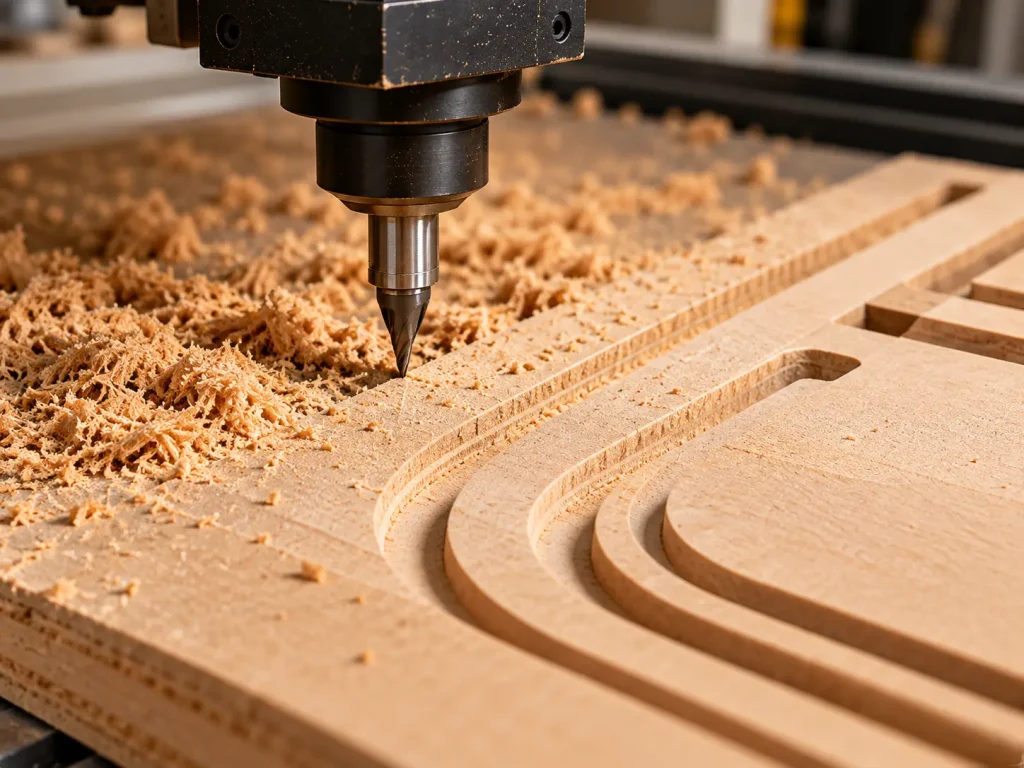
MDF performs particularly well during CNC routing because its internal structure is very consistent. The cutting tool encounters essentially the same material throughout the board, allowing manufacturers to produce clean grooves, recessed areas, decorative profiles, and customized shapes.
This characteristic is useful for cosmetic display cabinets, perfume display cabinets, jewelry display cases, optical display cabinets, beauty counters, fashion fixtures, branded POS displays, and shop-in-shop display systems. Retail brands often require customized shapes or decorative elements that help create a distinctive visual identity.
Plywood can also be CNC cut and routed, particularly for structural panels and customized cabinet parts. However, routing exposes its multiple veneer layers. Depending on the required appearance, these edges may need additional sanding, edge banding, veneer, painting, or other finishing.
9. Edge Treatment
Although MDF has a consistent internal structure, its exposed edges are generally more absorbent than the face of the panel. Painted MDF edges therefore require appropriate sealing, sanding, and preparation to achieve the same smooth finish as the main surface.
For laminated retail cabinets and store fixtures, MDF edges are commonly protected with PVC, ABS, acrylic, veneer, or other edge-banding materials. Proper edge treatment improves both appearance and resistance to everyday impacts and commercial cleaning.
Plywood edges reveal multiple veneer layers after cutting. Some modern retail store fixtures and shopfitting designs intentionally leave these layers visible as a decorative detail, particularly in natural or minimalist interiors. In other applications, plywood edges can be covered with edge banding, solid wood strips, veneer, metal profiles, or decorative trims.
10. Cost
MDF is usually more economical than comparable high-quality plywood. This makes it attractive for projects where large quantities of custom store fixtures, retail display cabinets, retail counters, shelving units, and merchandising displays need to be produced within a controlled budget.
For example, a chain retailer rolling out fixtures across dozens or hundreds of stores may use MDF for decorative or non-structural areas where plywood’s additional strength would provide little practical benefit. Selecting the appropriate material for each component can help control total manufacturing costs without unnecessarily reducing fixture performance.
Plywood is generally more expensive, but material price should not be evaluated independently. A commercial display cabinet may also include metalwork, tempered glass, acrylic, hardware, LED lighting, surface finishes, signage, packaging, shipping, and installation. The best specification is therefore the one that provides the required performance and appearance at an appropriate overall project cost.
How to Choose Between MDF and Plywood for Your Retail Display Project
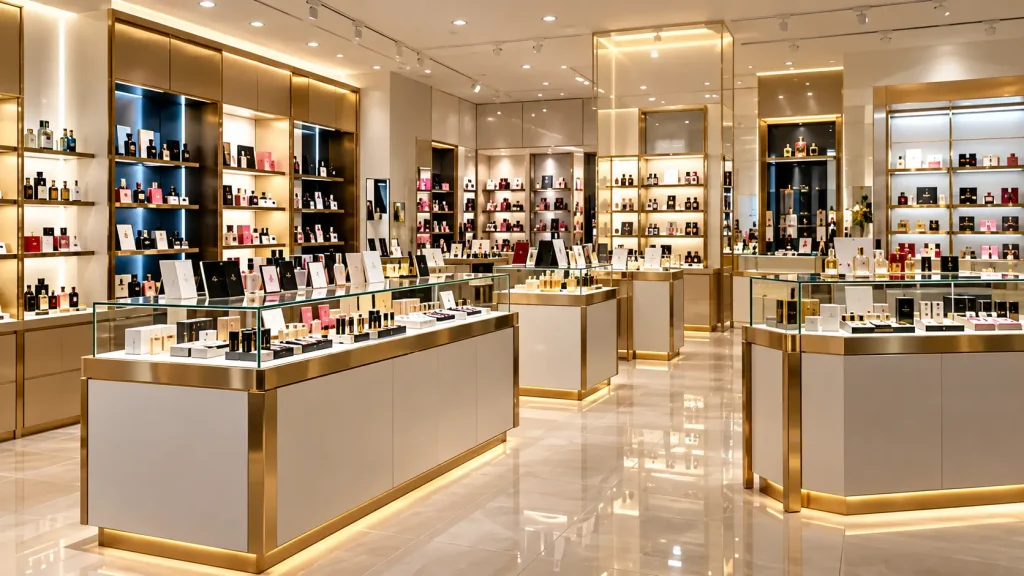
When selecting materials for custom retail display cabinets, retail display cases, and commercial store fixtures, B2B buyers should consider the following factors.
- Product Weight: Consider the weight and quantity of merchandise that the fixture will support. Heavy merchandise or long retail shelf spans may require plywood, metal reinforcement, thicker panels, or additional supports. Lightweight products displayed in cosmetics cabinets, accessories displays, or promotional units may allow more flexibility in panel selection.
- Surface Finish: The required finish can have a major influence on material selection. If the retail fixture requires high-gloss paint, matte lacquer, customized brand colors, routed details, or extremely smooth decorative surfaces, MDF can provide an excellent base. When natural wood grain is part of the design, plywood or decorative veneer may be more appropriate.
- Store Environment: Consider temperature, humidity, cleaning routines, customer traffic, and possible exposure to water. Fixtures installed in fashion or beauty stores have different requirements from convenience store fixtures, supermarket displays, pharmacy fixtures, food retail displays, or café shopfitting fixtures.
- Hardware Requirements: Hinges, drawer slides, locks, adjustable shelf systems, and other hardware place stress on the panel around their fixing points. Retail counters, storage cabinets, glass display cases, and merchandise cabinets with large doors or heavy drawers may require stronger fixing methods or stronger structural materials.
- Fixture Size and Structure: Small countertop displays and large freestanding retail display showcases have very different structural requirements. Large wall display units, floor displays, retail counters, and full-height cabinets may require stronger cabinet carcasses, internal framing, or metal reinforcement.
- Installation Method: Consider whether the fixture will be delivered fully assembled, semi-assembled, or as a knock-down system. Modular store fixtures and shopfitting systems that need to be assembled and dismantled repeatedly may require stronger connection points and carefully designed hardware systems.
- Transportation and Shipping: For international retail projects, panel weight and cabinet construction affect packaging dimensions, container loading, freight costs, and installation handling. This is particularly important for large orders of custom retail fixtures, display shelving, counters, and store display cabinets.
- Project Quantity: Large chain-store and multi-location projects require materials that can be manufactured consistently at scale. Material availability, CNC machining efficiency, surface finishing consistency, packaging, and batch production costs should therefore be considered in addition to individual panel performance.
- Expected Service Life: A temporary promotional POS display used for several months may not need the same material specification as a permanent retail display cabinet expected to remain in a store for many years. Material selection should match the expected service life, customer traffic, and level of daily use.
- Budget: The objective should not simply be to select the cheapest panel. B2B buyers should consider where higher-performance materials are necessary and where more economical materials can achieve the same function. Combining MDF, plywood, metal, and glass in different areas can often provide a more cost-effective custom shopfitting solution.
In Conclusion
When comparing MDF vs plywood for custom retail display cabinets, both materials offer advantages for different applications. MDF provides excellent surface smoothness, CNC machining flexibility, and painted finish performance, while plywood offers greater structural strength, better screw holding, and generally improved resistance to bending and moisture. For B2B retail fixture and shopfitting projects, the most suitable specification should be determined according to the cabinet structure, merchandise load, finish requirements, store environment, shipping method, expected service life, and overall budget rather than selecting one material for every component.
Frequently Asked Questions
1. Why Are MDF and Plywood Often Combined with Other Materials in Retail Display Fixtures?
Retail display fixtures often combine MDF or plywood with glass, metal, acrylic, and LED lighting to balance strength, appearance, function, and cost
2. Is MDF Strong Enough for Commercial Retail Display Cabinets?
Yes. MDF is suitable for many commercial display cabinets, counters, and wall fixtures when the structure and panel thickness are properly designed. Reinforcement can be added for heavier loads.
3. Is Plywood Better Than MDF for Retail Shelving?
Plywood is often better for longer or heavier-duty shelves because of its higher strength and resistance to bending. MDF is still suitable for standard shelving with proper support.
Custom Retail Display Cabinets for Your Next Project
Choosing between MDF and plywood is only one part of creating reliable custom retail display cabinets and store fixtures. ONI Display provides customized retail display cabinets, retail shelving, counters, showcases, wall units, POS displays, and shopfitting solutions for a wide range of retail environments, combining MDF, plywood, metal, glass, acrylic, hardware, lighting, and surface finishes according to your store design, product category, project quantity, finish requirements, and budget.
 Contact us today to start your custom display fixtures project.
 WhatsApp/Call: +86 186 2096 3396
 Email: sales1@onishopfitting.com
 Factory Location: Guangzhou, China