Choosing materials for a commercial display cabinet can be more complicated than it first appears. Retail fixtures need to look attractive, support merchandise safely, withstand frequent customer interaction and remain consistent with the overall store design. Selecting a material based only on appearance or price can easily lead to problems later.
The wrong material may result in shelves that are not strong enough, surfaces that wear too quickly, cabinets that are too heavy to install efficiently or finishes that do not match the intended brand image. These issues can become even more significant in multi-store projects, where one design may need to be manufactured repeatedly across dozens or hundreds of locations.
That is why professional retail display fixtures usually combine material selection with structural engineering, product requirements, manufacturing feasibility and project budget. From MDF and plywood to metal, glass and acrylic, each material has its own advantages. Understanding these differences can help retailers select more practical and reliable materials for their commercial display cabinets.
Why Does Material Selection is Important for Custom Retail Display Cabinets?
Material selection directly affects the strength, durability and daily performance of a retail display cabinet. A cabinet designed for lightweight cosmetics, for example, may have very different structural requirements from shelving used for wine bottles, electronics or other heavier merchandise. The cabinet body, shelf thickness, frame structure and fixing methods should therefore be considered together.
Materials also influence the visual identity of a retail environment. Wood finishes can create a warm and natural atmosphere, glass can improve product visibility, while stainless steel or powder-coated metal can create a more contemporary or premium appearance. For this reason, materials are an important part of both fixture engineering and store branding.
For retailers planning chain-store rollouts, material selection can also affect manufacturing consistency, packaging, transportation, installation and long-term maintenance. A well-specified material system makes it easier to reproduce the same custom retail fixtures across multiple locations while maintaining consistent appearance and performance standards.
Common Materials Used for Commercial Display Cabinets
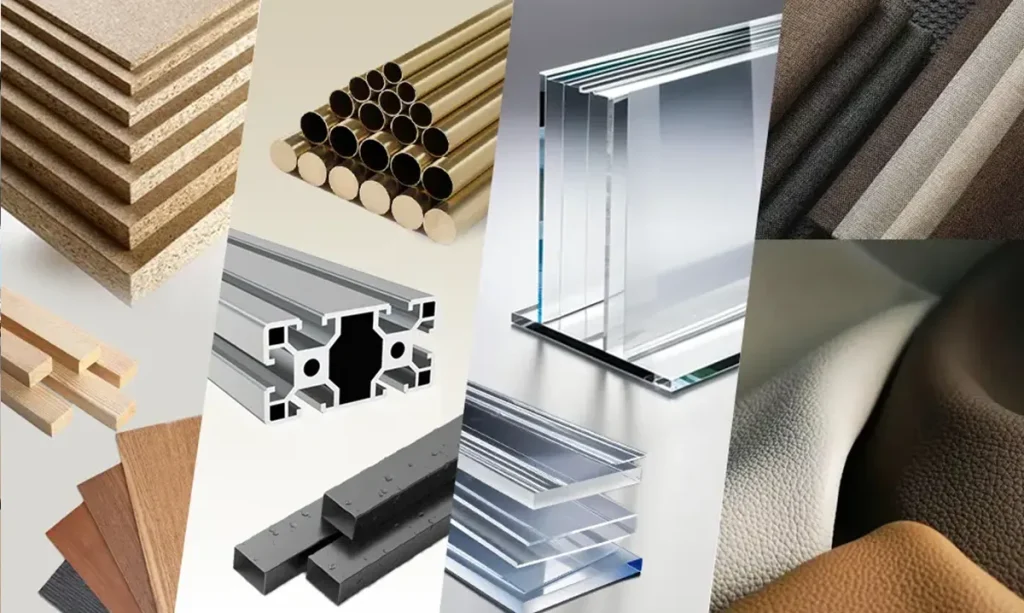
Commercial display cabinets are rarely manufactured from one material alone. Different materials are generally selected for the cabinet body, structural frame, shelving, doors, decorative elements and branding components.
Below are some of the most commonly used materials in modern retail display fixtures.
- MDF
Medium-density fiberboard, commonly known as MDF, is widely used in commercial display cabinet manufacturing because of its smooth and consistent surface. It is particularly suitable for painted, lacquered, laminated and other decorative finishes, making it a flexible option for customized retail interiors.
MDF can also be cut, routed and shaped into different forms, allowing manufacturers to create curved panels, recessed details, branded structures and customized cabinet profiles. It is frequently used for perfume counters, cosmetic displays, cashier counters, wall cabinets and boutique store display fixtures.
For applications involving high moisture, very heavy products or long shelf spans, MDF may need to be combined with plywood, metal reinforcement or other structural materials.
- Plywood
Plywood is manufactured by bonding multiple layers of wood veneer together, giving the panel good structural stability and screw-holding strength. It is commonly used for cabinet carcasses, storage areas, retail counters, display tables and shelving structures.
Compared with standard MDF, plywood is often selected where stronger fixings or additional structural performance are required. It can also be finished with laminate, wood veneer, paint or other decorative materials to match the overall retail design.
Plywood is frequently combined with steel frames, glass shelves or decorative panels in long-term custom store fixtures, providing a balance between durability, manufacturability and appearance.
- Solid Wood and Wood Veneer
Solid wood offers a natural and premium appearance, making it suitable for retail environments where craftsmanship and material quality are important parts of the brand presentation. It is commonly associated with premium boutiques, lifestyle stores, wine shops and specialty retail concepts.
However, using solid wood throughout an entire commercial cabinet can increase both fixture weight and manufacturing cost. Because of this, many retail projects use engineered wood for the main cabinet structure and apply natural wood veneer to visible surfaces.
This approach provides the visual character of natural timber while making the fixture easier to manufacture consistently, particularly for larger retail store fixture projects.
- Steel
Steel is one of the most commonly used structural materials in commercial retail fixtures. It provides high strength and can be used for frames, support structures, shelving systems, brackets, bases and other load-bearing components.
Steel can also be finished in a variety of ways, with powder coating being particularly common in retail interiors. Different colors and surface textures can help the same material work in industrial, minimalist, luxury or contemporary store environments.
Because of its structural strength, steel is often combined with MDF, plywood, glass or acrylic to create durable custom retail displays without making the fixture appear visually heavy.
- Stainless Steel
Stainless steel is often selected when a retailer wants a more refined metallic appearance. It is commonly used for trims, frames, plinths, handles, decorative edges and other visible elements in premium retail environments.
Brushed and polished stainless steel can create very different visual effects, allowing designers to adapt the material to different store concepts. It is frequently used in jewelry, cosmetics, fashion, watch and luxury retail projects.
Although stainless steel generally costs more than standard mild steel, it can add a higher-end finish to retail display cabinets, particularly when combined with glass, lacquered panels and integrated lighting.
- Aluminum
Aluminum is lightweight, corrosion-resistant and easy to fabricate into profiles, making it useful for modular retail systems, frames, trims and display structures.
Its lower weight can be especially useful where fixtures need to be transported, assembled or reconfigured efficiently. Aluminum is therefore often used in modular shelving, exhibition displays and certain types of branded retail fixtures.
However, aluminum is not always the most appropriate choice for extremely heavy product loads. The required wall thickness, profile shape and structural design should be determined according to the specific application.
Tempered glass is widely used in commercial display cabinets because it provides excellent product visibility while maintaining a clean and premium appearance. It is commonly used for cabinet doors, shelves, showcases and display counter tops.
In retail environments, tempered glass is generally preferred over ordinary glass because it provides improved safety characteristics. Different options can also be specified, including clear, ultra-clear, tinted, frosted and decorative glass.
Tempered glass is especially common in jewelry displays, perfume counters, watch showcases and other retail display fixtures where customers need a clear view of the merchandise while products remain protected inside the cabinet.
- Acrylic
Acrylic is another commonly used transparent material in retail displays. It is lighter than glass and can be cut, bent, printed and formed into many customized shapes.
For this reason, acrylic is frequently used for product holders, cosmetic trays, sign holders, dividers, branding panels and smaller merchandising components. Clear acrylic creates a clean and modern appearance, while colored or printed acrylic can be used for stronger branding.
Acrylic is especially useful in custom retail displays that require lightweight, shaped or interchangeable components, although the surface can be more susceptible to scratching than glass.
- Laminate and Melamine
Laminate and melamine are commonly used as decorative surface materials for MDF, plywood and other engineered boards. They are available in a wide range of colors, textures and patterns, including wood grain, stone, concrete and solid-color finishes.
These materials can be particularly practical for large commercial projects because the same finish can be applied across different fixture types, such as wall cabinets, shelving units, display tables and cashier counters.
For multi-store retail projects, laminate and melamine can help maintain a consistent visual identity while supporting efficient manufacturing of standardized retail display fixtures.
Commercial Custom Display Cabinet Material Comparison
| Material | Main Advantages | Common Applications | Typical Visual Effect | Key Considerations |
|---|---|---|---|---|
| MDF | Smooth surface, highly customizable | Cabinets, counters, wall displays | Clean and modern | May need reinforcement for heavier loads |
| Plywood | Good strength and screw-holding performance | Cabinet structures, shelving, counters | Natural or contemporary | Usually requires decorative finishing |
| Solid Wood / Veneer | Premium natural appearance | Luxury retail, wine shops, boutiques | Warm and premium | Solid wood can increase cost and weight |
| Steel | Strong and durable | Frames, shelves, support structures | Industrial or modern | Requires surface treatment |
| Stainless Steel | Premium metallic finish | Luxury fixtures, trims, counters | Contemporary and refined | Higher cost than standard steel |
| Aluminum | Lightweight and versatile | Modular systems, profiles, frames | Minimal and modern | Structural capacity must be evaluated |
| Tempered Glass | High visibility and premium appearance | Doors, showcases, shelves | Transparent and elegant | Packaging and transportation require care |
| Acrylic | Lightweight and easy to shape | Product holders, signage, trays | Clean and contemporary | More prone to scratching than glass |
| Laminate / Melamine | Wide range of finishes | Cabinet surfaces, counters, shelving | Highly customizable | Edge finishing affects final appearance |
How to Choose the Right Material for a Commercial Display Cabinet
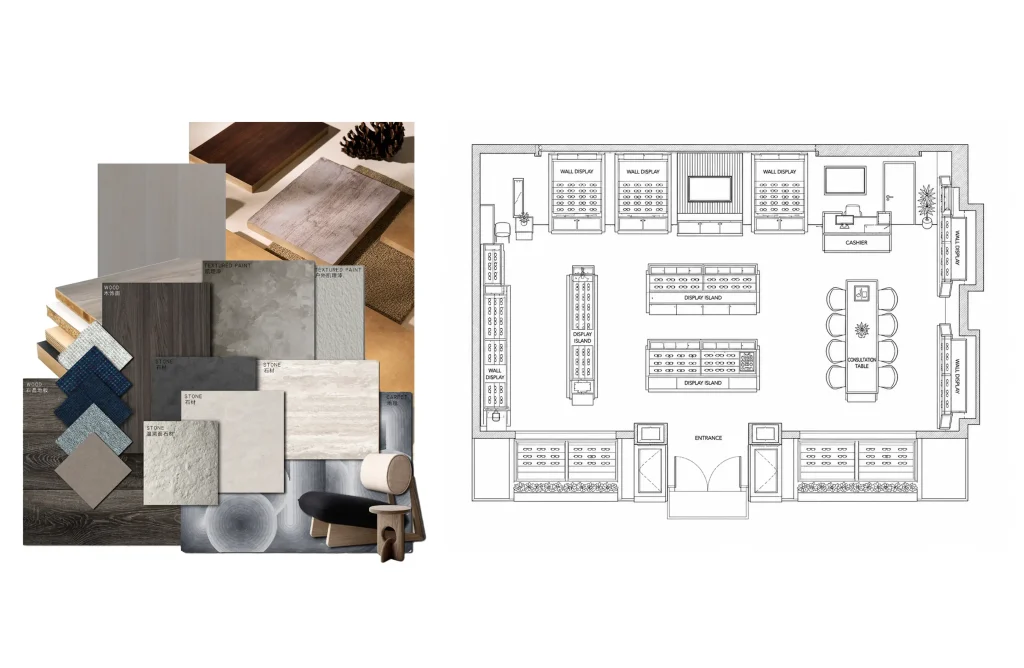
When selecting materials for commercial display cabinets, the choice should be based on the complete project rather than appearance alone.
- Displayed product weight: Determine how much weight shelves and cabinet structures need to support before selecting boards, glass thickness or metal frames.
- Product type: Cosmetics, jewelry, fashion, electronics, liquor and convenience-store products can all require different fixture structures and materials.
- Fixture location: Consider whether the cabinet will be wall-mounted, freestanding, installed along an aisle, placed at checkout or used as a center-floor display.
- Expected fixture lifespan: Permanent retail fixtures usually require more durable materials and finishes than temporary promotional displays.
- Customer interaction: Cabinets that are frequently touched, opened or used by customers may require more durable surfaces, hinges, handles and drawer systems.
- Brand positioning: Select materials that match the intended visual identity, whether the store concept is luxury, natural, industrial, minimalist or highly branded.
- Store environment: Temperature, humidity, cleaning frequency and lighting conditions can affect the performance of certain materials.
- Maintenance requirements: Consider whether surfaces are easy to clean, repair or replace during long-term store operation.
- Project quantity: Materials suitable for a one-off flagship store may not always be the most practical option for a large multi-store rollout.
- Manufacturing consistency: For chain stores, the selected materials should be available and repeatable across multiple production batches.
- Shipping weight: Heavy glass, solid wood and large steel structures can increase transportation and packaging requirements.
- Installation method: Modular and knock-down fixture designs may require different material and hardware choices from fully assembled fixtures.
- Project budget: Material selection should balance initial cost, expected lifespan, maintenance requirements and overall visual quality.
- Combination of materials: In many projects, the most practical solution is to use several materials together rather than relying on a single material throughout the fixture.
In Conclusion
Choosing the right materials for commercial display cabinets requires balancing appearance, durability, structural performance, budget and the specific products being displayed. MDF, plywood, metal, tempered glass, acrylic and decorative finishes each offer different advantages, and the most effective retail display fixtures often combine several materials to meet both functional and branding requirements.
Frequently Asked Questions
1. Why Are Multiple Materials Commonly Used in Commercial Display Cabinets?
Different parts of a display cabinet perform different functions, so using several materials allows each component to be optimized for its purpose. For example, a perfume display cabinet may use MDF for the main structure, steel for reinforcement, tempered glass for shelves, acrylic for product holders and LED lighting for product presentation.
2. Which Materials Are Best for Different Retail Environments?
The best material depends on the retail category and the products being displayed. Jewelry and watch stores often use tempered glass, stainless steel, lacquered MDF and premium decorative finishes. Cosmetics stores frequently combine acrylic, glass, painted MDF and metal trims. Fashion stores may use plywood, veneer and powder-coated metal, while liquor displays often require stronger shelving structures because of the weight of bottles.
3. Is MDF, Plywood or Metal Better for Retail Display Cabinets?
None of these materials is universally better because each serves a different purpose. MDF provides a smooth surface and excellent design flexibility, plywood offers stronger structural performance for many cabinet applications, while metal provides high strength and is particularly suitable for frames and reinforcement.
Need Custom Commercial Display Cabinets for Your Retail Project?
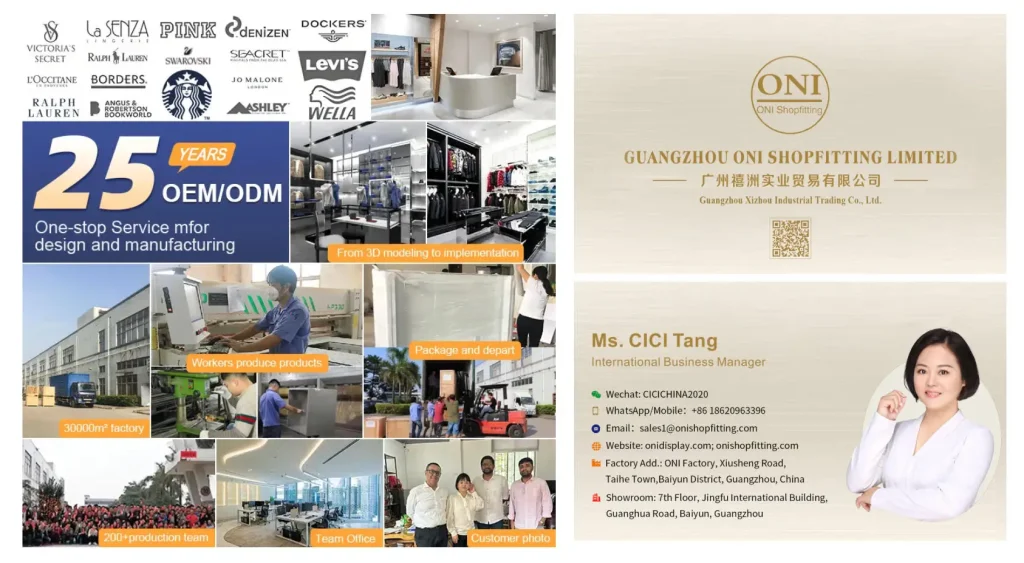
ONI Display provides custom retail display fixtures, commercial display cabinets, retail counters, shelving systems and complete store fixture solutions for different retail industries. With more than 25 years of shopfitting and fixture manufacturing experience, we work with wood, metal, glass, acrylic and multiple decorative finishes to develop retail fixtures according to your store concept, merchandise requirements and project scale.
Whether you are developing a flagship store, renovating an existing retail space or planning a multi-store rollout, our team can support your project from design development and engineering to prototyping, manufacturing and delivery.
 Contact us today to start your custom display fixtures project.
 WhatsApp/Call: +86 186 2096 3396
 Email: sales1@onishopfitting.com
 Factory Location: Guangzhou, China