Selecting the right apparel racks is crucial for creating an organized, attractive, and efficient retail space. The wrong rack choice can result in crowded displays, poor product visibility, limited customer flow, and inefficient use of valuable floor space.
Because different garments, store layouts, and merchandising strategies require different display solutions, retailers need to consider factors such as clothing type, display purpose, space utilization, load capacity, material quality, and durability when choosing apparel racks.
To help retailers find the best display solution for their stores, this guide explores 6 key types of apparel racks for retail stores, highlighting their features, applications, and benefits for different retail environments.
What Are Apparel Racks for Retail Stores?
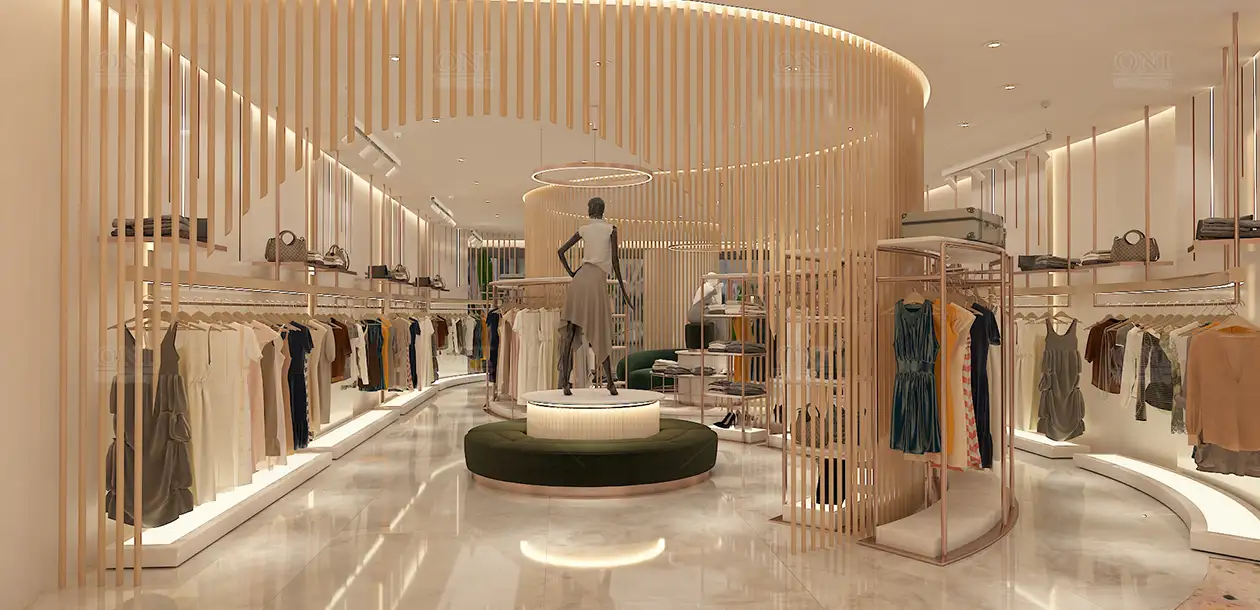
Apparel racks are retail fixtures designed to display clothing in an organized, accessible, and visually appealing way. They include clothes rack systems, garment racks, hanger rack fixtures, wall-mounted rails, round racks, gondola racks, and other clothing display solutions used in apparel retail environments.
In fashion retail, racks are not only storage tools. They influence customer movement, product visibility, stock density, category zoning, and the overall store atmosphere. A well-designed clothes hanging rack helps customers browse naturally while allowing staff to restock, adjust displays, maintain size order, and keep store presentation consistent throughout the day.
For broader store planning, apparel racks should work together with wall systems, display tables, mirrors, counters, lighting, and signage. Retail design organizations such as the Retail Design Institute often highlight how fixtures, layout, materials, and visual merchandising all shape the in-store customer experience.
Why Apparel Rack Selection Matters
Apparel racks play a critical role in shaping the overall shopping experience and influencing how customers interact with products. A well-designed rack system helps create a clean, organized, and comfortable shopping environment, allowing customers to browse garments easily and discover products naturally. When clothing is displayed too tightly, customers may feel uncomfortable while browsing, while poorly designed rack heights, layouts, or placements can reduce product visibility and weaken the overall visual impact of the store.
Beyond merchandising performance, apparel rack selection also has a direct impact on retail project execution. Rack design influences manufacturing costs, material usage, packaging size, shipping efficiency, installation processes, and long-term maintenance requirements. For multi-store rollouts, chain retailers, and franchise projects, even small design issues can become significant challenges when multiplied across multiple locations, leading to increased costs and operational difficulties.
Therefore, choosing apparel racks requires a balance between aesthetic appeal, functional performance, and production feasibility. The ideal rack solution should complement the brand identity, maximize merchandise presentation, optimize store space, and provide reliable performance for daily operations. ONI Display supports this type of planning through custom retail fixtures and turnkey shopfitting solutions.
1. Single-Rail Apparel Racks
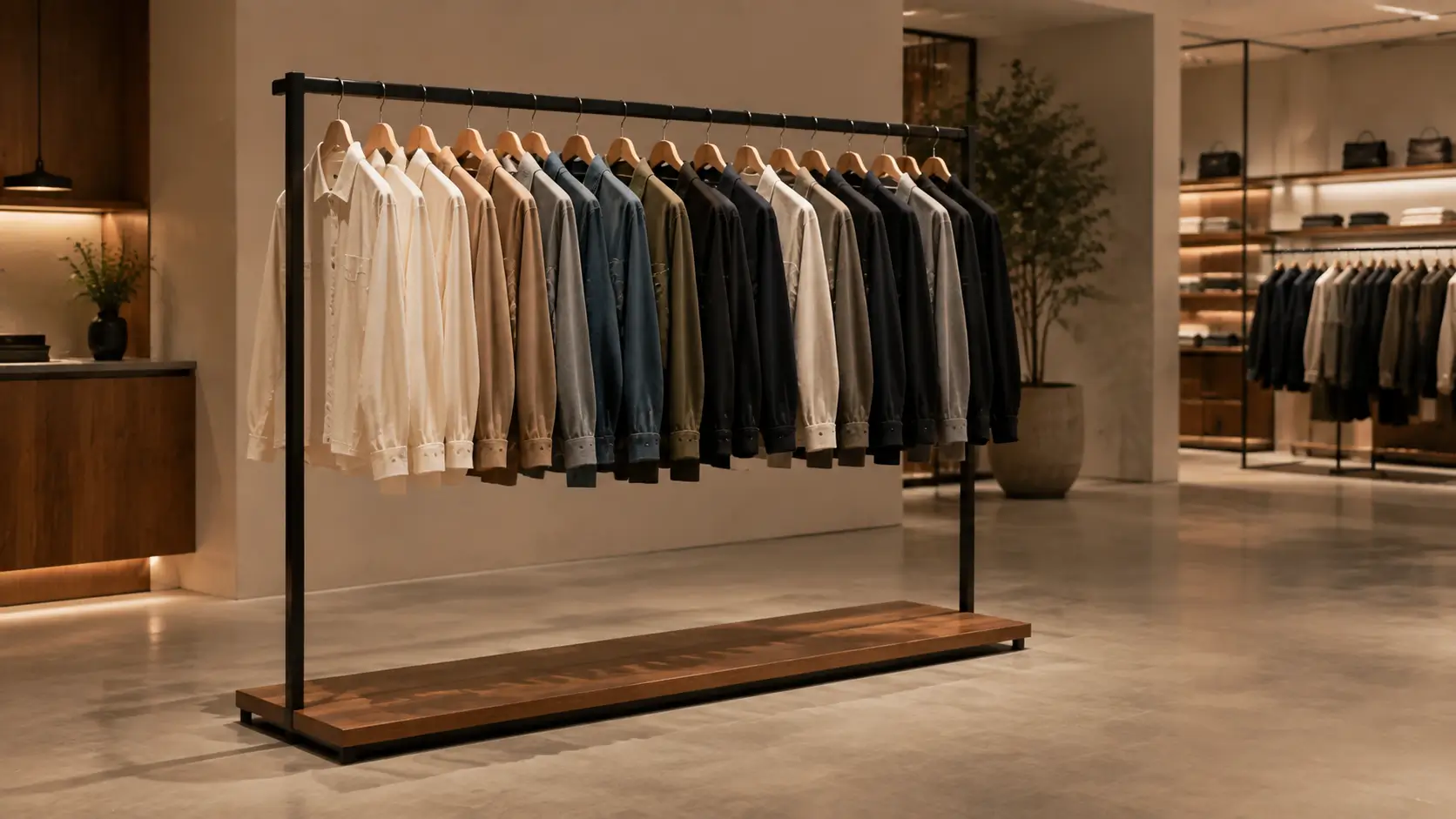
Single-rail apparel racks use one horizontal hanging bar supported by a metal, wood, or mixed-material frame. This type of clothes rack gives garments enough visual breathing space and makes products easy to browse. It is commonly used for shirts, jackets, dresses, pants, coats, suits, new arrivals, and seasonal collections.
This rack type works well in boutiques, pop-up stores, showroom displays, department store corners, and fast-changing apparel environments. Because the structure is open and easy to move, retailers can reposition single-rail garment racks for campaigns, capsule collections, and promotional layouts without changing the entire store plan.
For custom projects, single-rail racks can include powder-coated metal, brushed stainless steel, wood bases, casters, signage holders, mirrors, accessory trays, or brand-colored finishes. The main limitation is capacity, so they are better for clean presentation than high-density stock display.
2. Double-Rail Clothing Racks
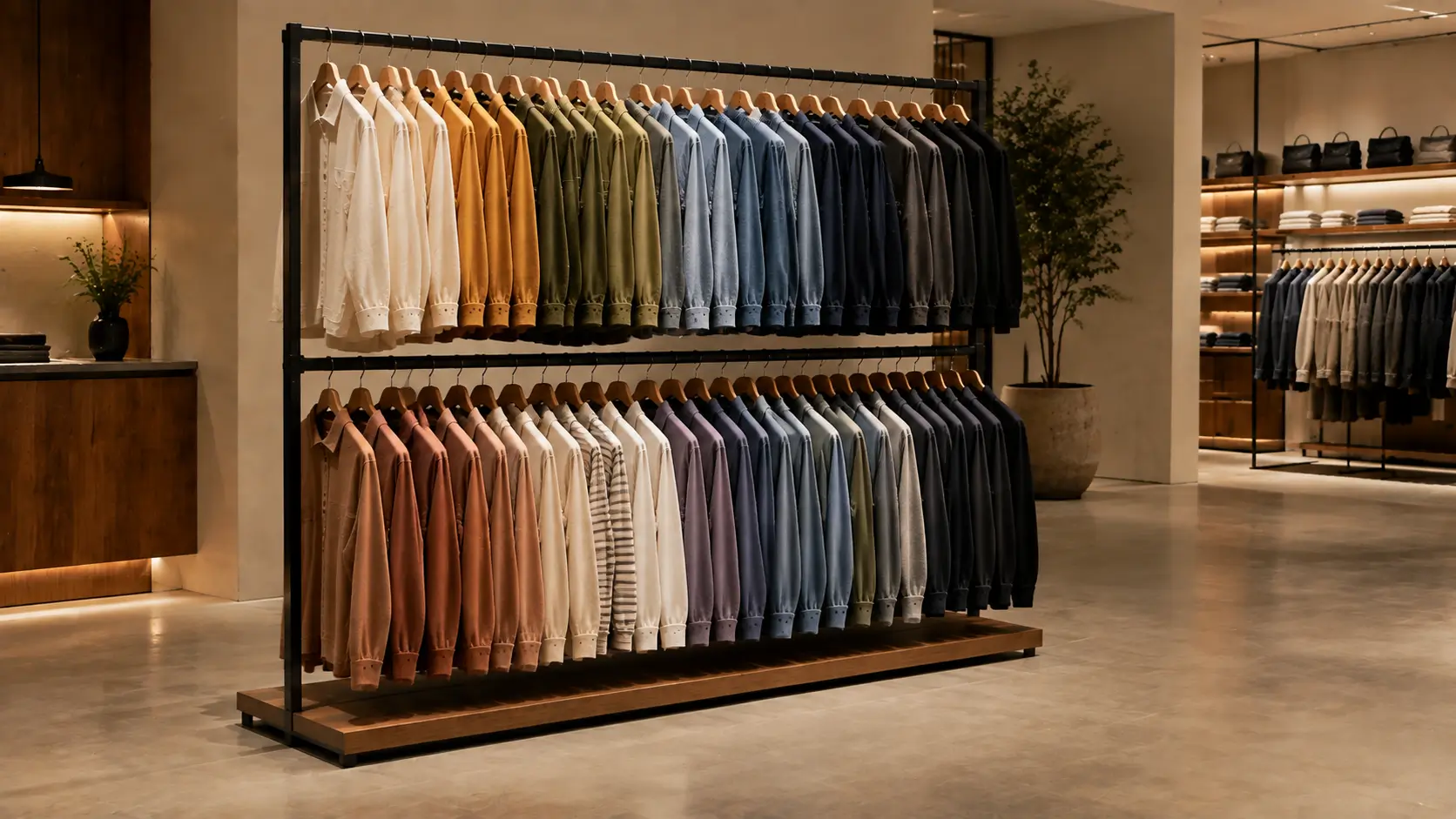
Double-rail apparel racks provide two hanging levels or two parallel bars, allowing stores to display more garments within the same footprint. This type of hanger rack is designed for higher product density and is often used when the store needs to present many SKUs, sizes, colors, or seasonal items.
They are especially useful for children’s clothing, basics, outlet apparel, uniforms, sportswear, promotional areas, and stock-heavy retail zones. By increasing hanging capacity, double-rail racks help retailers manage inventory on the sales floor without adding too many separate fixtures.
The spacing must be planned carefully. If rails are too close, products can look crowded and customers may find browsing difficult. For custom manufacturing, buyers should confirm rail height, spacing, load capacity, frame thickness, floor protection, and whether the rack needs adjustable components.
3. Four-Way Apparel Racks
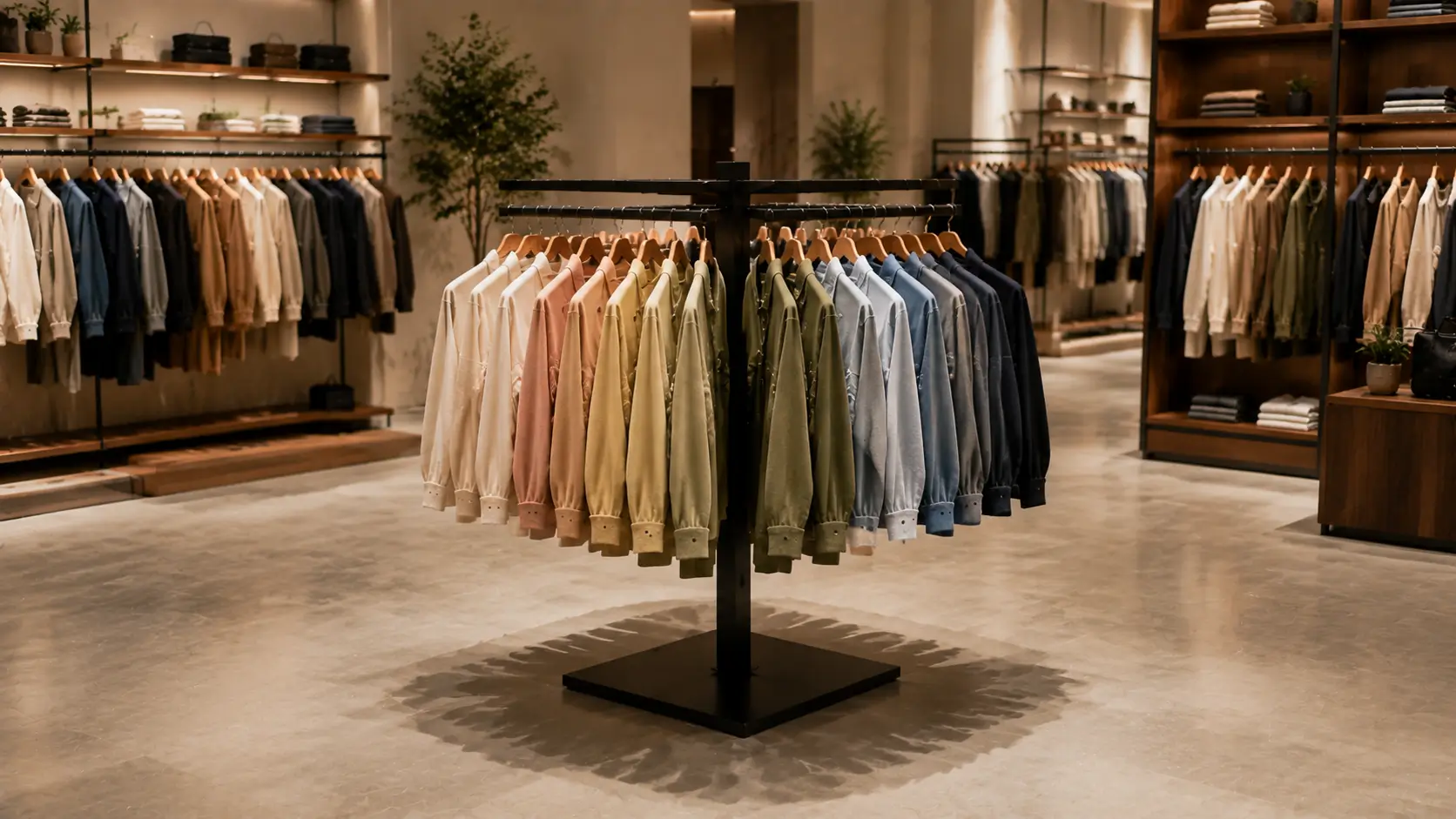
Four-way apparel racks feature four display arms connected to a central vertical post, creating a versatile fixture that allows garments to be displayed from multiple directions. They are commonly used to showcase complete outfits, seasonal collections, promotional items, coordinated styles, or different sizes within a limited floor area.
This type of rack is a popular choice for department stores, sportswear retailers, casual fashion shops, and mall-based apparel stores. Positioned in open areas or the center of a store, four-way racks can encourage customers to walk around the display, explore more products, and improve product visibility from different angles.
Depending on the merchandising needs, four-way racks can be designed with various arm styles, including straight arms, slanted arms, waterfall arms, stepped arms, and face-out displays. When planning placement, retailers should ensure enough space around the fixture to maintain comfortable customer movement and easy browsing. With the right layout, four-way apparel racks can help maximize display efficiency while creating an attractive focal point in the store.
4. Wall-Mounted Clothing Racks
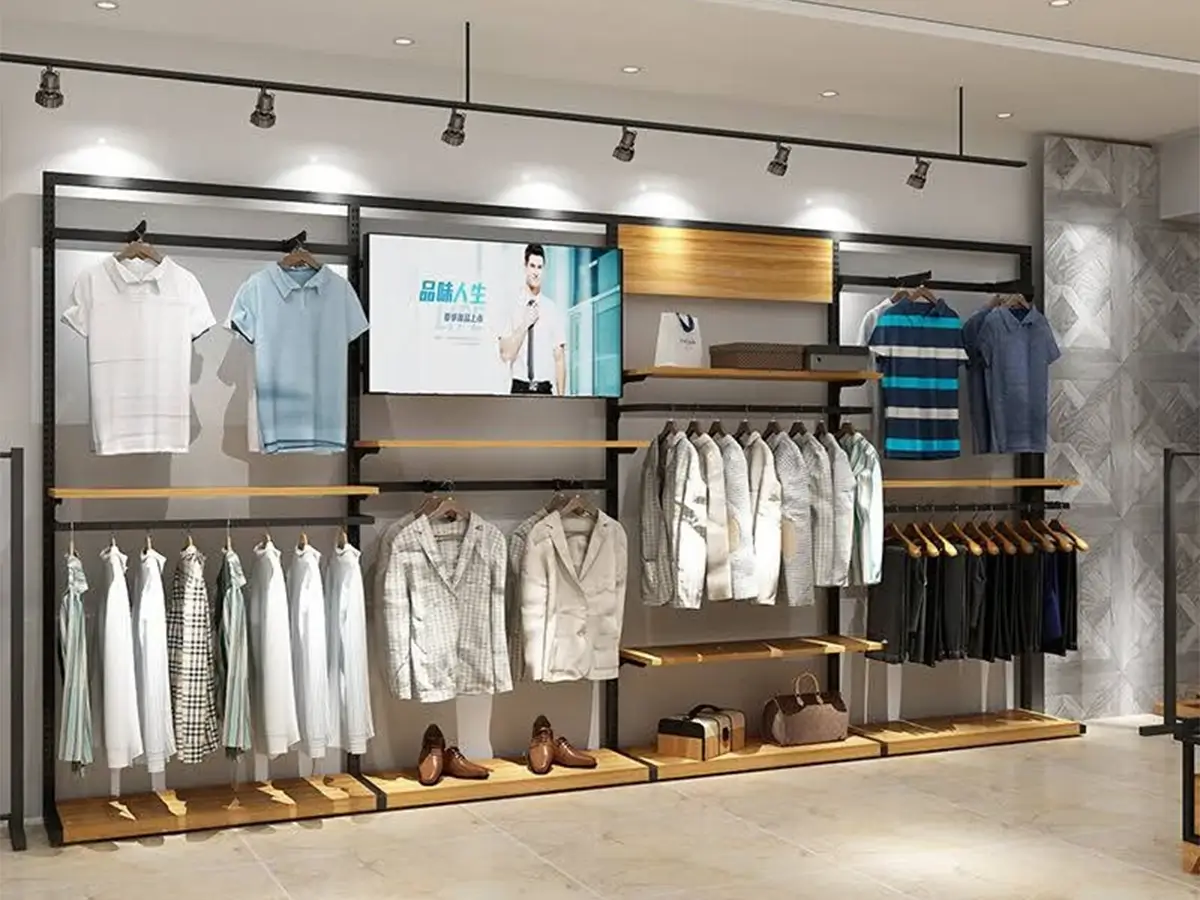
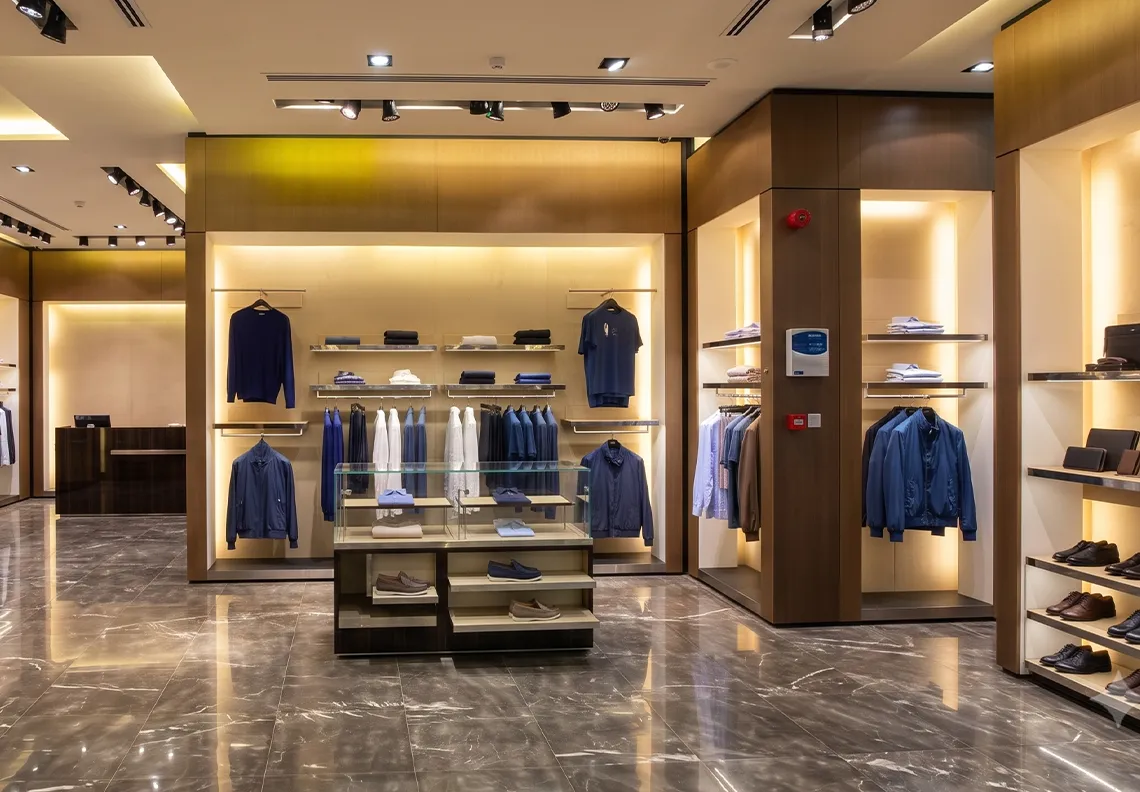
Wall-mounted apparel racks attach to wall panels, slatwall systems, metal uprights, or custom wall display structures. They help retailers use vertical space and keep the center of the store more open, which is valuable for stores with limited floor area.
This type is ideal for boutiques, sportswear stores, fashion chains, footwear and apparel stores, lifestyle stores, and premium retail spaces that need clean category zoning. Wall-mounted systems can include hanging rails, face-out arms, shelves, hooks, mirrors, signage, back panels, and LED lighting.
The key technical point is load support. A wall-mounted clothes hanging rack must be engineered according to wall condition, panel strength, bracket structure, garment weight, and installation method. For chain rollouts, the system should be easy to install consistently across different store locations.
5. Round Clothing Racks
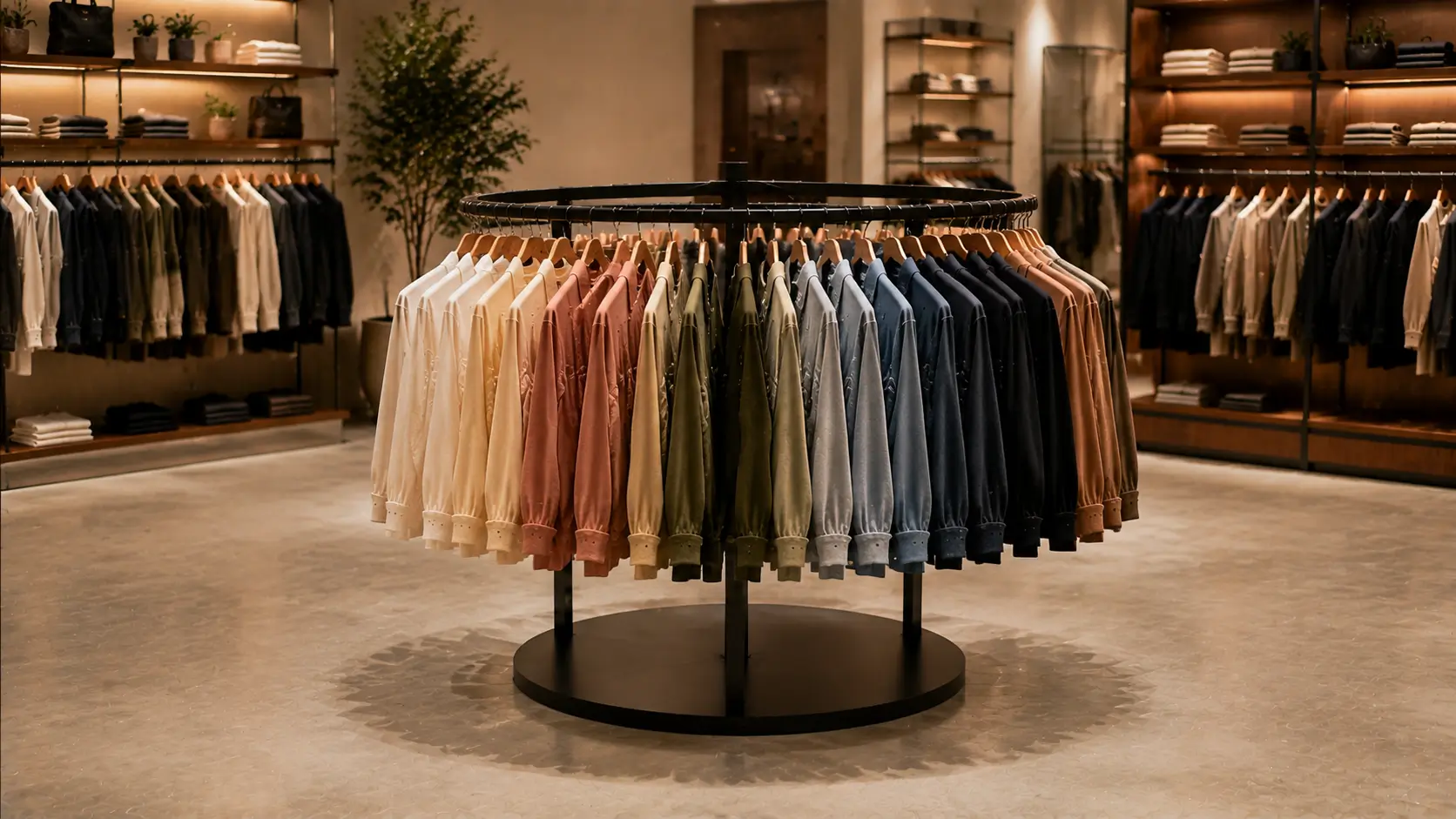
Round apparel racks use a circular hanging rail supported by a central base. They provide high display capacity and allow customers to browse around the fixture from every direction, making them useful for fast browsing and high stock exposure.
They are often used for sale areas, outlet stores, clearance zones, department stores, children’s clothing, uniforms, and promotional apparel. Because products hang around the full circle, round racks can hold many garments in a compact footprint.
Round garment racks require good merchandising discipline. If overloaded, they can look messy and reduce perceived product value. Custom round racks can include stronger bases, wheels, adjustable heights, branded signs, dividers, powder-coated finishes, or decorative top signage to improve both function and appearance.
6. Gondola Clothing Racks
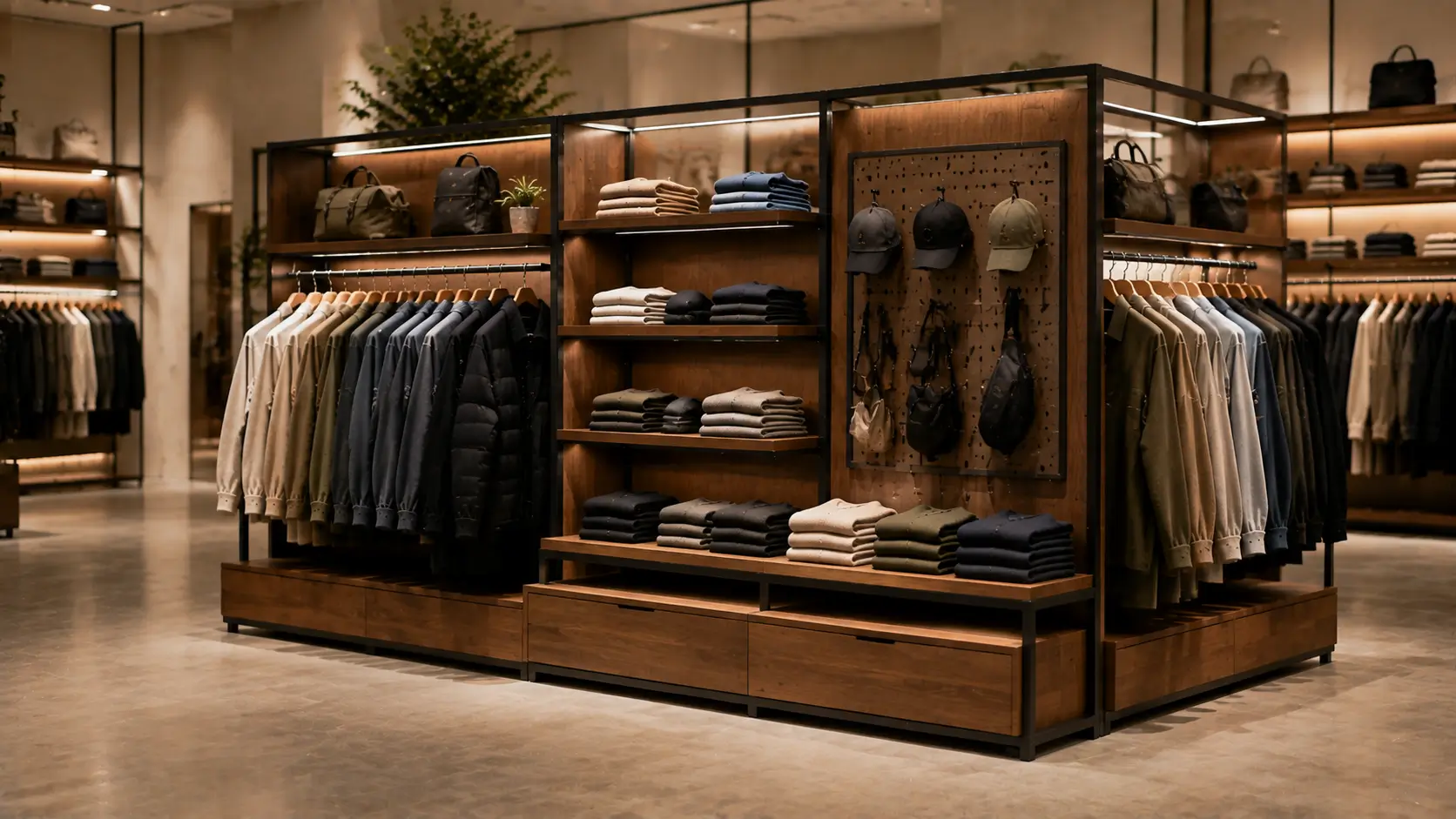
Gondola apparel racks combine hanging rails, shelves, hooks, signage, panels, and sometimes drawers or storage into one freestanding fixture. They are highly useful for stores that need mixed merchandising across apparel, bags, shoes, accessories, and folded products.
This rack type works well for flagship stores, chain stores, lifestyle retail, sportswear shops, and multi-category apparel stores. A gondola rack can present a complete product story in the center of the store, such as jackets on rails, folded sweaters on shelves, belts on hooks, and campaign signage above the display.
Gondola racks are larger and more complex than a simple clothes rack, so buyers should confirm dimensions, customer flow, shelf depth, rail height, lighting position, signage area, and installation method. For apparel chains planning standardized store formats, ONI Display’s custom apparel store fixtures can support coordinated wall systems, mid-floor racks, display tables, and full-store fixture packages.
Comparison Table: 6 Key Types of Apparel Racks
| Apparel Rack Type | Best For | Main Advantage | Buyer Consideration |
|---|---|---|---|
| Single-Rail Rack | Boutiques, new arrivals, seasonal collections, pop-ups | Clean presentation and flexible placement | Lower display capacity |
| Double-Rail Rack | Outlet stores, children’s clothing, basics, high-SKU apparel | Higher stock density in the same footprint | Can look crowded if spacing is too tight |
| Four-Way Rack | Promotions, mid-floor displays, coordinated outfits | Browsing from multiple directions | Needs enough aisle clearance |
| Wall-Mounted Rack | Fashion chains, boutiques, lifestyle stores | Saves floor space and strengthens category zoning | Requires strong wall or panel support |
| Round Rack | Sale zones, clearance areas, department stores | High capacity in a compact footprint | Less premium if overloaded |
| Gondola Rack | Mixed apparel and accessories, flagship stores | Strong merchandising flexibility | Requires careful layout and engineering |
How to Choose the Right Apparel Rack for Your Store
Choosing the right apparel rack starts with understanding what you sell, how your store operates, and how you want customers to shop. A good rack should not only hold clothing securely but also make products easier to see, improve store organization, and create a better shopping experience.
First, consider the type of garments you display. Different clothing categories require different rack designs. Heavy coats, suits, and denim need stronger racks with higher load capacity, while shirts, dresses, and lightweight apparel may need more flexible designs with suitable spacing to keep the display neat and easy to browse. The right rack helps customers find products quickly while keeping the store looking clean and organized.
You should also consider your store format and future expansion plans. Small boutiques often need compact and flexible racks to save space, while department stores and outlet stores may require stronger racks with higher display capacity. For chain stores or multiple locations, choosing standardized racks can help reduce production costs, simplify installation, and maintain a consistent brand image across all stores.
By selecting apparel racks based on product type, store layout, display needs, and long-term business plans, retailers can create a more functional, attractive, and efficient retail environment.
Common Apparel Rack Specification Parameters
When selecting apparel racks for a retail project, understanding the key specifications is essential to ensure the fixtures meet both display and operational requirements. Different rack designs have different performance characteristics, and factors such as size, load capacity, material, finish, mobility, and installation method can directly impact store layout, durability, maintenance, and overall project efficiency.
Before placing an order or starting a retail rollout, brands should carefully evaluate the following specification parameters to ensure the selected apparel racks are suitable for their products, store environment, and long-term business needs.
| Specification | What to Confirm | Why It Matters |
|---|---|---|
| Rack size | Width, depth, height | Controls store flow and display capacity |
| Load capacity | Garment weight and stock volume | Prevents bending, instability, and long-term damage |
| Material | Steel, stainless steel, wood, acrylic, mixed materials | Affects durability, appearance, and cost |
| Surface finish | Powder coating, chrome, brushed metal, laminate, veneer | Connects fixture appearance with brand identity |
| Mobility | Fixed base or casters | Supports flexible campaign changes |
| Adjustability | Adjustable arms, rails, shelves, hooks | Helps stores adapt to different product seasons |
| Packaging | Knock-down or assembled packing | Affects shipping volume and installation time |
| Installation | Freestanding, wall-mounted, or fixed to floor | Influences site preparation and safety |
Buyer Checklist for Custom Apparel Racks
Before ordering custom apparel racks, buyers should confirm garment categories, expected hanging weight, required display capacity, store layout, aisle width, rack dimensions, material finish, brand color, signage needs, lighting requirements, packaging method, and delivery schedule.
For chain stores, it is also important to confirm whether the rack system can be standardized, packed store by store, and installed consistently across different locations. This helps reduce project delays and maintain brand presentation.
Buyers should also consider how apparel racks connect with the rest of the store environment. A clothes hanging rack may need to coordinate with wall displays, mirrors, fitting room areas, display tables, checkout counters, and signage. For broader fixture planning, ONI Display’s guide to types of custom retail store fixtures can help buyers compare different fixture categories before finalizing a store package.
How ONI Display Supports Apparel Rack Projects
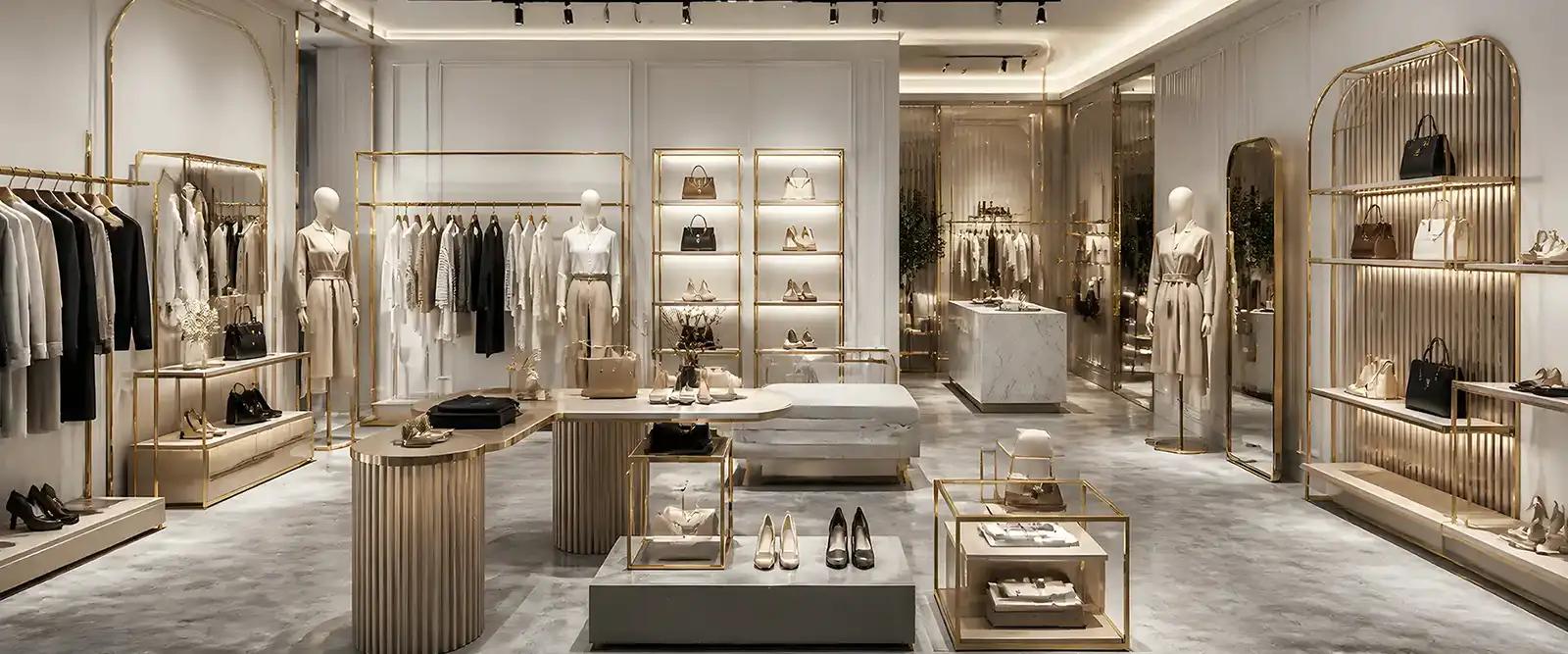
ONI Display provides custom retail fixtures and turnkey shopfitting solutions for apparel brands, designers, contractors, project managers, and shopfitting partners. With 25 years of experience and a 30,000-square-meter headquarters in Guangzhou, China, ONI Display supports design, engineering, woodworking, metal fabrication, lighting, production, quality control, packaging, and global delivery.
For apparel rack projects, ONI Display can help turn store concepts, drawings, and 3D designs into production-ready fixture systems. The team supports single-store projects, flagship stores, department store programs, and multi-location rollouts with custom manufacturing, consistent quality control, store-by-store packaging, and international delivery coordination. Contact us now to start your apparel rack projects!
Summary
The right apparel rack solution helps improve product visibility, optimize store flow, maximize display capacity, and strengthen brand consistency. Retailers should choose racks based on garment type, store layout, material strength, design requirements, durability, and future rollout needs. By selecting the right display solution, brands can create a more organized, attractive, and efficient retail environment while supporting better customer experiences and long-term operational success.
Frequently Asked Questions
What are the main types of apparel racks for retail stores?
The main types include single-rail racks, double-rail racks, four-way racks, wall-mounted racks, round racks, and gondola apparel racks.
What is the difference between a clothes rack and garment racks?
A clothes rack is often a general term for hanging clothing, while garment racks can refer to broader retail fixture systems for different apparel categories.
Can ONI Display customize a clothes hanging rack for chain stores?
Yes. ONI Display can customize clothes hanging rack systems with metal, wood, lighting, finishes, signage, packaging, and global delivery support for chain store rollouts.
 Contact us today to start your custom display fixtures project.
 WhatsApp/Call: +86 186 2096 3396
 Email: sales1@onishopfitting.com
 Website: www.onidisplay.com
 Factory Location: Guangzhou, China
 Check out our social media case studies:Guangzhou ONI Shopfitting Limited