


Choosing an optical store fixtures manufacturer is not only about comparing prices. A reliable manufacturer should provide design development, engineering drawings, material selection, sample confirmation, production, quality inspection, export packaging and delivery support. Strong manufacturing capability also helps ensure that eyewear wall displays, optical cabinets, consultation counters, mirrors, lighting, storage units and signage are produced with accurate dimensions, consistent finishes and durable structures.
For flagship optical stores, large retail spaces and multi-location chain rollouts, the factory should also be able to maintain consistent materials, colors, hardware and technical standards across different locations. The following points can help you evaluate whether an optical store fixture manufacturer is suitable for your project.
Why Choosing the Right Optical Store Fixtures Manufacturer is Important?
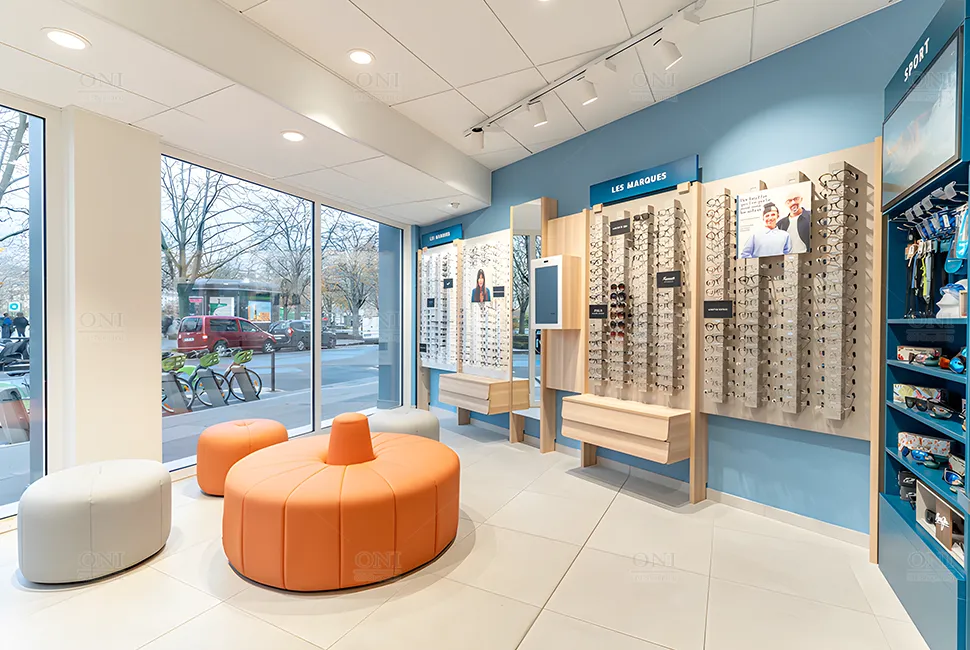
An optical store is a detail-sensitive retail environment. Eyeglasses, sunglasses, lenses, mirrors, consultation counters, storage drawers, and brand signage all depend on clean presentation. Unlike many retail categories where products can be displayed in larger quantities or looser arrangements, eyewear requires precision. Frame spacing, display height, lighting direction, mirror location, and cabinet finish all influence how customers see and compare products.
This is why choosing an optical store fixtures manufacturer should be treated as a project decision, not only a purchasing decision. The right factory must understand store layout, frame display quantity, customer flow, wall fixing, storage needs, lighting performance, and brand image. A manufacturer that only builds according to basic dimensions may miss the retail logic behind the design.
If the manufacturer lacks optical retail experience, problems may appear after production or installation. Common risks include inaccurate dimensions, uneven lighting, color inconsistency, weak cabinet structure, poor drawer alignment, damaged glass, unclear packaging labels, or fixture parts that do not fit on site. These issues do not only affect appearance; they can delay store opening, increase installation costs, and reduce the final presentation quality.
For optical chains, these risks become even more serious. A single store may be adjusted locally, but multi-store rollout requires repeatable quality. If one store has slightly different lighting, another has a different wall fixture height, and another has inconsistent color, the brand image becomes fragmented. A professional manufacturer helps reduce this risk by connecting design, engineering, materials, production, quality control, packaging, export logistics, and installation support into one complete delivery system.
1. Design Ability: Can the Factory Turn Store Concepts into Buildable Fixtures?
Design ability is the first standard to evaluate because optical store fixtures must balance appearance, display function, and manufacturability. A 3D rendering may look attractive, but the manufacturer must know how to turn that design into real eyewear wall displays, optical cabinets, reception counters, lens areas, mirror panels, signage, and storage systems.
A capable factory should review floor plans, 3D design, brand colors, display quantity, shelf spacing, lighting direction, mirror position, consultation flow, and customer movement. This review helps identify whether the design can support real store operation. For example, eyewear shelves need the right display angle and spacing; mirrors must be placed where customers can try frames comfortably; drawers must be accessible to staff; and lighting must highlight frames without creating glare.
The design requirements also change by store type. For a premium eyewear boutique, the design may require warm materials, hidden LED lighting, glass cabinets, soft reflections, and refined wall display systems. For a high-volume optical chain, the focus may be modular fixtures, efficient storage, easy replenishment, and standardized display capacity. For a mall optical store, sightlines, entrance display zones, and compact space efficiency may be more important. This is where store design and 3D rendering service becomes valuable. Good design support helps buyers identify practical issues before production, such as cabinet depth, LED wiring, glass fixing, drawer access, installation clearance, signage location, and customer viewing height.
2. Production Line Capacity: Can the Factory Support Samples and Rollouts?
Production capacity is not only about having machines. Optical store fixtures usually combine MDF, plywood, metal, stainless steel, aluminum, acrylic, tempered glass, mirrors, LED lighting, laminate, veneer, lacquer, locks, hinges, drawer slides, and logo signage. These materials and processes must be coordinated accurately, otherwise the final fixtures may look inconsistent or become difficult to install.
A reliable factory should have organized production lines for woodworking, metal fabrication, painting, surface finishing, lighting assembly, hardware installation, trial assembly, quality inspection, and packaging. Each process affects the final store result. Woodwork affects cabinet structure and edge finishing; metalwork affects strength and detailing; painting affects color consistency; lighting assembly affects product visibility; and packaging affects whether the fixtures arrive safely.
ONI Display’s factory tour shows how different workshops support custom retail fixture manufacturing. For optical projects, a connected production system is especially important because display cabinets, wall units, counters, mirrors, and signage must work together as one store environment.
For optical store brands, the real test begins after sample approval. One good sample does not prove rollout ability. The manufacturer must repeat the same color, size, lighting effect, logo position, cabinet structure, glass detail, hardware function, and packaging standard across batch production. This requires clear production documents, material standards, process control, and internal coordination.
The retail value is rollout stability. Strong production line capacity helps optical brands open stores faster, reduce rework, maintain consistent visual identity, and avoid delays caused by uncoordinated suppliers. It also helps designers and project managers trust that the approved concept can be repeated across multiple locations.
3. Quality Control: Can the Factory Protect Details Before Delivery?
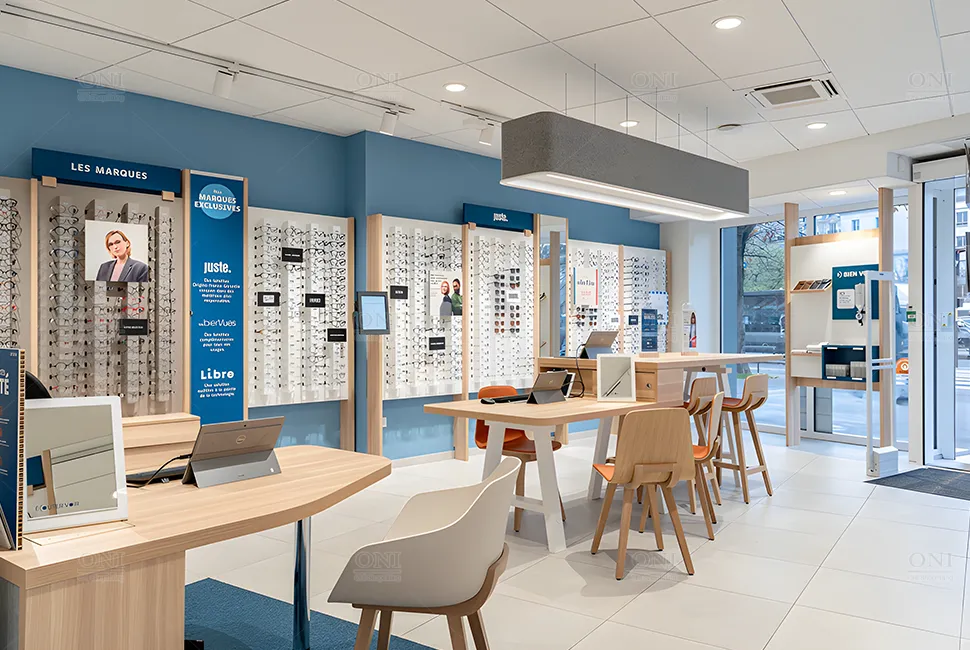
Quality control is critical because optical store fixtures are highly visible. Eyewear displays often use clean lines, reflective surfaces, glass shelves, mirrors, lighting, and precise frame spacing. Small defects such as scratches, uneven gaps, poor lighting, weak locks, misaligned drawers, or color differences can quickly weaken the premium feeling of the store.
A professional manufacturer should inspect the project in stages, not only at the end. This includes raw material inspection, dimension checking, surface finish review, LED lighting tests, hardware function checks, glass and acrylic inspection, trial assembly, packaging review, and final shipment checking. Each inspection step helps prevent problems from moving into the next stage.
For example, if a cabinet dimension is wrong, it may affect installation clearance. If the LED color temperature is inconsistent, the eyewear wall may look uneven. If glass shelves are not packed correctly, breakage may happen during shipping. If drawers or locks are not tested, staff may discover problems only after installation. These are avoidable risks when the factory has a systematic QC process.
Buyers can review ONI Display’s quality control and packaging process to understand why QC must cover the full fixture workflow. For optical retail, QC should protect both appearance and function, including lighting performance, display accuracy, cabinet usability, hardware reliability, and shipping safety.
The retail value is risk control. Strong QC helps prevent installation delays, missing parts, damaged glass, on-site repairs, and postponed store openings. For mall stores, chain stores, and international projects, this can be more important than a small difference in initial quotation because late-stage correction often costs more than early-stage prevention.
4. Proven Retail Project Experience: Can the Factory Handle Real Store Requirements?
Proven retail project experience helps buyers judge whether the manufacturer truly understands optical store requirements. Many factories can produce general cabinets, but optical retail requires more specific knowledge of display density, lighting angle, mirror placement, wall alignment, frame accessibility, secure storage, and brand atmosphere.
When reviewing a manufacturer, buyers should check whether the factory has handled similar store requirements before. Relevant experience may include eyewear display cabinets, sunglasses display stands, optical wall display systems, illuminated shelves, consultation counters, reception desks, storage drawers, logo panels, mirror systems, and complete store fixture programs.
Useful project experience should show more than finished photos. A strong manufacturer should be able to explain fixture materials, production methods, lighting solutions, packaging methods, delivery scope, and how it solved issues such as glare, cabinet stability, glass protection, wall installation, or multi-store consistency. Real project experience also improves communication. A factory familiar with optical stores can understand design drawings faster, ask better technical questions, and anticipate fixture risks earlier. This helps designers, contractors, and retail project managers avoid long communication cycles.
For buyers, proven experience reduces uncertainty. It shows whether the supplier understands optical store operations and customer-facing display needs, instead of only having general furniture manufacturing ability. In practical terms, it helps buyers choose a manufacturer that can support the whole store environment, not just isolated cabinets.
5. Export Experience: Can the Factory Support International Store Openings?
Export experience is essential for optical brands, contractors, designers, and shopfitting companies working across countries. A factory may produce good fixtures, but international delivery requires packaging, labeling, customs documents, loading plans, installation support, and cross-border communication.
Optical fixtures are often fragile and detail-heavy. They may include glass shelves, mirrors, acrylic panels, painted finishes, metal trims, LED lighting, locks, drawers, and delicate signage. If the manufacturer does not understand export packaging, damage may happen before the fixtures even reach the store site.
This is why global delivery for retail store displays is an important part of supplier evaluation. Clear packing lists, carton labels, hardware grouping, protective foam, corner protection, wooden crates when needed, and installation instructions help local installation teams work faster and reduce confusion.
Export experience also affects project timing. International store openings often involve fixed mall handover dates, contractor schedules, local installers, and opening campaigns. If shipment documents are incomplete or packaging labels are unclear, the project may lose time during customs clearance, unloading, or installation.
The retail value is smoother international rollout. A factory with export experience helps reduce shipping damage, missing parts, installation delays, and communication pressure, making overseas store openings more predictable.
6. Complete Workflow: From Design Review to Installation Support
A reliable optical fixture project should begin with design review. The manufacturer studies the layout, rendering, display quantity, brand standard, lighting requirement, storage demand, material expectation, and opening schedule. This stage helps identify risks before quotation and production.
The next stage is technical development. The manufacturer creates CAD drawings, shop drawings, material specifications, lighting details, hardware plans, glass fixing methods, cable routing, and installation notes. These documents turn a creative design into a manufacturable and installable fixture system.
After technical confirmation, the project moves into sampling. Buyers can review color samples, surface finishes, lighting effects, drawer function, lock quality, shelf spacing, logo position, and packaging method before batch production begins. This stage is important because optical store fixtures are detail-driven, and small changes are much easier to correct before mass production.
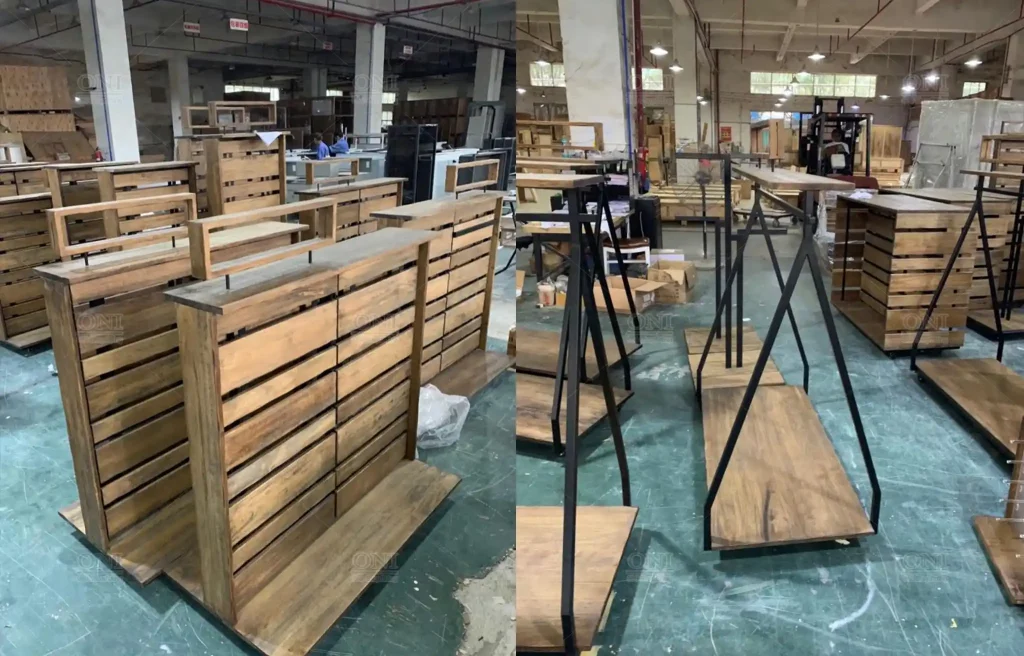
Once the sample is approved, the factory moves into mass production, inspection, packaging, shipping, and installation support. During production, process control keeps dimensions, finish, lighting, and hardware consistent. Before shipment, inspection and packing confirm that the store fixtures are ready for delivery.
Installation support is the final but often overlooked step. Clear drawings, labeled cartons, hardware lists, and assembly instructions help local teams install fixtures faster. This workflow helps optical retailers avoid choosing a supplier that can quote quickly but cannot control full delivery.
Case Insight: Solving Consistency for an Optical Store Rollout
An optical retail brand preparing multiple store openings may have a complete fixture concept that includes illuminated eyewear walls, glass display cabinets, consultation counters, mirror panels, logo signage and concealed storage. The main challenge is ensuring that every location achieves the same appearance, quality and customer experience.
To improve consistency, the manufacturer should standardize materials, finishes, lighting, hardware and structural details before batch production. The project can be divided into clear fixture modules, with approved technical drawings, finish samples, hardware lists, lighting requirements and labeled packaging prepared for each unit.
The complete fixture system should also be reviewed as one coordinated retail environment. Consistent lighting, practical counter placement, accessible storage, correctly positioned mirrors and clear installation instructions help reduce production differences, shipping damage and on-site delays while supporting efficient multi-store rollouts.
| Project Risk | Factory Action | Retail Value |
|---|---|---|
| Color difference | Finish sample approval before production | Consistent brand image |
| Uneven lighting | LED position review and lighting test | Better eyewear presentation |
| Installation delay | Shop drawings and labeled packaging | Faster on-site setup |
| Glass damage | Protective export packaging | Lower replacement risk |
| Fixture inconsistency | Standardized production documents | Easier multi-store rollout |
ONI Display Is Suitable for Your Optical Store Fixture Projects
ONI Display supports global retailers, design firms, contractors, project managers, and regional shopfitting companies with custom commercial fixture manufacturing and turnkey shopfitting solutions. With 25 years of industry experience and a 30,000-square-meter headquarters in Guangzhou, China, ONI Display can support design review, CAD detailing, material engineering, prototyping, metalwork, wood fabrication, surface finishing, integrated lighting, quality control, export packaging, logistics, and installation guidance.
Retailers can explore ONI Display’s custom store fixture manufacturing, one-stop shopfitting services, and optical store fixtures manufacturing guide to understand how design, engineering, production, QC, and delivery work together.
ONI Display is suitable for optical brands that need eyewear wall displays, optical display cabinets, sunglasses display stands, consultation counters, reception desks, storage cabinets, mirror systems, illuminated shelving, and complete store fixture programs. For brands planning multi-store expansion, this full-process support helps reduce communication cost, protect visual consistency, and make store opening schedules easier to manage.
Summary
A reliable manufacturer of optical store equipment should demonstrate its design capabilities, production capacity, quality control, retail experience, and export support prior to providing a quotation. For eyewear brands, the right partner is not merely an equipment supplier but a project delivery partner capable of transforming store concepts into reality. By evaluating these capabilities early on, retailers can mitigate project risks, safeguard their brand image, and ensure the successful rollout of individual stores or multi-store networks.
Frequently Asked Questions
How do I choose a reliable optical store fixtures manufacturer?
Check whether the manufacturer has optical store design ability, production line capacity, QC process, relevant retail experience, export packaging, and installation support.
What fixtures does an optical store usually need?
Optical stores often need eyewear wall displays, glass display cabinets, sunglasses stands, counters, mirrors, storage drawers, signage, lighting, and consultation areas.
Why is export experience important for optical fixture projects?
Export experience helps protect glass, mirrors, lighting, and painted fixtures during shipping while reducing missing parts, installation confusion, and store opening delays.