Buying custom display cabinets is a practical investment, but small purchasing mistakes can create costly problems later.
The 10 most common mistakes when buying custom display cabinets are unclear display goals, poor material choices, inaccurate measurements, weak lighting plans, missing security features, poor storage planning, ignored durability, skipped samples, weak logistics planning, and choosing the wrong supplier.
Below are the 10 mistakes buyers should avoid before confirming a custom display cabinet order.

Mistake 1: Buying Custom Display Cabinets Without Clear Product Display Goals
The first mistake is buying custom display cabinets before clearly defining what products they need to display. A cabinet for jewelry is different from a cabinet for cosmetics, watches, pharmacy products, electronics, fashion accessories, or collectibles.
Each product category has different requirements. Jewelry needs strong visibility, secure glass, controlled lighting, velvet trays, and lockable storage. Cosmetics often need open shelves, testers, acrylic trays, easy-clean surfaces, and promotional zones. Electronics may need ventilation, cable access, lockable sections, and durable laminates. Watches need secure counters, soft interiors, drawer storage, and consultation-friendly viewing angles.
Before production, buyers should confirm product size, product value, display density, customer access, staff access, and visual merchandising goals. Without these details, the cabinet may look attractive but fail in daily retail operation. Clear display goals should also connect with the store’s visual merchandising strategy and the retailer’s overall customer journey.
Solution: Create a product display brief before requesting a quotation. List the product category, product dimensions, display quantity, product value, customer interaction method, staff access method, security level, and expected visual merchandising style. ONI Display’s custom retail display solutions can help buyers connect fixture design with product presentation, store layout, and daily operation.
Mistake 2: Choosing Materials Only By Appearance
Many buyers choose display cabinet materials based on photos, renderings, or showroom samples without considering strength, weight, durability, cleaning, shipping, and long-term use. This is a common mistake because custom cabinets need to perform in real stores, not only look good in a design file.
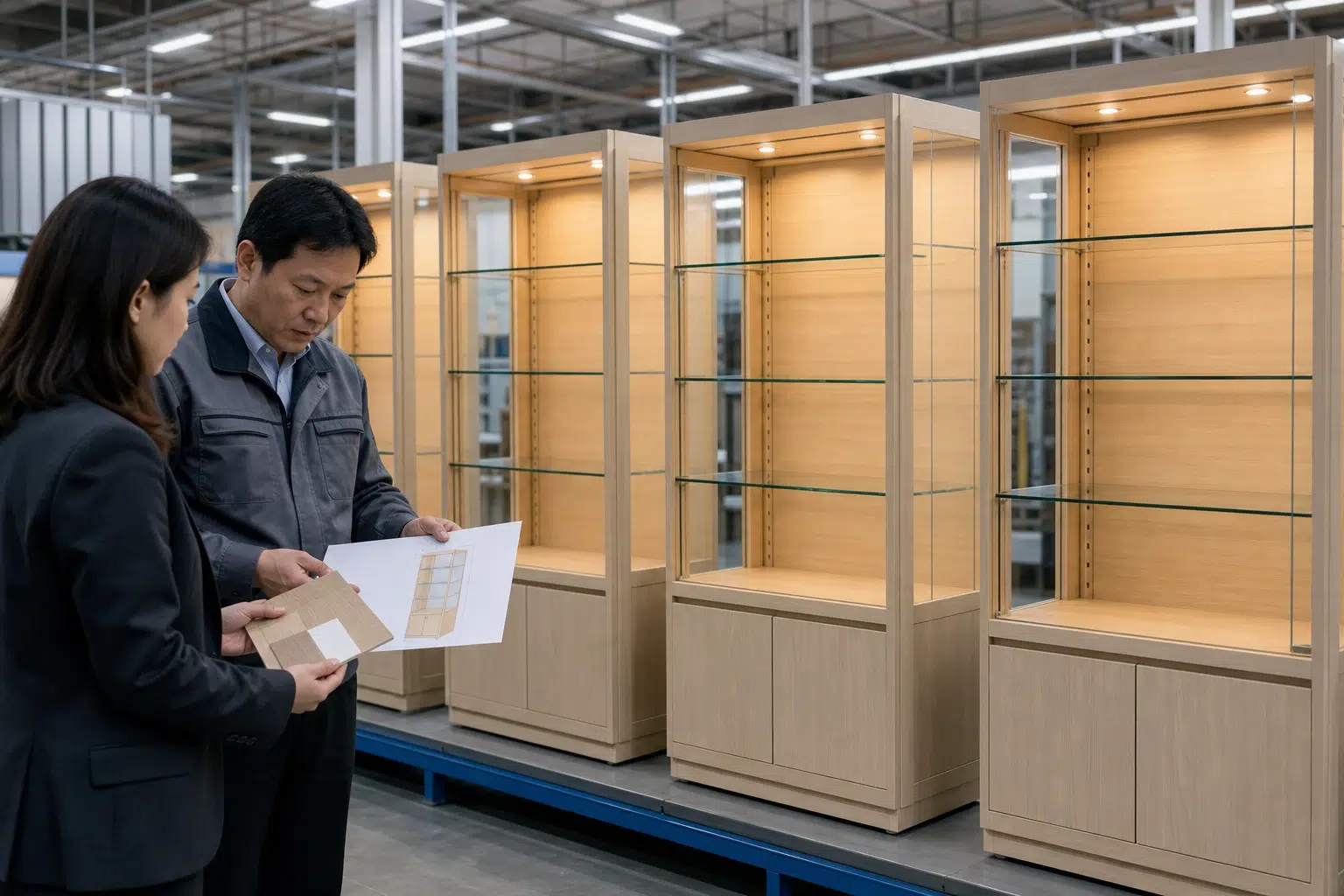
Common display cabinet materials include MDF, plywood, solid wood, stainless steel, aluminum, tempered glass, acrylic, stone, laminate, veneer, lacquer, LED lighting, and hardware. Each material has advantages and limitations. Tempered glass improves visibility and product protection. Metal frames can increase strength and create a premium look. Acrylic is lightweight and flexible but may scratch more easily. Lacquer finishes can look refined but require proper surface protection during shipping and installation.
Buyers should confirm material samples, finish samples, glass thickness, edge details, hardware quality, lighting specifications, and color references before mass production. For chain stores and multi-location rollouts, material consistency is especially important because inconsistent finishes can weaken the brand image.
Solution: Ask for a material board or sample confirmation before production. Confirm the exact finish, color code, glass type, metal surface, wood veneer, laminate, acrylic grade, hardware model, and lighting specification. Buyers can review ONI Display’s retail store fixtures and showcases to understand how materials, finishes, lighting, and structure affect the final cabinet result.
Mistake 3: Ignoring Accurate Store Measurements
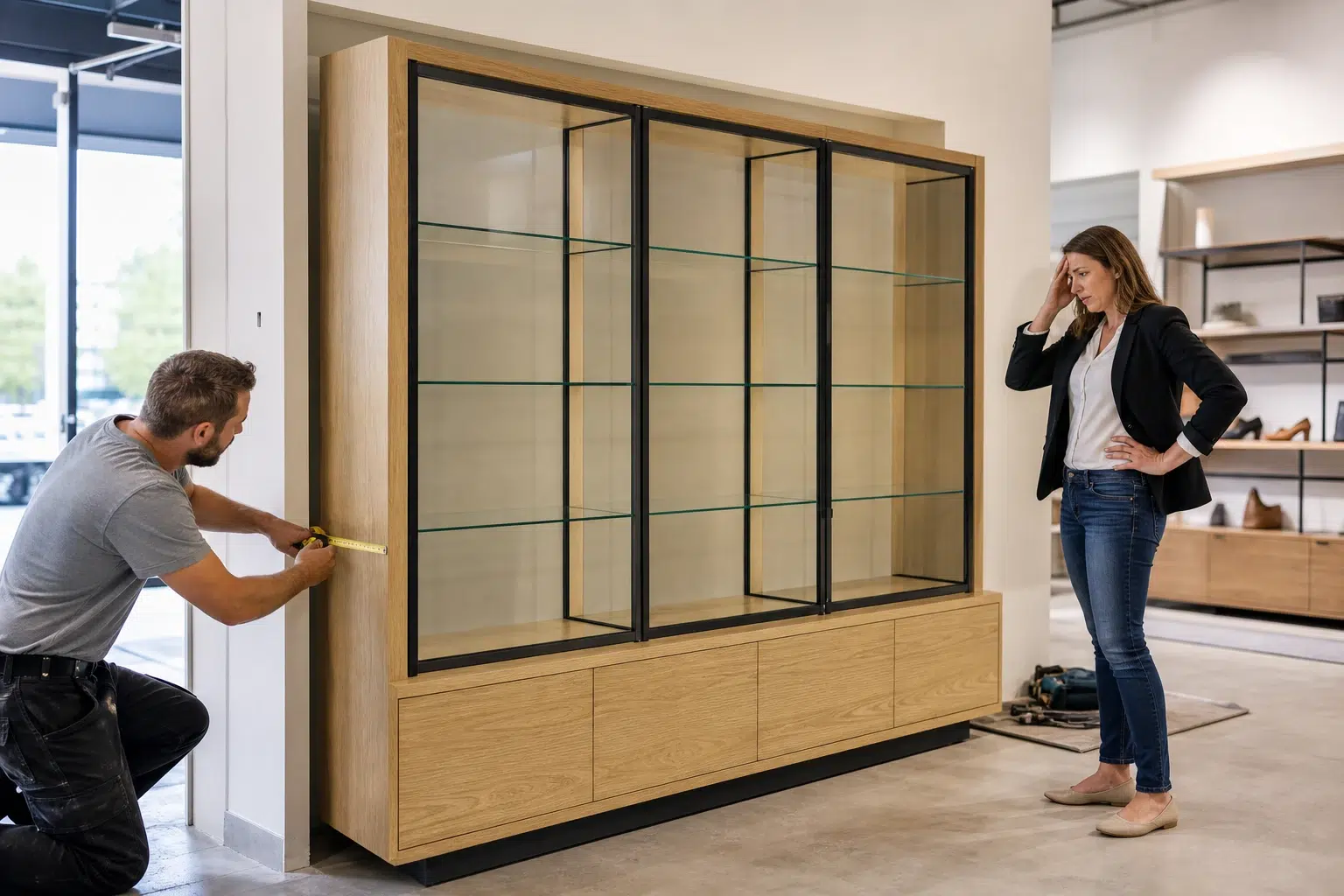
Incorrect measurements can damage the entire display cabinet project. A cabinet that is too large may block customer flow, cover important sightlines, or fail to pass through doors and elevators. A cabinet that is too small may not provide enough display capacity or storage. A cabinet with the wrong height may make products hard to see, test, or access.
Buyers should confirm store floor plans, wall dimensions, ceiling height, door width, elevator size, electrical points, floor level, column positions, and installation space before production. They should also consider customer viewing distance, aisle width, staff working space, and stock replenishment needs.
For international projects, measurement errors are more costly because cabinets may need modification after arrival. Accurate CAD drawings, site photos, and final dimension confirmation help reduce installation risk.
Solution: Complete a site measurement checklist before approving production drawings. Include floor plan dimensions, wall conditions, ceiling height, door and elevator access, electrical outlet positions, floor level, installation sequence, and aisle requirements. For overseas projects, provide photos and videos of the site so the manufacturer can check possible installation risks.
Mistake 4: Underestimating Lighting Requirements
Lighting is often treated as an accessory, but it is one of the most important parts of a custom display cabinet. Poor lighting can make products look dark, flat, or lower in value. Good lighting improves visibility, color accuracy, texture, sparkle, and customer attention.
Different product categories need different lighting. Jewelry cabinets need focused LED lighting to highlight diamonds, gemstones, gold, and fine details. Watch cabinets need lighting that reveals dial design, case finishing, and strap texture. Cosmetic and perfume cabinets need softer lighting that presents packaging, bottle color, and brand atmosphere. Electronics cabinets often need clean and bright lighting to support product comparison.
Before production, buyers should confirm color temperature, brightness, beam angle, wiring position, switch access, heat control, and replacement method. Lighting should be designed together with the cabinet structure, not added after the cabinet is finished. External references on retail lighting design guidance and display cabinet lighting mistakes also show why lighting decisions affect product value and customer perception.
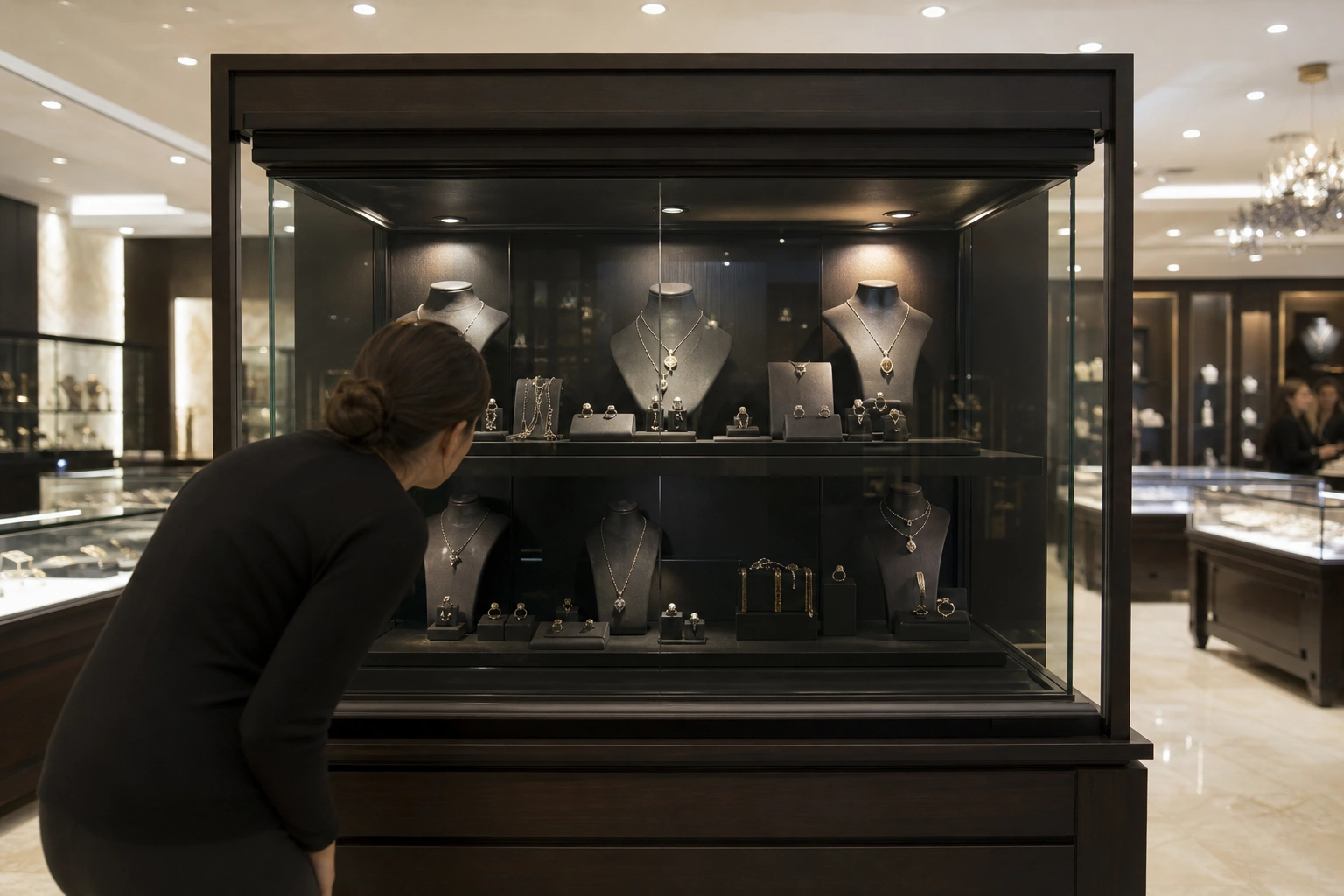
Solution: Treat lighting as part of the cabinet design from the beginning. Confirm LED type, color temperature, brightness, beam angle, power supply, wiring path, switch position, maintenance access, and heat control. If possible, test lighting with real products or product samples before final approval.
Mistake 5: Forgetting Security and Locking Systems
Security should be planned early, especially for jewelry, watches, electronics, premium cosmetics, collectibles, and high-value accessories. If locks, glass strength, staff access, and product handling are considered too late, the cabinet may become expensive to modify or visually awkward.
Security planning may include lockable glass doors, hidden locks, reinforced hinges, staff-side access, secure drawers, laminated glass, alarm integration space, camera visibility, and controlled product handling zones.
The goal is not to make the store feel closed or difficult to shop. The goal is to protect inventory while keeping products visible, attractive, and easy for staff to present. A well-designed secure cabinet can support both loss prevention and premium customer experience.
Solution: Define the security level before cabinet engineering begins. Decide which products need lockable display, which areas need staff-only access, whether laminated or tempered glass is required, whether alarms or cameras will be integrated, and how staff will remove products for customer viewing. For high-value retail categories, ONI Display’s custom watch display showcase manufacturer page shows how glass, lighting, locks, and premium materials can work together.
Mistake 6: Overlooking Storage and Staff Access
A display cabinet is not only for customers. It must also work for store staff. One common mistake is focusing only on the visible display area while ignoring hidden storage, drawer access, packaging space, and replenishment workflow.
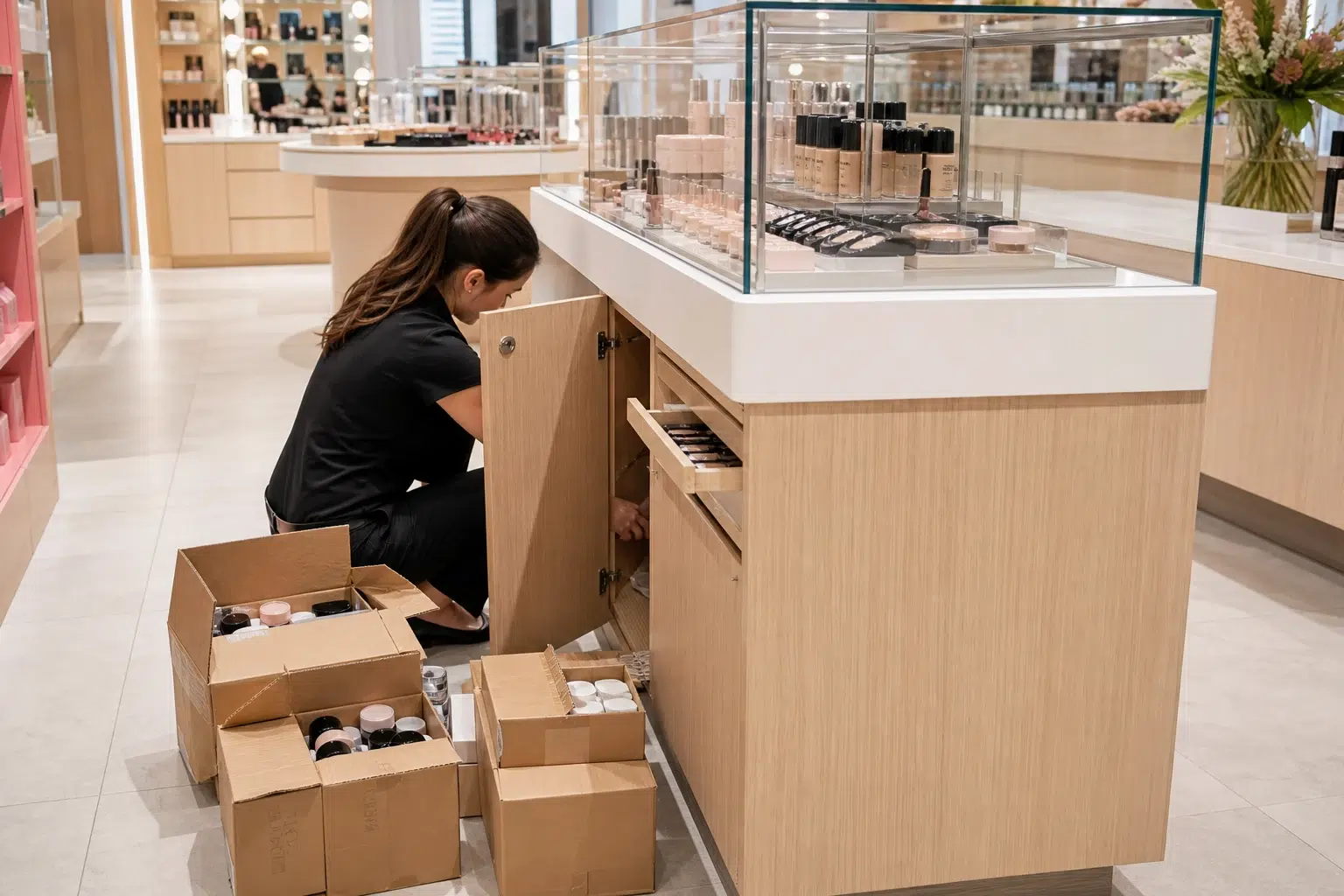
Staff may need quick access to product trays, backup stock, cleaning tools, packaging, brochures, tester supplies, or repair accessories. If the cabinet has no practical storage, staff may need to leave the selling area too often, which can slow service and weaken the customer experience.
Good cabinet design should include hidden drawers, adjustable shelves, staff-side doors, lockable storage, removable trays, and clear internal organization. For busy retail environments, storage planning can improve efficiency and keep the store looking clean.
Solution: Plan cabinet storage around staff workflow. Confirm what items staff need to store inside or near the cabinet, how often products will be replenished, whether drawers need locks, and whether trays should be removable. A good display cabinet should make selling, restocking, cleaning, and product handling easier.
Mistake 7: Ignoring Durability and Maintenance
Some display cabinets look impressive at opening but age quickly because durability and maintenance were not considered. Retail fixtures are used every day. Doors open and close. Drawers slide repeatedly. Shelves carry product weight. Lighting runs for long hours. Surfaces are cleaned often.
Buyers should check hinge quality, drawer slides, glass safety, shelf load capacity, scratch resistance, moisture resistance, cleaning requirements, and hardware replacement options. High-traffic stores such as supermarkets, pharmacies, cosmetics stores, jewelry stores, and department stores need cabinets that can handle repeated use.
Maintenance is also important. Replaceable LED strips, accessible wiring, removable trays, easy-clean surfaces, and durable finishes can reduce long-term operating problems.
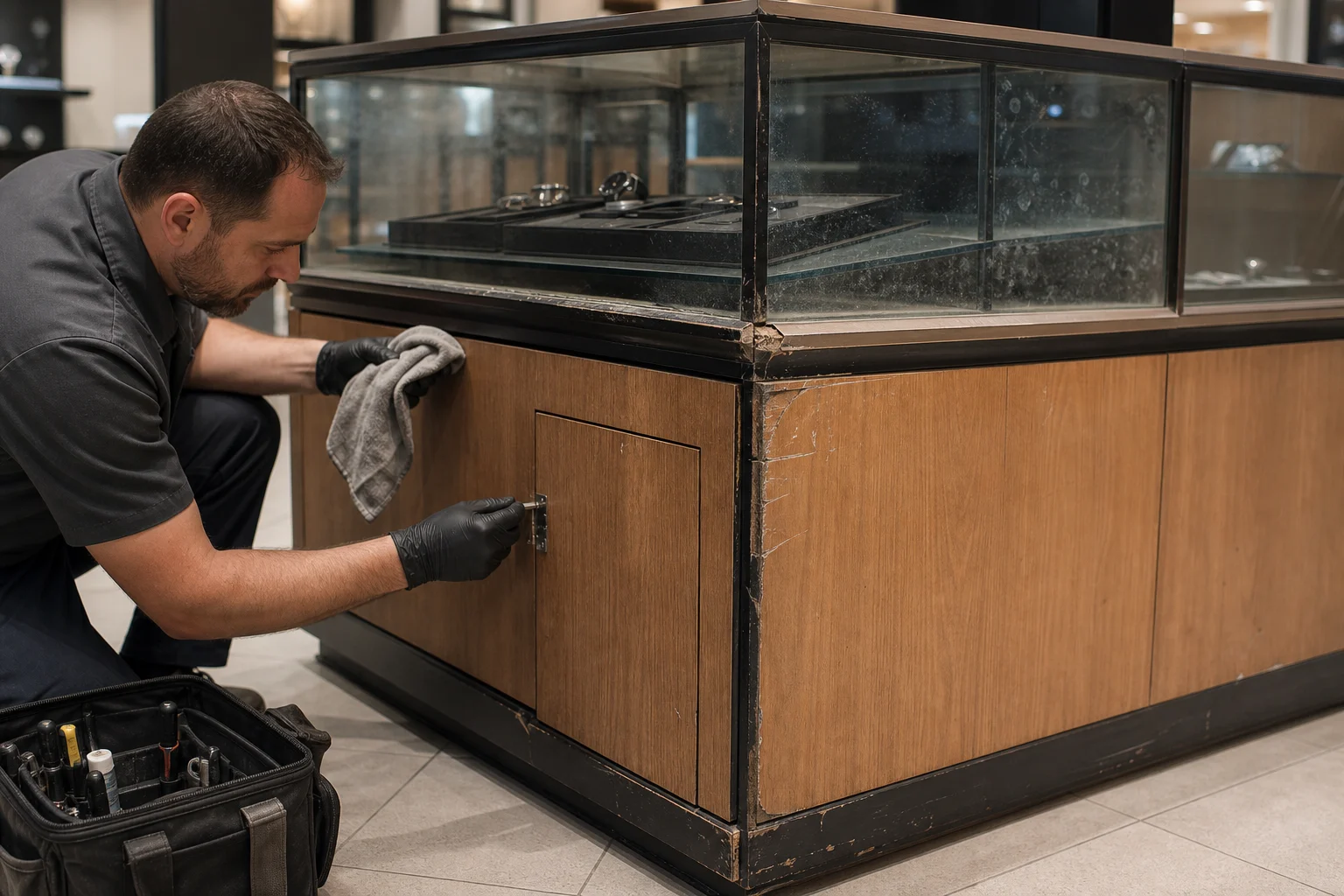
Solution: Review durability details before production approval. Ask about hinge cycles, drawer slide quality, shelf load capacity, surface resistance, glass safety, cleaning method, lighting replacement, and spare parts. Buyers can also review ONI Display’s guide on structural strength in custom retail display fixtures to understand why engineering, material selection, and fixture structure matter for long-term use.
Mistake 8: Skipping Prototype or Sample Confirmation
Skipping samples or prototypes may save time at the beginning, but it can increase risk later. A 3D rendering cannot fully show material texture, lighting effect, edge finishing, drawer movement, glass reflection, hardware quality, or product fit.
A prototype or sample allows buyers to check cabinet size, materials, finishes, lighting, structure, storage, product placement, and usability before bulk production. This is especially important for flagship stores, high-value retail products, and chain rollout projects.
For multi-store orders, confirming a sample before mass production helps prevent repeated errors across many locations. It also gives retailers, designers, and contractors a shared reference for quality control.
Solution: Approve a prototype, sample section, or production sample before bulk manufacturing. Check finish quality, material accuracy, lighting effect, hardware movement, product fit, storage function, packaging method, and installation details. Category-specific references such as custom perfume store fixtures and electronics display cabinets can help buyers understand how samples confirm materials, lighting, product zoning, and daily use.
Mistake 9: Ignoring Packaging, Shipping, and Installation Details
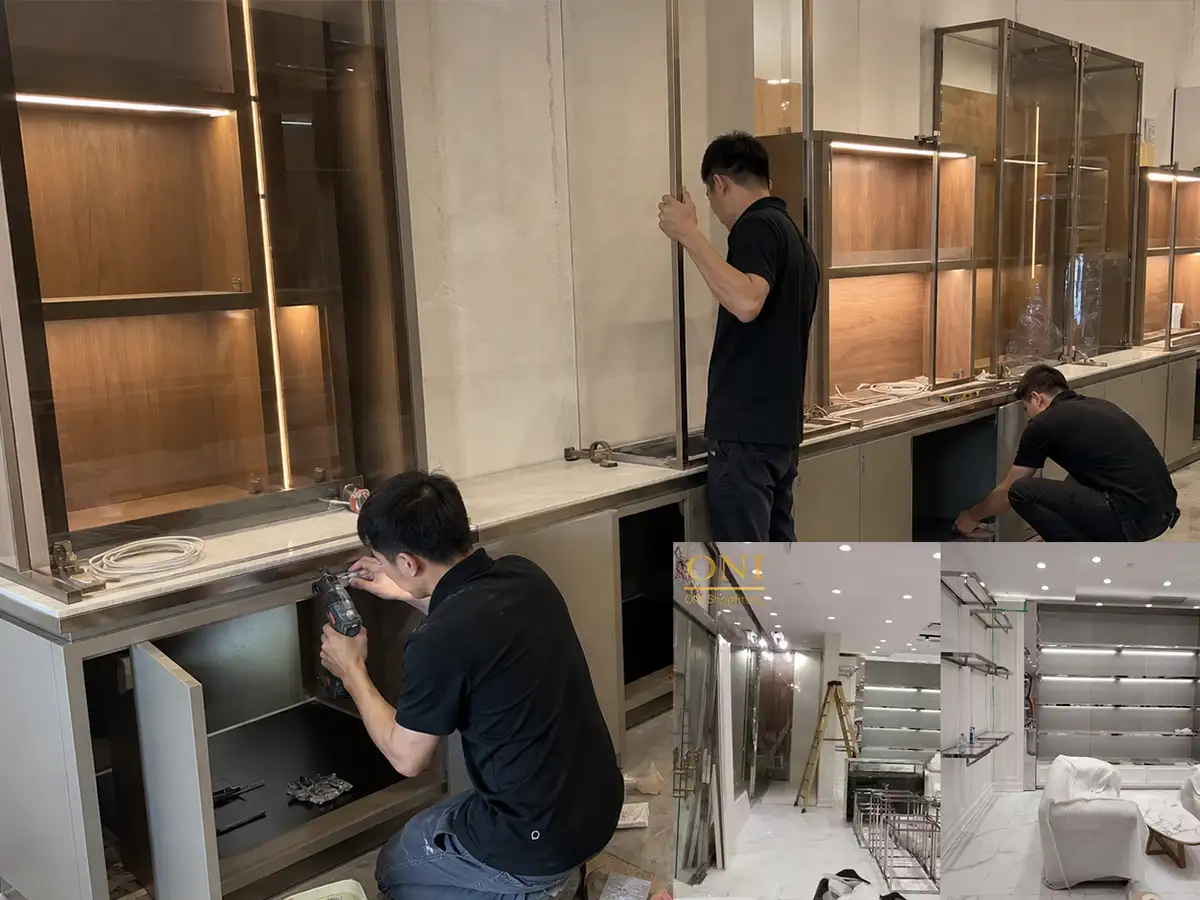
Many buyers focus on cabinet design and forget what happens after production. Custom display cabinets must survive packaging, loading, international shipping, customs handling, unloading, and installation. If logistics are not planned carefully, cabinets may arrive damaged or difficult to install.
Packaging should protect glass, corners, surfaces, lighting parts, hardware, and fragile finishes. For multi-store projects, store-by-store packaging and clear labeling can save installation time. Knock-down structures may reduce shipping volume, while pre-assembled cabinets may reduce on-site work. The right choice depends on the project schedule, destination, store conditions, and installation team.
Installation planning should include adjustable feet, wall fixing points, electrical access, assembly instructions, spare parts, and coordination with flooring, walls, lighting, and signage. Guides on retail fixture installation planning also show why site readiness, assembly sequence, and installation coordination affect project success.
Solution: Discuss logistics before finalizing cabinet structure. Confirm whether the cabinets should be knock-down or pre-assembled, how glass and fragile finishes will be packed, how cartons or crates will be labeled, and what installation instructions are needed. For multi-store projects, request store-by-store packaging and spare parts planning.
Mistake 10: Choosing a Supplier Without Full Project Support
The final mistake is choosing a supplier based only on low price or attractive photos. Custom display cabinet projects require design understanding, engineering, material control, production capability, quality inspection, packaging knowledge, and delivery coordination.
A weak supplier may create problems such as unclear drawings, material inconsistency, poor lighting integration, fragile packaging, delayed production, or difficult installation. These problems can increase total project cost even if the initial quotation looks low.
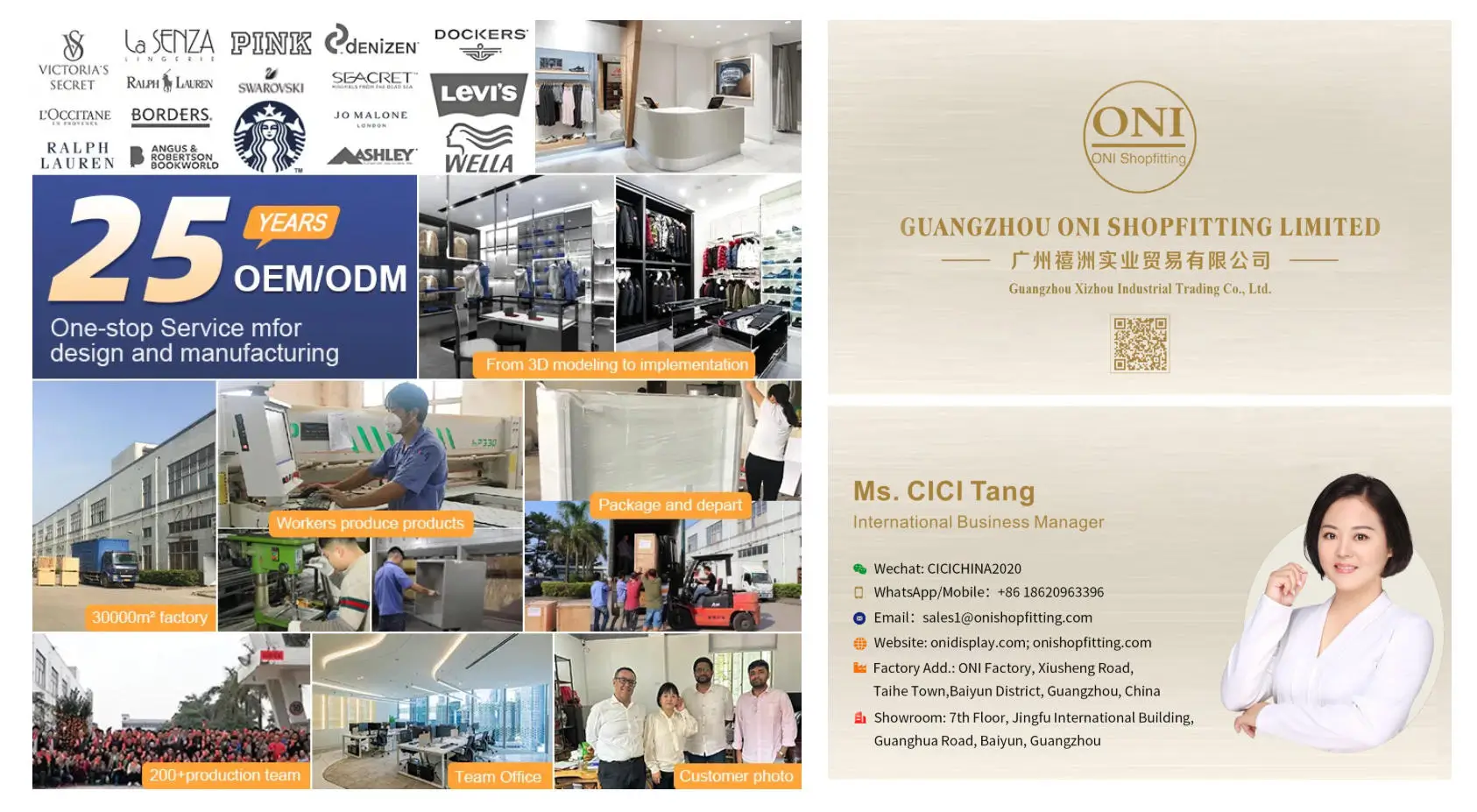
ONI Display helps retailers, designers, contractors, and shopfitting partners turn display cabinet ideas into practical retail fixtures. With 25 years of experience and a 30,000-square-meter headquarters in Guangzhou, China, ONI Display integrates design, engineering, woodworking, metal fabrication, lighting, production, quality control, packaging, and global delivery. This helps buyers reduce project friction, maintain consistent quality, and support single-store or multi-location retail projects.
Solution: Evaluate suppliers by capability, not price alone. Check whether the supplier can provide engineering drawings, material advice, lighting integration, prototyping, production control, quality inspection, export packaging, installation guidance, and global delivery support. Buyers can learn more through the ONI Display factory tour and review available fixture references in the ONI Display retail display catalog.
Summary Table of The 10 Common Mistakes When Buying Custom Display Cabinets
Buying custom display cabinets involves more than comparing prices and choosing an attractive design. Mistakes in measurements, materials, lighting, security, storage, production, or delivery can lead to higher costs, installation delays, and poor display performance. The table below summarizes 10 common purchasing mistakes and the better decisions buyers can make to improve quality, functionality, and project execution.
| Mistake | Why It Creates Problems | Better Buying Decision |
|---|---|---|
| Buying without clear product display goals | Cabinets may not fit the product category or selling method | Define product size, value, display density, and customer access first |
| Choosing materials only by appearance | Materials may scratch, bend, age, or ship poorly | Confirm samples, finishes, glass thickness, and hardware quality |
| Ignoring accurate measurements | Cabinets may block traffic or fail during installation | Check floor plans, site photos, door sizes, and electrical points |
| Underestimating lighting requirements | Products may look dull or lower in value | Confirm LED type, brightness, color temperature, beam angle, and wiring |
| Forgetting security systems | High-value products may be exposed to risk | Plan locks, glass strength, staff access, secure drawers, and alarm space |
| Overlooking storage and staff access | Staff workflow becomes slow or messy | Add drawers, removable trays, staff-side access, and organized storage |
| Ignoring durability and maintenance | Cabinets may age quickly in daily use | Check hinges, slides, shelf load, surface resistance, and replaceable parts |
| Skipping prototype or sample confirmation | Bulk production may repeat hidden errors | Approve sample, finish, lighting, hardware, and product fit before mass production |
| Ignoring packaging, shipping, and installation | Cabinets may arrive damaged or be difficult to assemble | Plan export packaging, labeling, structure, spare parts, and instructions |
| Choosing a supplier without full support | Low initial price may lead to delays and rework | Work with a supplier offering engineering, QC, packaging, and delivery support |
Summary
Avoiding these 10 mistakes helps buyers reduce risks, control costs, improve display quality, and ensure smoother production, delivery, and installation.
Frequently Asked Questions
What is the biggest mistake when buying custom display cabinets?
The biggest mistake is buying without clear product display goals. Cabinet design should begin with product type, value, size, security, lighting, storage, and customer interaction needs.
Should I request a sample before mass production?
Yes. A sample or prototype helps confirm materials, finish quality, lighting effect, product fit, hardware, and structure before producing cabinets for one store or multiple locations.
How can ONI Display help with custom display cabinet projects?
ONI Display supports design development, engineering, material selection, prototyping, production, quality control, packaging, global delivery, and rollout coordination for custom retail display cabinets.
 Contact us today and discover how custom display fixtures can take your store to the next level.
 WhatsApp/Call: +86 186 2096 3396
 Email: sales1@onishopfitting.com
 Website: www.onidisplay.com
 Factory Location: Guangzhou, China
 Check out our social media case studies:Guangzhou ONI Shopfitting Limited