Choosing the right materials for custom retail fixtures is an important part of store design, manufacturing, and long-term operation. Solid wood and Medium-Density Fiberboard (MDF) are two commonly used materials in retail furniture, display cabinets, counters, shelving, and decorative store fittings. While both can create attractive retail environments, they differ in appearance, design flexibility, surface finishing, cost, and manufacturing consistency.
Solid wood is often preferred for its natural grain, authentic texture, and premium appearance, making it suitable for luxury boutiques, flagship stores, and high-end retail interiors. MDF, on the other hand, provides a smooth, uniform surface that works well with paint, laminate, wood veneer, and other decorative finishes. Its consistency and cost efficiency make it a practical option for many commercial retail projects.
For global retail brands, interior designers, architects, contractors, and shopfitting companies, understanding solid wood vs MDF for custom retail fixtures helps balance design expectations, manufacturing feasibility, project budgets, and consistency across multiple store locations.
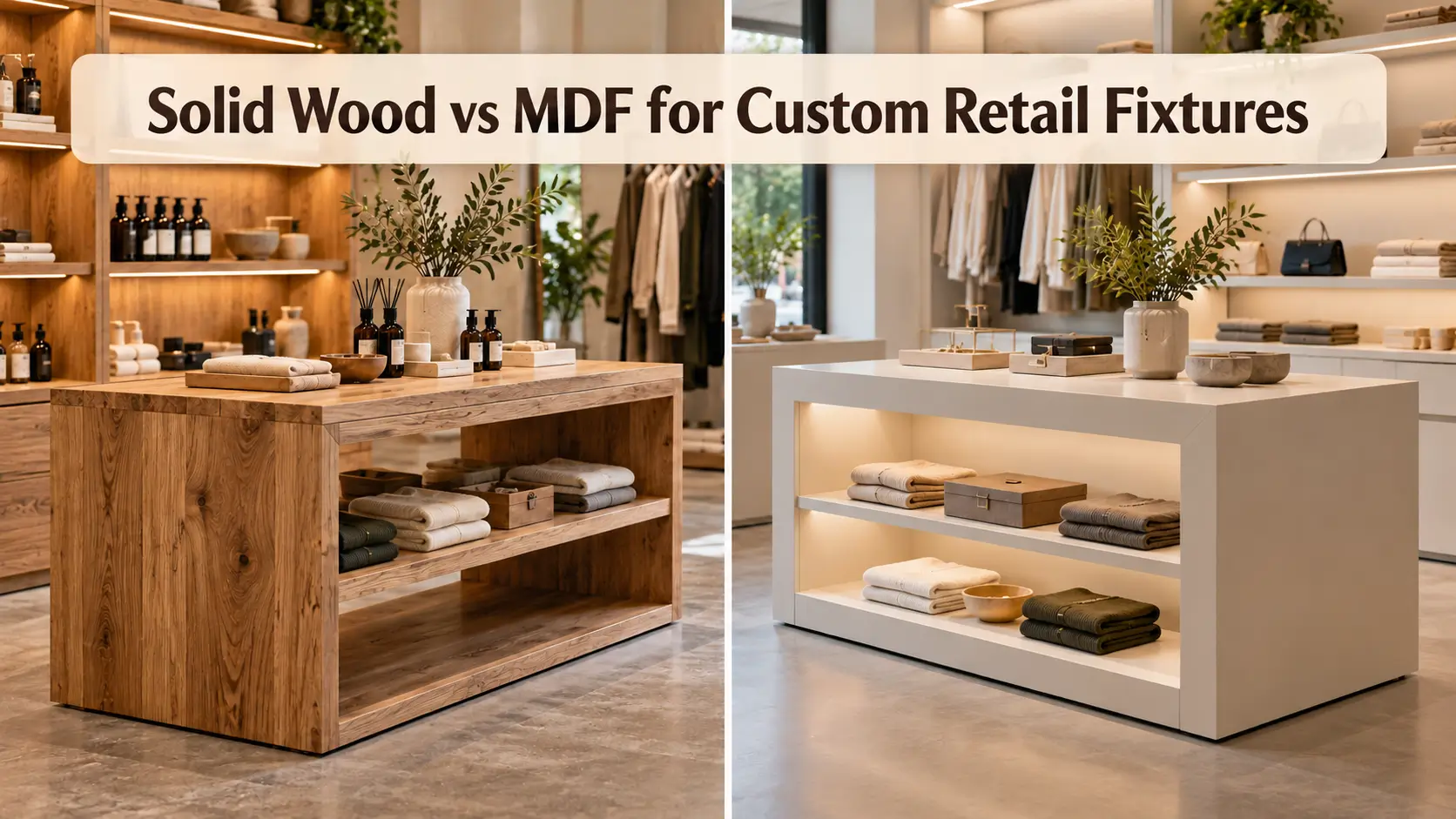
What Is Solid Wood?
Solid wood is natural timber processed into boards, panels, and furniture components without being broken down into wood fibers. Common wood species used in custom retail fixtures include oak, walnut, ash, maple, and beech. Each species has distinctive grain patterns, colors, and textures, making solid wood a popular choice for luxury boutiques, flagship stores, and premium retail display furniture.
Solid wood can be cut, carved, shaped, stained, and finished to create unique display cabinets, counters, shelves, and decorative features. Its natural appearance adds warmth and character to retail environments. However, solid wood is generally more expensive than MDF, and natural variations in grain, color, and moisture movement can make it more challenging to maintain a consistent appearance across large-scale retail projects.
What Is MDF?
Medium-Density Fiberboard (MDF) is an engineered wood panel manufactured from wood fibers combined with resin binders under heat and pressure. Unlike solid wood, MDF has a smooth, uniform surface without natural grain patterns or knots. It is widely used in custom retail display cabinets, counters, shelving, wall panels, and decorative store furniture.
MDF is particularly suitable for CNC machining, shaped panels, and decorative finishes such as paint, laminate, and wood veneer. Its consistent surface allows manufacturers to achieve uniform colors and finishes, making it a practical choice for retail brands, chain stores, and multi-store rollouts. MDF is also generally more cost-effective than solid wood, although appropriate board grades, surface protection, and structural reinforcement may be necessary depending on the fixture application.
Solid Wood vs MDF: Quick Comparison
The table below summarizes the main differences between solid wood and MDF for custom retail fixtures, helping buyers, designers, and contractors compare their suitability for different retail applications.
| Comparison | Solid Wood | MDF |
|---|---|---|
| Material Type | Natural timber | Engineered wood fiberboard |
| Appearance | Natural grain and unique texture | Smooth, uniform surface |
| Premium Aesthetics | Excellent for natural luxury finishes | Premium appearance achievable with suitable finishes |
| Design Flexibility | Suitable for carving, shaping, and detailed joinery | Excellent for CNC routing and decorative profiles |
| Surface Finishing | Staining, oiling, painting, clear coating | Painting, laminate, wood veneer, decorative coatings |
| Finish Consistency | Natural color and grain variations | Highly consistent surface |
| Dimensional Stability | Sensitive to humidity changes | More uniform, but still moisture-sensitive |
| Durability | Depends on wood species and construction | Depends on MDF grade and fixture construction |
| Maintenance | May require periodic surface care | Depends on applied finish and edge protection |
| Manufacturing Cost | Generally higher | Generally more economical |
| Multi-Store Projects | More challenging to reproduce natural appearance | Suitable for standardized fixture production |
| Typical Applications | Premium counters, decorative trims, feature displays | Display cabinets, counters, shelving, wall fixtures |
Neither material is automatically better for every retail environment. Solid wood is often selected when natural appearance and craftsmanship are essential to the brand concept, while MDF is commonly preferred when uniform finishes, efficient manufacturing, and controlled costs are priorities.
1. Appearance and Natural Wood Grain
Solid wood offers distinctive natural grain patterns, textures, and color variations that give retail fixtures an authentic and premium appearance. Materials such as oak, walnut, and ash can create a warm atmosphere and reinforce brand positioning in luxury boutiques, fashion stores, and specialty retail environments. Each wooden component has its own character, making solid wood attractive for stores that emphasize craftsmanship and natural materials.
MDF does not have natural wood grain, but its smooth and uniform surface provides considerable flexibility in decorative finishing. By applying wood veneer, laminate, or paint, manufacturers can achieve different visual styles, including natural-looking wood finishes and contemporary solid colors. For retail brands that require consistent colors and textures across multiple stores, MDF with a specified surface finish is often a more practical solution.
2. Design Flexibility and Customization
Solid wood provides excellent design flexibility for traditional woodworking, carved details, shaped edges, and custom joinery. Its natural appearance works particularly well for decorative retail furniture, distinctive display counters, and architectural features where the material itself contributes to the design. Different wood species, stains, and surface treatments allow designers to create unique visual effects.
MDF is also highly flexible and particularly suitable for CNC machining, routed patterns, shaped panels, and painted surfaces. Its uniform composition supports consistent machining and repeatable components, which is useful when producing custom retail fixtures based on technical drawings and approved 3D designs. For interior design firms, architects, and shopfitting contractors, MDF can help translate detailed designs into manufacturable retail furniture without the natural variability of solid timber.
3. Surface Finishing and Color Consistency
Solid wood can be finished with natural oil, stain, lacquer, or protective coatings to enhance its grain and improve surface protection. Transparent and semi-transparent finishes allow the wood’s natural character to remain visible, creating a refined appearance for premium retail environments. However, variations between boards and wood batches may influence the final color and texture.
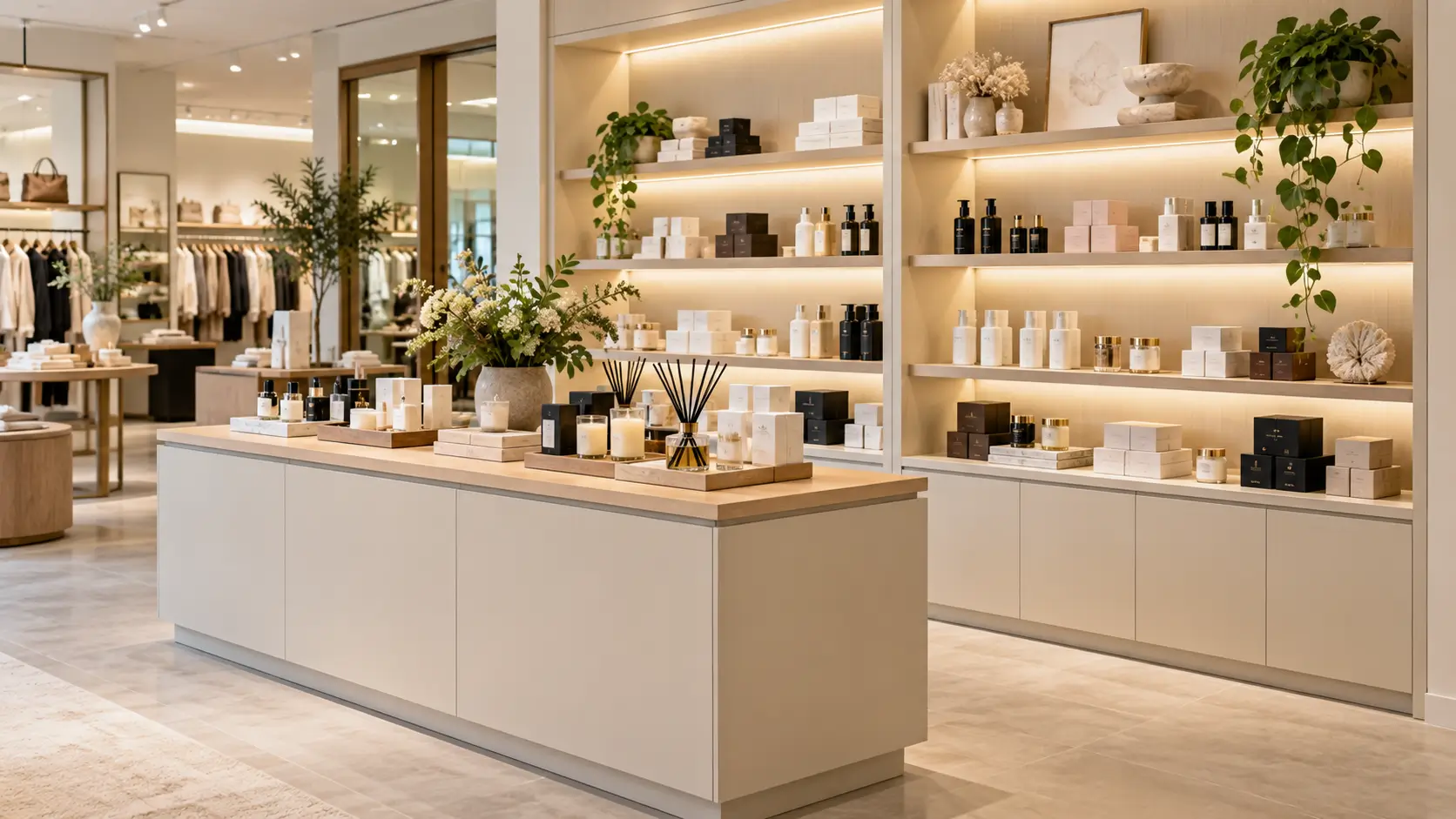
MDF provides a smooth, consistent substrate for painting, decorative laminates, wood veneer, and other finishes. This makes it especially useful for retail brands with strict color guidelines and standardized store concepts. Manufacturers can work toward consistent painted or laminated finishes across display cabinets, counters, wall fixtures, and other components, although approved samples and production quality control remain necessary to maintain finish consistency.
4. Durability and Long-Term Performance
Solid wood can offer excellent long-term performance when the appropriate species, construction methods, and protective finishes are used. Many hardwoods perform well in furniture components exposed to regular handling, and suitable surfaces may be repaired or refinished when required. However, wood hardness, grain direction, joint construction, and environmental conditions all influence durability.
MDF can also perform reliably in commercial retail environments when used in appropriately designed cabinets, panels, and decorative components. Its performance depends on board grade, thickness, surface finishing, hardware installation, and loading conditions. For heavily loaded shelves, frequently moved displays, or components subject to repeated impacts, reinforcement or alternative structural materials may be more suitable than standard MDF alone.
5. Moisture Resistance and Dimensional Stability
Solid wood naturally absorbs and releases moisture from the surrounding environment. These changes can cause expansion, contraction, and movement, especially in locations with significant humidity fluctuations. Proper kiln drying, suitable construction details, protective finishing, and installation allowances are important when specifying solid wood for retail interiors.
MDF has a uniform structure that helps reduce the irregular grain-related movement found in solid timber, but standard MDF can swell or deteriorate when exposed to excessive moisture. Moisture-resistant MDF grades are available for certain applications, although they should not automatically be considered waterproof. For retail fixtures installed in humid environments, material selection should consider edge sealing, surface protection, ventilation, and expected exposure conditions.
6. Manufacturing Cost and Project Budget
Solid wood generally involves higher material and processing costs, particularly when using premium hardwood species such as walnut or oak. Additional expenses may arise from wood selection, drying, machining, matching grain patterns, surface finishing, and skilled labor. For large retail projects, these requirements can increase the overall cost of producing display furniture and decorative fixtures.
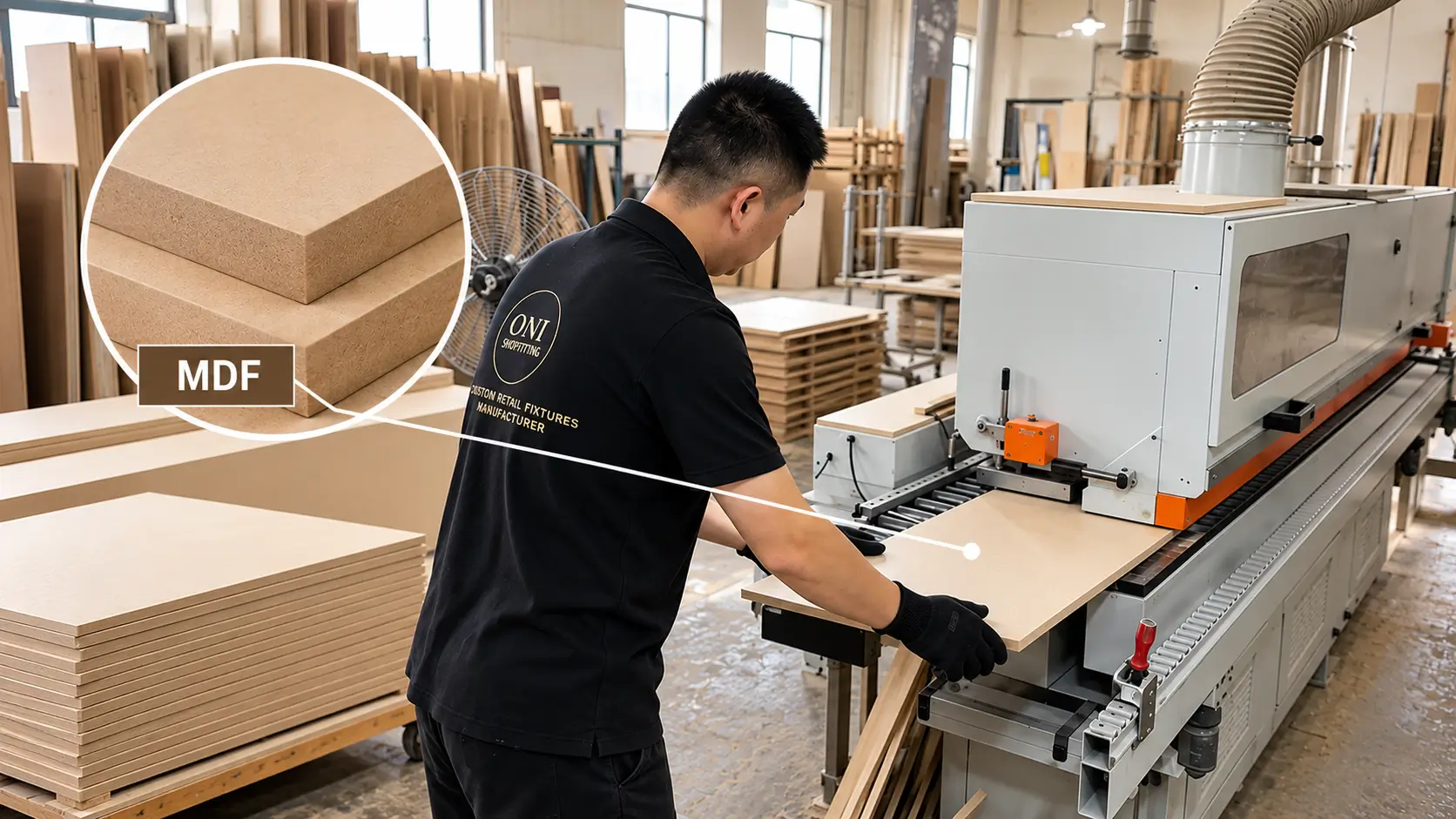
MDF is generally more cost-effective for standard cabinet bodies, decorative panels, and painted retail fixtures. Its consistent dimensions and suitability for CNC production can support efficient manufacturing and material utilization. For global brands, contractors, and regional shopfitting companies managing multiple store locations, MDF can provide a practical balance between appearance, customization, and budget control.
7. Consistency for Chain Stores and Multi-Store Rollouts
Solid wood introduces natural variations in grain, color, and texture, which can make it difficult to reproduce an identical appearance across different store locations. For some premium brands, these variations are desirable and contribute to the authenticity of the retail concept. However, projects requiring standardized fixtures may need additional material grading, sample approvals, and quality control.
MDF is often better suited to repeatable manufacturing because its surface and internal composition are more uniform. Combined with standardized laminates, veneers, paints, and technical specifications, it helps manufacturers maintain a consistent visual identity across multiple stores. This is particularly valuable for franchise networks, international retail chains, and shopfitting companies responsible for large-scale fixture rollouts.
Solid Wood vs MDF for Different Custom Retail Fixture Applications
Different types of custom retail fixtures have different requirements for appearance, durability, construction, and cost. Choosing between solid wood and MDF depends on the fixture’s function, design style, location, and expected daily use.
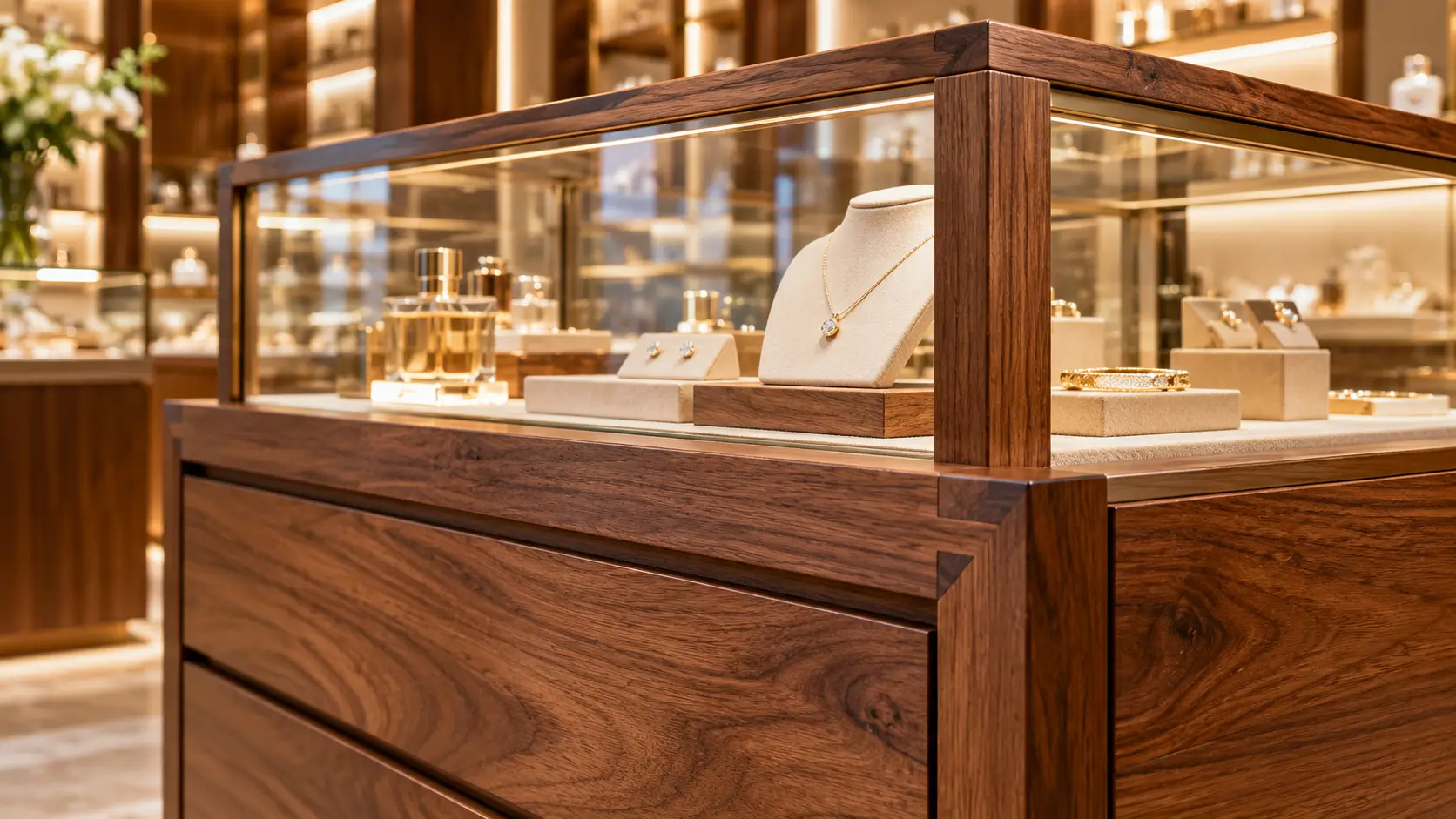
- Display Showcases: MDF with wood veneer, laminate, or painted finishes is suitable for jewelry, perfume, cosmetic, and watch display showcases. Solid wood may be selected for decorative frames and accent details to enhance a luxury presentation.
- Checkout Counters: MDF is suitable for counter bodies and decorative panels, while solid wood can be used for visible trims and customer-facing details. Worktops and high-contact surfaces should be selected according to wear resistance and maintenance requirements.
- Retail Shelving and Display Racks: MDF can be used for suitably supported shelves and decorative display panels, depending on load requirements. Solid wood is an option for exposed shelves, frames, and decorative elements where natural texture is important.
- Wall Display Fixtures: MDF works well for painted wall panels, branded display backgrounds, and integrated cabinetry. Solid wood can be used for decorative wall features that create a warm and premium retail atmosphere.
- Freestanding Display Stands: MDF supports customized shapes, branded colors, and repeatable manufacturing. Solid wood can be incorporated into display bases and decorative accents to create a distinctive appearance.
- Full-Store Shopfitting Projects: MDF is practical for standardized cabinets, counters, and decorative panels, while solid wood can be reserved for selected feature areas. Combining both materials helps balance appearance, manufacturing efficiency, and project budgets.
How to Choose Between Solid Wood and MDF for Custom Retail Fixtures
Choosing the right material requires more than comparing appearance or price. Retail brands, designers, contractors, and shopfitting companies should consider the overall store concept, fixture requirements, manufacturing process, and long-term performance.
- Store Concept and Brand Positioning: Solid wood is suitable for premium retail environments where natural grain, authentic texture, and craftsmanship are important. MDF with decorative finishes is often more practical for contemporary stores requiring consistent colors, clean lines, and standardized designs.
- Fixture Functions and Daily Use: Consider whether the fixture will be used for product display, storage, decoration, or customer interaction. Material selection should account for loading requirements, surface wear, moisture exposure, and maintenance needs to ensure suitable long-term performance.
- Design and Surface Finishing Requirements: Solid wood works well for natural wood finishes, carved details, and decorative components. MDF is particularly suitable for painted surfaces, laminated panels, CNC-machined shapes, and consistent decorative finishes. Approved material and finish samples help ensure the final result matches the design.
- Material Costs and Project Budgets: Solid wood generally involves higher material and manufacturing costs, especially when using premium hardwood species. MDF provides a more economical option for cabinet bodies, wall fixtures, and decorative panels. Combining MDF with selected solid wood features can help control costs without compromising the overall store appearance.
- Manufacturing Consistency and Project Scale: Solid wood is suitable for unique flagship stores where natural variations contribute to the design. MDF is often more practical for chain stores, franchises, and multi-store rollouts requiring standardized dimensions, colors, and finishes across different locations.
In Conclusion
When comparing solid wood vs MDF for custom retail fixtures, solid wood offers natural beauty, distinctive grain patterns, and a premium appearance, while MDF provides smooth surfaces, design flexibility, consistent finishes, and cost-effective manufacturing. Solid wood is often suitable for high-end decorative elements and statement displays, whereas MDF is widely used for display cabinets, counters, shelving, and standardized store fixtures. The right choice ultimately depends on your store concept, design requirements, fixture applications, project scale, and long-term performance expectations.
FAQs
1. Is Solid Wood Better Than MDF for Custom Retail Fixtures?
Not necessarily. Solid wood is a good choice when natural wood grain, premium appearance, and craftsmanship are priorities. MDF is often more suitable for painted surfaces, decorative panels, and cost-effective custom display cabinets. The better option depends on the fixture design, intended use, finishing requirements, and project budget.
2. Is MDF Suitable for Luxury Retail Display Cabinets?
Yes. MDF can be used in luxury retail display cabinets when combined with appropriate surface finishes, such as high-quality paint, natural wood veneer, or decorative laminate. It can also be integrated with tempered glass, metal components, and LED lighting to create premium-looking displays. The final quality depends on the design, materials, finishing process, and manufacturing workmanship.
3. Can Solid Wood and MDF Be Used Together in Custom Retail Fixtures?
Yes. Solid wood and MDF can be combined in the same custom retail fixtures to balance premium appearance, design flexibility, and manufacturing costs. MDF is often used for cabinet bodies, larger panels, and painted surfaces, while solid wood can be incorporated into decorative trims, frames, handles, and selected visible components.
Custom Retail Fixtures for Your Next Project
At ONI Display, we provide custom retail display cabinets, display showcases, counters, shelving, and complete shopfitting solutions for global retail brands, interior design and architectural firms, general contractors, and project managers. With over 25 years of industry experience and a 30,000㎡ manufacturing facility in Guangzhou, China, we support retail projects from design development and material selection to technical drawings, manufacturing, quality inspection, export packaging, and delivery.
Whether you are developing a flagship store, planning a new retail concept, or managing a chain store rollout, our team can help evaluate solid wood, MDF, plywood, wood veneer, laminate, metal, glass, and other materials based on your project requirements.
 Contact us today to start your custom display fixtures project.
 WhatsApp/Call: +86 186 2096 3396
 Email: sales1@onishopfitting.com
 Factory Location: Guangzhou, China