


Good pharmacy lighting does more than brighten the store. It helps customers see products clearly, feel comfortable while shopping, and build trust in the pharmacy environment.
A well-planned pharmacy lighting design combines ambient lighting, shelf lighting, display cabinet lighting, accent lighting, and task lighting to improve both product presentation and sales conversion. By using proper brightness, neutral color temperature, glare control, clear product zoning, energy-efficient LED lighting, and well-lit display fixtures, pharmacies can create a cleaner, safer, and more purchase-friendly retail space.
In this guide, we will explain how to plan pharmacy lighting for a modern retail store and how the right lighting design can support better visibility, customer experience, and buying decisions.
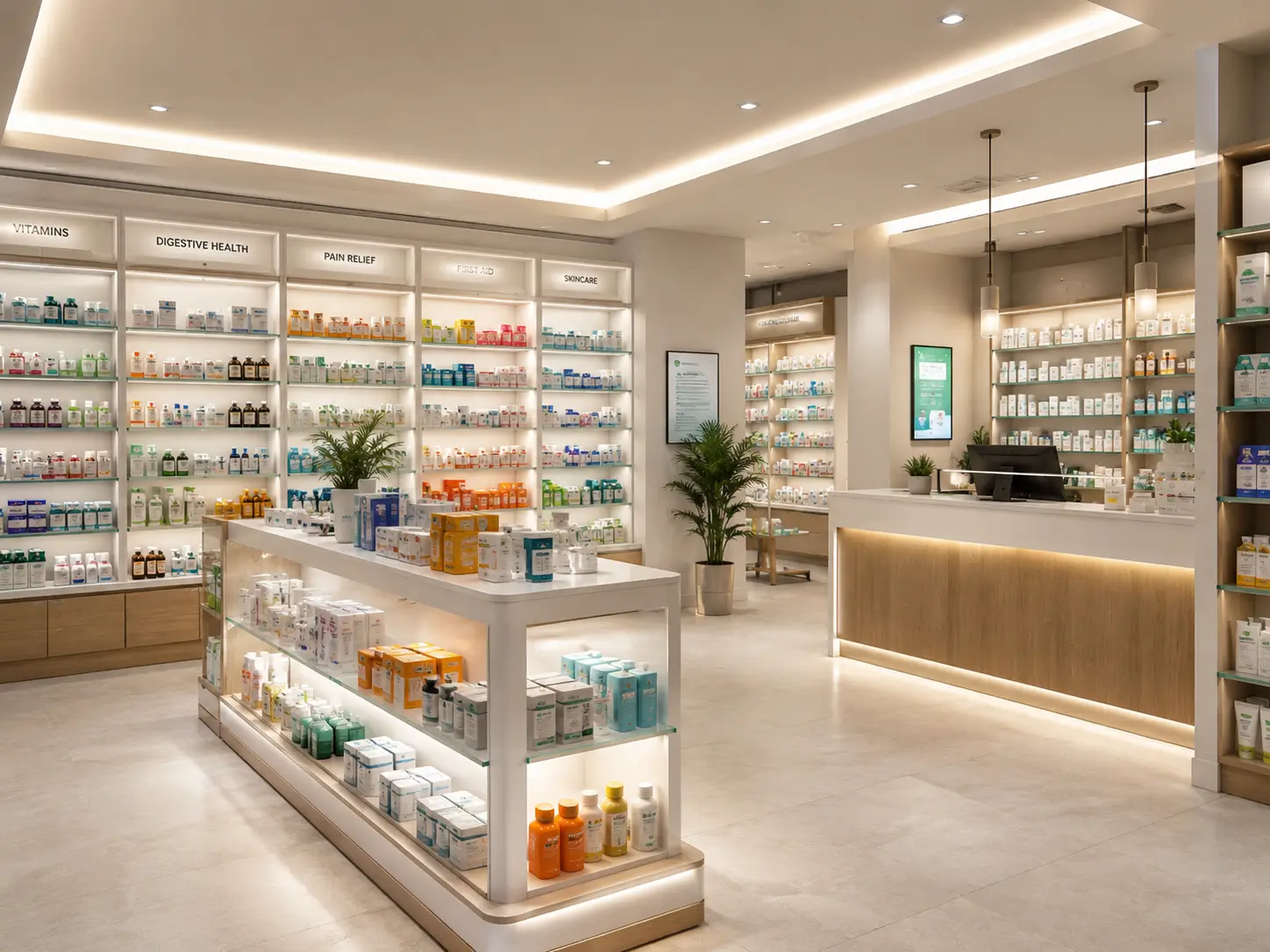
Key Points of Pharmacy Lighting Design
Pharmacy lighting is a key part of modern pharmacy design. It affects how products are displayed, how customers move through the store, and how professional the pharmacy feels. Before choosing display cabinets, shelving systems, or LED lighting, pharmacy owners should understand several basic lighting principles.
1. Safety First
Pharmacy lighting should help customers and staff move safely through the store. Aisles, entrances, cashier counters, consultation areas, and prescription service zones should have enough brightness to reduce shadows and prevent accidents. Clear lighting also helps customers read labels, compare products, and identify different product categories more easily.
2. Clear Zone Planning
Different areas of a pharmacy need different lighting levels. General retail areas need soft and even ambient lighting, while shelves and display cabinets need brighter product-focused lighting. Prescription counters, consultation rooms, and cashier areas require task lighting to support staff work. Good zone planning makes the store easier to navigate and improves the shopping experience.
3. Follow Practical Standards and Rules
Pharmacy lighting should follow local building codes, electrical safety standards, and pharmacy design requirements. For pharmacies with sterile compounding or special medical service areas, lighting plans may also need to consider standards such as USP <797> where applicable. All lighting should be planned to support cleanliness, visibility, safety, and professional operation.
4. LED Lighting Has Become the Standard
LED lighting is widely used in modern pharmacy design because it is energy-efficient, long-lasting, and flexible. It can be applied to ceiling lights, shelf lighting, display cabinet lighting, signage, and under-counter lighting. Compared with traditional lighting, LED systems help reduce energy costs while keeping products bright and clearly visible.
5. Balance Atmosphere and Function
A pharmacy should feel clean, trustworthy, and comfortable, but it also needs to support product display and daily staff workflow. Lighting that is too cold may feel clinical and unfriendly, while lighting that is too warm may reduce product clarity. A balanced lighting plan uses neutral color temperature, proper brightness, glare control, and layered lighting to create a professional retail environment.
Lighting and Product Display Psychology
Lighting has a strong influence on how customers notice and evaluate products inside a pharmacy. Customers often make quick decisions based on what they can see clearly. If a shelf is too dim, unevenly lit, or visually crowded, even well-placed products may be ignored. Clear pharmacy lighting helps guide attention, reduce hesitation, and make the shopping process feel easier.
In pharmacy retail, customers often need to read small labels, compare ingredients, check product functions, and choose health-related items. Good lighting makes medicine, vitamins, skincare products, and healthcare products easier to understand. It also reduces visual stress and helps the pharmacy feel cleaner, safer, and more professional.
Lighting also affects perceived product value. A skincare product displayed in a clean, softly illuminated cabinet may feel more premium than the same product placed on a dark shelf. For related display fixture ideas, see pharmacy shelving solutions.
Main Types of Pharmacy Lighting
A complete pharmacy lighting design should combine different lighting layers to support both store function and product presentation. Ambient lighting creates overall brightness, shelf lighting improves product visibility, display cabinet lighting highlights premium products, accent lighting guides customer attention, and task lighting supports cashier, consultation, and prescription service areas. When these lighting types work together, the pharmacy becomes clearer, more comfortable, and easier for customers to shop.
Ambient Lighting for Pharmacy Stores
- Target: Create overall store brightness and a clean first impression.
- Lighting Type: LED panel lights, ceiling downlights, linear lights, recessed lights.
- Best Used For: Main aisles, entrance areas, general shopping zones, open retail spaces.
Ambient lighting sets the foundation for the entire pharmacy. It helps customers feel safe and comfortable as soon as they enter the store. A good ambient lighting plan should remove dark corners, support clear navigation, and make the store look organized. The lighting should feel clean and bright without becoming cold or harsh.
Shelf Lighting for Product Visibility
- Target: Improve visibility for products displayed on shelves.
- Lighting Type: LED strip lights, linear shelf lights, under-shelf lighting, integrated shelf lighting.
- Best Used For: Wall shelving, gondola shelving, OTC medicine areas, supplement shelves, skincare shelves.
Shelf lighting is important because many pharmacy products are small, boxed, or placed on deep shelves. Ceiling lighting alone may not reach lower shelves or back rows clearly. Good shelf lighting helps customers read labels, compare packaging, and notice products more easily. It also makes product categories look cleaner and better organized.
For custom pharmacy shelving, lighting should be considered before production. LED positions, wire routing, transformer placement, and maintenance access all affect long-term use and should follow practical pharmacy design guidelines.
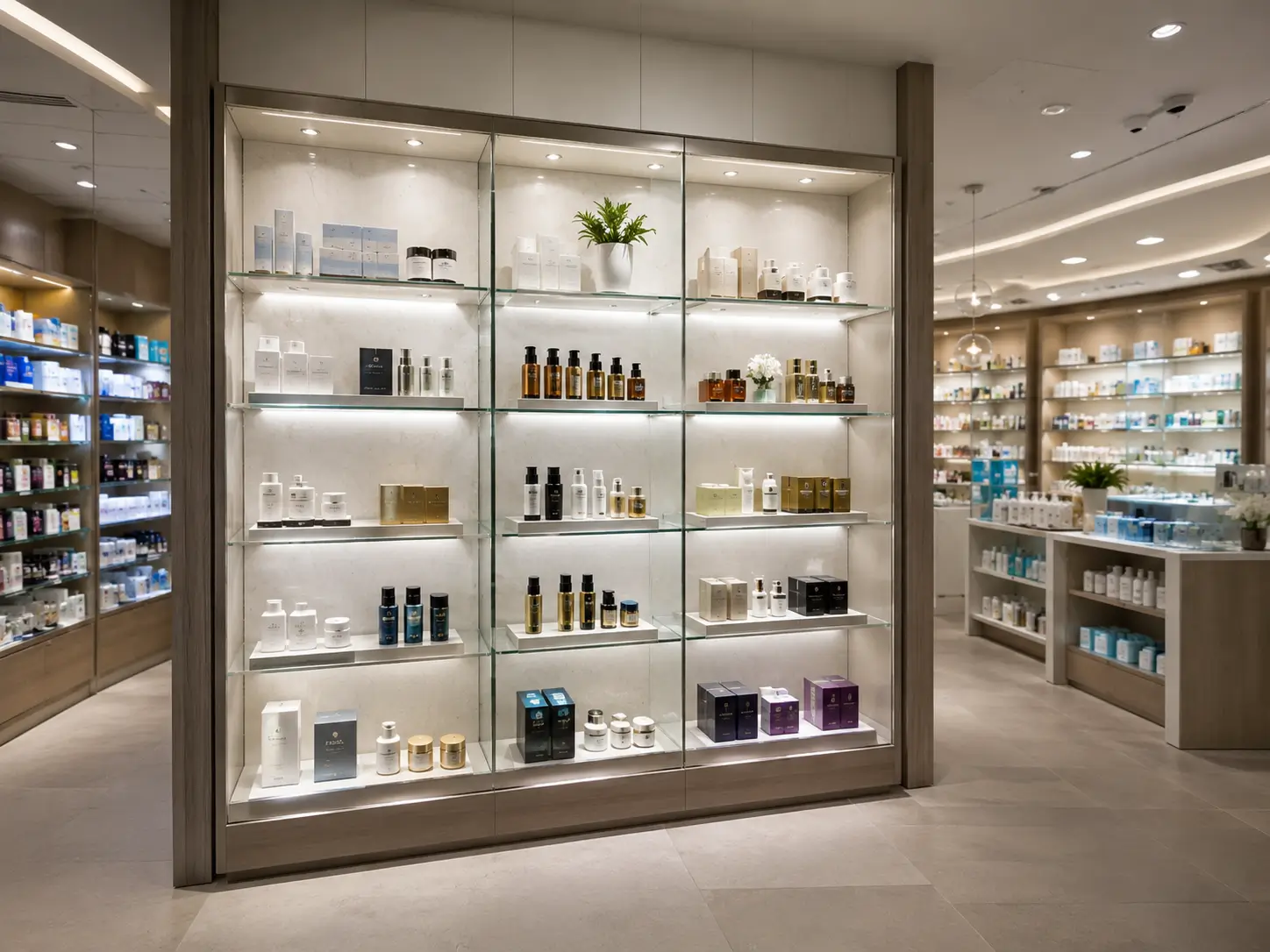
Display Cabinet Lighting for Premium Products
- Target: Highlight premium, protected, or high-value products.
- Lighting Type: LED strips, mini spotlights, vertical light channels, backlighting.
- Best Used For: Glass showcases, pharmacy display cabinets, lockable cabinets, skincare displays, wellness product cabinets.
Display cabinet lighting makes pharmacy products look more professional and carefully selected. It is especially useful for premium skincare, medical devices, high-value supplements, wellness products, and controlled product displays.
Because glass can reflect light, cabinet lighting must be planned carefully. Poor light angles may create glare, while well-positioned pharmaceutical lighting makes products clearer and more attractive. For pharmacy display cabinets, lighting should be planned during the production drawing stage. Cable routes, power access, heat control, switch positions, and maintenance access should be considered early.
Accent Lighting for Promotional Zones
- Target: Draw attention to key sales areas.
- Lighting Type: Track lights, spotlights, focused downlights, illuminated signage, feature wall lighting.
- Best Used For: Promotional displays, seasonal products, end caps, new arrivals, brand feature areas.
Promotional zones are key areas where pharmacies guide customer attention toward selected products, seasonal offers, new arrivals, or high-margin categories. Proper accent lighting helps these zones stand out from general shelving areas, making promotions easier to notice and more attractive to shoppers. By using brighter, focused, and adjustable lighting, pharmacies can create a stronger visual impact, improve product exposure, and encourage customers to stop, look, and make purchase decisions.
Task Lighting for Prescription and Consultation Areas
- Target: Support staff accuracy and customer service.
- Lighting Type: Desk lights, under-cabinet lights, focused downlights, linear task lighting.
- Best Used For: Prescription counters, dispensing areas, consultation desks, cashier counters, product checking zones.
Task lighting is essential for pharmacy operation. Staff need clear and stable lighting to read labels, check documents, handle small packages, and explain products to customers. Prescription counters and dispensing areas should avoid shadows and glare. Good task lighting supports accuracy and helps staff work more efficiently.
Consultation areas should feel professional but comfortable. Balanced pharmaceutical lighting helps create trust when customers discuss health needs or compare product options. For pharmacy counter fixture references, see pharmacy display counter solutions.
Color Temperature for Pharmacy Lighting Design
Color temperature should be planned according to the function of each pharmacy area. General sales areas usually need clean and balanced lighting, while consultation spaces may benefit from a softer tone to make customers feel more relaxed and comfortable.
A well-controlled color temperature also helps products look more accurate and professional. Medicine packaging, skincare products, wellness items, and healthcare displays all need lighting that keeps colors clear without creating a harsh or cold visual effect.
For a complete pharmacy lighting design, different color temperatures should work together instead of looking disconnected. This helps create a consistent store atmosphere while making each zone feel suitable for its purpose.
Brightness, Glare Control, and Visual Comfort
Brightness in pharmacy lighting design should be balanced according to both product visibility and customer comfort. A pharmacy needs enough light to help customers read labels, compare products, and move safely through the store, but excessive brightness can make the space feel harsh and tiring. Instead of making the whole store uniformly bright, lighting should be planned based on different functional zones.
General aisles should use soft and even lighting to create a comfortable shopping path, while display shelves and promotional areas can use slightly stronger lighting to improve product visibility. Prescription counters, consultation desks, and checkout areas need clearer task lighting to support staff work and customer service. For glass cabinets or glossy product displays, the lighting angle should be carefully controlled to reduce reflection and avoid blocking the view of products.
Glare control is essential for creating a visually comfortable pharmacy environment. Diffusers, frosted covers, recessed lights, indirect lighting, and proper beam angles can help soften the light and reduce uncomfortable bright spots. When brightness and glare are well managed, customers can browse more easily, staff can work with less eye fatigue, and the entire pharmacy feels brighter, safer, and more professional.
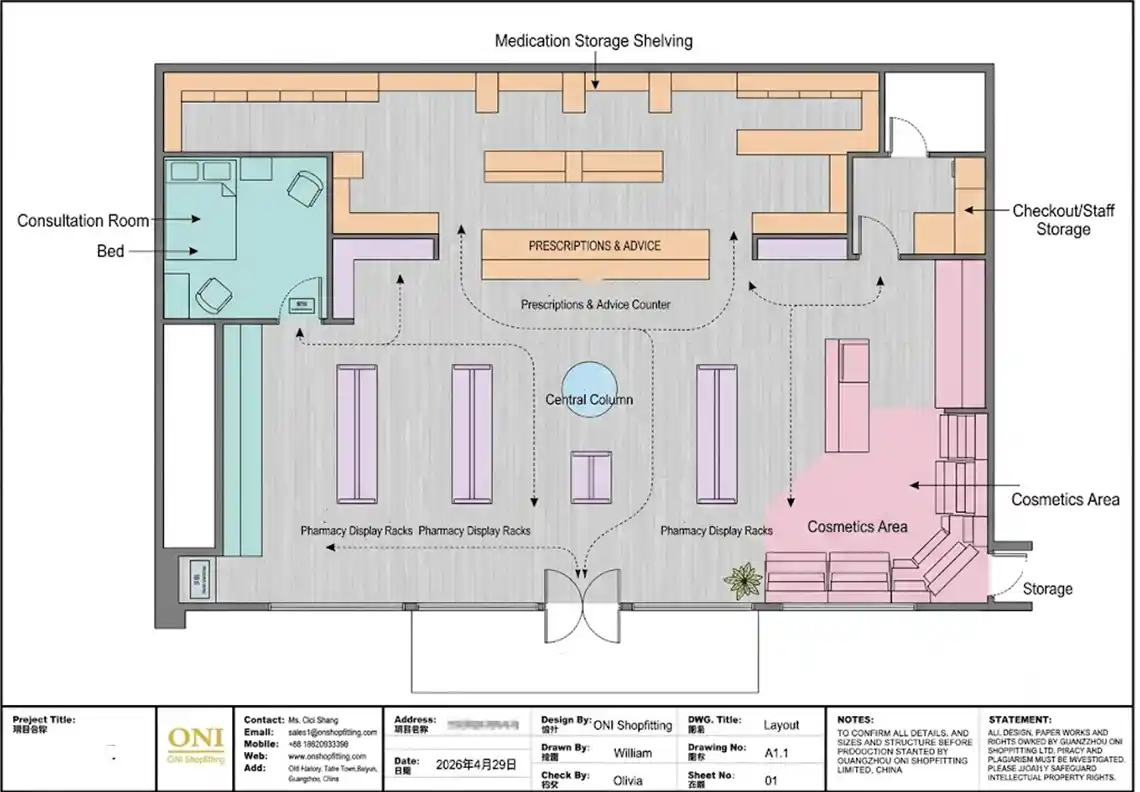
Lighting Layout for Different Pharmacy Zones
A good pharmacy lighting layout should be planned according to the function of each zone. The entrance needs bright and welcoming lighting to create a positive first impression, while main aisles should use even ambient lighting to guide customer movement and make the store easy to navigate. This helps customers quickly understand the store layout and feel comfortable when entering the space.
For product display areas, lighting should improve visibility and guide attention. Wall shelves and gondola shelves can use product-focused lighting to make packaging, categories, and product details easier to see. Promotional zones, seasonal displays, end caps, and new arrival areas should use stronger accent lighting to stand out from general shelves and attract customer interest.
Service and support areas also need proper lighting design. Prescription counters and dispensing areas require clear task lighting to support staff accuracy and daily work efficiency, while consultation rooms can use softer lighting to create a calm and private atmosphere. Storage areas should have practical and reliable lighting so staff can find products quickly and safely. When every zone has the right lighting strategy, the pharmacy can support customer flow, product discovery, staff workflow, and overall brand image at the same time.
Energy Efficiency and Maintenance
Energy efficiency is an important factor in pharmacy lighting design because most pharmacy lights operate for long hours every day. Using high-quality LED lighting can help reduce electricity consumption while keeping the store bright, clean, and professional. For pharmacy chains or large retail spaces, efficient lighting systems can also lower long-term operating costs and make lighting performance more stable across multiple locations.
Maintenance should be planned from the beginning of the fixture design. Display cabinets, wall shelves, signage, and illuminated promotional areas should allow easy access to LED strips, drivers, switches, and wiring. This helps staff or technicians replace lighting components quickly without damaging the cabinet structure, glass panels, or decorative finishes.
Before installation, every lighting component should be carefully checked, including power supplies, switches, wiring routes, brightness levels, color consistency, heat dissipation, and fixture compatibility. This helps ensure that the lighting system works safely, looks consistent across different display areas, and can support long-term daily use in the pharmacy. Proper pre-installation testing also reduces the risk of flickering, uneven color, wiring problems, and future maintenance issues.
Summary
Pharmacy lighting design improves product visibility, customer comfort, staff efficiency, and sales performance. By combining ambient lighting, shelf lighting, cabinet lighting, accent lighting, and task lighting, pharmacies can create a clean, professional, and easy-to-navigate retail environment that helps customers browse products with confidence.
Frequently Asked Questions
1. What color temperature is best for pharmacy lighting?
Neutral white lighting around 4000K is commonly suitable for pharmacy interiors because it feels clean, professional, and comfortable.
2. How does pharmacy lighting improve sales conversion?
Pharmacy lighting helps customers notice products, read labels, compare options, and feel more confident while browsing. Better visibility can support stronger purchase decisions.
3. Should pharmacy display cabinets include built-in lighting?
Yes. Built-in LED lighting can improve product visibility, highlight premium items, and make display cabinets look more professional.