Choosing the right kiosk materials is an important part of creating a retail kiosk that is practical, structurally reliable, and suitable for everyday commercial use. The materials used in kiosk construction affect everything from load-bearing capacity and product visibility to weight, maintenance, fabrication, and overall project cost.
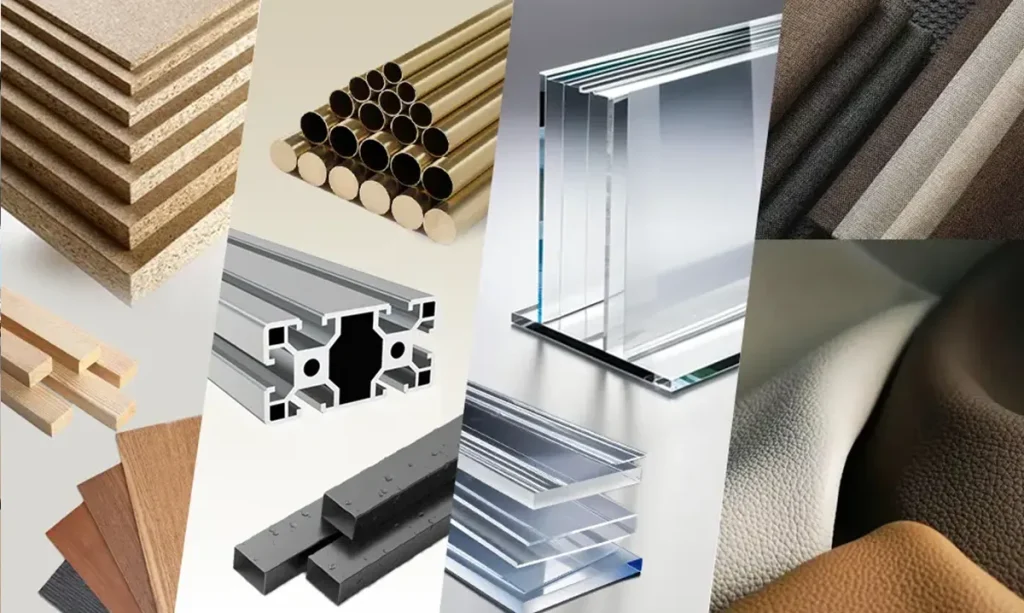
Most retail kiosks are not built from a single material. Instead, different materials are combined according to the function of each part of the kiosk. Wood-based materials are commonly used for cabinets and counters, tempered glass for showcases, steel for structural support, aluminum for lightweight components, and acrylic for product displays and signage.
Understanding the properties and typical applications of each material can help retailers, designers, contractors, and procurement teams make better decisions before a kiosk moves into production.
What Are the Common Materials Used to Build a Retail Kiosk?
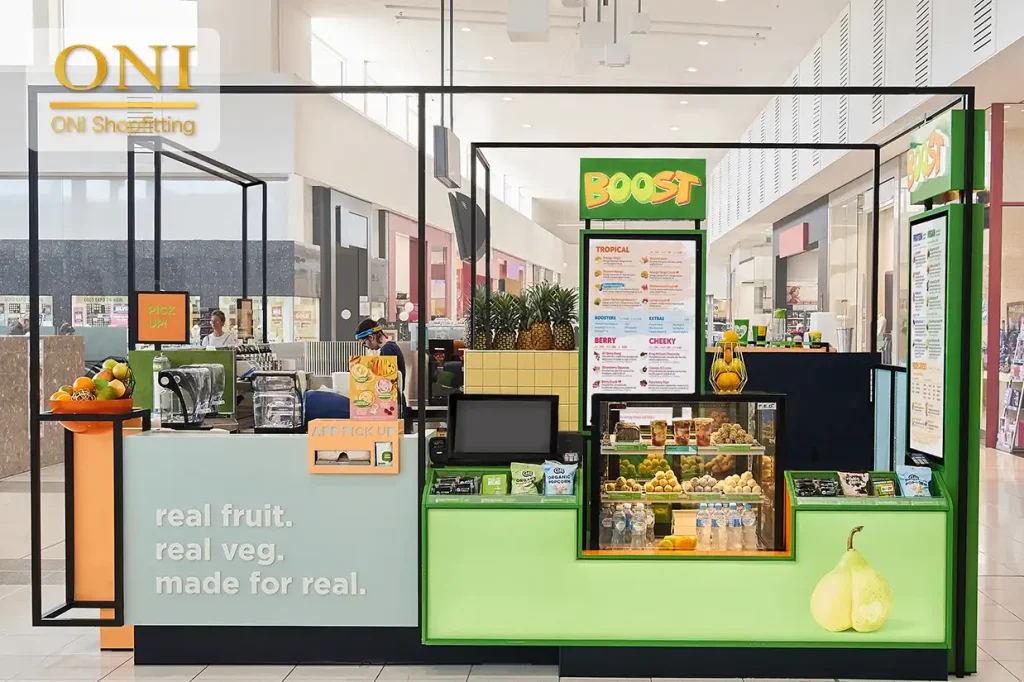
The most common materials used to build retail kiosks include wood, tempered glass, steel, other metals such as aluminum, and acrylic. Each material has different physical properties and performs a different role within the overall kiosk structure.
For example, plywood may be selected for load-bearing cabinets, MDF for custom-shaped components, steel for internal reinforcement, tempered glass for merchandise showcases, and acrylic for smaller display accessories. In many projects, several materials are used together to achieve the required balance of strength, weight, visibility, and manufacturing flexibility. The following table provides a quick overview of the main kiosk material types and where they are typically used.
| Material Type | Common Options | Typical Uses in Kiosks | Key Characteristics |
|---|---|---|---|
| Wood | Plywood, MDF, solid wood | Cabinets, counters, shelving, display structures | Versatile, easy to fabricate, suitable for custom cabinetry |
| Tempered Glass | Flat tempered glass, curved tempered glass | Showcases, shelves, display cases, protective panels | Transparent, rigid, safety glass, good for product presentation |
| Steel | Mild steel, stainless steel | Frames, supports, shelving, equipment areas | High strength and good load-bearing capacity |
| Other Metals | Aluminum, aluminum composite panels | Frames, panels, signage structures, lightweight components | Lightweight, corrosion resistant, suitable for many structural and panel applications |
| Acrylic | Clear, colored, frosted acrylic | Product holders, signs, risers, covers, display components | Lightweight, transparent, easy to cut and form |
1. Wood Options for Kiosks
Wood and wood-based panels are widely used in retail kiosk construction for cabinets, counters, shelves, storage units, and display structures. Common substrate materials include plywood, MDF, and solid wood. Plywood offers good strength, stability, and screw-holding performance, while MDF is smooth, easy to machine, and suitable for custom-shaped panels and decorative elements. Solid wood is typically used for selected structural or decorative details.
Surface finishes are equally important. HPL and LPL are commonly applied to plywood, MDF, or particleboard to improve appearance and durability. HPL provides better resistance to scratches, stains, and daily wear, making it suitable for countertops, cabinet exteriors, and other high-contact areas. LPL is generally more economical and is often used for cabinet interiors, shelving, and areas with moderate wear requirements. You can learn more in our guide to HPL vs LPL.
In custom kiosk manufacturing, these materials can be combined according to structural, aesthetic, durability, and budget requirements, allowing each part of the kiosk to use the most suitable substrate and surface finish.
2. Tempered Glass for Kiosks
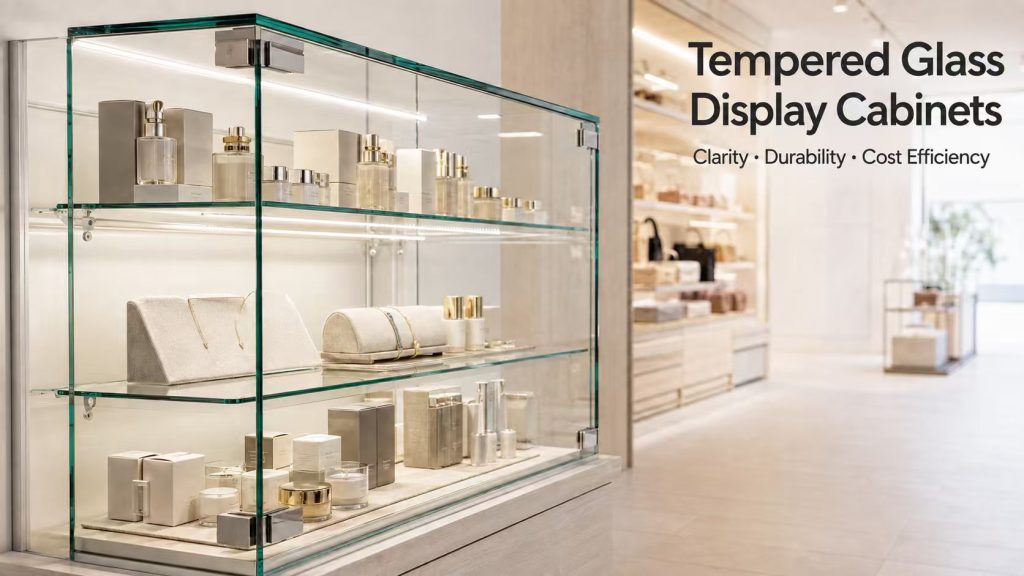
Tempered glass is an important material for kiosks where merchandise needs to remain clearly visible while being protected from direct customer access. It is widely used in jewelry kiosks, watch kiosks, cosmetics kiosks, electronics kiosks, bakery displays, and other product-focused retail environments.
Tempered glass is produced by heating glass and then cooling it rapidly under controlled conditions. This process increases its strength compared with ordinary annealed glass. It is also a type of safety glass because, if it breaks, it is designed to fragment into relatively small pieces instead of large sharp shards. This makes it suitable for many commercial retail display applications.
In kiosk construction, tempered glass is commonly used for display showcases, glass shelves, countertop display cases, product protection panels, doors, and transparent partitions. Its transparency allows customers to see products clearly from different angles while keeping merchandise enclosed. Glass also provides good rigidity, making it suitable for larger showcase panels and shelving when correctly engineered.
3. Steel as a Kiosk Material
Steel is commonly used in kiosk construction when greater structural strength or load-bearing capacity is required. Even when the visible parts of a kiosk are mainly constructed from wood or glass, steel may be used internally to reinforce counters, shelving, signage, equipment areas, overhead structures, or the base of the kiosk.
One of the main advantages of steel is its high strength relative to the size of the structural section. A relatively slim steel frame can support substantial loads without requiring a bulky structure. This makes steel particularly useful for open display systems, long shelves, suspended signage, heavy equipment, canopies, and kiosk designs that require thin but strong structural components.
Steel is also highly adaptable during manufacturing. It can be cut, drilled, bent, welded, and fabricated into frames, brackets, supports, racks, and other customized structural parts. In many retail kiosk projects, steel and wood-based materials are used together: plywood or MDF forms the main cabinet structure, while steel provides additional reinforcement where required.
Stainless steel is another important option, particularly for coffee kiosks, food kiosks, and beverage kiosks. Its corrosion resistance makes it suitable for preparation areas, sinks, equipment zones, worktops, and other places that may be exposed to water or frequent cleaning. It is normally used selectively in the areas where its properties are needed rather than for the entire kiosk structure.
4. Other Metal Options for Kiosks
In addition to steel and stainless steel, aluminum and aluminum-based materials can be useful in retail kiosk construction. They are especially suitable when reducing component weight is important or when the kiosk requires lightweight frames, larger panels, signage structures, or modular elements.
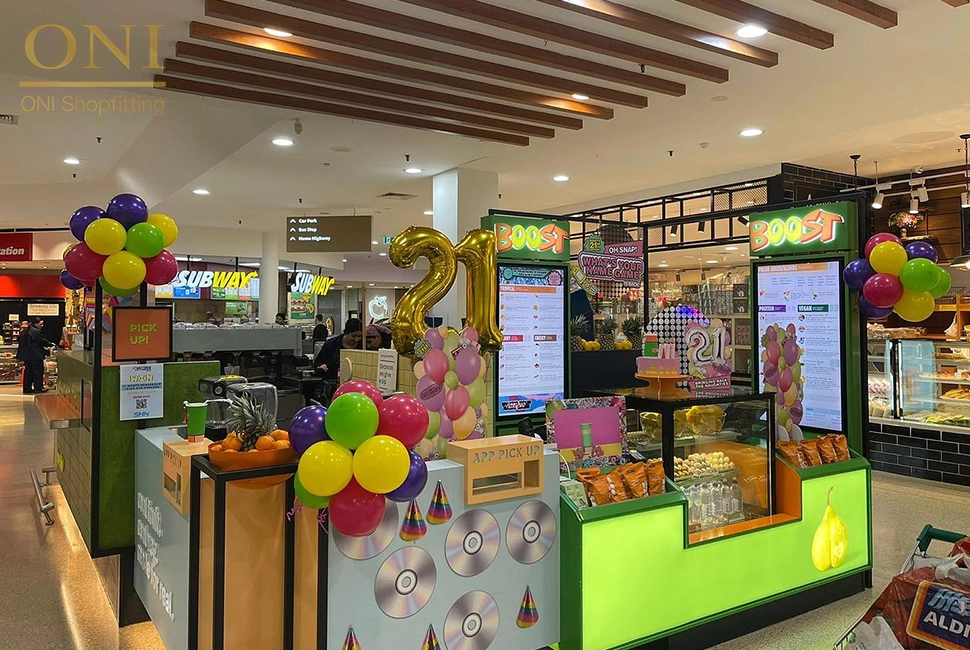
Aluminum is considerably lighter than steel and naturally resistant to corrosion. It can be used for display frames, structural profiles, signage frames, light box structures, lightweight shelves, and other kiosk components. Aluminum can also be extruded into specific profile shapes, which makes it useful for certain modular display and framing systems.
The choice between aluminum and steel depends on the function of the component. Steel is generally more suitable where higher structural strength and heavier load capacity are required, while aluminum can be useful when low weight, easier handling, or corrosion resistance is more important. A single kiosk may therefore use steel in load-bearing areas and aluminum in lighter structural or display components.
Aluminum composite panels, often referred to as ACP or ACM, are another option for certain kiosk panels and enclosures. These panels typically consist of thin aluminum sheets bonded to a core, producing a relatively lightweight and rigid panel. They can be used for kiosk wall panels, fascias, signage structures, canopies, and larger enclosed sections. For outdoor or regulated commercial environments, the specific panel grade, core material, supporting structure, and applicable fire requirements should be considered as part of the overall kiosk specification.
5. Acrylic for Kiosks
Acrylic is a transparent thermoplastic widely used in retail kiosks because it is lightweight, versatile, and easy to fabricate. It is particularly suitable for smaller display components that need to be transparent, shaped, engraved, bent, or customized to suit individual products.
Typical applications include product holders, display risers, transparent covers, dividers, menu holders, signage panels, logo components, cosmetic organizers, promotional displays, and light box components. Acrylic is available in clear, frosted, translucent, and colored forms, giving kiosk designers flexibility when creating merchandising and branding elements.
One of acrylic’s main advantages is its fabrication flexibility. It can be cut, drilled, routed, engraved, polished, bent, and thermoformed into many different shapes. It is also much lighter than glass, making it useful for removable displays and smaller components that may need to be moved, changed, or replaced as merchandise changes.
Acrylic and tempered glass are often used together rather than treated as direct substitutes. Tempered glass is generally more appropriate for larger showcases, shelves, doors, and protective panels where rigidity and scratch resistance are important. Acrylic is often more practical for product holders, risers, dividers, signage, and custom-shaped accessories. Using each material according to its strengths can result in a more practical display system.
How to Choose the Right Kiosk Materials
There is no single best material for every retail kiosk. Material selection should be based on the function of each component, the products being displayed, the operating environment, and the way the kiosk will be manufactured and used.
- Consider structural requirements. Determine which parts of the kiosk need to support merchandise, equipment, countertops, shelving, signage, or overhead structures. Plywood and steel are often used where higher structural strength is required.
- Consider the product category. Different products require different display solutions. Jewelry and watches may require extensive tempered glass showcases, while cosmetics may use more acrylic product holders.
- Consider the operating environment. Indoor retail kiosks, food-service kiosks, and outdoor kiosks can require different material specifications. Moisture, heat, food preparation, cleaning, and environmental exposure should all be considered before materials are selected.
- Consider visibility and product access. Transparent materials are important when customers need to see merchandise clearly. Tempered glass is commonly used for enclosed showcases, while acrylic can be used for smaller holders, dividers, and displays.
- Consider weight. The total weight of steel, glass, cabinetry, equipment, and merchandise can become significant. Aluminum or acrylic may be useful for reducing weight in selected components when appropriate.
- Consider fabrication requirements. Some kiosk designs require CNC machining, welding, bending, curved glass, acrylic forming, or custom metalwork. The selected material should be compatible with the required manufacturing process.
- Consider hardware and fixing points. Hinges, locks, drawer slides, shelf brackets, electrical equipment, and display systems all need suitable structural support. The material behind these components should provide adequate fixing strength.
- Consider maintenance and daily use. High-traffic kiosks are frequently touched and cleaned. Materials should be selected according to how the kiosk will actually be operated rather than based on appearance alone.
- Consider project cost. Material cost is only one part of the total budget. Fabrication complexity, material quantity, structural requirements, packaging, transportation, and installation can also influence the final project cost.
A typical retail kiosk may therefore combine plywood and MDF for cabinetry, steel for reinforcement, tempered glass for showcases, aluminum for lightweight structures, and acrylic for product holders and signage. The goal is not to identify one universal “best kiosk material,” but to use the right material in the right part of the kiosk.
In Conclusion
The materials used to build a retail kiosk directly affect its strength, functionality, appearance, weight, and durability. Wood-based materials such as plywood and MDF are commonly used for cabinets and counters, while tempered glass improves product visibility. Steel and stainless steel provide structural strength and durability, aluminum helps reduce component weight, and acrylic is useful for custom displays, signage, and accessories.
In most kiosk projects, several materials are combined according to the function, structural requirements, operating environment, and budget of each component. For B2B buyers, material selection should be considered during the design and engineering stage. Providing the kiosk manufacturer with clear dimensions, drawings, product information, equipment requirements, and intended use helps ensure that the materials and kiosk structure are properly specified before production.
FAQs About Kiosk Materials
1. What are the most common materials used to build retail kiosks?
The most common kiosk materials include plywood, MDF, solid wood, tempered glass, steel, stainless steel, aluminum, aluminum composite panels, and acrylic.
2. Is plywood or MDF better for building a kiosk?
It depends on the application. Plywood is generally more suitable for structural cabinetry, hardware fixing, and areas that require greater strength, while MDF is useful for components that require accurate machining, detailed shapes, or curved forms. For many custom retail kiosks, the most practical solution is to use plywood and MDF together according to the requirements of different components.
3. Is tempered glass or acrylic better for kiosk displays?
Tempered glass is generally more suitable for larger showcases, shelves, doors, and protective display panels because it provides good rigidity and scratch resistance. Acrylic is lighter and easier to fabricate into custom shapes, making it suitable for product holders, risers, dividers, signs, and smaller display components. Many kiosks use both materials in different areas.
Start Your Custom Kiosk Project
Choosing the right kiosk materials is only one part of developing a successful custom retail kiosk. Materials must also work with the kiosk dimensions, structure, product displays, equipment, hardware, electrical requirements, manufacturing methods, packing, and installation.
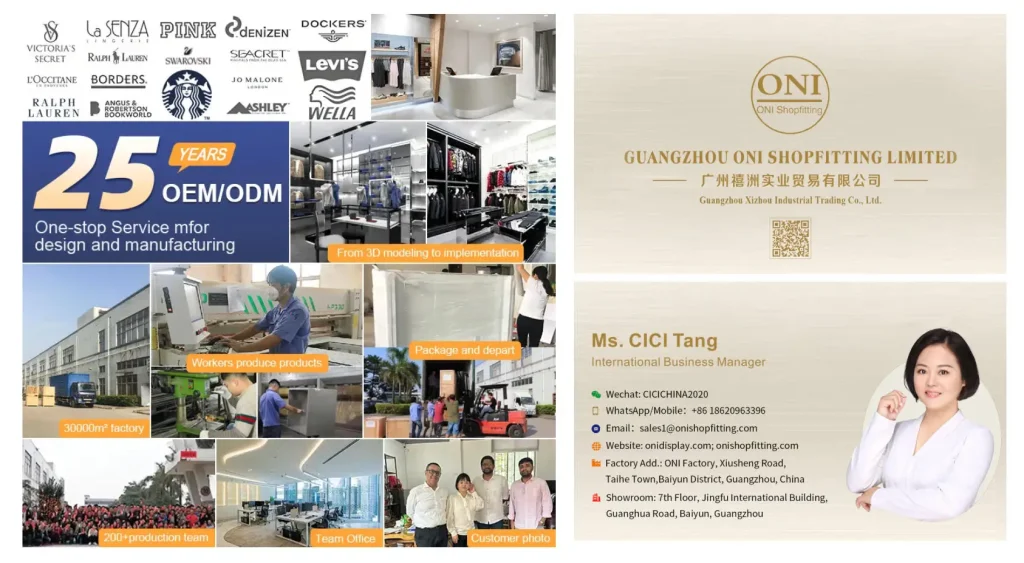
ONI Display is a factory-direct custom retail fixture and shopfitting manufacturer based in Guangzhou, China. With an in-house 30,000 m² manufacturing facility covering woodworking, metal fabrication, signage, painting, assembly, and quality inspection, ONI Display provides integrated services from design, material selection, prototyping, and engineering to manufacturing, quality control, export packing, and global delivery.
Whether you are developing a mall kiosk, jewelry kiosk, cosmetics kiosk, coffee kiosk, food kiosk, electronics kiosk, or another custom retail display, ONI Display can manufacture according to your drawings, brand requirements, merchandise, equipment, and project specifications. Send us your kiosk dimensions, floor plan, drawings or reference images, product category, equipment information, quantity, and project location to discuss the right materials and construction solution for your project.
 Contact us today to start your custom display fixtures project.
 WhatsApp/Call: +86 186 2096 3396
 Email: sales1@onishopfitting.com
 Factory Location: Guangzhou, China