


A well designed pharmacy is about more than storing medicine. The right pharmacy shelving systems improve product organization, streamline staff workflow, enhance customer experience, and make better use of available space. Whether you are opening a new pharmacy, remodeling an existing store, or planning a chain rollout, choosing the right shelving system is one of the most important decisions.
Modern pharmacies require fixtures that combine functionality, durability, and attractive presentation. From prescription storage to over the counter merchandise, every area benefits from shelving that supports efficient operations while maintaining a clean and professional appearance.
In this guide, you will learn about different pharmacy shelving systems, common materials, layout planning and how to choose the best solution for your pharmacy project.
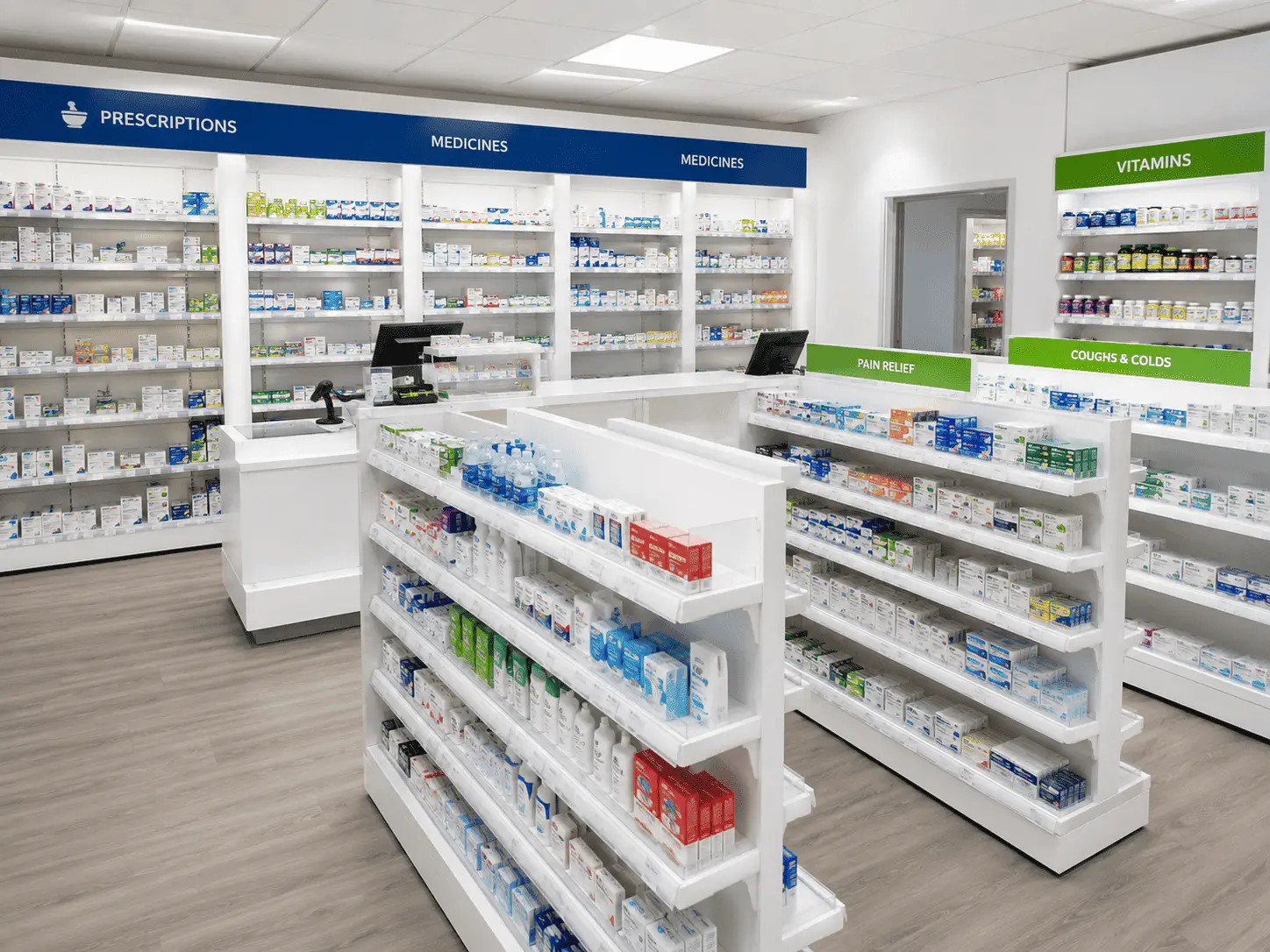
Why Pharmacy Shelving Systems is Important In Modern Pharmacy Design
A well-designed pharmacy is about much more than storing medicine. The shelving system affects how customers move through the store, how easily products are found, how efficiently pharmacists work, and how professional the pharmacy feels.
Unlike ordinary retail shelving, pharmacy shelving systems must handle thousands of products with different packaging sizes, storage needs, and access requirements. Prescription medicines, OTC products, vitamins, supplements, personal care goods, medical devices, skincare products, and healthcare accessories all need different display methods.
A strong pharmacy shelving plan helps maximize storage capacity, improve product visibility, speed up staff workflow, reduce unnecessary movement, and create a cleaner shopping environment. For more pharmacy fixture examples, see custom pharmacy store fixtures.
In pharmacy environments, shelving design should also support product safety, clear navigation, and professional presentation. The World Health Organization provides broad public health guidance that reinforces the importance of safe and organized healthcare environments.
Main Types of Pharmacy Shelving Systems
Different areas of a pharmacy require different shelving solutions. A complete pharmacy design usually combines multiple fixture types instead of using one standard shelf everywhere.
| Shelving Type | Best Used For | Main Benefit |
|---|---|---|
| Wall-mounted shelving | OTC medicine, vitamins, personal care | Saves floor space and improves vertical display |
| Gondola shelving | Central aisles, daily products, promotions | Creates organized shopping paths |
| Back counter shelving | Prescription medicine and staff storage | Improves workflow and access speed |
| End cap displays | Seasonal products and new arrivals | Increases visibility |
| Checkout shelving | Small healthcare items | Supports impulse purchases |
| Glass display cabinets | Premium or controlled products | Protects products while keeping them visible |
| Modular shelving | Chain stores and future expansion | Allows flexible adjustment and rollout consistency |
A good pharmacy shelving system matches each product category with the right display method. You can also review pharmacy shelving solutions for more product-specific inspiration.
High-volume products need easy access. Premium products may need glass cabinets. Controlled items may require lockable storage. Promotional products should be placed where customers naturally notice them. By combining different shelving types, the pharmacy can improve both display performance and operational efficiency.
Wall-Mounted Pharmacy Shelving
Wall-mounted pharmacy shelving makes full use of vertical space while keeping the center of the store open. This type of shelving is ideal for OTC medicines, vitamins, personal care products, healthcare accessories, supplements, oral care products, and skincare items.
Wall shelving can include adjustable shelves, metal uprights, wood panels, laminate finishes, acrylic dividers, LED lighting, category signage, and bottom storage cabinets. Adjustable shelf holes or bracket systems allow staff to change the shelf height based on product packaging.
In modern pharmacy design, wall-mounted shelving is often used as a main product wall. It can include brand panels, header signage, light boxes, and clear category labels. This improves product navigation and strengthens the store’s professional image.
Gondola Pharmacy Shelving
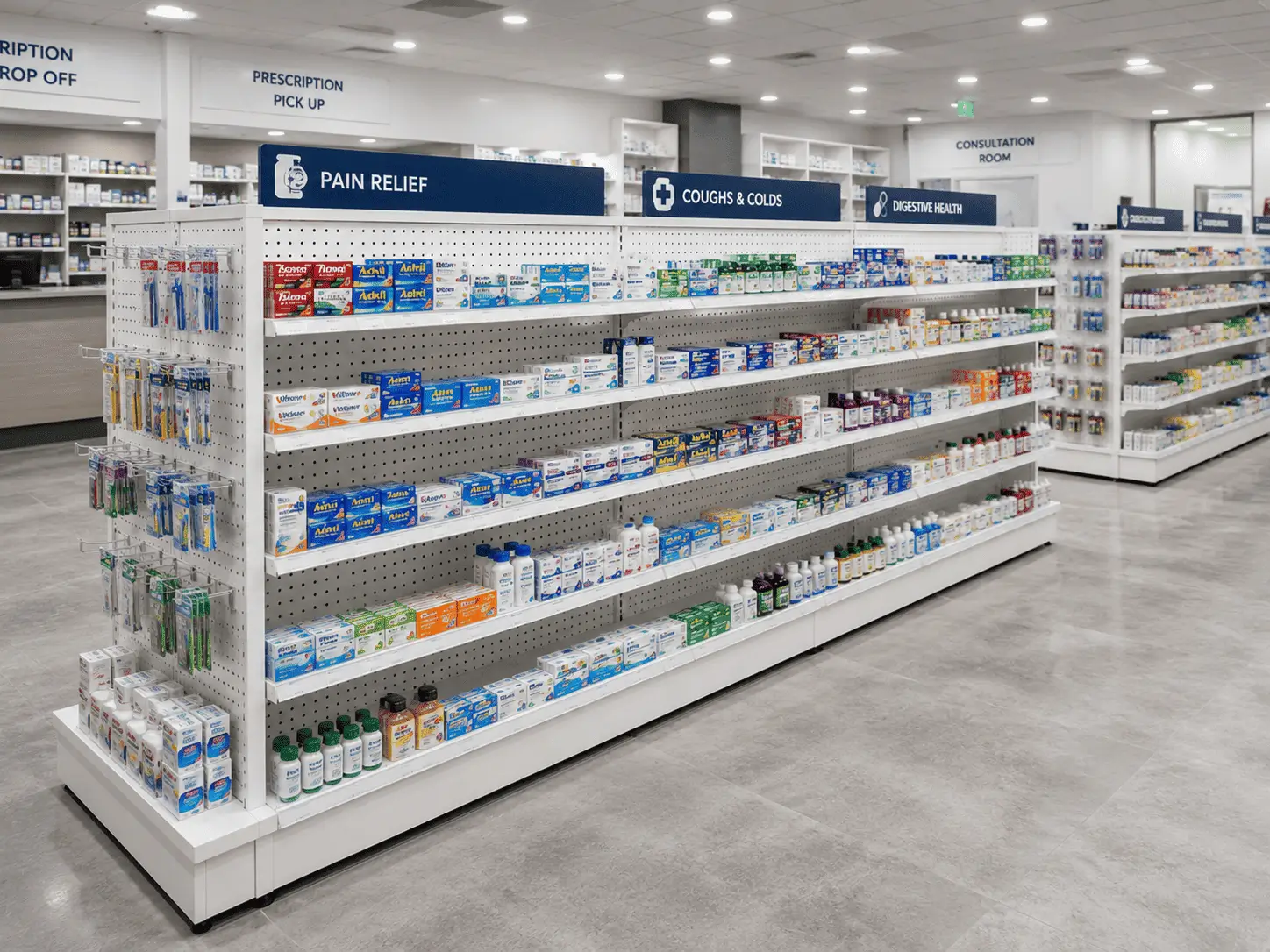
Gondola pharmacy shelving is usually placed in the center of the store. Double-sided gondola shelves allow customers to browse products from both sides while helping divide the pharmacy into organized shopping aisles.
They are widely used for vitamins, supplements, first-aid products, daily health goods, personal care items, and promotional products. Medium-height gondola shelving can provide good product capacity while keeping the store open and easy to navigate.
If gondola shelving is too high, it may block sightlines and make the pharmacy feel crowded. If it is too low, the store may lose valuable display capacity. Metal gondola shelving is strong, adjustable, and suitable for high-volume products. Wood-finish gondola shelving creates a warmer atmosphere.
Many modern pharmacies combine powder-coated metal frames with laminate or wood-grain panels to balance strength, cost, and design. End panels and shelf-end areas can also be used for promotional displays, seasonal healthcare products, or best-selling items.
Pharmacy Back Counter Shelving
Behind the dispensing counter, shelving is designed for staff efficiency rather than customer browsing. Pharmacy back counter shelving is commonly used for prescription medicines, frequently used medications, medical supplies, controlled storage, and daily dispensing operations.
A good back counter shelving system may include adjustable shelves, labeled storage sections, pull-out drawers, lockable cabinets, medicine sorting zones, and worktop storage. The goal is to reduce searching time and support faster prescription fulfillment.
Back counter shelving should also consider staff movement. Products used most often should be placed within easy reach. Less frequently used items can be stored higher or in lower cabinets. Clear labeling and logical grouping help reduce errors and improve workflow.
For medicine handling and pharmacy operations, regulatory requirements vary by country and region. In the United States, the U.S. Food and Drug Administration drug information provides useful reference material related to drugs, labeling, and safety.
Display End Caps and Checkout Shelving
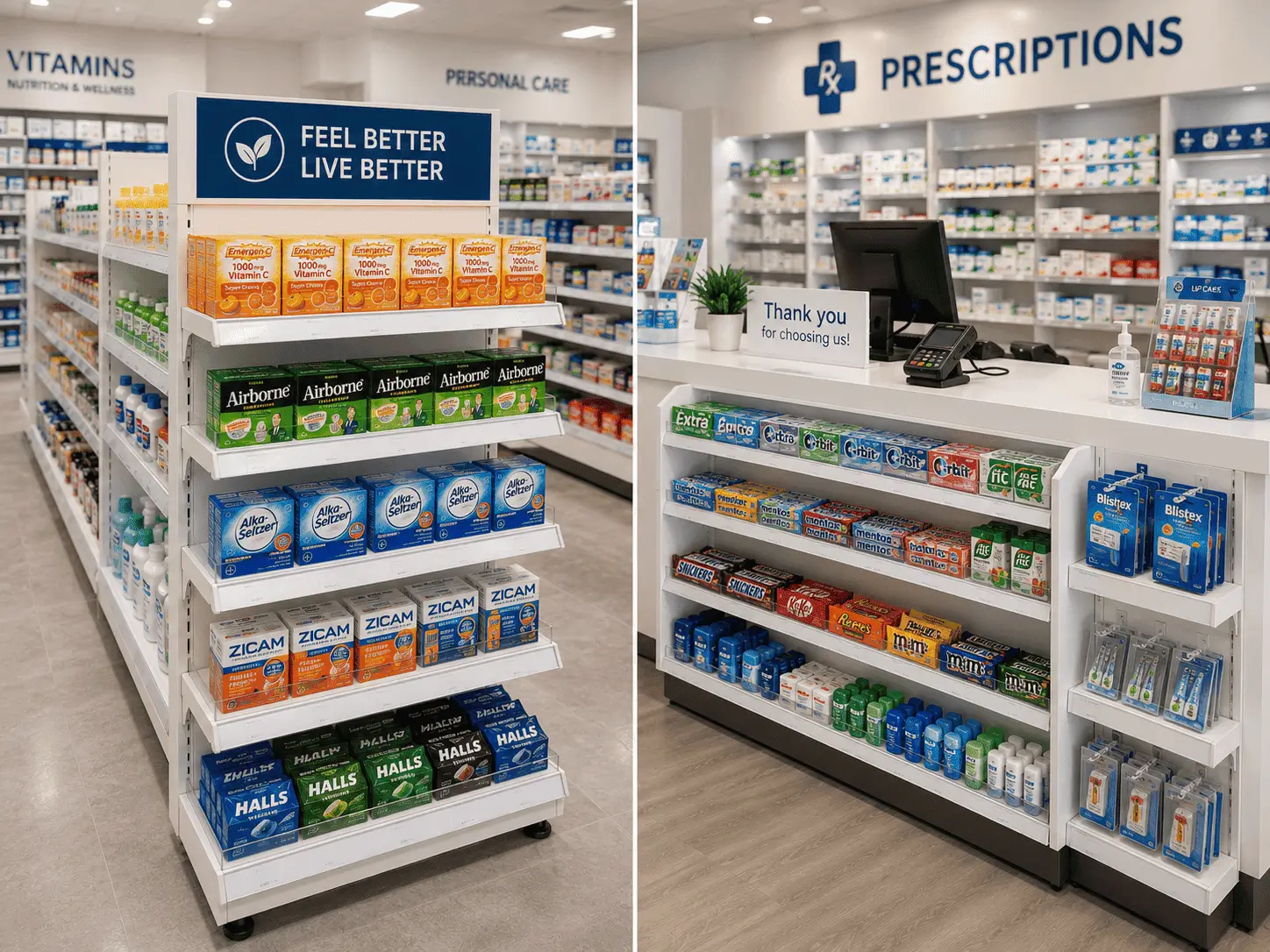
Display end caps are placed at the end of gondola shelving. Because customers naturally notice aisle ends, these displays are ideal for promotional products, seasonal merchandise, and high-margin healthcare items.
Common end cap products include cold and flu medicine, vitamins, travel-size healthcare products, wellness bundles, skincare promotions, and new arrivals. A well-designed end cap can increase visibility without interrupting customer flow.
Checkout display shelving is another high-value area. It is suitable for small convenience items such as hand sanitizers, lip balm, pain relief products, batteries, travel healthcare accessories, masks, and small personal care goods.
However, checkout shelving must remain neat. Too many small display stands can make the counter feel cluttered. The best checkout displays are compact, well-organized, and easy for customers to browse while waiting. For counter design ideas, see pharmacy display counter solutions.
Materials Used in Pharmacy Shelving Systems
Material choice affects durability, appearance, hygiene, maintenance, and long-term cost. Powder-coated steel is one of the most common structural materials for pharmacy shelving because it offers high strength, excellent load capacity, corrosion resistance, easy maintenance, and long service life.
Wood panels create a warmer and more welcoming shopping environment. They are commonly used for wall feature displays, consultation areas, cosmetic sections, wellness product displays, and branded pharmacy zones. Wood finishes can help pharmacies create a more premium retail atmosphere.
Tempered glass is often used for premium healthcare products, cosmetics, skincare, and lockable display cabinets. It improves product visibility, creates a clean appearance, and is easy to maintain. Acrylic is useful for lightweight organization, including dividers, sign holders, product separators, countertop displays, and promotional organizers.
Laminate and melamine finishes are practical for shelves, counters, and cabinets because they are clean-looking and easy to maintain. For quality management reference, many manufacturers follow principles similar to ISO 9001 quality management, which helps explain why consistent inspection, process control, and documentation matter in fixture manufacturing.
Pharmacy Shelving Layout Planning
An effective pharmacy layout improves both customer shopping and staff efficiency. Most pharmacies are divided into several functional areas:
- Prescription dispensing zone
- OTC medicine section
- Healthcare products
- Vitamins and supplements
- Personal care products
- Checkout area
- Consultation room
- Storage room
Keeping related products together makes shopping easier while reducing unnecessary movement for pharmacy staff. Wide aisles, clear signage, and logical product grouping all contribute to a better customer experience.
A successful pharmacy layout should create a natural flow that guides customers through different product categories while allowing pharmacists to work efficiently behind the counter. Clear zoning helps customers find products quickly and reduces congestion during busy hours.
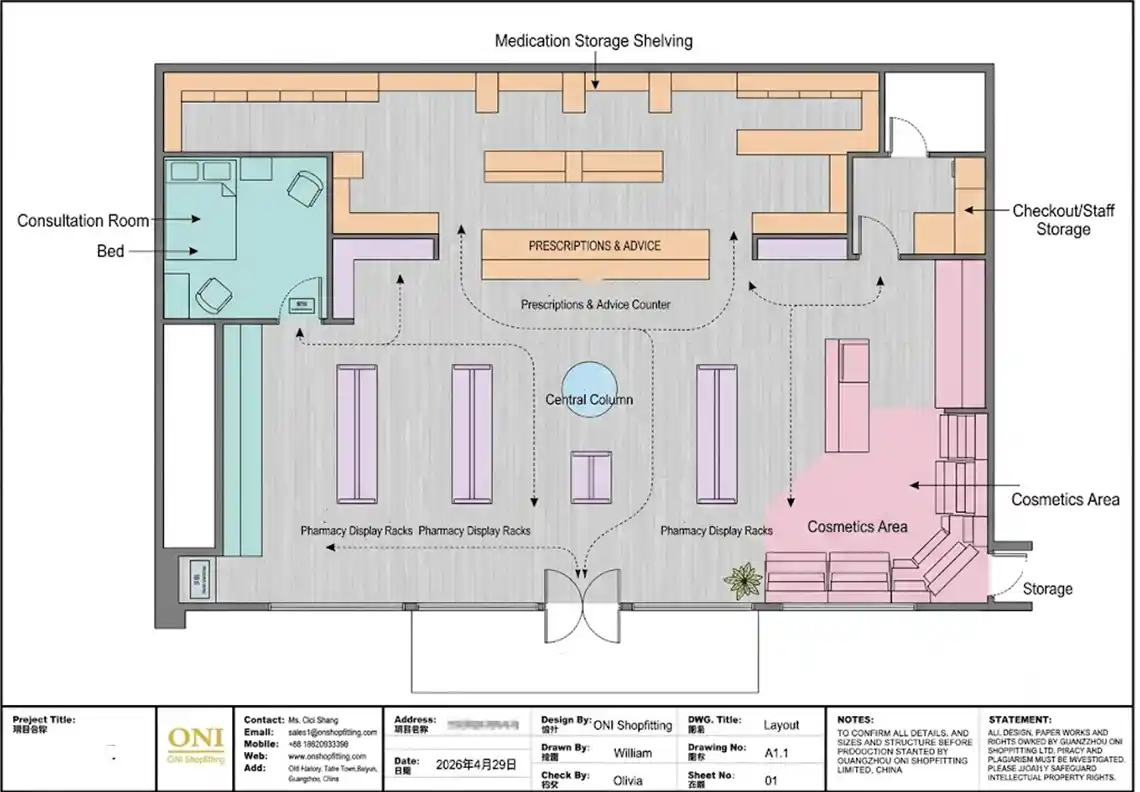
Shelf placement should also reflect purchasing behavior. Best selling healthcare products and seasonal items are often positioned at eye level or along primary walkways to increase visibility, while prescription storage remains secure and easily accessible to pharmacy staff.
Modular pharmacy shelving systems offer greater flexibility as product ranges change over time. Adjustable shelves, gondola units, and interchangeable accessories allow pharmacies to reorganize displays for promotions, new inventory, or store expansion without replacing the entire fixture system.
For pharmacy chains and healthcare retailers, a standardized shelving layout helps maintain a consistent brand image across multiple locations. Combined with integrated signage, lighting, and organized merchandising, a well planned layout creates a professional shopping environment that improves both operational efficiency and customer satisfaction.
How to Choose the Right Pharmacy Shelving System
Before selecting pharmacy shelving, several factors should be reviewed carefully. Store size is the first consideration. Small pharmacies benefit from compact wall shelving and space-saving gondola systems. Large pharmacies need wider aisles, larger product categories, back counter storage, consultation zones, and promotional display areas.
Product categories also matter. Prescription medicines require organized storage and fast staff access. Retail products need attractive customer-facing displays. Premium products may need glass cabinets. Promotional products need high-visibility locations.
Future expansion should be considered early. Modular shelving systems allow additional sections to be added as inventory grows. This reduces remodeling costs and helps the pharmacy adapt to market changes.
Brand image is another key factor. A modern pharmacy may combine white steel shelving, wood accents, integrated lighting, clean graphics, and clear signage to create a professional healthcare environment. For broader fixture planning, visit ONI Display custom retail fixtures.
In Conclusion
Modern pharmacy shelving systems are not just storage fixtures. They are a core part of pharmacy design, customer experience, staff workflow, product safety, and brand presentation. A good shelving system should make products easy to find, help pharmacists work efficiently, support clean and hygienic daily operation, and allow the store to adjust as product categories change.
The best solution usually combines wall-mounted shelving, gondola shelving, back counter shelving, end cap displays, checkout shelves, glass cabinets, lockable storage, and modular fixtures. With the right materials, layout planning, lighting, signage, and flexible configuration, pharmacy shelving can create a more organized, professional, and future-ready retail environment.
Frequently Asked Questions
1. What is the best material for pharmacy shelving systems?
Powder-coated steel is widely used because it is strong, durable, and easy to maintain. Many pharmacies combine steel with wood panels, glass, acrylic, and laminate.
2. Are modular pharmacy shelving systems better than fixed shelving?
Yes. Modular shelving allows pharmacies to adjust layouts, expand categories, replace parts, and reduce future renovation costs.
3. Can pharmacy shelving be customized?
Yes. Pharmacy shelving can be customized with adjustable shelves, integrated lighting, branded colors, logo panels, lockable storage, glass cabinets, and custom dimensions.