


Suppose you entering a newly opened coffee shop with a modern interior that feels well designed and high quality. At first everything seems organized, but as customers arrive, queues form, ordering slows, and congestion builds. The problem is not service but a layout that cannot handle real traffic. The solution is targeted interior optimization to improve space planning and customer flow.
Coffee shop design is a systematic approach to building an efficient operational environment. By optimizing spatial structure, customer flow, and visual communication systems, cafés can improve service efficiency, reduce congestion, and create a smoother customer experience.
To understand this, we need to look at the engineering logic behind high performance coffee shop design.
1. Coffee Shop Design Functions as a Performance System
Design in coffee shops extends beyond aesthetics to become a critical operational tool. While atmosphere matters, the primary role of layout is to support daily workflow efficiency and revenue generation. Global brands like Starbucks engineer stores for speed and consistency, proving that design directly impacts labor efficiency and order accuracy. In fast-paced environments, even minor flaws like misplaced equipment can significantly slow down service during peak hours.
Modern café planning treats design as a performance system rather than mere decoration. It integrates spatial psychology with operational logic to ensure that every square foot contributes to business objectives. This approach minimizes bottlenecks and maximizes throughput, ensuring that the physical environment supports rather than hinders staff performance.
2. Core Principles of Efficient Coffee Shop Layouts
An efficient coffee shop layout focuses on minimizing movement waste and maximizing operational clarity. Every step in the service chain should follow a logical sequence.
- Linear Workflow: Placing grinders, espresso machines, and milk stations in a logical sequence reduces barista movement and preparation time.
- Visual Clarity: Customers must instantly recognize ordering, waiting, and pickup zones to prevent congestion.
- Operational Rhythm: A structured workflow allows staff to maintain a continuous rhythm, essential for handling high volumes without compromising quality.
By applying these workflow optimization principles, designers create spaces where physical layout directly enhances operational performance, reducing friction for both staff and patrons.
3. Selecting the Right Coffee Shop Layout Types
Different business models require specific structural strategies. Selecting the right layout depends not only on space constraints but also on service style, customer volume, and operational priorities:
Linear Layout: Optimizes fast, one-directional service flows, making it ideal for takeaway-focused cafés and high-traffic urban locations. By minimizing cross-movement, it reduces service time per order and improves queue efficiency, especially during peak hours.
L-Shaped Counter: Creates a natural separation between ordering and preparation zones, improving workflow organization while maintaining interaction with customers. This layout is well-suited for mid-sized cafés that balance dine-in experience with steady takeaway demand.
U-Shaped Bar: Designed for high-volume operations, this layout enables multiple baristas to work simultaneously within a compact, efficient workspace. It reduces movement distance between stations and supports parallel workflows, making it ideal for busy cafés with complex drink menus.
Island Bar Design: Places the counter at the center of the space, transforming it into a visual and interactive focal point. This layout enhances customer engagement and brand perception, making it a popular choice for premium cafés focused on experience-driven service. However, it requires precise planning to avoid congestion and maintain workflow efficiency.
Beyond structural differences, each layout also influences customer behavior, staff productivity, and revenue potential. For example, fast-service layouts prioritize turnover rate, while experiential layouts encourage longer stays and higher per-customer spending.
Understanding these frameworks allows café owners to align spatial design with business strategy, ensuring that the layout not only fits the space but also supports long-term operational efficiency and customer satisfaction.
4. Front-of-House and Back-of-House Balance in Coffee Shop Design
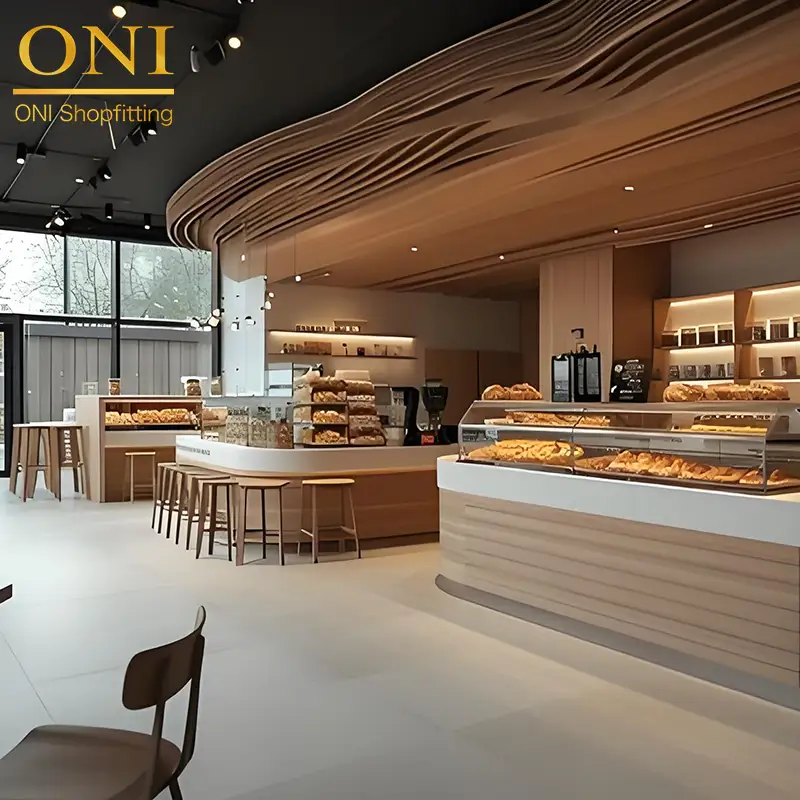
High-performing coffee shops treat front-of-house (FOH) and back-of-house (BOH) as a fully integrated operational system rather than two separate zones. The efficiency of the entire café depends on how well these areas communicate and support each other in real time.
- FOH Design: Focuses on customer clarity, emotional experience, and decision speed. This includes highly visible menus, intuitive queue direction, and clear zoning for ordering, waiting, and pickup. A well-designed FOH reduces hesitation, shortens decision time, and improves perceived service speed—especially during peak hours.
- BOH Design: Prioritizes production efficiency and workflow continuity. This involves strategic equipment placement (grinder → espresso machine → milk station → finishing area), optimized storage accessibility, and sufficient workspace for multiple staff members. A well-structured BOH minimizes unnecessary movement and supports consistent output under pressure.
Misalignment between these zones creates bottlenecks, even if each area is well-designed individually. Successful integration ensures that staff can move seamlessly between production and service areas without disrupting customer experience. This holistic approach guarantees that operational efficiency supports customer satisfaction, creating a cohesive service environment.
5. Material Selection Ensures Durability and Brand Consistency
Material choices in coffee shop design must withstand high humidity, frequent cleaning, and constant foot traffic. Durable materials not only reduce long-term maintenance costs but also reinforce brand identity. Key considerations include:
- Countertop Resilience: Quartz or solid surface materials resist stains and heat, ensuring a pristine look despite heavy use.
- Flooring Durability: Non-slip, water-resistant tiles or polished concrete handle spills and heavy traffic without wearing down.
- Fixture Longevity: Stainless steel and powder-coated metals provide hygienic, scratch-resistant surfaces for counters and shelving.
Selecting materials that align with the brand’s aesthetic while meeting functional demands creates a cohesive and lasting impression.
6. Lighting Design Enhances Atmosphere and Operational Focus
Lighting plays a dual role in shaping both customer mood and staff efficiency. A well-planned lighting system is not only about ambiance but also about guiding behavior, improving visibility, and supporting operational performance. A layered lighting strategy addresses different functional and commercial needs:
Task Lighting: Focused illumination over espresso bars, POS areas, and preparation stations ensures precision, speed, and safety for staff. Proper brightness levels reduce errors during peak hours and help maintain consistent product quality.
Ambient Lighting: Soft, warm lighting in seating areas creates a comfortable and inviting atmosphere, encouraging customers to relax and extend their stay. This is especially important for cafés that rely on dine-in experience and higher per-customer spending.
Accent Lighting: Strategically highlights branding elements, wall features, and product zones. It draws attention to key visual points and helps create a strong spatial identity, guiding customers naturally through the space.
Display Lighting: Lighting for display cabinets and merchandise showcases plays a crucial role in influencing purchasing decisions. Well-lit pastry shelves, bakery displays, and retail product cabinets make items appear more attractive, fresh, and premium. High color-rendering lighting enhances texture and color accuracy, increasing perceived quality and encouraging impulse purchases.
Beyond individual lighting types, lighting distribution directly shapes spatial hierarchy and customer flow. Bright focal areas attract attention and drive movement, while softer lighting zones signal relaxation and longer dwell time—allowing cafés to guide behavior without physical barriers.
7. Modular Fixtures Support Flexible Space Adaptation
Modular design elements allow coffee shops to adapt quickly to changing business needs or seasonal events. Flexibility in layout offers several advantages:
- Reconfigurable Seating: Lightweight, stackable chairs and movable tables enable quick transitions between individual workspaces and group gatherings.
- Pop-Up Displays: Portable kiosks or display units can be introduced for limited-time promotions or seasonal product launches.
- Scalable Storage: Modular shelving systems expand or contract based on inventory levels, optimizing space usage.
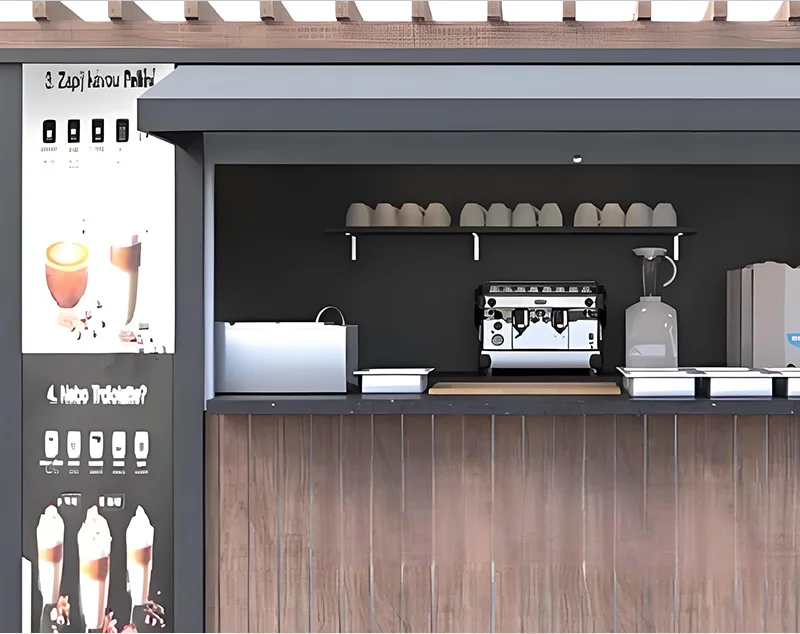
This adaptability ensures that the café remains functional, efficient, and engaging even as customer patterns fluctuate. This systematic approach can also be achieved through standardized modular solutions, such as a small coffee kiosk design with integrated layout and wooden finishes.
8. ONI DISPLAY Coffee Shop Case: From Congested Layout to High-Performance Retail Space
In this project, ONI DISPLAY partnered with a high-traffic coffee shop to comprehensively renovate its store environment, focusing on solving layout congestion while improving product visibility and operational efficiency.
Unlike traditional upgrades, ONI DISPLAY delivered a fully integrated solution combining layout design, custom display fixtures, and digital signage systems.
The Challenge: When Layout Limits Revenue
- Severe congestion in the ordering and pickup zones
- Inefficient customer flow and unclear queue direction
- Limited product exposure due to poorly designed display cabinets
- Staff frequently interrupted by customer questions
The core problem was not staffing, it was a mismatch between spatial design, product presentation, and information delivery.
ONI DISPLAY Solution: Integrated Design + Custom Display Manufacturing
We restructured the front-of-house space to create clear customer flow paths, reducing congestion in ordering and pickup areas. At the same time, strategically positioned high-brightness digital menu boards improved menu visibility and accelerated decision-making, minimizing queue delays and staff interruptions.
In addition, ONI DISPLAY designed and manufactured custom display cabinets tailored to the café’s layout and customer movement patterns. These cabinets were positioned along key visual and traffic zones, supported by integrated lighting to enhance product visibility and appeal.
Results: Measurable Business Impact in 3 Months
By transforming product displays into active sales touchpoints, the solution not only improved spatial efficiency but also increased customer engagement and impulse purchases, ultimately driving a 30% revenue growth within 3 months.
In Conclusion
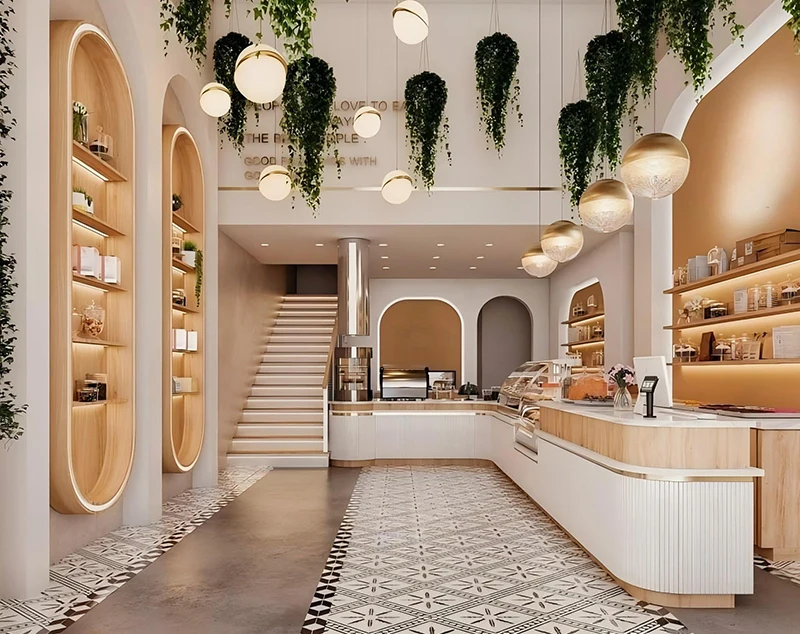
A successful coffee shop design is defined not only by aesthetics, but by how well it performs in real operations. When layout, customer flow, materials, and lighting work together seamlessly, the space can handle high-pressure conditions and maintain efficient operations even during peak hours.
👉 Get in touch with us today to start your project.
🌐 Website: www.onidisplay.com | www.onishopfitting.com