

Starting a pet store can be challenging, especially when it comes to business planning, selecting the right location, organizing merchandise, and managing startup costs. Without proper preparation, retailers may face inefficient store layouts, limited display space, and unnecessary expenses.
These challenges can affect customer shopping experiences, daily operations, and long-term profitability. Poorly planned shelving, crowded aisles, and unsuitable display fixtures may also make it difficult to organize products and accommodate future business growth.
Whether you are opening an independent pet shop or expanding a chain of pet retail stores, careful planning and suitable custom pet store fixtures can help create a functional and attractive retail environment. This guide explains how to start a pet store, covering business planning, startup costs, store layout design, and pet store display solutions.
1. Research the Pet Retail Market
Before opening a pet store, understanding your target market and local competition is essential. Different customers have different purchasing habits, product preferences, and expectations for pet retail services.
Research the types of pets commonly owned in your area, popular product categories, customer spending habits, and existing competitors. This information helps you identify market opportunities and select products that match customer demand.
Consider the following factors when researching your market:
- Target Customers: Identify whether your store will serve dog owners, cat owners, small animal owners, or customers with multiple pets.
- Local Competition: Research nearby pet stores, supermarkets, veterinary clinics, and online retailers.
- Product Demand: Evaluate demand for pet food, treats, toys, grooming products, accessories, and pet care supplies.
- Customer Preferences: Understand customer expectations regarding product quality, pricing, convenience, and brand selection.
- Market Opportunities: Look for underserved product categories, specialized pet supplies, or convenient services that competitors may not offer.
For retailers planning multiple pet store locations, market research should also consider regional shopping habits, store sizes, and opportunities for standardized store operations.
2. Choose Your Pet Store Business Model
Selecting the right business model is an important step when learning how to start a pet store. Your business model determines your product range, store size, equipment requirements, staffing needs, and overall investment.
Some pet stores focus on everyday pet supplies, while others specialize in premium products, grooming services, or comprehensive pet retail experiences.
| Pet Store Type | Main Business Focus | Typical Store Requirements |
|---|---|---|
| Independent Pet Shop | Pet food, toys, and accessories | Flexible shelving, display racks, checkout counter |
| Specialty Pet Store | Premium food, specialty products, and accessories | Branded displays, wall shelving, product showcases |
| Pet Supply Superstore | Wide product categories and larger inventory | Heavy-duty shelving, gondola displays, storage systems |
| Pet Store with Grooming | Retail products and grooming services | Retail shelving, grooming reception counter, dedicated service area |
| Chain Pet Store | Standardized products and multiple locations | Modular fixtures, standardized layouts, branded display systems |
Your chosen business model should match your available budget, target customers, and long-term expansion plans. For chain retailers, consistent store layouts and standardized custom pet store fixtures can simplify future store openings and brand management.
3. Create a Pet Store Business Plan
A well-structured pet store business plan helps retailers define their business objectives, target customers, product categories, startup budget, and expected operating expenses. It should include market research, competitor analysis, pricing strategies, supplier arrangements, and financial forecasts to evaluate the feasibility of the business before making major investments.
Store planning should also be included in the business plan, covering retail space requirements, interior design, custom pet store fixtures, product display areas, storage capacity, and customer circulation. For pet store chains and multi-store rollout projects, establishing consistent store layouts, fixture specifications, and brand standards can simplify future expansion and improve operational efficiency.
4. Estimate the Cost of Opening a Pet Store
The cost of opening a pet store depends on the location, store size, business model, renovation requirements, and initial inventory. Independent pet shops generally require lower investment than large pet supply stores or chain retail projects. Preparing a detailed startup budget helps retailers control expenses and allocate resources effectively.
The table below outlines the main startup cost categories and factors to consider when planning your investment.
| Startup Cost Category | Main Expenses | Cost Considerations |
|---|---|---|
| Store Rental | Security deposit, advance rent, lease fees | Location, floor area, lease terms |
| Renovation & Interior Design | Flooring, lighting, painting, electrical work, signage | Store condition, design complexity, materials |
| Display Fixtures | Pet store shelving, gondola displays, wall racks, checkout counters | Fixture quantity, materials, customization |
| Initial Inventory | Pet food, treats, toys, accessories, grooming products | Product categories, brands, stock quantities |
| Equipment & Technology | POS systems, barcode scanners, security equipment | Store size, equipment requirements |
| Licenses & Insurance | Business registration, permits, insurance | Local regulations, business activities |
| Marketing & Branding | Website, signage, advertising, opening promotions | Promotion channels, branding requirements |
| Working Capital | Salaries, utilities, restocking, operating expenses | Staffing levels, monthly expenses |
Investing in durable, modular custom pet store fixtures can help reduce long-term maintenance costs and accommodate future merchandise changes. For chain pet stores and multi-store rollout projects, standardized fixture specifications can also simplify bulk manufacturing, purchasing, and installation.
5. Select the Right Pet Store Location
Choosing the right location is essential for attracting customers and supporting daily store operations. Pet stores are often located in residential neighborhoods, shopping centers, commercial streets, or mixed-use developments where pet owners can conveniently purchase food, accessories, and other supplies. When evaluating a location, consider customer demographics, nearby competitors, foot traffic, parking availability, and rental costs.
The available retail space should accommodate product display areas, checkout counters, storage facilities, and comfortable customer circulation. Since pet stores frequently sell large food bags, litter, and other bulky merchandise, sufficient aisle space and practical shelving arrangements are particularly important. If your business includes grooming services, additional space for dedicated service areas and equipment may also be required.
For pet store chains and multi-location expansion projects, selecting locations with compatible floor plans and flexible retail spaces can simplify store standardization. Modular pet store shelving and adaptable custom pet store fixtures allow retailers to maintain a consistent brand appearance while accommodating different store sizes and layouts.
6. Plan an Efficient Pet Store Layout
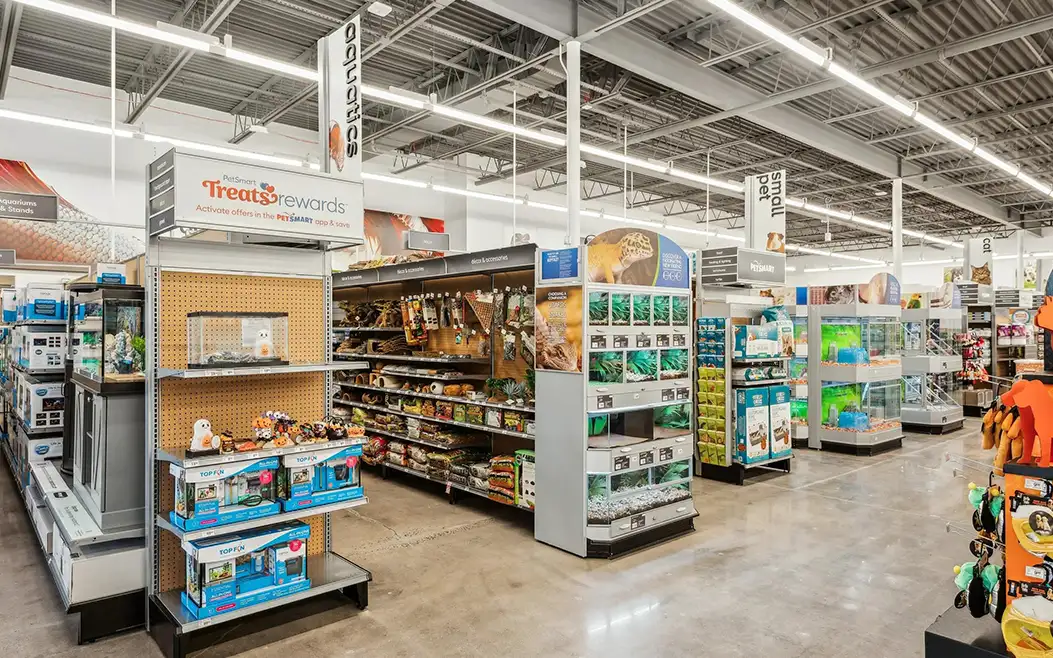
An efficient pet store layout improves product visibility, customer navigation, and daily operations. Since pet stores display merchandise ranging from small accessories to large bags of pet food and litter, retailers should carefully plan shelving arrangements, product categories, aisle space, and storage areas. Integrating custom pet store fixtures into the layout can help maximize available retail space while maintaining a consistent store appearance.
Key Areas of a Pet Store Layout
- Entrance & Promotional Area: Create an attractive entrance with seasonal products, new arrivals, and promotional display stands.
- Pet Food Section: Use durable pet store shelving with suitable load capacities for dry food, canned products, and heavy merchandise.
- Treats & Snacks Area: Organize pet treats by animal type, brand, or category using adjustable shelves and display baskets.
- Toys & Accessories Section: Install wall-mounted shelving, hooks, and display racks for collars, leashes, toys, and pet clothing.
- Grooming & Pet Care Section: Display shampoos, brushes, hygiene products, and grooming accessories in clearly organized areas.
- Checkout Counter: Position the cashier counter conveniently and incorporate small product displays for additional purchases.
- Storage & Restocking Area: Allocate sufficient space for inventory storage, packaging, and efficient merchandise replenishment.
For independent pet shops, flexible shelving helps maximize limited floor space. For larger pet stores and multi-store rollout projects, standardized layouts and modular display fixtures support consistent store presentation and future expansion.

7. Choose the Right Pet Store Display Fixtures
Selecting suitable pet store display fixtures helps retailers organize merchandise, maximize retail space, and create a professional shopping environment. Different product categories require specific shelving structures, display configurations, and load capacities. Custom pet store fixtures also allow retailers to coordinate display equipment with their store design, product selection, and brand identity.
The table below compares common pet store display fixtures and their applications.
| Display Fixture Type | Main Applications | Key Features & Benefits |
|---|---|---|
| Pet Store Shelving | Pet food, litter, canned food, grooming supplies | Reinforced structures, adjustable shelves, suitable load capacities |
| Wall-Mounted Display Shelving | Toys, collars, leashes, accessories | Maximizes vertical space, supports hooks and baskets |
| Gondola Shelving | Packaged products, general merchandise | Double-sided displays, modular configurations |
| Pet Store Display Racks | Pet toys, accessories, packaged products | Adjustable hooks, baskets, convenient product access |
| Promotional Display Stands | New arrivals, seasonal products, special offers | Flexible placement, customizable branding |
| Glass Display Cabinets | Premium accessories, specialty merchandise | Enclosed displays, optional locks and lighting |
| Checkout Counters | Payment processing, customer service | Integrated storage, POS equipment space |
| Storage Cabinets | Inventory, supplies, operational equipment | Organized storage, durable construction |
Custom pet store fixtures can be manufactured in different sizes, materials, colors, and configurations to suit specific retail requirements. For pet store chains and multi-location projects, standardized and modular fixtures help maintain consistent branding, simplify batch production, and support efficient store expansion.
8. Design an Attractive and Functional Pet Store Interior
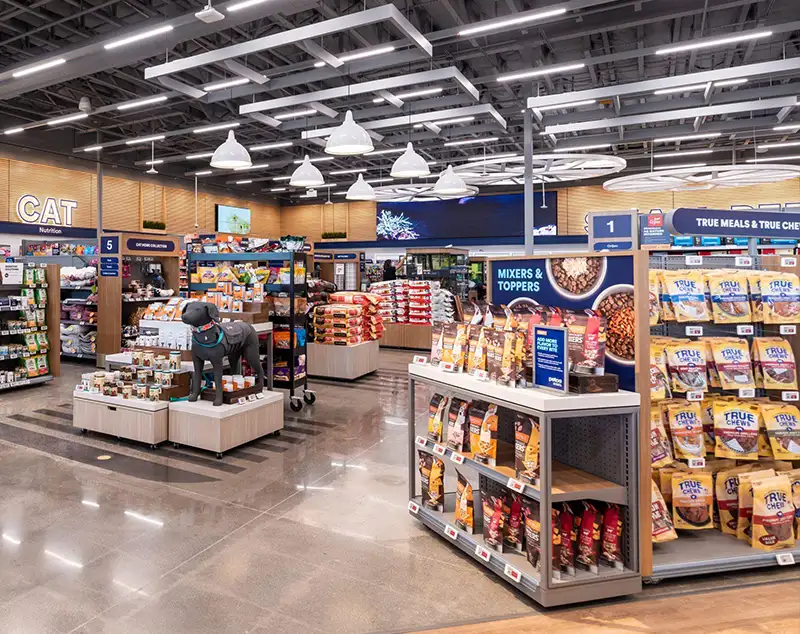
Pet store interior design should create a welcoming shopping environment while supporting efficient product displays and daily operations. A successful store design combines practical shelving arrangements, coordinated colors, suitable lighting, clear signage, and durable materials. These elements help customers navigate the store, identify product categories, and enjoy a comfortable shopping experience.
The interior style should reflect the store’s brand positioning and target customers. Premium pet boutiques may use warm lighting, decorative finishes, and customized display cabinets to create an upscale atmosphere. Larger pet supply stores often prioritize durable shelving, open aisles, clear product organization, and efficient merchandise replenishment. Incorporating custom pet store fixtures helps retailers balance visual appeal with practical merchandising requirements.
When planning the interior, consider the following design elements:
- Brand Identity & Color Scheme: Use coordinated colors, materials, and decorative elements to create a recognizable retail environment that reflects the store’s positioning.
- Lighting & Product Presentation: Combine general lighting with accent lighting to improve merchandise visibility and highlight featured products without creating excessive glare.
- Shelving & Display Integration: Select custom pet store shelving and display fixtures that complement the interior design while providing sufficient capacity for different product categories.
- Clear Signage & Navigation: Incorporate category signs, directional indicators, and promotional graphics to help customers locate products efficiently.
- Durable & Easy-to-Clean Materials: Choose suitable surface finishes, flooring, and fixture materials that can withstand daily retail use and regular cleaning.
- Flexible Interior Arrangements: Use modular shelving and movable display stands to accommodate seasonal promotions, changing inventory, and future store modifications.
For pet store chains and multi-store projects, a standardized interior design helps maintain a consistent brand appearance across different locations. Coordinating fixture materials, dimensions, colors, lighting details, and signage can also simplify purchasing, manufacturing, and future store renovations.
9. Plan for Pet Store Expansion and Multi-Store Rollouts
For retailers planning long-term growth, store standardization should be considered from the beginning. A consistent retail concept can simplify future expansion and help maintain the same brand presentation across multiple locations.
Chain pet stores and franchise operators often require standardized custom pet store fixtures, including shelving dimensions, materials, colors, signage, and merchandising configurations. Developing repeatable store fixture systems can reduce design differences between locations and simplify future production orders.
Important considerations for multi-store pet retail projects include:
- Standardized Store Layouts: Establish adaptable layout guidelines for different store sizes and locations.
- Consistent Display Fixtures: Use coordinated pet store shelving, display stands, and checkout counters across stores.
- Modular Fixture Designs: Develop flexible configurations that can be adjusted for different floor plans.
- Batch Manufacturing: Coordinate fixture production to maintain consistent dimensions, structures, and finishes.
- Centralized Project Management: Organize design approvals, production schedules, quality inspections, and delivery requirements.
- Coordinated Shipping: Plan packaging identification and shipment arrangements according to store opening schedules.
Working with an experienced custom pet store fixtures manufacturer can help retailers manage fixture design, production consistency, and delivery coordination for single-store and multi-store projects.
In Conclusion
Starting a pet store requires careful planning, from market research and business budgeting to location selection, store layout, and display fixture selection. A well-organized retail environment helps improve merchandise visibility, customer convenience, and daily operational efficiency. Whether opening an independent pet shop or expanding a chain of pet retail stores, investing in durable, flexible, and custom pet store fixtures can support both current operations and future business growth.
Frequently Asked Questions
How much does it cost to start a pet store?
Startup costs depend on store size, location, renovation, inventory, and equipment requirements. A detailed budget helps retailers estimate expenses and plan their investment.
What display fixtures are needed for a pet store?
Common fixtures include pet store shelving, gondola displays, display racks, promotional stands, checkout counters, and storage cabinets. Custom pet store fixtures can be designed to match different store layouts and product categories.
How do I design an efficient pet store layout?
Organize products into clear sections, maintain comfortable aisles, and use suitable shelving for different merchandise. Modular custom pet store fixtures help improve space efficiency and support future layout changes.
Custom Pet Store Fixtures for Your Next Retail Project
At ONI Display, we provide custom pet store fixtures and retail display solutions for independent pet shops, pet supply retailers, grooming salons, retail chains, and multi-store rollout projects. Our solutions include customized pet store shelving, gondola displays, wall-mounted systems, display stands, checkout counters, and storage cabinets to suit different store layouts and merchandising requirements.
From store layout planning and 3D visualization to custom manufacturing, quality control, and global delivery, we help retailers create functional and consistent pet retail environments. Whether you are opening a single pet store or planning multiple store locations, our team can customize display fixtures according to your store dimensions, product categories, brand identity, and project specifications.
 Contact us today to start your custom display fixtures project.
 WhatsApp/Call: +86 186 2096 3396
 Email: sales1@onishopfitting.com
 Factory Location: Guangzhou, China