When sourcing custom store display fixtures, two quotations can look very different even when they appear to cover the same project.
One supplier may offer a lower total price, but that does not always mean better value. Differences in materials, hardware, lighting, finishes, packaging, shipping terms and included services can significantly affect the final cost.
For buyers, the key is to compare quotations on the same basis rather than focusing only on the total price. So, how do you compare two quotations for custom store display fixtures and determine which offer provides better overall value? The following points will help you review each quotation more clearly and make a more informed purchasing decision.
1. Compare the Same Fixture List
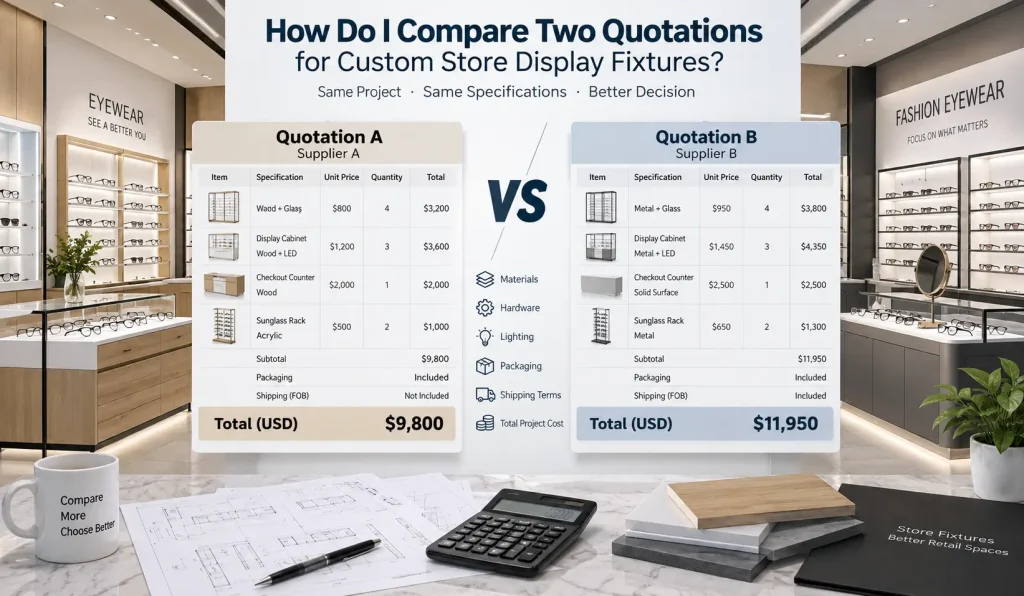
The first step is to confirm that both suppliers are quoting exactly the same range of custom retail fixtures. This may sound simple, but quotation differences often begin here. One supplier may include every fixture shown on the floor plan, while another may omit signage, storage cabinets, wall displays or decorative units.
Before comparing prices, check whether both quotations are based on the same project information, including:
- Fixture types: Confirm that both suppliers are quoting the same wall displays, gondola shelving, display showcases, checkout counters, storage units, kiosks or other fixtures.
- Quantities: Make sure the quantity of each fixture is identical, especially for chain stores or large retail projects.
- Dimensions: Compare the width, height and depth of every fixture, because even small dimension changes can affect material usage and cost.
- Materials: Check whether both suppliers are using the same wood, metal, glass, acrylic and decorative materials.
- Finishes: Confirm that the same lacquer, laminate, powder coating, stainless steel or special finish is included.
- Lighting: Verify whether LED strips, spotlights, drivers, wiring and power supplies are included.
- Hardware: Compare hinges, drawer slides, locks, handles, shelf supports and other functional components.
- Branding: Check whether illuminated logos, signage, graphics and branded panels are included.
- Packaging: Confirm whether export packing is included and what level of protection will be used.
- Delivery terms: Make sure both suppliers are using the same shipping terms and destination.
For example, two suppliers may both quote a custom retail display cabinet, but one may include tempered glass, LED lighting, locks and storage drawers while the other provides only a basic cabinet structure.
For complete retail projects, it is best to send every supplier the same floor plan, fixture list, drawings, reference images and material requirements. This makes the quotation comparison much more accurate.
2. Compare Each Fixture Instead of Only the Total Price
A quotation total can be misleading because it does not show where the price difference comes from. A better approach is to compare the quotation line by line. When reviewing retail display cabinets, display showcases, shelving and counters, check the unit price together with the technical specification behind that price.
| Item | Supplier A | Supplier B | What to Check |
|---|---|---|---|
| Wall Display | $850 | $1,050 | Size, material, shelves |
| Glass Showcase | $1,200 | $1,450 | Glass, locks, lighting |
| Checkout Counter | $2,400 | $2,700 | Storage, hardware, finish |
| Gondola Shelving | $620 | $700 | Structure, load capacity |
For each fixture, look beyond the unit price:
- Wall displays: Compare overall dimensions, shelf quantity, back panels, metal supports, lighting and signage.
- Glass showcases: Check glass thickness, tempered glass, locks, lighting, doors, drawers and internal storage.
- Checkout counters: Compare countertop material, storage layout, drawers, cable management, hardware and branding.
- Gondola shelving: Check shelf quantity, load capacity, metal thickness, adjustability, hooks and base storage.
This type of comparison makes it easier to identify whether one supplier is genuinely more expensive or simply offering a higher specification. Note: A lower quotation may only mean that fewer functions, thinner materials or simpler construction have been included.
3. Check Materials and Finishes
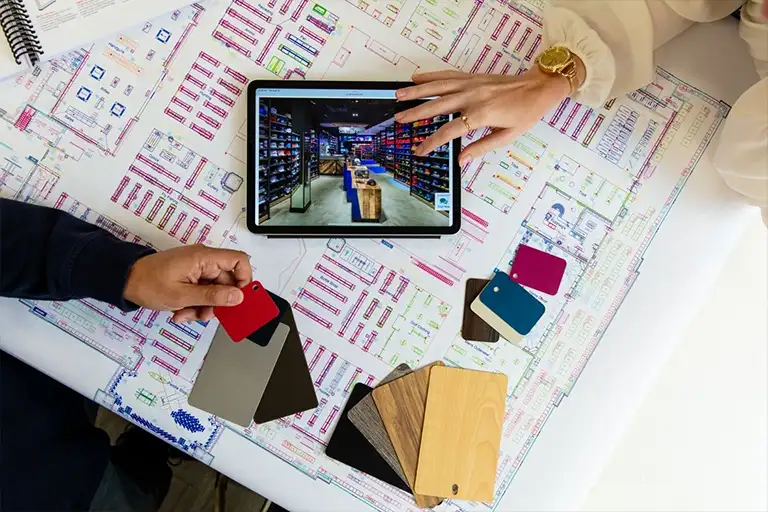
Materials are one of the most important factors affecting the price of custom store display fixtures. Two fixtures can look almost identical in a rendering but have very different production costs depending on the materials and construction used.
When comparing quotations, do not accept vague descriptions such as “wood + metal + glass.” Ask the supplier to clearly identify the material type and relevant specifications.
Key areas to compare include:
- Wood and board materials: Check whether the fixture uses MDF, plywood, particleboard, solid wood, veneer, melamine or laminate.
- Metal materials: Confirm whether the structure uses mild steel, stainless steel, aluminum or another metal, as well as the thickness where relevant.
- Glass: Check whether the supplier uses standard glass, tempered glass, low-iron glass or laminated glass and confirm the thickness.
- Acrylic: Compare acrylic thickness, transparency, color and whether it is used for shelves, signs or product holders.
- Surface finish: Compare lacquer, laminate, melamine, powder coating, spray paint, brushed stainless steel, polished metal or plating.
- Decorative details: Check whether special textures, metallic finishes, veneer patterns or custom colors are included.
The same applies to finish quality. A basic laminate surface and a multi-layer lacquer finish should not be considered equivalent simply because both are described as “wood finish.”
For branded retail projects, also ask whether material samples and color samples will be approved before mass production. This is especially important for stores that need consistent finishes across multiple locations.
4. Compare Hardware, Lighting and Accessories
Hardware and accessories may represent a smaller part of the overall fixture cost, but they have a major impact on how the fixture performs after installation.
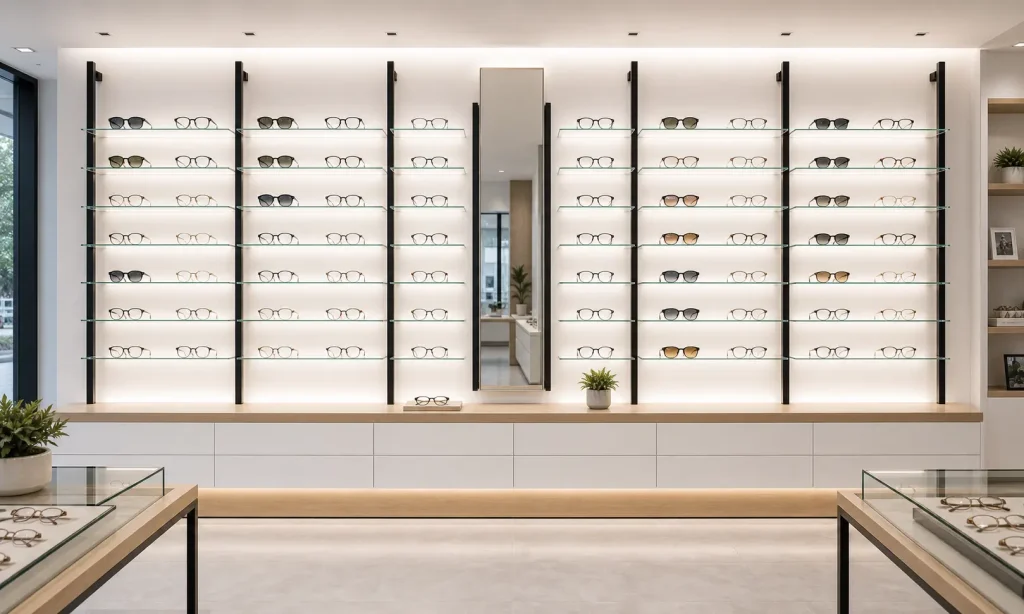
For high-use commercial environments, low-quality hardware can lead to loose doors, difficult drawers, broken locks or frequent maintenance. For this reason, these components should be compared carefully.
Check whether both quotations include similar:
- Hinges: Compare standard hinges, concealed hinges and soft-close options.
- Drawer slides: Check whether the drawer system is basic, heavy-duty or soft-closing.
- Locks: Confirm the type and number of locks for secure display cabinets and showcases.
- Handles: Compare material, finish and design consistency.
- Shelf supports: Check whether the shelves are fixed or adjustable and what support system is used.
- Adjustable feet or casters: These may affect installation, leveling and fixture mobility.
- LED lighting: Compare LED type, color temperature, CRI, brightness and installation method.
- Power supplies and drivers: Confirm whether drivers, transformers and wiring are included.
- Signage and accessories: Check acrylic holders, graphics, category signs, logo panels and promotional headers.
For glass display showcases, jewelry cabinets, optical displays and cosmetic display stands, lighting and hardware are especially important because they directly affect both product presentation and daily operation. Note: If one quotation uses higher-quality commercial hardware and a more complete lighting system, a higher price may be reasonable.
5. Check Design and Engineering Services
Another major difference between quotations is the level of service included before production begins. Some suppliers quote only the manufacturing cost based on drawings provided by the buyer. Others may include design development, engineering and technical drawing services as part of the project.
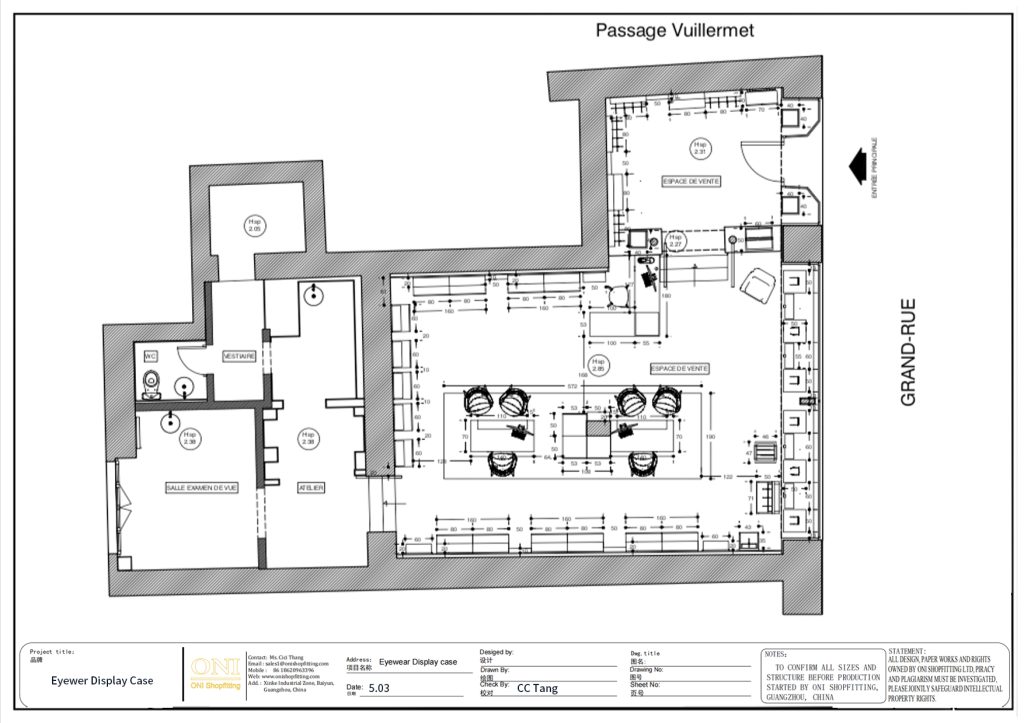
Depending on your project, check whether the quotation includes:
- Store layout planning: Arrangement of fixtures according to store size, traffic flow and product zones.
- 3D renderings: Visual confirmation of the overall store concept before production.
- Material selection: Support in choosing suitable boards, metals, glass, finishes and hardware.
- Engineering development: Converting the design concept into practical and manufacturable structures.
- Shop drawings: Detailed dimensions, construction details and installation information.
- Production drawings: Final technical drawings used during manufacturing.
- Installation drawings: Guidance for assembly, positioning and connection on site.
If you already have complete production drawings, these services may not be necessary. However, if you only have a floor plan, reference images or concept design, engineering support becomes much more important because someone must convert the concept into practical custom retail fixtures that can actually be manufactured and installed.
ONI Display supports projects from design development and engineering through manufacturing, quality control, packing and global delivery, helping buyers manage the complete fixture process through one supplier.
6. Compare Quality Control
For international orders, quality control should not be treated as an optional extra. It directly affects whether the fixtures arrive according to the approved drawings and whether they can be installed smoothly on site. Before selecting a supplier, ask how quality is checked during and after production.
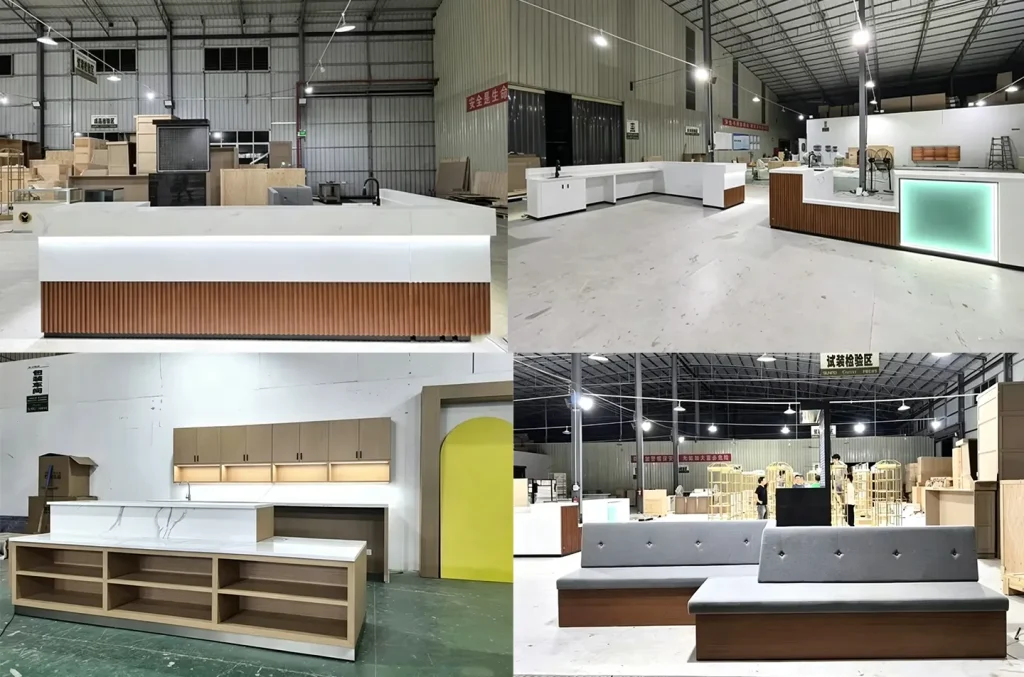
Important inspection points include:
- Dimensions: Confirm that finished fixtures match the approved drawings.
- Materials: Check whether the correct boards, metals, glass and accessories are used.
- Structure: Inspect stability, reinforcement, welding and assembly.
- Surface finish: Check paint, lacquer, veneer, laminate and metal surfaces for consistency.
- Glass: Inspect size, edges, holes and overall condition.
- Hardware: Test hinges, drawer slides, locks, handles and moving components.
- Lighting: Confirm LEDs, wiring, drivers and switches are working correctly.
- Assembly: Check whether components fit together correctly before packing.
- Packaging: Inspect protection and labeling before shipment.
This is especially important for chain stores and multi-location projects, where every batch of fixtures needs to remain consistent. aA lower unit price may not save money if incorrect dimensions, damaged finishes or inconsistent colors create additional installation and replacement costs later.
7. Check Packaging
Packaging is another area where two quotations can differ significantly. For overseas shipments, retail display cabinets, glass showcases and store fixtures may travel long distances by truck, container and warehouse handling before reaching the final project site. Proper packaging helps reduce damage during this process.
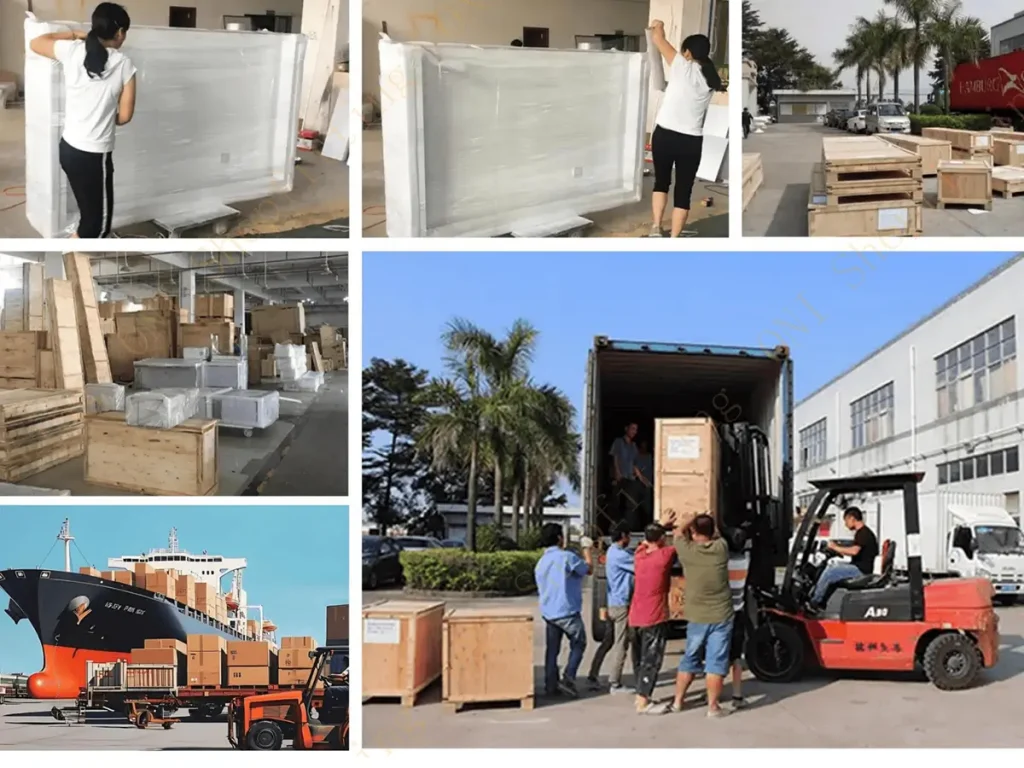
Ask whether the quotation includes:
- Protective film: Helps protect finished surfaces from scratches.
- Foam protection: Provides cushioning around panels, corners and fragile areas.
- Corner protection: Reduces damage to exposed edges.
- Cartons: Suitable for smaller or knock-down fixture components.
- Plywood cases: Often used for valuable, heavy or fragile display fixtures.
- Pallets: Make handling and container loading easier.
- Glass protection: Additional protection for glass doors, shelves and showcase panels.
- Labels: Fixture numbers, store numbers and installation information can simplify site sorting.
For chain rollout projects, organized packaging can also reduce installation time. Components can be packed by fixture, store or installation sequence, with matching hardware grouped together. Therefore, good packaging should be considered part of the total project value, not just an additional expense.
8. Compare Shipping Terms
Shipping terms can completely change the true value of a quotation.
A factory price from China and a delivered price to your warehouse should not be compared directly. Before evaluating two quotations, confirm which Incoterm each supplier is using.
Common terms include:
- EXW: The buyer takes responsibility for collection and most transportation from the supplier’s factory.
- FOB: The supplier delivers the goods to the agreed export port according to FOB terms.
- CIF: The supplier arranges freight and insurance to the destination port.
- DDP: The supplier handles a larger part of the delivery process to the agreed destination.
Also confirm whether the quotation includes international freight, export documentation, customs clearance, import duties, port charges, local delivery and warehouse delivery.
If Supplier A quotes EXW and Supplier B quotes DDP, Supplier B may appear much more expensive even though the final landed cost is actually more competitive.
9. Ask What Is Excluded
One of the most useful questions in a quotation comparison is: What is not included in this quotation?
Many unexpected project costs come from items that the buyer assumed were included but were never listed clearly.
Common exclusions may include:
- Shipping: International freight may be quoted separately.
- Import duties: Taxes and duties are often the buyer’s responsibility.
- Installation: Factory pricing does not always include on-site assembly.
- Site measurement: Final field measurements may need to be arranged locally.
- Electrical work: Wiring from the fixture to the building power supply may be excluded.
- Signage: Logos, graphics and illuminated signs may be separate items.
- Special hardware: Premium locks, slides or accessories may carry additional costs.
- Installation labor: Local labor costs may not be included.
Asking both suppliers for a written exclusions list makes the comparison much clearer and helps prevent additional charges from appearing later.
10. Compare the Total Project Cost
The final purchasing decision should be based on the total project cost rather than the initial factory quotation alone. A lower quotation may not include packaging, lighting, signage, shipping, customs-related charges or other project expenses, which can significantly increase the final cost.
For example, one supplier may quote $32,000, but after adding packaging, lighting, signage and shipping, the total cost may reach $39,700. Another supplier may quote $37,000 with these items already included, making the second offer more competitive overall.
Before selecting a retail store fixtures supplier, buyers should compare what is included in each quotation and calculate the complete cost of manufacturing, packing, shipping and installation. This provides a more accurate basis for evaluating different custom retail fixture suppliers.
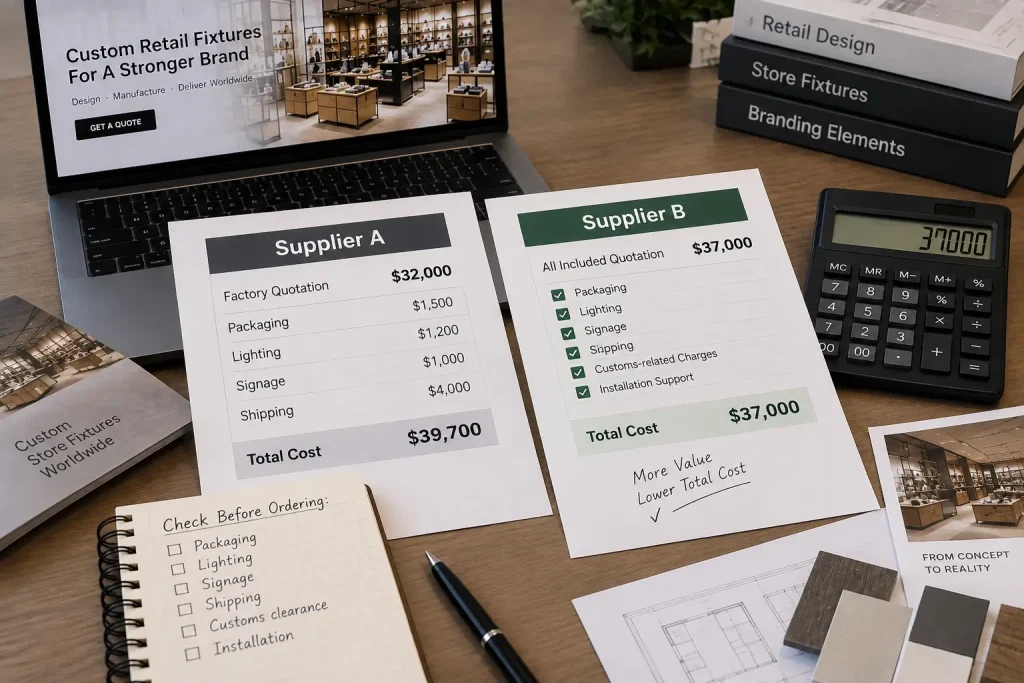
Custom Store Fixture Quotation Checklist
A simple comparison table can help procurement teams quickly identify whether two quotations are truly based on the same specifications.
Use the following checklist before approving a supplier:
| Comparison Item | Supplier A | Supplier B |
|---|---|---|
| Same Fixture Quantity | ✓ / ✗ | ✓ / ✗ |
| Same Dimensions | ✓ / ✗ | ✓ / ✗ |
| Same Materials | ✓ / ✗ | ✓ / ✗ |
| Same Finishes | ✓ / ✗ | ✓ / ✗ |
| Same Hardware | ✓ / ✗ | ✓ / ✗ |
| Same Lighting | ✓ / ✗ | ✓ / ✗ |
| Branding Included | ✓ / ✗ | ✓ / ✗ |
| Design Included | ✓ / ✗ | ✓ / ✗ |
| QC Included | ✓ / ✗ | ✓ / ✗ |
| Export Packing Included | ✓ / ✗ | ✓ / ✗ |
| Shipping Included | ✓ / ✗ | ✓ / ✗ |
| Installation Support | ✓ / ✗ | ✓ / ✗ |
| Total Project Cost | ___ | ___ |
Note: If several items cannot be confirmed, the quotations are probably not ready for a final price comparison.
Custom Store Fixtures Projects With ONI Display
ONI Display is a custom retail fixture manufacturer providing custom display cabinets, glass display showcases, retail shelving, checkout counters, kiosks and complete store fixture solutions.
Our project support covers design development, engineering, material selection, production, quality inspection, export packaging and global delivery. With in-house manufacturing and project management, we help retail brands, contractors, shopfitting companies and commercial buyers develop customized store fixtures with clearer specifications, more consistent production and better control over the complete project process.
In Conclusion
When comparing quotations for custom store display fixtures, do not focus only on the final price. Compare the fixture list, quantities, dimensions, materials, finishes, hardware, lighting, branding, quality control, packaging, shipping terms and included services to make sure both suppliers are quoting the same project scope. Once the specifications and responsibilities are aligned, the true cost difference becomes much easier to evaluate.
Start Your Custom Retail Fixture Project
If you are planning a custom retail fixture project, send ONI Display your floor plan, drawings, fixture list or reference images. Our team can review your requirements and provide a quotation based on your project specifications, materials, production needs and delivery destination.
 Contact us today to start your custom display fixtures project.
 WhatsApp/Call: +86 186 2096 3396
 Email: sales1@onishopfitting.com
 Factory Location: Guangzhou, China